Daniels TR et al. (NOV 2007)
Molecular cancer therapeutics 6 11 2995--3008
Conjugation of an anti transferrin receptor IgG3-avidin fusion protein with biotinylated saporin results in significant enhancement of its cytotoxicity against malignant hematopoietic cells.
We have previously developed an antibody fusion protein composed of a mouse/human chimeric IgG3 specific for the human transferrin receptor genetically fused to avidin (anti-hTfR IgG3-Av) as a universal delivery system for cancer therapy. This fusion protein efficiently delivers biotinylated FITC into cancer cells via TfR-mediated endocytosis. In addition,anti-hTfR IgG3-Av alone exhibits intrinsic cytotoxic activity and interferes with hTfR recycling,leading to the rapid degradation of the TfR and lethal iron deprivation in certain malignant B-cell lines. We now report on the cytotoxic effects of a conjugate composed of anti-hTfR IgG3-Av and biotinylated saporin 6 (b-SO6),a toxin derived from the plant Saponaria officinalis that inhibits protein synthesis. Conjugation of anti-hTfR IgG3-Av with b-SO6 enhances the cytotoxic effect of the fusion protein in sensitive cells and also overcomes the resistance of malignant cells that show low sensitivity to the fusion protein alone. Our results show for the first time that loading anti-hTfR IgG3-Av with a biotinylated toxin enhances the cytotoxicity of the fusion protein alone. These results suggest that anti-hTfR IgG3-Av has great potential as a therapeutic agent for a wide range of applications due to its intrinsic cytotoxic activity plus its ability to deliver biotinylated molecules into cancer cells.
View Publication
产品类型:
产品号#:
18357
18357RF
产品名:
Ayasoufi K et al. (APR 2016)
Journal of Immunology 196 7 3180--90
CD4 T Cell Help via B Cells Is Required for Lymphopenia-Induced CD8 T Cell Proliferation.
Ab-mediated lymphoablation is commonly used in solid organ and hematopoietic cell transplantation. However,these strategies fail to control pathogenic memory T cells efficiently and to improve long-term transplant outcomes significantly. Understanding the mechanisms of T cell reconstitution is critical for enhancing the efficacy of Ab-mediated depletion in sensitized recipients. Using a murine analog of anti-thymocyte globulin (mATG) in a mouse model of cardiac transplantation,we previously showed that peritransplant lymphocyte depletion induces rapid memory T cell proliferation and only modestly prolongs allograft survival. We now report that T cell repertoire following depletion is dominated by memory CD4 T cells. Additional depletion of these residual CD4 T cells severely impairs the recovery of memory CD8 T cells after mATG treatment. The CD4 T cell help during CD8 T cell recovery depends on the presence of B cells expressing CD40 and intact CD40/CD154 interactions. The requirement for CD4 T cell help is not limited to the use of mATG in heart allograft recipients,and it is observed in nontransplanted mice and after CD8 T cell depletion with mAb instead of mATG. Most importantly,limiting helper signals increases the efficacy of mATG in controlling memory T cell expansion and significantly extends heart allograft survival in sensitized recipients. Our findings uncover the novel role for helper memory CD4 T cells during homeostatic CD8 T cell proliferation and open new avenues for optimizing lymphoablative therapies in allosensitized patients.
View Publication
产品类型:
产品号#:
19851
19851RF
产品名:
EasySep™小鼠T细胞分选试剂盒
RoboSep™ 小鼠T细胞分选试剂盒
Foley JF et al. (APR 2005)
Journal of immunology (Baltimore,Md. : 1950) 174 8 4892--900
Roles for CXC chemokine ligands 10 and 11 in recruiting CD4+ T cells to HIV-1-infected monocyte-derived macrophages, dendritic cells, and lymph nodes.
We investigated roles for chemoattractants in dissemination of HIV-1 by examining the induction of T cell-active chemokines in HIV-1-infected human monocyte-derived macrophages and dendritic cells. Of the 12 chemokines analyzed,mRNAs for two,CXCL10 and CXCL11,ligands for the chemokine receptor CXCR3,were up-regulated in both cell types upon infection by HIV-1. Induction of these chemokine genes in infected cultures was dependent on both viral entry and reverse transcriptase activity,but not on the HIV-1 envelope glycoprotein. Conditioned medium from infected cells was chemotactic for freshly isolated human CD4+ T cells,and chemotaxis was abolished by pretreatment with an Ab against CXCR3. A lymph node from an HIV-1-infected individual expressed CXCL10 and CXCL11 mRNAs in the paracortex,including venules,as detected by in situ hybridization,whereas neither mRNA was detected after highly active antiretroviral therapy. Because CCR5 on CD4+ T cells is found predominantly on cells that also express CXCR3,these data implicate CXCL10 and CXCL11 in the recruitment of susceptible T cells to HIV-1-infected lymph nodes,macrophages,and dendritic cells. This recruitment might enhance the sequestration of T cells in infected lymphoid organs and the spread of infection between cells,contributing to the immunopathology of AIDS.
View Publication
Su X et al. (FEB 2010)
Journal of immunology (Baltimore,Md. : 1950) 184 3 1630--41
Tumor microenvironments direct the recruitment and expansion of human Th17 cells.
Although Th17 cells play critical roles in the pathogenesis of many inflammatory and autoimmune diseases,their prevalence among tumor-infiltrating lymphocytes (TILs) and function in human tumor immunity remains largely unknown. We have recently demonstrated high percentages of Th17 cells in TILs from ovarian cancer patients,but the mechanisms of accumulation of these Th17 cells in the tumor microenvironment are still unclear. In this study,we further showed elevated Th17 cell populations in the TILs obtained from melanoma and breast and colon cancers,suggesting that development of tumor-infiltrating CD4(+) Th17 cells may be a general feature in cancer patients. We then demonstrated that tumor microenvironmental RANTES and MCP-1 secreted by tumor cells and tumor-derived fibroblasts mediate the recruitment of Th17 cells. In addition to their recruitment,we found that tumor cells and tumor-derived fibroblasts produce a proinflammatory cytokine milieu as well as provide cell-cell contact engagement that facilitates the generation and expansion of Th17 cells. We also showed that inflammatory TLR and nucleotide oligomerization binding domain 2 signaling promote the attraction and generation of Th17 cells induced by tumor cells and tumor-derived fibroblasts. These results identify Th17 cells as an important component of human TILs,demonstrate mechanisms involved in the recruitment and regulation of Th17 cells in tumor microenvironments,and provide new insights relevant for the development of novel cancer immunotherapeutic approaches.
View Publication
产品类型:
产品号#:
19155
19155RF
产品名:
Fulcher JA et al. (JUL 2006)
Journal of immunology (Baltimore,Md. : 1950) 177 1 216--26
Galectin-1-matured human monocyte-derived dendritic cells have enhanced migration through extracellular matrix.
Dendritic cells (DCs) are potent mediators of the immune response,and can be activated by exogenous pathogen components. Galectin-1 is a member of the conserved beta-galactoside-binding lectin family that binds galactoside residues on cell surface glycoconjugates. Galectin-1 is known to play a role in immune regulation via action on multiple immune cells. However,its effects on human DCs are unknown. In this study,we show that galectin-1 induces a phenotypic and functional maturation in human monocyte-derived DCs (MDDCs) similar to but distinct from the activity of the exogenous pathogen stimuli,LPS. Immature human MDDCs exposed to galectin-1 up-regulated cell surface markers characteristic of DC maturation (CD40,CD83,CD86,and HLA-DR),secreted high levels of IL-6 and TNF-alpha,stimulated T cell proliferation,and showed reduced endocytic capacity,similar to LPS-matured MDDCs. However,unlike LPS-matured DCs,galectin-1-treated MDDCs did not produce the Th1-polarizing cytokine IL-12. Microarray analysis revealed that in addition to modulating many of the same DC maturation genes as LPS,galectin-1 also uniquely up-regulated a significant subset of genes related to cell migration through the extracellular matrix (ECM). Indeed,compared with LPS,galectin-1-treated human MDDCs exhibited significantly better chemotactic migration through Matrigel,an in vitro ECM model. Our findings show that galectin-1 is a novel endogenous activator of human MDDCs that up-regulates a significant subset of genes distinct from those regulated by a model exogenous stimulus (LPS). One unique effect of galectin-1 is to increase DC migration through the ECM,suggesting that galectin-1 may be an important component in initiating an immune response.
View Publication
产品类型:
产品号#:
15022
15062
15028
15068
产品名:
RosetteSep™人CD4+ T细胞富集抗体混合物
RosetteSep™人CD4+ T细胞富集抗体混合物
RosetteSep™人单核细胞富集抗体混合物
RosetteSep™人单核细胞富集抗体混合物
Garnache-Ottou F et al. (FEB 2005)
Blood 105 3 1256--64
Expression of the myeloid-associated marker CD33 is not an exclusive factor for leukemic plasmacytoid dendritic cells.
A new entity of acute leukemia coexpressing CD4(+)CD56(+) markers without any other lineage-specific markers has been identified recently as arising from lymphoid-related plasmacytoid dendritic cells (pDCs). In our laboratory,cells from a patient with such CD4(+)CD56(+) lineage-negative leukemia were unexpectedly found to also express the myeloid marker CD33. To confirm the diagnosis of pDC leukemia despite the CD33 expression,we demonstrated that the leukemic cells indeed exhibited pDC phenotypic and functional properties. In 7 of 8 other patients with CD4(+)CD56(+) pDC malignancies,we were able to confirm that the tumor cells expressed CD33 although with variable expression levels. CD33 expression was shown by flow cytometry,reverse transcriptase-polymerase chain reaction,and immunoblot analysis. Furthermore,CD33 monoclonal antibody stimulation of purified CD4(+)CD56(+) leukemic cells led to cytokine secretion,thus confirming the presence of a functional CD33 on these leukemic cells. Moreover,we found that circulating pDCs in healthy individuals also weakly express CD33. Overall,our results demonstrate that the expression of CD33 on CD4(+)CD56(+) lineage-negative cells should not exclude the diagnosis of pDC leukemia and underline that pDC-specific markers should be used at diagnosis for CD4(+)CD56(+) malignancies.
View Publication
产品类型:
产品号#:
15028
15068
产品名:
RosetteSep™人单核细胞富集抗体混合物
RosetteSep™人单核细胞富集抗体混合物
Nguyen KD et al. (NOV 2009)
American journal of respiratory and critical care medicine 180 9 823--33
Impaired IL-10-dependent induction of tolerogenic dendritic cells by CD4+CD25hiCD127lo/- natural regulatory T cells in human allergic asthma.
RATIONALE: Tolerogenic dendritic cells and natural regulatory T cells have been implicated in the process of infectious tolerance in human allergic asthma. However,the significance of the influence of natural regulatory T cells on tolerogenic dendritic cells in the disease has not been investigated. OBJECTIVES: We aimed to characterize the mechanism of induction of the tolerogenic phenotype in circulating blood dendritic cells by allergic asthmatic natural regulatory T cells. METHODS: The study was performed in a cohort of 21 subjects with allergic asthma,21 healthy control subjects,and 21 subjects with nonallergic asthma. We cultured blood dendritic cells with natural regulatory T cells to study the induction of tolerogenic dendritic cells. Flow cytometry and proliferation assays were employed to analyze phenotype and function of dendritic cells as well as IL-10 production from natural regulatory T cells. MEASUREMENTS AND MAIN RESULTS: Dendritic cells cultured with natural regulatory T cells up-regulated IL-10,down-regulated costimulatory molecules,and stimulated the proliferation of CD4(+)CD25(-) effector T cells less potently. Allergic asthmatic natural regulatory T cells were significantly less efficient in inducing this tolerogenic phenotype of dendritic cells compared with healthy control and nonallergic asthmatic counterparts. Furthermore,this defective function of natural regulatory T cells was associated with their decreased IL-10 expression,disease severity,and could be reversed by oral corticosteroid therapy. CONCLUSIONS: These results provided the first evidences of impaired induction of tolerogenic dendritic cells mediated by natural regulatory T cells in human allergic asthma.
View Publication
产品类型:
产品号#:
15022
15062
产品名:
RosetteSep™人CD4+ T细胞富集抗体混合物
RosetteSep™人CD4+ T细胞富集抗体混合物
Quintarelli C et al. (MAR 2011)
Blood 117 12 3353--62
High-avidity cytotoxic T lymphocytes specific for a new PRAME-derived peptide can target leukemic and leukemic-precursor cells.
The cancer testis antigen (CTA) preferentially expressed antigen of melanoma (PRAME) is overexpressed by many hematologic malignancies,but is absent on normal tissues,including hematopoietic progenitor cells,and may therefore be an appropriate candidate for T cell-mediated immunotherapy. Because it is likely that an effective antitumor response will require high-avidity,PRAME-specific cytotoxic T lymphocytes (CTLs),we attempted to generate such CTLs using professional and artificial antigen-presenting cells loaded with a peptide library spanning the entire PRAME protein and consisting of 125 synthetic pentadecapeptides overlapping by 11 amino acids. We successfully generated polyclonal,PRAME-specific CTL lines and elicited high-avidity CTLs,with a high proportion of cells recognizing a previously uninvestigated HLA-A*02-restricted epitope,P435-9mer (NLTHVLYPV). These PRAME-CTLs could be generated both from normal donors and from subjects with PRAME(+) hematologic malignancies. The cytotoxic activity of our PRAME-specific CTLs was directed not only against leukemic blasts,but also against leukemic progenitor cells as assessed by colony-forming-inhibition assays,which have been implicated in leukemia relapse. These PRAME-directed CTLs did not affect normal hematopoietic progenitors,indicating that this approach may be of value for immunotherapy of PRAME(+) hematologic malignancies.
View Publication
产品类型:
产品号#:
产品名:
Kennah E et al. (MAY 2009)
Blood 113 19 4646--55
Identification of tyrosine kinase, HCK, and tumor suppressor, BIN1, as potential mediators of AHI-1 oncogene in primary and transformed CTCL cells.
AHI-1 is an oncogene often targeted by provirus insertional mutagenesis in murine leukemias and lymphomas. Aberrant expression of human AHI-1 occurs in cutaneous T-cell lymphoma (CTCL) cells and in CD4(+)CD7(-) Sezary cells from patients with Sezary syndrome. Stable knockdown of AHI-1 using retroviral-mediated RNA interference in CTCL cells inhibits their transforming activity in vitro and in vivo. To identify genes involved in AHI-1-mediated transformation,microarray analysis was performed to identify differentially expressed genes in AHI-1-suppressed CTCL cells. Fifteen up-regulated and 6 down-regulated genes were identified and confirmed by quantitative reverse transcription-polymerase chain reaction. Seven were further confirmed in a microarray analysis of CD4(+)CD7(-) Sezary cells from Sezary syndrome patients. HCK and BIN1 emerged as new candidate cooperative genes,with differential protein expression,which correlates with observed transcript changes. Interestingly,changes in HCK phosphorylation and biologic response to its inhibitor,dasatinib,were observed in AHI-1-suppressed or -overexpressed cells. The tumor suppressor BIN1 physically interacts with MYC in CTCL cells,which also exhibit differential MYC protein expression. In addition,aberrant expression of alternative splicing forms of BIN1 was observed in primary and transformed CTCL cells. These findings indicate that HCK and BIN1 may play critical roles in AHI-1-mediated leukemic transformation of human CTCL cells.
View Publication
产品类型:
产品号#:
15021
15061
产品名:
RosetteSep™人T细胞富集抗体混合物
RosetteSep™人T细胞富集抗体混合物
Milush JM et al. (NOV 2009)
Blood 114 23 4823--31
Functionally distinct subsets of human NK cells and monocyte/DC-like cells identified by coexpression of CD56, CD7, and CD4.
The lack of natural killer (NK) cell-specific markers,as well as the overlap among several common surface antigens and functional properties,has obscured the delineation between NK cells and dendritic cells. Here,novel subsets of peripheral blood CD3/14/19(neg) NK cells and monocyte/dendritic cell (DC)-like cells were identified on the basis of CD7 and CD4 expression. Coexpression of CD7 and CD56 differentiates NK cells from CD56+ monocyte/DC-like cells,which lack CD7. In contrast to CD7+CD56+ NK cells,CD7(neg)CD56+ cells lack expression of NK cell-associated markers,but share commonalities in their expression of various monocyte/DC-associated markers. Using CD7,we observed approximately 60% of CD4+CD56+ cells were CD7(neg) cells,indicating the actual frequency of activated CD4+ NK cells is much lower in the blood than previously recognized. Functionally,only CD7+ NK cells secrete gamma interferon (IFNgamma) and degranulate after interleukin-12 (IL-12) plus IL-18 or K562 target cell stimulation. Furthermore,using CD7 to separate CD56+ NK cells and CD56+ myeloid cells,we demonstrate that unlike resting CD7+CD56+ NK cells,the CD7(neg)CD56+ myeloid cells stimulate a potent allogeneic response. Our data indicate that CD7 and CD56 coexpression discriminates NK cells from CD7(neg)CD56+ monocyte/DC-like cells,thereby improving our ability to study the intricacies of NK-cell subset phenotypes and functions in vivo.
View Publication


 EasySep™小鼠TIL(CD45)正选试剂盒




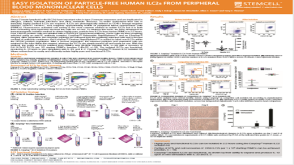 科学海报Easy Isolation of Particle-Free Human ILC2s from Peripheral Blood Mononuclear Cells
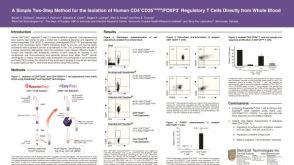 科学海报Isolation of Human CD4+CD25+Bright/Foxp3+ Regulatory T Cells Directly from Whole Blood
 沪公网安备31010102008431号