ABC transporter activities of murine hematopoietic stem cells vary according to their developmental and activation status.
Primitive hematopoietic cells from several species are known to efflux both Hoechst 33342 and Rhodamine-123. We now show that murine hematopoietic stem cells (HSCs) defined by long-term multilineage repopulation assays efflux both dyes variably according to their developmental or activation status. In day 14.5 murine fetal liver,very few HSCs efflux Hoechst 33342 efficiently,and they are thus not detected as side population" (SP) cells. HSCs in mouse fetal liver also fail to efflux Rhodamine-123. Both of these features are retained by most of the HSCs present until 4 weeks after birth but are reversed by 8 weeks of age or after a new HSC population is regenerated in adult mice that receive transplants with murine fetal liver cells. Activation of adult HSCs in vivo following 5-fluorouracil treatment�
View Publication
产品类型:
产品号#:
18756
18756RF
产品名:
EasySep™小鼠SCA1正选试剂盒
RoboSep™ 小鼠SCA1正选试剂盒含滤芯吸头
Maes C et al. (MAY 2006)
The Journal of clinical investigation 116 5 1230--42
Placental growth factor mediates mesenchymal cell development, cartilage turnover, and bone remodeling during fracture repair.
Current therapies for delayed- or nonunion bone fractures are still largely ineffective. Previous studies indicated that the VEGF homolog placental growth factor (PlGF) has a more significant role in disease than in health. Therefore we investigated the role of PlGF in a model of semi-stabilized bone fracture healing. Fracture repair in mice lacking PlGF was impaired and characterized by a massive accumulation of cartilage in the callus,reminiscent of delayed- or nonunion fractures. PlGF was required for the early recruitment of inflammatory cells and the vascularization of the fracture wound. Interestingly,however,PlGF also played a role in the subsequent stages of the repair process. Indeed in vivo and in vitro findings indicated that PlGF induced the proliferation and osteogenic differentiation of mesenchymal progenitors and stimulated cartilage turnover by particular MMPs. Later in the process,PlGF was required for the remodeling of the newly formed bone by stimulating osteoclast differentiation. As PlGF expression was increased throughout the process of bone repair and all the important cell types involved expressed its receptor VEGFR-1,the present data suggest that PlGF is required for mediating and coordinating the key aspects of fracture repair. Therefore PlGF may potentially offer therapeutic advantages for fracture repair.
View Publication
产品类型:
产品号#:
03534
03334
03434
03444
18753
18753RF
产品名:
MethoCult™GF M3534
MethoCult™M3334
MethoCult™GF M3434
MethoCult™GF M3434
Wunderlich M et al. (SEP 2006)
Blood 108 5 1690--7
Human CD34+ cells expressing the inv(16) fusion protein exhibit a myelomonocytic phenotype with greatly enhanced proliferative ability.
The t(16:16) and inv(16) are associated with FAB M4Eo myeloid leukemias and result in fusion of the CBFB gene to the MYH11 gene (encoding smooth muscle myosin heavy chain [SMMHC]). Knockout of CBFbeta causes embryonic lethality due to lack of definitive hematopoiesis. Although knock-in of CBFB-MYH11 is not sufficient to cause disease,expression increases the incidence of leukemia when combined with cooperating events. Although mouse models are valuable tools in the study of leukemogenesis,little is known about the contribution of CBFbeta-SMMHC to human hematopoietic stem and progenitor cell self-renewal. We introduced the CBFbeta-MYH11 cDNA into human CD34+ cells via retroviral transduction. Transduced cells displayed an initial repression of progenitor activity but eventually dominated the culture,resulting in the proliferation of clonal populations for up to 7 months. Long-term cultures displayed a myelomonocytic morphology while retaining multilineage progenitor activity and engraftment in NOD/SCID-B2M-/- mice. Progenitor cells from long-term cultures showed altered expression of genes defining inv(16) identified in microarray studies of human patient samples. This system will be useful in examining the effects of CBFbeta-SMMHC on gene expression in the human preleukemic cell,in characterizing the effect of this oncogene on human stem cell biology,and in defining its contribution to the development of leukemia.
View Publication
产品类型:
产品号#:
04100
18056
18056RF
产品名:
MethoCult™ H4100
Lengi AJ et al. (DEC 2006)
Journal of molecular endocrinology 37 3 421--32
17beta-estradiol downregulates interferon regulatory factor-1 in murine splenocytes.
Interferon regulatory factor-1 (IRF-1) is an important transcription factor that mediates interferon-gamma (IFN-gamma)-induced cell-signaling events. In this study,we examined whether 17beta-estradiol alters IRF-1 in splenic lymphocytes,in view of the immunomodulatory effects of this natural female sex hormone including its ability to alter IFN-gamma levels. We find that IRF-1 expression is markedly downregulated in splenocytes or purified T-cells from estrogen-treated mice at all time points studied when compared with their placebo counterparts. This decrease in IRF-1 in splenocytes from estrogen-treated mice is neither due to upregulation of IRF-1-interfering proteins (nucleophosmin or signal transducer and activator of transcription (STAT)-5) nor due to alternatively spliced IRF-1 mRNA. Given that IFN-gamma is a potent inducer of IRF-1,direct addition of recombinant IFN-gamma to splenocytes from either wild-type or IFN-gamma-knockout mice,or the addition of recombinant IFN-gamma to purified T-cells,was expected to stimulate IRF-1 expression. However,robust expression of IRF-1 in cells from estrogen-treated mice was not seen,unlike what was observed in cells from placebo-treated mice. Diminished IFN-gamma induction of IRF-1 in cells from estrogen-treated mice was noticed despite comparable phosphorylated STAT-1 activation. These studies are the first to show that estrogen regulates IFN-gamma-inducible IRF-1 in lymphoid cells,a finding that may have implications to IFN-gamma-regulated immune and vascular diseases.
View Publication
产品类型:
产品号#:
21000
20119
20155
19751
19751RF
产品名:
RoboSep™- S
RoboSep™ 吸头组件抛光剂
RoboSep™分选管套装(9个塑料管)
Suto A et al. (JUN 2008)
The Journal of experimental medicine 205 6 1369--79
Development and characterization of IL-21-producing CD4+ T cells.
It has recently been shown that interleukin (IL)-21 is produced by Th17 cells,functions as an autocrine growth factor for Th17 cells,and plays critical roles in autoimmune diseases. In this study,we investigated the differentiation and characteristics of IL-21-producing CD4(+) T cells by intracellular staining. Unexpectedly,we found that under Th17-polarizing conditions,the majority of IL-21-producing CD4(+) T cells did not produce IL-17A and -17F. We also found that IL-6 and -21 potently induced the development of IL-21-producing CD4(+) T cells without the induction of IL-4,IFN-gamma,IL-17A,or IL-17F production. On the other hand,TGF-beta inhibited IL-6- and IL-21-induced development of IL-21-producing CD4(+) T cells. IL-2 enhanced the development of IL-21-producing CD4(+) T cells under Th17-polarizing conditions. Finally,IL-21-producing CD4(+) T cells exhibited a stable phenotype of IL-21 production in the presence of IL-6,but retained the potential to produce IL-4 under Th2-polarizing conditions and IL-17A under Th17-polarizing conditions. These results suggest that IL-21-producing CD4(+) T cells exhibit distinct characteristics from Th17 cells and develop preferentially in an IL-6-rich environment devoid of TGF-beta,and that IL-21 functions as an autocrine growth factor for IL-21-producing CD4(+) T cells.
View Publication
产品类型:
产品号#:
21000
20119
20155
19752
19752RF
产品名:
RoboSep™- S
RoboSep™ 吸头组件抛光剂
RoboSep™分选管套装(9个塑料管)
Lambert AA et al. (AUG 2008)
Blood 112 4 1299--307
The C-type lectin surface receptor DCIR acts as a new attachment factor for HIV-1 in dendritic cells and contributes to trans- and cis-infection pathways.
The dynamic interplay between dendritic cells (DCs) and human immunodeficiency virus type-1 (HIV-1) is thought to result in viral dissemination and evasion of antiviral immunity. Although initial observations suggested that the C-type lectin receptor (CLR) DC-SIGN was responsible for the trans-infection function of the virus,subsequent studies demonstrated that trans-infection of CD4(+) T cells with HIV-1 can also occur through DC-SIGN-independent mechanisms. We demonstrate that a cell surface molecule designated DCIR (for DC immunoreceptor),a member of a recently described family of DC-expressing CLRs,can participate in the capture of HIV-1 and promote infection in trans and in cis of autologous CD4(+) T cells from human immature monocyte-derived DCs. The contribution of DCIR to these processes was revealed using DCIR-specific siRNAs and a polyclonal antibody specific for the carbohydrate recognition domain of DCIR. Data from transfection experiments indicated that DCIR acts as a ligand for HIV-1 and is involved in events leading to productive virus infection. Finally,we show that the neck domain of DCIR is important for the DCIR-mediated effect on virus binding and infection. These results point to a possible role for DCIR in HIV-1 pathogenesis by supporting the productive infection of DCs and promoting virus propagation.
View Publication


 EasySep™小鼠TIL(CD45)正选试剂盒




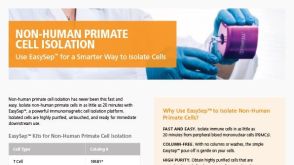 产品手册非人灵长类细胞分选
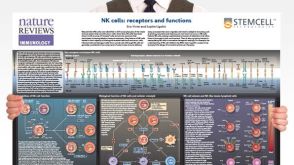 挂图Natural Killer Cells Overview of NK cell receptors, subsets, activation and function
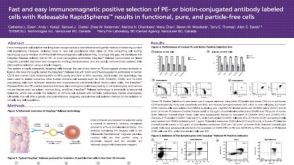 科学海报Fast and Easy Immunomagnetic Positive Selection of PE- or Biotin-Conjugated Antibody Labeled Cells with Releasable RapidSpheres™ Results in Functional, Pure and Particle-Free Cells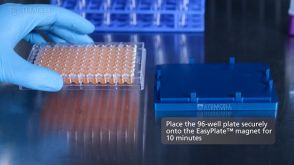


 沪公网安备31010102008431号