Billerbeck E et al. (FEB 2010)
Proceedings of the National Academy of Sciences of the United States of America 107 7 3006--11
Analysis of CD161 expression on human CD8+ T cells defines a distinct functional subset with tissue-homing properties.
CD8(+) T lymphocytes play a key role in host defense,in particular against important persistent viruses,although the critical functional properties of such cells in tissue are not fully defined. We have previously observed that CD8(+) T cells specific for tissue-localized viruses such as hepatitis C virus express high levels of the C-type lectin CD161. To explore the significance of this,we examined CD8(+)CD161(+) T cells in healthy donors and those with hepatitis C virus and defined a population of CD8(+) T cells with distinct homing and functional properties. These cells express high levels of CD161 and a pattern of molecules consistent with type 17 differentiation,including cytokines (e.g.,IL-17,IL-22),transcription factors (e.g.,retinoic acid-related orphan receptor gamma-t,P = 6 x 10(-9); RUNX2,P = 0.004),cytokine receptors (e.g.,IL-23R,P = 2 x 10(-7); IL-18 receptor,P = 4 x 10(-6)),and chemokine receptors (e.g.,CCR6,P = 3 x 10(-8); CXCR6,P = 3 x 10(-7); CCR2,P = 4 x 10(-7)). CD161(+)CD8(+) T cells were markedly enriched in tissue samples and coexpressed IL-17 with high levels of IFN-gamma and/or IL-22. The levels of polyfunctional cells in tissue was most marked in those with mild disease (P = 0.0006). These data define a T cell lineage that is present already in cord blood and represents as many as one in six circulating CD8(+) T cells in normal humans and a substantial fraction of tissue-infiltrating CD8(+) T cells in chronic inflammation. Such cells play a role in the pathogenesis of chronic hepatitis and arthritis and potentially in other infectious and inflammatory diseases of man.
View Publication
产品类型:
产品号#:
19053
19053RF
产品名:
EasySep™人CD8+ T细胞富集试剂盒
RoboSep™ 人CD8+ T细胞富集试剂盒含滤芯吸头
Krummen M et al. (JUL 2010)
Journal of leukocyte biology 88 1 189--99
Release of IL-12 by dendritic cells activated by TLR ligation is dependent on MyD88 signaling, whereas TRIF signaling is indispensable for TLR synergy.
Recently,it has been shown that certain combinations of TLR ligands act in synergy to induce the release of IL-12 by DCs. In this study,we sought to define the critical parameters underlying TLR synergy. Our data show that TLR ligands act synergistically if MyD88- and TRIF-dependent ligands are combined. TLR4 uses both of these adaptor molecules,thus activation via TLR4 proved to be a synergistic event on its own. TLR synergy did not affect all aspects of DC activation but enhanced primarily the release of certain cytokines,particularly IL-12,whereas the expression of costimulatory molecules remained unchanged. Consequently,synergistic activation of DC did not affect their ability to induce T cell proliferation but resulted in T(H)1-biased responses in vitro and in vivo. Furthermore,we examined the impact of TLR ligand combinations on primary DC in vitro but observed only modest effects with a combination of CpG + Poly (I:C). However,noticeable synergy in terms of IL-12 production by DCs was detectable in vivo after systemic administration of CpG + Poly (I:C). Finally,we show that synergy is partially dependent on IFNAR signaling but does not require the release of IFNs to the enviroment,suggesting an autocrine action of type I IFNs.
View Publication
产品类型:
产品号#:
18752
18752RF
21000
20119
20155
18758
18758RF
18768
18768RF
产品名:
RoboSep™- S
RoboSep™ 吸头组件抛光剂
RoboSep™分选管套装(9个塑料管)
Martin G et al. (JUN 2007)
Journal of virology 81 11 5872--81
Human immunodeficiency virus type 1-associated CD40 ligand transactivates B lymphocytes and promotes infection of CD4+ T cells.
Abnormal activation of B lymphocytes is a feature commonly seen in human immunodeficiency virus type 1 (HIV-1)-infected persons. However,the mechanism(s) responsible for this dysfunction is still poorly understood. Having recently shown that CD40L,the ligand for CD40,is inserted within emerging HIV-1 particles,we hypothesized that the contact between virus-anchored host CD40L and CD40 on the surface of B lymphocytes might result in the activation of this cell type. We report here that CD40L-bearing viruses,but not isogenic virions lacking host-derived CD40L,can induce immunoglobulin G and interleukin-6 production. Furthermore,such viral entities were found to induce B-cell homotypic adhesion. These effects were paralleled at the intracellular level by the nuclear translocation of the ubiquitous transcription factor NF-kappaB. The presence of host-derived CD40L within virions resulted in an increased virus attachment to B cells and a more-efficient B-cell-mediated transfer of HIV-1 to autologous CD4(+) T lymphocytes. All the above processes were independent of the virus-encoded envelope glycoproteins. Altogether,the data gathered from this series of investigations suggest that the incorporation of host-encoded CD40L in HIV-1 is likely to play a role in the B-cell abnormalities that are seen in infected individuals.
View Publication
产品类型:
产品号#:
19052
19052RF
19054
19054RF
产品名:
EasySep™人CD4+ T细胞富集试剂盒
RoboSep™ 人CD4+ T细胞富集试剂盒含滤芯吸头
EasySep™人B细胞富集试剂盒
RoboSep™ 人B细胞富集试剂盒含滤芯吸头
Allan LL et al. (MAY 2011)
Journal of immunology (Baltimore,Md. : 1950) 186 9 5261--72
CD1d and CD1c expression in human B cells is regulated by activation and retinoic acid receptor signaling.
B cell activation and Ab production in response to protein Ags requires presentation of peptides for recruitment of T cell help. We and others have recently demonstrated that B cells can also acquire innate help by presenting lipid Ags via CD1d to NKT cells. Given the newfound contribution of NKT cells to humoral immunity,we sought to identify the pathways that regulate CD1 molecule expression in human B cells. We show that ex vivo,activated and memory B cells expressed lower levels of CD1d compared with resting,naive,and marginal zone-like B cells. In vitro,CD1d was downregulated by all forms of B cell activation,leaving a narrow temporal window in which B cells could activate NKT cells. CD1c expression and function also decreased following activation by CD40L alone,whereas activation via the BCR significantly upregulated CD1c,particularly on marginal zone-like B cells. We found that the CD40L-induced downregulation of CD1d and CD1c correlated with diminished expression of retinoic acid receptor α (RARα) response genes,an effect that was reversed by RARα agonists. However,BCR-induced upregulation of CD1c was independent of the RAR pathway. Our findings that both CD1d and CD1c are upregulated by RARα signaling in human B cells is distinct from effects reported in dendritic cells,in which CD1c is inversely downregulated. One functional consequence of CD1d upregulation by retinoic acid was NKT cell cytotoxicity toward B cells. These results are central to our understanding of how CD1-restricted T cells may control humoral immunity.
View Publication
产品类型:
产品号#:
01700
01705
18054
18054RF
01702
产品名:
ALDEFLUOR™ 试剂盒
ALDEFLUOR™ DEAB试剂, 1.5 mM, 1 mL
ALDEFLUOR™检测缓冲液
van Wilgenburg B et al. (AUG 2013)
PLoS ONE 8 8 e71098
Efficient, Long Term Production of Monocyte-Derived Macrophages from Human Pluripotent Stem Cells under Partly-Defined and Fully-Defined Conditions
Human macrophages are specialised hosts for HIV-1,dengue virus,Leishmania and Mycobacterium tuberculosis. Yet macrophage research is hampered by lack of appropriate cell models for modelling infection by these human pathogens,because available myeloid cell lines are,by definition,not terminally differentiated like tissue macrophages. We describe here a method for deriving monocytes and macrophages from human Pluripotent Stem Cells which improves on previously published protocols in that it uses entirely defined,feeder- and serum-free culture conditions and produces very consistent,pure,high yields across both human Embryonic Stem Cell (hESC) and multiple human induced Pluripotent Stem Cell (hiPSC) lines over time periods of up to one year. Cumulatively,up to ∼3×10(7) monocytes can be harvested per 6-well plate. The monocytes produced are most closely similar to the major blood monocyte (CD14(+),CD16(low),CD163(+)). Differentiation with M-CSF produces macrophages that are highly phagocytic,HIV-1-infectable,and upon activation produce a pro-inflammatory cytokine profile similar to blood monocyte-derived macrophages. Macrophages are notoriously hard to genetically manipulate,as they recognise foreign nucleic acids; the lentivector system described here overcomes this,as pluripotent stem cells can be relatively simply genetically manipulated for efficient transgene expression in the differentiated cells,surmounting issues of transgene silencing. Overall,the method we describe here is an efficient,effective,scalable system for the reproducible production and genetic modification of human macrophages,facilitating the interrogation of human macrophage biology.
View Publication
产品类型:
产品号#:
05850
05857
05870
05875
85850
85857
85870
85875
27845
27945
27840
27865
27940
27965
产品名:
mTeSR™1
mTeSR™1
Figueroa G et al. (OCT 2016)
Journal of visualized experiments : JoVE 116
Characterization of Human Monocyte-derived Dendritic Cells by Imaging Flow Cytometry: A Comparison between Two Monocyte Isolation Protocols.
Dendritic cells (DCs) are antigen presenting cells of the immune system that play a crucial role in lymphocyte responses,host defense mechanisms,and pathogenesis of inflammation. Isolation and study of DCs have been important in biological research because of their distinctive features. Although they are essential key mediators of the immune system,DCs are very rare in blood,accounting for approximately 0.1 - 1% of total blood mononuclear cells. Therefore,alternatives for isolation methods rely on the differentiation of DCs from monocytes isolated from peripheral blood mononuclear cells (PBMCs). The utilization of proper isolation techniques that combine simplicity,affordability,high purity,and high yield of cells is imperative to consider. In the current study,two distinct methods for the generation of DCs will be compared. Monocytes were selected by adherence or negatively enriched using magnetic separation procedure followed by differentiation into DCs with IL-4 and GM-CSF. Monocyte and MDDC viability,proliferation,and phenotype were assessed using viability dyes,MTT assay,and CD11c/ CD14 surface marker analysis by imaging flow cytometry. Although the magnetic separation method yielded a significant higher percentage of monocytes with higher proliferative capacity when compared to the adhesion method,the findings have demonstrated the ability of both techniques to simultaneously generate monocytes that are capable of proliferating and differentiating into viable CD11c+ MDDCs after seven days in culture. Both methods yielded textgreater 70% CD11c+ MDDCs. Therefore,our results provide insights that contribute to the development of reliable methods for isolation and characterization of human DCs.
View Publication
产品类型:
产品号#:
19059
19059RF
产品名:
EasySep™人单核细胞富集试剂盒
RoboSep™ 人单核细胞富集试剂盒含滤芯吸头
Lambert AA et al. (AUG 2008)
Blood 112 4 1299--307
The C-type lectin surface receptor DCIR acts as a new attachment factor for HIV-1 in dendritic cells and contributes to trans- and cis-infection pathways.
The dynamic interplay between dendritic cells (DCs) and human immunodeficiency virus type-1 (HIV-1) is thought to result in viral dissemination and evasion of antiviral immunity. Although initial observations suggested that the C-type lectin receptor (CLR) DC-SIGN was responsible for the trans-infection function of the virus,subsequent studies demonstrated that trans-infection of CD4(+) T cells with HIV-1 can also occur through DC-SIGN-independent mechanisms. We demonstrate that a cell surface molecule designated DCIR (for DC immunoreceptor),a member of a recently described family of DC-expressing CLRs,can participate in the capture of HIV-1 and promote infection in trans and in cis of autologous CD4(+) T cells from human immature monocyte-derived DCs. The contribution of DCIR to these processes was revealed using DCIR-specific siRNAs and a polyclonal antibody specific for the carbohydrate recognition domain of DCIR. Data from transfection experiments indicated that DCIR acts as a ligand for HIV-1 and is involved in events leading to productive virus infection. Finally,we show that the neck domain of DCIR is important for the DCIR-mediated effect on virus binding and infection. These results point to a possible role for DCIR in HIV-1 pathogenesis by supporting the productive infection of DCs and promoting virus propagation.
View Publication
产品类型:
产品号#:
18058
18058RF
19052
19052RF
产品名:
EasySep™人CD4+ T细胞富集试剂盒
RoboSep™ 人CD4+ T细胞富集试剂盒含滤芯吸头
Halim L et al. (JUL 2017)
Cell reports 20 3 757--770
An Atlas of Human Regulatory T Helper-like Cells Reveals Features of Th2-like Tregs that Support a Tumorigenic Environment.
Regulatory T cells (Tregs) play a pivotal role in maintaining immunological tolerance,but they can also play a detrimental role by preventing antitumor responses. Here,we characterized T helper (Th)-like Treg subsets to further delineate their biological function and tissue distribution,focusing on their possible contribution to disease states. RNA sequencing and functional assays revealed that Th2-like Tregs displayed higher viability and autocrine interleukin-2 (IL-2)-mediated activation than other subsets. Th2-like Tregs were preferentially found in tissues rather than circulation and exhibited the highest migratory capacity toward chemokines enriched at tumor sites. These cellular responses led us to hypothesize that this subset could play a role in maintaining a tumorigenic environment. Concurrently,Th2-like Tregs were enriched specifically in malignant tissues from patients with melanoma and colorectal cancer compared to healthy tissue. Overall,our results suggest that Th2-like Tregs may contribute to a tumorigenic environment due to their increased cell survival,higher migratory capacity,and selective T-effector suppressive ability.
View Publication
产品类型:
产品号#:
15022
15062
产品名:
RosetteSep™人CD4+ T细胞富集抗体混合物
RosetteSep™人CD4+ T细胞富集抗体混合物
Imbeault M et al. (JAN 2009)
Retrovirology 6 5
Microarray study reveals that HIV-1 induces rapid type-I interferon-dependent p53 mRNA up-regulation in human primary CD4+ T cells.
BACKGROUND: Infection with HIV-1 has been shown to alter expression of a large array of host cell genes. However,previous studies aimed at investigating the putative HIV-1-induced modulation of host gene expression have been mostly performed in established human cell lines. To better approximate natural conditions,we monitored gene expression changes in a cell population highly enriched in human primary CD4+ T lymphocytes exposed to HIV-1 using commercial oligonucleotide microarrays from Affymetrix. RESULTS: We report here that HIV-1 influences expression of genes related to many important biological processes such as DNA repair,cellular cycle,RNA metabolism and apoptosis. Notably,expression of the p53 tumor suppressor and genes involved in p53 homeostasis such as GADD34 were up-regulated by HIV-1 at the mRNA level. This observation is distinct from the previously reported p53 phosphorylation and stabilization at the protein level,which precedes HIV-1-induced apoptosis. We present evidence that the HIV-1-mediated increase in p53 gene expression is associated with virus-mediated induction of type-I interferon (i.e. IFN-alpha and IFN-beta). CONCLUSION: These observations have important implications for our understanding of HIV-1 pathogenesis,particularly in respect to the virus-induced depletion of CD4+ T cells.
View Publication
产品类型:
产品号#:
15022
15062
产品名:
RosetteSep™人CD4+ T细胞富集抗体混合物
RosetteSep™人CD4+ T细胞富集抗体混合物
Tareen SU et al. (MAR 2014)
Molecular therapy : the journal of the American Society of Gene Therapy 22 3 575--87
Design of a novel integration-deficient lentivector technology that incorporates genetic and posttranslational elements to target human dendritic cells.
As sentinels of the immune system,dendritic cells (DCs) play an essential role in regulating cellular immune responses. One of the main challenges of developing DC-targeted therapies includes the delivery of antigen to DCs in order to promote the activation of antigen-specific effector CD8 T cells. With the goal of creating antigen-directed immunotherapeutics that can be safely administered directly to patients,Immune Design has developed a platform of novel integration-deficient lentiviral vectors that target and deliver antigen-encoding nucleic acids to human DCs. This platform,termed ID-VP02,utilizes a novel genetic variant of a Sindbis virus envelope glycoprotein with posttranslational carbohydrate modifications in combination with Vpx,a SIVmac viral accessory protein,to achieve efficient targeting and transduction of human DCs. In addition,ID-VP02 incorporates safety features in its design that include two redundant mechanisms to render ID-VP02 integration-deficient. Here,we describe the characteristics that allow ID-VP02 to specifically transduce human DCs,and the advances that ID-VP02 brings to conventional third-generation lentiviral vector design as well as demonstrate upstream production yields that will enable manufacturing feasibility studies to be conducted.
View Publication
产品类型:
产品号#:
70034
70042
200-0167
200-0166
产品名:
冻存的人外周血单核细胞
冻存的人外周血巨噬细胞
人外周血单核细胞,冷冻
人外周血单核细胞,冷冻
Voo KS et al. (JUL 2014)
The Journal of Immunology 193 2 627--34
Targeting of TLRs inhibits CD4+ regulatory T cell function and activates lymphocytes in human peripheral blood mononuclear cells.
Accumulating evidence suggests elements within tumors induce exhaustion of effector T cells and infiltration of immunosuppressive regulatory T cells (Tregs),thus preventing the development of durable antitumor immunity. Therefore,the discovery of agents that simultaneously block Treg suppressive function and reinvigorate effector function of lymphocytes is key to the development of effective cancer immunotherapy. Previous studies have shown that TLR ligands (TLRLs) could modulate the function of these T cell targets; however,those studies relied on cell-free or accessory cell-based assay systems that do not accurately reflect in vivo responses. In contrast,we used a human PBMC-based proliferation assay system to simultaneously monitor the effect of TLRLs on T cells (CD4(+),CD8(+),Tregs),B cells,and NK cells,which gave different and even conflicting results. We found that the TLR7/8L:CL097 could simultaneously activate CD8(+) T cells,B cells,and NK cells plus block Treg suppression of T cells and B cells. The TLRLs TLR1/2L:Pam3CSK4,TLR5L:flagellin,TLR4L:LPS,and TLR8/7L:CL075 also blocked Treg suppression of CD4(+) or CD8(+) T cell proliferation,but not B cell proliferation. Besides CL097,TLR2L:PGN,CL075,and TLR9L:CpG-A,CpG-B,and CpG-C) were strong activators of NK cells. Importantly,we found that Pam3CSK4 could: 1) activate CD4(+) T cell proliferation,2) inhibit the expansion of IL-10(+) naturally occurring FOXP3(+) Tregs and induction of IL-10(+) CD4(+) Tregs (IL-10-producing type 1 Treg),and 3) block naturally occurring FOXP3(+) Tregs suppressive function. Our results suggest these agents could serve as adjuvants to enhance the efficacy of current immunotherapeutic strategies in cancer patients.
View Publication


 EasySep™小鼠TIL(CD45)正选试剂盒




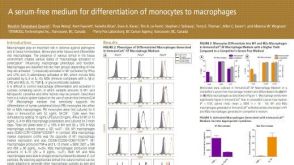 科学海报A Serum-Free Medium for Differentiation of Monocytes to Macrophages
 沪公网安备31010102008431号