Ramos TV et al. (SEP 2014)
Current protocols in cell biology 64 A.3I.1--8
Standardized cryopreservation of human primary cells.
Cryopreservation is the use of low temperatures to preserve structurally intact living cells. The cells that survive the thermodynamic journey from the 37 °C incubator to the -196 °C liquid nitrogen storage tank are free from the influences of time. Thus,cryopreservation is a critical component of cell culture and cell manufacturing protocols. Successful cryopreservation of human cells requires that the cells be derived from patient samples that are collected in a standardized manner,and carefully handled from blood draw through cell isolation. Furthermore,proper equipment must be in place to ensure consistency,reproducibility,and sterility. In addition,the correct choice and amount of cryoprotectant agent must be added at the correct temperature,and a controlled rate of freezing (most commonly 1 °C/min) must be applied prior to a standardized method of cryogenic storage. This appendix describes how human primary cells can be frozen for long-term storage and thawed for growth in a tissue culture vessel.
View Publication
R. J. Komban et al. ( 2019)
Nature communications 10 1 2423
Activated Peyer's patch B cells sample antigen directly from M cells in the subepithelial dome.
The germinal center (GC) reaction in Peyer's patches (PP) requires continuous access to antigens,but how this is achieved is not known. Here we show that activated antigen-specific CCR6+CCR1+GL7- B cells make close contact with M cells in the subepithelial dome (SED). Using in situ photoactivation analysis of antigen-specific SED B cells,we find migration of cells towards the GC. Following antigen injection into ligated intestinal loops containing PPs,40{\%} of antigen-specific SED B cells bind antigen within 2 h,whereas unspecifc cells do not,indicating B cell-receptor involvment. Antigen-loading is not observed in M cell-deficient mice,but is unperturbed in mice depleted of classical dendritic cells (DC). Thus,we report a M cell-B cell antigen-specific transporting pathway in PP that is independent of DC. We propose that this antigen transporting pathway has a critical role in gut IgA responses,and should be taken into account when developing mucosal vaccines.
View Publication
产品类型:
产品号#:
19854
19854RF
产品名:
EasySep™小鼠B细胞分选试剂盒
RoboSep™ 小鼠B细胞分选试剂盒
Carlsten M et al. (OCT 2009)
Journal of immunology (Baltimore,Md. : 1950) 183 8 4921--30
Primary human tumor cells expressing CD155 impair tumor targeting by down-regulating DNAM-1 on NK cells.
The activating NK cell receptor DNAX accessory molecule-1 (DNAM-1) contributes to tumor immune surveillance and plays a crucial role in NK cell-mediated recognition of several types of human tumors,including ovarian carcinoma. Here,we have analyzed the receptor repertoire and functional integrity of NK cells in peritoneal effusions from patients with ovarian carcinoma. Relative to autologous peripheral blood NK cells,tumor-associated NK cells expressed reduced levels of the DNAM-1,2B4,and CD16 receptors and were hyporesponsive to HLA class I-deficient K562 cells and to coactivation via DNAM-1 and 2B4. Moreover,tumor-associated NK cells were also refractory to CD16 receptor stimulation,resulting in diminished Ab-dependent cellular cytotoxicity against autologous tumor cells. Coincubation of NK cells with ovarian carcinoma cells expressing the DNAM-1 ligand CD155 led to reduction of DNAM-1 expression. Therefore,NK cell-mediated rejection of ovarian carcinoma may be limited by perturbed DNAM-1 expression on tumor-associated NK cells induced by chronic ligand exposure. Thus,these data support the notion that tumor-induced alterations of activating NK cell receptor expression may hamper immune surveillance and promote tumor progression.
View Publication
产品类型:
产品号#:
18259
18259RF
18289
18289RF
18551
18551RF
18561
产品名:
Grimaldi JC et al. (JUN 1999)
Journal of Leukocyte Biology 65 6 846--53
Depletion of eosinophils in mice through the use of antibodies specific for C-C chemokine receptor 3 (CCR3).
We have generated rat monoclonal antibodies specific for the mouse eotaxin receptor,C-C chemokine receptor 3 (CCR3). Several anti-CCR3 mAbs proved to be useful for in vivo depletion of CCR3-expressing cells and immunofluorescent staining. In vivo CCR3 mAbs of the IgG2b isotype substantially depleted blood eosinophil levels in Nippostrongyus brasiliensis-infected mice. Repeated anti-CCR3 mAb treatment in these mice significantly reduced tissue eosinophilia in the lung tissue and bronchoalveolar lavage fluid. Flow cytometry revealed that mCCR3 was expressed on eosinophils but not on stem cells,dendritic cells,or cells from the thymus,lymph node,or spleen of normal mice. Unlike human Th2 cells,mouse Th2 cells did not express detectable levels of CCR3 nor did they give a measurable response to eotaxin. None of the mAbs were antagonists or agonists of CCR3 calcium mobilization. To our knowledge,the antibodies described here are the first mAbs reported to be specific for mouse eosinophils and to be readily applicable for the detection,isolation,and in vivo depletion of eosinophils.
View Publication
产品类型:
产品号#:
03800
03801
03802
03803
03804
03805
03806
产品名:
ClonaCell™-HY杂交瘤试剂盒
ClonaCell™-HY培养基A
ClonaCell™-HY 培养基 B
ClonaCell™-HY 培养基 C
ClonaCell™-HY 培养基 D
ClonaCell™-HY 培养基 E
ClonaCell™-HY PEG
Sasaki H et al. (FEB 2005)
Blood 105 3 1204--13
Overexpression of a cell adhesion molecule, TSLC1, as a possible molecular marker for acute-type adult T-cell leukemia.
Adult T-cell leukemia (ATL) caused by human T-cell leukemia virus type 1 (HTLV-1) infection,occurs in 2% to 4% of the HTLV-1 carriers with a long latent period,suggesting that additional alterations participate in the development of ATL. To characterize and identify novel markers of ATL,we examined the expression profiles of more than 12 000 genes in 8 cases of acute-type ATL using microarray. One hundred ninety-two genes containing interleukin 2 (IL-2) receptor alpha were up-regulated more than 2-fold compared with CD4(+) and CD4(+)CD45RO(+) T cells,and tumor suppressor in lung cancer 1 (TSLC1),caveolin 1,and prostaglandin D2 synthase showed increased expression of more than 30-fold. TSLC1 is a cell adhesion molecule originally identified as a tumor suppressor in the lung but lacks its expression in normal or activated T cells. We confirmed ectopic expression of the TSLC1 in all acute-type ATL cells and in 7 of 10 ATL- or HTLV-1-infected T-cell lines. Introduction of TSLC1 into a human ATL cell line ED enhanced both self-aggregation and adhesion ability to vascular endothelial cells. These results suggested that the ectopic expression of TSLC1 could provide a novel marker for acute-type ATL and may participate in tissue invasion,a characteristic feature of the malignant ATL cells.
View Publication
Muthuswamy R et al. (JUL 2008)
Cancer research 68 14 5972--8
Ability of mature dendritic cells to interact with regulatory T cells is imprinted during maturation.
Preferential activation of regulatory T (Treg) cells limits autoimmune tissue damage during chronic immune responses but can also facilitate tumor growth. Here,we show that tissue-produced inflammatory mediators prime maturing dendritic cells (DC) for the differential ability of attracting anti-inflammatory Treg cells. Our data show that prostaglandin E(2) (PGE(2)),a factor overproduced in chronic inflammation and cancer,induces stable Treg-attracting properties in maturing DC,mediated by CCL22. The elevated production of CCL22 by PGE(2)-matured DC persists after the removal of PGE(2) and is further elevated after secondary stimulation of DC in a neutral environment. This PGE(2)-induced overproduction of CCL22 and the resulting attraction of FOXP3(+) Tregs are counteracted by IFN alpha,a mediator of acute inflammation,which also restores the ability of the PGE(2)-exposed DC to secrete the Th1-attracting chemokines: CXCL9,CXCL10,CXCL11,and CCL5. In accordance with these observations,different DCs clinically used as cancer vaccines show different Treg-recruiting abilities,with PGE(2)-matured DC,but not type 1-polarized DC,generated in the presence of type I and type II IFNs,showing high Treg-attracting activity. The current data,showing that the ability of mature DC to interact with Treg cells is predetermined at the stage of DC maturation,pave the way to preferentially target the regulatory versus proinflammatory T cells in autoimmunity and transplantation,as opposed to intracellular infections and cancer.
View Publication


 EasySep™小鼠TIL(CD45)正选试剂盒




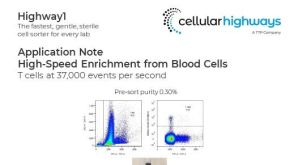


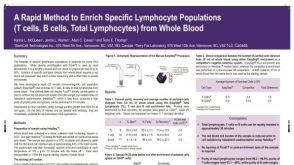 科学海报Cell Enrichment of Specific Lymphocyte Populations (T Cells, B Cells, Total Lymphocytes) from Whole Blood

 沪公网安备31010102008431号