Role for the conserved N-terminal cysteines in the anti-chemokine activities by the chemokine-like protein MC148R1 encoded by Molluscum contagiosum virus.
Molluscum contagiosum poxvirus (MCV) type 1 and type 2 encode two chemokine-like proteins MC148R1 and MC148R2. It is believed that MC148R proteins function by blocking the inflammatory response. However,the mechanism of the proposed biological activities of MC148R proteins and the role of the additional C-terminal cysteines that do not exist in other chemokines are not understood. Here,we demonstrated in two different assay systems that His-tagged MC148R1 displaces the interaction between CXCL12α and CXCR4. The N-terminal cysteines but not the additional C-terminal cysteines modulate this displacement. His-tagged MC148R1 blocked both CXCL12α-mediated and MIP-1α-mediated chemotaxis. In contrast,MC148R2 blocked MIP-1α-mediated but not CXCL12α-mediated chemotaxis. Immunoprecipitation by antibodies to MC148R1 or CXCL12α followed by immunoblotting and detection by antibodies to the other protein demonstrated physical interaction of His-tagged CXCL12α and His-tagged MC148R1. Interaction with chemokines might mask the receptor interaction site resulting in decreased binding and impairment of the biological activities.
View Publication
产品类型:
产品号#:
70025
70025.1
70025.2
70025.3
70047
70047.1
70047.2
70048
70048.1
70048.2
产品名:
冻存的人外周血单个核细胞
冻存的人外周血单个核细胞
冻存的人外周血单个核细胞
冻存的人外周血单个核细胞
Asokan R et al. (JUL 2006)
Journal of immunology (Baltimore,Md. : 1950) 177 1 383--94
Characterization of human complement receptor type 2 (CR2/CD21) as a receptor for IFN-alpha: a potential role in systemic lupus erythematosus.
Human complement receptor type 2 (CR2/CD21) is a B lymphocyte membrane glycoprotein that plays a central role in the immune responses to foreign Ags as well as the development of autoimmunity to nuclear Ags in systemic lupus erythematosus. In addition to these three well-characterized ligands,C3d/iC3b,EBV-gp350,and CD23,a previous study has identified CR2 as a potential receptor for IFN-alpha. IFN-alpha,a multifunctional cytokine important in the innate immune system,has recently been proposed to play a major pathogenic role in the development of systemic lupus erythematosus in humans and mice. In this study,we have shown using surface plasmon resonance and ELISA approaches that CR2 will bind IFN-alpha in the same affinity range as the other three well-characterized ligands studied in parallel. In addition,we show that IFN-alpha interacts with short consensus repeat domains 1 and 2 in a region that serves as the ligand binding site for C3d/iC3b,EBV-gp350,and CD23. Finally,we show that treatment of purified human peripheral blood B cells with the inhibitory anti-CR2 mAb 171 diminishes the induction of IFN-alpha-responsive genes. Thus,IFN-alpha represents a fourth class of extracellular ligands for CR2 and interacts with the same domain as the other three ligands. Defining the role of CR2 as compared with the well-characterized type 1 IFN-alpha receptor 1 and 2 in mediating innate immune and autoimmune roles of this cytokine should provide additional insights into the biologic roles of this interaction.
View Publication
产品类型:
产品号#:
15024
15064
产品名:
RosetteSep™人B细胞富集抗体混合物
RosetteSep™人B细胞富集抗体混合物
Mitchell WB et al. (MAY 2007)
Blood 109 9 3725--32
Mapping early conformational changes in alphaIIb and beta3 during biogenesis reveals a potential mechanism for alphaIIbbeta3 adopting its bent conformation.
Current evidence supports a model in which the low-affinity state of the platelet integrin alphaIIbbeta3 results from alphaIIbbeta3 adopting a bent conformation. To assess alphaIIbbeta3 biogenesis and how alphaIIbbeta3 initially adopts the bent conformation,we mapped the conformational states occupied by alphaIIb and beta3 during biogenesis using conformation-specific monoclonal antibodies (mAbs). We found that alphaIIbbeta3 complex formation was not limited by the availability of either free pro-alphaIIb or free beta3,suggesting that other molecules,perhaps chaperones,control complex formation. Five beta3-specific,ligand-induced binding site (LIBS) mAbs reacted with much or all free beta3 but not with beta3 when in complex with mature alphaIIb,suggesting that beta3 adopts its mature conformation only after complex formation. Conversely,2 alphaIIb-specific LIBS mAbs directed against the alphaIIb Calf-2 region adjacent to the membrane reacted with only minor fractions of free pro-alphaIIb,raising the possibility that pro-alphaIIb adopts a bent conformation early in biogenesis. Our data suggest a working model in which pro-alphaIIb adopts a bent conformation soon after synthesis,and then beta3 assumes its bent conformation by virtue of its interaction with the bent pro-alphaIIb.
View Publication
产品类型:
产品号#:
15026
15066
产品名:
RosetteSep™人造血祖细胞富集抗体混合物
RosetteSep™人造血祖细胞富集抗体混合物
Peters PJ et al. (JUL 2006)
Journal of virology 80 13 6324--32
Non-macrophage-tropic human immunodeficiency virus type 1 R5 envelopes predominate in blood, lymph nodes, and semen: implications for transmission and pathogenesis.
Human immunodeficiency virus type 1 (HIV-1) R5 isolates that predominantly use CCR5 as a coreceptor are frequently described as macrophage tropic. Here,we compare macrophage tropism conferred by HIV-1 R5 envelopes that were derived directly by PCR from patient tissue. This approach avoids potentially selective culture protocols used in virus isolation. Envelopes were amplified (i) from blood and semen of adult patients and (ii) from plasma of pediatric patients. The phenotypes of these envelopes were compared to those conferred by an extended panel of envelopes derived from brain and lymph node that we reported previously. Our results show that R5 envelopes vary by up to 1,000-fold in their capacity to confer infection of primary macrophages. Highly macrophage-tropic envelopes were predominate in brain but were infrequent in semen,blood,and lymph node samples. We also confirmed that the presence of N283 in the C2 CD4 binding site of gp120 is associated with HIV-1 envelopes from the brain but absent from macrophage-tropic envelopes amplified from blood and semen. Finally,we compared infection of macrophages,CD4(+) T cells,and peripheral blood mononuclear cells (PBMCs) conferred by macrophage-tropic and non-macrophage-tropic envelopes in the context of full-length replication competent viral clones. Non-macrophage-tropic envelopes conferred low-level infection of macrophages yet infected CD4(+) T cells and PBMCs as efficiently as highly macrophage-tropic brain envelopes. The lack of macrophage tropism for the majority of the envelopes amplified from lymph node,blood,and semen is striking and contrasts with the current consensus that R5 primary isolates are generally macrophage tropic. The extensive variation in R5 tropism reported here is likely to have an important impact on pathogenesis and on the capacity of HIV-1 to transmit.
View Publication
产品类型:
产品号#:
19052
19052RF
产品名:
EasySep™人CD4+ T细胞富集试剂盒
RoboSep™ 人CD4+ T细胞富集试剂盒含滤芯吸头
Gleeson LE et al. (MAR 2016)
Journal of Immunology 196 6 2444--9
Cutting Edge: Mycobacterium tuberculosis Induces Aerobic Glycolysis in Human Alveolar Macrophages That Is Required for Control of Intracellular Bacillary Replication.
Recent advances in immunometabolism link metabolic changes in stimulated macrophages to production of IL-1β,a crucial cytokine in the innate immune response to Mycobacterium tuberculosis. To investigate this pathway in the host response to M. tuberculosis,we performed metabolic and functional studies on human alveolar macrophages,human monocyte-derived macrophages,and murine bone marrow-derived macrophages following infection with the bacillus in vitro. M. tuberculosis infection induced a shift from oxidative phosphorylation to aerobic glycolysis in macrophages. Inhibition of this shift resulted in decreased levels of proinflammatory IL-1β and decreased transcription of PTGS2,increased levels of anti-inflammatory IL-10,and increased intracellular bacillary survival. Blockade or absence of IL-1R negated the impact of aerobic glycolysis on intracellular bacillary survival,demonstrating that infection-induced glycolysis limits M. tuberculosis survival in macrophages through induction of IL-1β. Drugs that manipulate host metabolism may be exploited as adjuvants for future therapeutic and vaccination strategies.
View Publication
产品类型:
产品号#:
19359
19359RF
100-0697
产品名:
EasySep™人单核细胞分选试剂盒
RoboSep™ 人单核细胞分选试剂盒
EasySep™人单核细胞分选试剂盒
Hidalgo LG et al. (MAR 2008)
American journal of transplantation : official journal of the American Society of Transplantation and the American Society of Transplant Surgeons 8 3 627--36
The transcriptome of human cytotoxic T cells: similarities and disparities among allostimulated CD4(+) CTL, CD8(+) CTL and NK cells.
Transcripts expressed in cytotoxic T lymphocytes (CTL) have mechanistic and diagnostic importance in transplantation. We used microarrays to select CTL-associated transcripts (CATs) expressed in human CD4(+) CTL,CD8(+) CTL and NK cells,excluding transcripts expressed in B cells,monocytes and kidney. This generated three transcript sets: CD4(+)-associated,CD8(+)-associated and NK-associated. Surprisingly,many CATs were expressed in effector memory cells e.g. granzyme B/GZMB,interferon-gamma/IFNG. Transcript expression was very similar between CD4(+) and CD8(+) CTL. There were no transcripts highly selective for CD4(+) CTL or CD8(+) CTL: for example,cytotoxic molecule transcripts (perforin,granzymes,granulysin) were shared between CD8(+) CTL and CD4(+) CTL although expression remained higher in CD8(+) CTL. Transcripts that differentiated between CD8(+) CTL and CD4(+) CTL were primarily those shared between CD8(+) CTL and NK cells (e.g. NK receptors KLRC1,KLRC3,KLRD1,KLRK1). No transcripts could differentiate CD4(+) CTL from CD8(+) CTL but NK cell-associated transcripts could differentiate NK cells from CTL. This study serves as a foundation for the interpretation of CATs in rejecting allografts and highlights the extensive sharing of CATs among CD4(+) CTL,CD8(+) CTL and effector memory T cells.
View Publication
产品类型:
产品号#:
18058
18058RF
19053
19053RF
19052
19052RF
19055
19055RF
19054
19054RF
产品名:
EasySep™人CD8+ T细胞富集试剂盒
RoboSep™ 人CD8+ T细胞富集试剂盒含滤芯吸头
EasySep™人CD4+ T细胞富集试剂盒
RoboSep™ 人CD4+ T细胞富集试剂盒含滤芯吸头
EasySep™人NK细胞富集试剂盒
RoboSep™ 人NK细胞富集试剂盒含滤芯吸头
EasySep™人B细胞富集试剂盒
RoboSep™ 人B细胞富集试剂盒含滤芯吸头
Crispí et al. (OCT 2009)
Journal of immunology (Baltimore,Md. : 1950) 183 7 4675--81
Human TCR-alpha beta+ CD4- CD8- T cells can derive from CD8+ T cells and display an inflammatory effector phenotype.
The origin and function of human double negative (DN) TCR-alphabeta+ T cells is unknown. They are thought to contribute to the pathogenesis of systemic lupus erythematosus because they expand and accumulate in inflamed organs. In this study,we provide evidence that human TCR-alphabeta+ CD4- CD8- DN T cells can derive from activated CD8+ T cells. Freshly isolated TCR-alphabeta+ DN T cells display a distinct gene expression and cytokine production profile. DN cells isolated from peripheral blood as well as DN cells derived in vitro from CD8+ T cells produce a defined array of proinflammatory mediators that includes IL-1beta,IL-17,IFN-gamma,CXCL3,and CXCL2. These results indicate that,upon activation,CD8+ T cells have the capacity to acquire a distinct phenotype that grants them inflammatory capacity.
View Publication
Inoue S et al. (AUG 2006)
Cancer research 66 15 7741--7
Inhibitory effects of B cells on antitumor immunity.
B-cell functions in antitumor immunity are not well understood. In this study,we evaluated the role of B cells in the development of antitumor immunity using Friend murine leukemia virus gag-expressing mouse EL-4 (EL-4 gag),D5 mouse melanoma,or MCA304 mouse sarcoma cells. To screen tumors for susceptibility to B-cell-deficient immune environments,spleen cells from naive C57BL/6 [wild-type (WT)] and B-cell knockout (BKO) mice were cultured with irradiated tumor cells in vitro. When cells were stimulated with EL-4 gag or D5 (but not MCA304 tumors),IFN-gamma production from CD8 T cells and natural killer cells was markedly decreased in WT compared with BKO cultures. IFN-gamma production was correlated with CD40 ligand expression on the tumor and inversely with interleukin-10 (IL-10) production by B cells. Sorted WT B cells produced more IL-10 than CD40 knockout (CD40KO) B cells when cocultured with EL-4 gag or D5 (but not MCA304). IFN-gamma production by BKO cells was reduced by the addition of sorted naive WT B cells (partially by CD40KO B cells) or recombinant mouse IL-10. In vivo tumor progression mirrored in vitro studies in that WT mice were unable to control tumor growth whereas EL-4 gag and D5 tumors (but not MCA304) were eliminated in BKO mice. Robust in vivo antitumor CTLs developed only in BKO tumor-challenged mice. Our studies provide the first mechanistic basis for the concept that B-cell depletion could therapeutically enhance antitumor immune responses to certain tumors by decreasing IL-10 production from B cells.
View Publication
产品类型:
产品号#:
18754
18754RF
产品名:
Suto A et al. (JUN 2008)
The Journal of experimental medicine 205 6 1369--79
Development and characterization of IL-21-producing CD4+ T cells.
It has recently been shown that interleukin (IL)-21 is produced by Th17 cells,functions as an autocrine growth factor for Th17 cells,and plays critical roles in autoimmune diseases. In this study,we investigated the differentiation and characteristics of IL-21-producing CD4(+) T cells by intracellular staining. Unexpectedly,we found that under Th17-polarizing conditions,the majority of IL-21-producing CD4(+) T cells did not produce IL-17A and -17F. We also found that IL-6 and -21 potently induced the development of IL-21-producing CD4(+) T cells without the induction of IL-4,IFN-gamma,IL-17A,or IL-17F production. On the other hand,TGF-beta inhibited IL-6- and IL-21-induced development of IL-21-producing CD4(+) T cells. IL-2 enhanced the development of IL-21-producing CD4(+) T cells under Th17-polarizing conditions. Finally,IL-21-producing CD4(+) T cells exhibited a stable phenotype of IL-21 production in the presence of IL-6,but retained the potential to produce IL-4 under Th2-polarizing conditions and IL-17A under Th17-polarizing conditions. These results suggest that IL-21-producing CD4(+) T cells exhibit distinct characteristics from Th17 cells and develop preferentially in an IL-6-rich environment devoid of TGF-beta,and that IL-21 functions as an autocrine growth factor for IL-21-producing CD4(+) T cells.
View Publication
产品类型:
产品号#:
21000
20119
20155
19752
19752RF
产品名:
RoboSep™- S
RoboSep™ 吸头组件抛光剂
RoboSep™分选管套装(9个塑料管)
Wu X et al. (JAN 2018)
Cell 172 3 423--438.e25
Intrinsic Immunity Shapes Viral Resistance of Stem Cells.
Stem cells are highly resistant to viral infection compared to their differentiated progeny; however,the mechanism is mysterious. Here,we analyzed gene expression in mammalian stem cells and cells at various stages of differentiation. We find that,conserved across species,stem cells express a subset of genes previously classified as interferon (IFN) stimulated genes (ISGs) but that expression is intrinsic,as stem cells are refractory to interferon. This intrinsic ISG expression varies in a cell-type-specific manner,and many ISGs decrease upon differentiation,at which time cells become IFN responsive,allowing induction of a broad spectrum of ISGs by IFN signaling. Importantly,we show that intrinsically expressed ISGs protect stem cells against viral infection. We demonstrate the in vivo importance of intrinsic ISG expression for protecting stem cells and their differentiation potential during viral infection. These findings have intriguing implications for understanding stem cell biology and the evolution of pathogen resistance.
View Publication


 EasySep™小鼠TIL(CD45)正选试剂盒




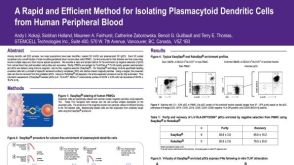 科学海报Isolation of Plasmacytoid Dendritic Cells from Peripheral Blood

 沪公网安备31010102008431号