Crabé et al. (DEC 2009)
Journal of immunology (Baltimore,Md. : 1950) 183 12 7692--702
The IL-27 p28 subunit binds cytokine-like factor 1 to form a cytokine regulating NK and T cell activities requiring IL-6R for signaling.
IL-27 is formed by the association of a cytokine subunit,p28,with the soluble cytokine receptor EBV-induced gene 3 (EBI3). The IL-27R comprises gp130 and WSX-1. The marked difference between EBI3(-/-) and WSX-1(-/-) mice suggests that p28 has functions independent of EBI3. We have identified an alternative secreted complex formed by p28 and the soluble cytokine receptor cytokine-like factor 1 (CLF). Like IL-27,p28/CLF is produced by dendritic cells and is biologically active on human NK cells,increasing IL-12- and IL-2-induced IFN-gamma production and activation marker expression. Experiments with Ba/F3 transfectants indicate that p28/CLF activates cells expressing IL-6Ralpha in addition to the IL-27R subunits. When tested on CD4 and CD8 T cells,p28/CLF induces IL-6Ralpha-dependent STAT1 and STAT3 phosphorylation. Furthermore,p28/CLF inhibits CD4 T cell proliferation and induces IL-17 and IL-10 secretion. These results indicate that p28/CLF may participate in the regulation of NK and T cell functions by dendritic cells. The p28/CLF complex engages IL-6R and may therefore be useful for therapeutic applications targeting cells expressing this receptor. Blocking IL-6R using humanized mAbs such as tocilizumab has been shown to be beneficial in pathologies like rheumatoid arthritis and juvenile idiopathic arthritis. The identification of a new IL-6R ligand is therefore important for a complete understanding of the mechanism of action of this emerging class of immunosuppressors.
View Publication
产品类型:
产品号#:
19752
19752RF
产品名:
Harwood NMK et al. (MAR 2016)
Journal of leukocyte biology 99 3 495--503
HCV-infected cells and differentiation increase monocyte immunoregulatory galectin-9 production.
The lectin galectin-9 may help establish and maintain chronic hepatitis C virus infection. Galectin-9 is elevated in the liver and sera of hepatitis C virus patients,induces apoptosis of hepatitis C virus-specific T cells,and increases inhibitory regulatory T cells. Kupffer cells stain strongly for galectin-9 protein in hepatitis C virus patients. In the current study,we determined stimuli that induce galectin-9 production by monocytes and macrophages in hepatitis C virus infection. With the use of real-time PCR and flow cytometry,we analyzed galectin-9 mRNA and protein from human monocytes cocultured with hepatitis C virus-infected cells or noninfectious hepatitis C virus subgenomic replicon cells. We focused on finding the stimuli for galectin-9 production. Additionally,we measured galectin-9 during monocyte-to-macrophage maturation. Finally,we examined galectin-9 in peripheral monocytes from hepatitis C virus patients using flow cytometry. Galectin-9 mRNA increased 8-fold when primary monocytes were exposed to hepatitis C virus--infected cells. Maximum induction required proximity or contact and did not require IFN-γ or hepatitis C virus virions. Coculture of monocytes with subgenomic replicon cells increased galectin-9 5-fold,and purified exosomes from infected cells stimulated galectin-9 production. Stimulation of monocyte TLR3,-7,and -8 increased galectin-9 production. Differentiation of monocytes to macrophages increased galectin-9,and nonclassic monocytes from hepatitis C virus patients had the highest levels of galectin-9. Hepatitis C virus-infected cells stimulated monocytes to produce galectin-9 in close proximity,possibly,in part,as a result of exosomes and endosomal TLRs. Differentiation of monocytes to macrophages increased galectin-9. Nonclassic monocytes from hepatitis C virus patients express the highest galectin-9 levels,suggesting they may contribute to elevated galectin-9 and adaptive immune inhibition in hepatitis C virus infection.
View Publication
产品类型:
产品号#:
19059
19059RF
产品名:
EasySep™人单核细胞富集试剂盒
RoboSep™ 人单核细胞富集试剂盒含滤芯吸头
Machmach K et al. (APR 2012)
Journal of virology 86 8 4245--52
Plasmacytoid dendritic cells reduce HIV production in elite controllers.
HIV elite controllers (EC) are a rare group of HIV-infected patients who are able to maintain undetectable viral loads during a long period of time in the absence of antiretroviral treatment. Adaptive immunity and host genetic factors,although implicated,do not entirely explain this phenomenon. On the other hand,plasmacytoid dendritic cells (pDCs) are the principal type I interferon (IFN) producers in response to viral infection,and it is unknown whether pDCs are involved in the control of HIV infection in EC. In our study,we analyzed peripheral pDC levels and IFN-α production by peripheral blood mononuclear cells (PBMCs) in EC compared to other groups of HIV-infected patients,the ability of pDCs to reduce HIV production in vitro,and the mechanisms potentially involved. We showed preserved pDC counts and IFN-α production in EC. We also observed a higher capacity of pDCs from EC to reduce HIV production and to induce T cell apoptosis,whereas pDCs from viremic patients barely responded without previous Toll-like receptor 9 (TLR-9) stimulus. The preserved functionality of pDCs from EC to reduce viral production may be one of the mechanisms involved in the control of HIV viremia in these subjects. These results demonstrate the importance of innate immunity in HIV pathogenesis,and an understanding of pDC mechanisms would be helpful for the design of new therapies.
View Publication
产品类型:
产品号#:
15022
15062
19062
19062RF
17977
17977RF
产品名:
RosetteSep™人CD4+ T细胞富集抗体混合物
RosetteSep™人CD4+ T细胞富集抗体混合物
EasySep™人浆细胞样DC富集试剂盒
RoboSep™ 人浆细胞样DC富集试剂盒含滤芯吸头
EasySep™人浆细胞样DC分选试剂盒
RoboSep™ 人浆细胞样DC分选试剂盒
Zeng J and Wang S (JAN 2014)
Stem cells translational medicine 3 1 69--80
Human dendritic cells derived from embryonic stem cells stably modified with CD1d efficiently stimulate antitumor invariant natural killer T cell response.
Invariant natural killer T (iNKT) cells are a unique lymphocyte subpopulation that mediates antitumor activities upon activation. A current strategy to harness iNKT cells for cancer treatment is endogenous iNKT cell activation using patient-derived dendritic cells (DCs). However,the limited number and functional defects of patient DCs are still the major challenges for this therapeutic approach. In this study,we investigated whether human embryonic stem cells (hESCs) with an ectopically expressed CD1d gene could be exploited to address this issue. Using a lentivector carrying an optimized expression cassette,we generated stably modified hESC lines that consistently overexpressed CD1d. These modified hESC lines were able to differentiate into DCs as efficiently as the parental line. Most importantly,more than 50% of such derived DCs were CD1d+. These CD1d-overexpressing DCs were more efficient in inducing iNKT cell response than those without modification,and their ability was comparable to that of DCs generated from monocytes of healthy donors. The iNKT cells expanded by the CD1d-overexpressing DCs were functional,as demonstrated by their ability to lyse iNKT cell-sensitive glioma cells. Therefore,hESCs stably modified with the CD1d gene may serve as a convenient,unlimited,and competent DC source for iNKT cell-based cancer immunotherapy.
View Publication
产品类型:
产品号#:
05850
05857
05870
05875
09600
09650
70024
70024.1
85850
85857
85870
85875
产品名:
StemSpan™ SFEM
StemSpan™ SFEM
冻存的人外周血Pan T细胞
冻存的人外周血Pan T细胞
mTeSR™1
mTeSR™1
Diou J et al. (MAR 2010)
Journal of immunology (Baltimore,Md. : 1950) 184 6 2899--907
Dendritic cells derived from hemozoin-loaded monocytes display a partial maturation phenotype that promotes HIV-1 trans-infection of CD4+ T cells and virus replication.
Coinfection of HIV-1 patients with Plasmodium falciparum,the etiological agent of malaria,results in a raise of viral load and an acceleration of disease progression. The primary objective of this study was to investigate whether the malarial pigment hemozoin (HZ),a heme by-product of hemoglobin digestion by malaria parasites,can affect HIV-1 transmission by monocytes-derived dendritic cells (DCs) to CD4(+) T cells when HZ is initially internalized in monocytes before their differentiation in DCs. We demonstrate in this study that HZ treatment during the differentiation process induces an intermediate maturation phenotype when compared with immature and fully mature DCs. Furthermore,the DC-mediated transfer of HIV-1 is enhanced in presence of HZ,a phenomenon that may be linked with the capacity of HZ-loaded cells to interact and activate CD4(+) T cells. Altogether our findings suggest a new mechanism that could partially explain the increased HIV-1 virus production during a coinfection with P. falciparum. Understanding the multifaceted interactions between P. falciparum and HIV-1 is an important challenge that could lead to the development of new treatment strategies.
View Publication
产品类型:
产品号#:
19052
19052RF
产品名:
EasySep™人CD4+ T细胞富集试剂盒
RoboSep™ 人CD4+ T细胞富集试剂盒含滤芯吸头
Saï et al. (FEB 2016)
PLoS pathogens 12 2 e1005407
HMGB1 Is Involved in IFN-α Production and TRAIL Expression by HIV-1-Exposed Plasmacytoid Dendritic Cells: Impact of the Crosstalk with NK Cells.
Plasmacytoid dendritic cells (pDCs) are innate sensors of viral infections and important mediators of antiviral innate immunity through their ability to produce large amounts of IFN-α. Moreover,Toll-like receptor 7 (TLR7) and 9 (TLR9) ligands,such as HIV and CpG respectively,turn pDCs into TRAIL-expressing killer pDCs able to lyse HIV-infected CD4+ T cells. NK cells can regulate antiviral immunity by modulating pDC functions,and pDC production of IFN-α as well as cell-cell contact is required to promote NK cell functions. Impaired pDC-NK cell crosstalk was reported in the setting of HIV-1 infection,but the impact of HIV-1 on TRAIL expression and innate antiviral immunity during this crosstalk is unknown. Here,we report that low concentrations of CCR5-tropic HIV-1Ba-L promote the release of pro-inflammatory cytokines such as IFN-α,TNF-α,IFN-γ and IL-12,and CCR5-interacting chemokines (MIP-1α and MIP-1β) in NK-pDCs co-cultures. At high HIV-1BaL concentrations,the addition of NK cells did not promote the release of these mediators,suggesting that once efficiently triggered by the virus,pDCs could not integrate new activating signals delivered by NK cells. However,high HIV-1BaL concentrations were required to trigger IFN-α-mediated TRAIL expression at the surface of both pDCs and NK cells during their crosstalk. Interestingly,we identified the alarmin HMGB1,released at pDC-NK cell synapse,as an essential trigger for the secretion of IFN-α and IFN-related soluble mediators during the interplay of HIV-1 exposed pDCs with NK cells. Moreover,HMGB1 was found crucial for mTRAIL translocation to the plasma membrane of both pDCs and NK cells during their crosstalk following pDC exposure to HIV-1. Data from serum analyses of circulating HMGB1,HMGB1-specific antibodies,sTRAIL and IP-10 in a cohort of 67 HIV-1+ patients argue for the in vivo relevance of these observations. Altogether,these findings identify HMGB1 as a trigger for IFN-α-mediated TRAIL expression at the surface of pDCs and NK cells,and they suggest a novel mechanism of innate control of HIV-1 infection.
View Publication
Leiba M et al. (AUG 2006)
Journal of leukocyte biology 80 2 399--406
Halofuginone inhibits NF-kappaB and p38 MAPK in activated T cells.
Halofuginone,a low molecular weight plant alkaloid,inhibits collagen alpha1 (I) gene expression in several animal models and in patients with fibrotic disease,including scleroderma and graft-versus-host disease. In addition,halofuginone has been shown to inhibit angiogenesis and tumor progression. It was demonstrated recently that halofuginone inhibits transforming growth factor-beta (TGF-beta),an important immunomodulator. The present study was undertaken to explore the effects of halofuginone on activated T cells. Peripheral blood T cells were activated by anti-CD3 monoclonal antibodies in the absence and presence of halofuginone and assessed for nuclear factor (NF)-kappaB activity,production of tumor necrosis factor alpha (TNF-alpha) and interferon-gamma (IFN-gamma),T cell apoptosis,chemotaxis,and phosphorylation of p38 mitogen-activated protein kinase (MAPK). A delayed-type hypersensitivity (DTH) model was applied to investigate the effect of halofuginone on T cells in vivo. Preincubation of activated peripheral blood T cells with 10-40 ng/ml halofuginone resulted in a significant dose-dependent decrease in NF-kappaB activity (80% inhibition following incubation with 40 ng halofuginone,P = 0.002). In addition,40 ng/ml halofuginone inhibited secretion of TNF-alpha,IFN-gamma,interleukin (IL)-4,IL-13,and TGF-beta (P textless 0.005). Similarly,halofuginone inhibited the phosphorylation of p38 MAPK and apoptosis in activated T cells (P = 0.0001 and 0.005,respectively). In contrast,T cell chemotaxis was not affected. Halofuginone inhibited DTH response in mice,indicating suppression of T cell-mediated inflammation in vivo. Halofuginone inhibits activated peripheral blood T cell functions and proinflammatory cytokine production through inhibition of NF-kappaB activation and p38 MAPK phosphorylation. It also inhibited DTH response in vivo,making it an attractive immunomodulator and anti-inflammatory agent.
View Publication
产品类型:
产品号#:
15022
15062
15023
15063
产品名:
RosetteSep™人CD4+ T细胞富集抗体混合物
RosetteSep™人CD4+ T细胞富集抗体混合物
RosetteSep™人CD8+ T细胞富集抗体混合物
RosetteSep™人CD8+ T细胞富集抗体混合物
C. R. Seehus et al. (DEC 2017)
Nature communications 8 1 1900
Alternative activation generates IL-10 producing type 2 innate lymphoid cells.
Type 2 innate lymphoid cells (ILC2) share cytokine and transcription factor expression with CD4+ Th2 cells,but functional diversity of the ILC2 lineage has yet to be fully explored. Here,we show induction of a molecularly distinct subset of activated lung ILC2,termed ILC210. These cells produce IL-10 and downregulate some pro-inflammatory genes. Signals that generate ILC210 are distinct from those that induce IL-13 production,and gene expression data indicate that an alternative activation pathway leads to the generation of ILC210. In vivo,IL-2 enhances ILC210 generation and is associated with decreased eosinophil recruitment to the lung. Unlike most activated ILC2,the ILC210 population contracts after cessation of stimulation in vivo,with maintenance of a subset that can be recalled by restimulation,analogous to T-cell effector cell and memory cell generation. These data demonstrate the generation of a previously unappreciated IL-10 producing ILC2 effector cell population.
View Publication
产品类型:
产品号#:
19860
19860RF
85415
85420
85450
85460
86415
86420
86450
86460
产品名:
EasySep™小鼠Streptavidin RapidSpheres™分选试剂盒
RoboSep™ 小鼠Streptavidin RapidSpheres™分选试剂盒
SepMate™-15 (IVD)
SepMate™-15 (IVD)
SepMate™-50 (IVD)
SepMate™-50 (IVD)
SepMate™-15 (RUO)
SepMate™-15 (RUO)
SepMate™-50 (RUO)
SepMate™-50 (RUO)
Lund PJ et al. (SEP 2016)
Journal of immunology (Baltimore,Md. : 1950)
Global Analysis of O-GlcNAc Glycoproteins in Activated Human T Cells.
T cell activation in response to Ag is largely regulated by protein posttranslational modifications. Although phosphorylation has been extensively characterized in T cells,much less is known about the glycosylation of serine/threonine residues by O-linked N-acetylglucosamine (O-GlcNAc). Given that O-GlcNAc appears to regulate cell signaling pathways and protein activity similarly to phosphorylation,we performed a comprehensive analysis of O-GlcNAc during T cell activation to address the functional importance of this modification and to identify the modified proteins. Activation of T cells through the TCR resulted in a global elevation of O-GlcNAc levels and in the absence of O-GlcNAc,IL-2 production and proliferation were compromised. T cell activation also led to changes in the relative expression of O-GlcNAc transferase (OGT) isoforms and accumulation of OGT at the immunological synapse of murine T cells. Using a glycoproteomics approach,we identified textgreater200 O-GlcNAc proteins in human T cells. Many of the identified proteins had a functional relationship to RNA metabolism,and consistent with a connection between O-GlcNAc and RNA,inhibition of OGT impaired nascent RNA synthesis upon T cell activation. Overall,our studies provide a global analysis of O-GlcNAc dynamics during T cell activation and the first characterization,to our knowledge,of the O-GlcNAc glycoproteome in human T cells.
View Publication


 EasySep™小鼠TIL(CD45)正选试剂盒




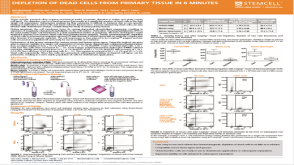 科学海报Depletion of Dead Cells from Primary Tissue in 6 Minutes
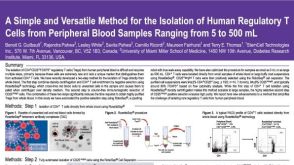 科学海报Isolation of Human Regulatory T Cells from Peripheral Blood Samples

 沪公网安备31010102008431号