Enhanced cytotoxicity of an anti-transferrin receptor IgG3-avidin fusion protein in combination with gambogic acid against human malignant hematopoietic cells: functional relevance of iron, the receptor, and reactive oxygen species.
The human transferrin receptor (hTfR) is a target for cancer immunotherapy due to its overexpression on the surface of cancer cells. We previously developed an antibody-avidin fusion protein that targets hTfR (anti-hTfR IgG3-Av) and exhibits intrinsic cytotoxicity against certain malignant cells. Gambogic acid (GA),a drug that also binds hTfR,induces cytotoxicity in several malignant cell lines. We now report that anti-hTfR IgG3-Av and GA induce cytotoxicity in a new broader panel of hematopoietic malignant cell lines. Our results show that the effect of anti-hTfR IgG3-Av is iron-dependent whereas that of GA is iron-independent in all cells tested. In addition,we observed that GA exerts a TfR-independent cytotoxicity. We also found that GA increases the generation of reactive oxygen species that may play a role in the cytotoxicity induced by this drug. Additive cytotoxicity was observed by simultaneous combination treatment with these drugs and synergy by using anti-hTfR IgG3-Av as a chemosensitizing agent. In addition,we found a concentration of GA that is toxic to malignant hematopoietic cells but not to human hematopoietic progenitor cells. Our results suggest that these two compounds may be effective,alone or in combination,for the treatment of human hematopoietic malignancies.
View Publication
Graham B et al. (JUL 2014)
International Journal of Environmental Research and Public Health 11 7 7524--7536
Enhancement of arsenic trioxide-mediated changes in human induced pluripotent stem cells (IPS)
Induced pluripotent stem cells (IPS) are an artificially derived type of pluripotent stem cell,showing many of the same characteristics as natural pluripotent stem cells. IPS are a hopeful therapeutic model; however there is a critical need to determine their response to environmental toxins. Effects of arsenic on cells have been studied extensively; however,its effect on IPS is yet to be elucidated. Arsenic trioxide (ATO) has been shown to inhibit cell proliferation,induce apoptosis and genotoxicity in many cells. Based on ATOs action in other cells,we hypothesize that it will induce alterations in morphology,inhibit cell viability and induce a genotoxic effect on IPS. Cells were treated for 24 hours with ATO (0-9 µg/mL). Cell morphology,viability and DNA damage were documented. Results indicated sufficient changes in morphology of cell colonies mainly in cell ability to maintain grouping and ability to remain adherent. Cell viability decreased in a dose dependent manner. There were significant increases in tail length and moment as well as destruction of intact DNA as concentration increased. Exposure to ATO resulted in a reproducible dose dependent sequence of events marked by changes in morphology,decrease of cell viability,and induction of genotoxicity in IPS.
View Publication
Esplin BL et al. (MAY 2011)
Journal of immunology (Baltimore,Md. : 1950) 186 9 5367--75
Chronic exposure to a TLR ligand injures hematopoietic stem cells.
Hematopoietic stem cells (HSC) can be harmed by disease,chemotherapy,radiation,and normal aging. We show in this study that damage also occurs in mice repeatedly treated with very low doses of LPS. Overall health of the animals was good,and there were relatively minor changes in marrow hematopoietic progenitors. However,HSC were unable to maintain quiescence,and transplantation revealed them to be myeloid skewed. Moreover,HSC from treated mice were not sustained in serial transplants and produced lymphoid progenitors with low levels of the E47 transcription factor. This phenomenon was previously seen in normal aging. Screening identified mAbs that resolve HSC subsets,and relative proportions of these HSC changed with age and/or chronic LPS treatment. For example,minor CD150(Hi)CD48(-) populations lacking CD86 or CD18 expanded. Simultaneous loss of CD150(Lo/-)CD48(-) HSC and gain of the normally rare subsets,in parallel with diminished transplantation potential,would be consistent with age- or TLR-related injury. In contrast,HSC in old mice differed from those in LPS-treated animals with respect to VCAM-1 or CD41 expression and lacked proliferation abnormalities. HSC can be exposed to endogenous and pathogen-derived TLR ligands during persistent low-grade infections. This stimulation might contribute in part to HSC senescence and ultimately compromise immunity.
View Publication
产品类型:
产品号#:
03434
03444
产品名:
MethoCult™ GF M3434
MethoCult™ GF M3434
Yang J et al. (SEP 2007)
Blood 110 6 2034--40
AZD1152, a novel and selective aurora B kinase inhibitor, induces growth arrest, apoptosis, and sensitization for tubulin depolymerizing agent or topoisomerase II inhibitor in human acute leukemia cells in vitro and in vivo.
Aurora kinases play an important role in chromosome alignment,segregation,and cytokinesis during mitosis. We have recently shown that hematopoietic malignant cells including those from acute myeloid leukemia (AML) and acute lymphoblastic leukemia (ALL) aberrantly expressed Aurora A and B kinases,and ZM447439,a potent inhibitor of Aurora kinases,effectively induced growth arrest and apoptosis of a variety of leukemia cells. The present study explored the effect of AZD1152,a highly selective inhibitor of Aurora B kinase,on various types of human leukemia cells. AZD1152 inhibited the proliferation of AML lines (HL-60,NB4,MOLM13),ALL line (PALL-2),biphenotypic leukemia (MV4-11),acute eosinophilic leukemia (EOL-1),and the blast crisis of chronic myeloid leukemia K562 cells with an IC50 ranging from 3 nM to 40 nM,as measured by thymidine uptake on day 2 of culture. These cells had 4N/8N DNA content followed by apoptosis,as measured by cell-cycle analysis and annexin V staining,respectively. Of note,AZD1152 synergistically enhanced the antiproliferative activity of vincristine,a tubulin depolymerizing agent,and daunorubicin,a topoisomerase II inhibitor,against the MOLM13 and PALL-2 cells in vitro. Furthermore,AZD1152 potentiated the action of vincristine and daunorubicin in a MOLM13 murine xenograft model. Taken together,AZD1152 is a promising new agent for treatment of individuals with leukemia. The combined administration of AZD1152 and conventional chemotherapeutic agent to patients with leukemia warrants further investigation.
View Publication
产品类型:
产品号#:
04564
04534
04544
产品名:
MethoCult™ H4534 Classic 无 EPO 入门试剂盒
MethoCult™ H4534 Classic(不含 EPO)
MethoCult™ H4534 Classic(不含 EPO)
Heringer-Walther S et al. (JUN 2009)
Haematologica 94 6 857--60
Angiotensin-(1-7) stimulates hematopoietic progenitor cells in vitro and in vivo.
Effects of angiotensin (Ang)-(1-7),an AngII metabolite,on bone marrow-derived hematopoietic cells were studied. We identified Ang-(1-7) to stimulate proliferation of human CD34(+) and mononuclear cells in vitro. Under in vivo conditions,we monitored proliferation and differentiation of human cord blood mononuclear cells in NOD/SCID mice. Ang-(1-7) stimulated differentially human cells in bone marrow and accumulated them in the spleen. The number of HLA-I(+) and CD34(+) cells in the bone marrow was increased 42-fold and 600-fold,respectively. These results indicate a decisive impact of Ang-(1-7) on hematopoiesis and its promising therapeutic potential in diseases requiring progenitor stimulation.
View Publication
产品类型:
产品号#:
09600
09650
产品名:
StemSpan™ SFEM
StemSpan™ SFEM
Sakai R et al. (MAR 2003)
Toxicological sciences : an official journal of the Society of Toxicology 72 1 84--91
TCDD treatment eliminates the long-term reconstitution activity of hematopoietic stem cells.
2,3,7,8-tetrachlorodibenzo-p-dioxin (TCDD),an endocrine disrupting chemical (EDC),can cause carcinogenesis,immunosuppression,and teratogenesis,through a ligand-activated transcription factor,the aryl hydrocarbon receptor (AhR). Despite remarkable recent advances in stem cell biology,the influence of TCDD on hematopoietic stem cells (HSCs),which possess the ability to reconstitute long-term multilineage hematopoiesis,has not been well investigated. In this study we examined the influence of TCDD on HSCs enriched for CD34(-),c-kit(+),Sca-1(+),lineage negative (CD34-KSL) cells. The number of the CD34-KSL cells was found to be increased about four-fold upon a single oral administration of TCDD (40 micro g/kg body weight). Surprisingly,we found that these TCDD-treated cells almost lost long-term reconstitution activity. This defect was not present in AhR(-/-) mice. These findings suggest that modulation of AhR/ARNT system activity may have an effect on HSC function or survival.
View Publication


 EasySep™小鼠TIL(CD45)正选试剂盒




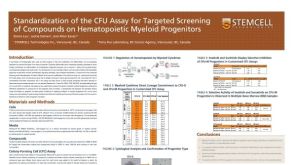 科学海报Standardization of the CFU Assay for Targeted Screening of Compounds on Hematopoietic Myeloid Progenitors
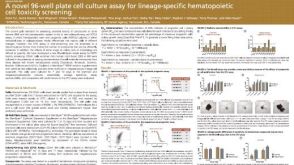 科学海报A Novel 96-well Plate Cell Culture Assay for Lineage-Specific Hematopoietic Cell Toxicity Screening


 沪公网安备31010102008431号