Small molecule XIAP inhibitors cooperate with TRAIL to induce apoptosis in childhood acute leukemia cells and overcome Bcl-2-mediated resistance.
Defects in apoptosis contribute to poor outcome in pediatric acute lymphoblastic leukemia (ALL),calling for novel strategies that counter apoptosis resistance. Here,we demonstrate for the first time that small molecule inhibitors of the antiapoptotic protein XIAP cooperate with TRAIL to induce apoptosis in childhood acute leukemia cells. XIAP inhibitors at subtoxic concentrations,but not a structurally related control compound,synergize with TRAIL to trigger apoptosis and to inhibit clonogenic survival of acute leukemia cells,whereas they do not affect viability of normal peripheral blood lymphocytes,suggesting some tumor selectivity. Analysis of signaling pathways reveals that XIAP inhibitors enhance TRAIL-induced activation of caspases,loss of mitochondrial membrane potential,and cytochrome c release in a caspase-dependent manner,indicating that they promote a caspase-dependent feedback mitochondrial amplification loop. Of note,XIAP inhibitors even overcome Bcl-2-mediated resistance to TRAIL by enhancing Bcl-2 cleavage and Bak conformational change. Importantly,XIAP inhibitors kill leukemic blasts from children with ALL ex vivo and cooperate with TRAIL to induce apoptosis. In vivo,they significantly reduce leukemic burden in a mouse model of pediatric ALL engrafted in non-obese diabetic/severe combined immunodeficient (NOD/SCID) mice. Thus,XIAP inhibitors present a promising novel approach for apoptosis-based therapy of childhood ALL.
View Publication
产品类型:
产品号#:
04100
产品名:
MethoCult™ H4100
Puissant A et al. (FEB 2010)
Cancer research 70 3 1042--52
Resveratrol promotes autophagic cell death in chronic myelogenous leukemia cells via JNK-mediated p62/SQSTM1 expression and AMPK activation.
Autophagy that is induced by starvation or cellular stress can enable cancer cell survival by sustaining energy homeostasis and eliminating damaged organelles and proteins. In response to stress,cancer cells have been reported to accumulate the protein p62/SQSTM1 (p62),but its role in the regulation of autophagy is controversial. Here,we report that the plant phytoalexin resveratrol (RSV) triggers autophagy in imatinib-sensitive and imatinib-resistant chronic myelogenous leukemia (CML) cells via JNK-dependent accumulation of p62. JNK inhibition or p62 knockdown prevented RSV-mediated autophagy and antileukemic effects. RSV also stimulated AMPK,thereby inhibiting the mTOR pathway. AMPK knockdown or mTOR overexpression impaired RSV-induced autophagy but not JNK activation. Lastly,p62 expression and autophagy in CD34+ progenitors from patients with CML was induced by RSV,and disrupting autophagy protected CD34+ CML cells from RSV-mediated cell death. We concluded that RSV triggered autophagic cell death in CML cells via both JNK-mediated p62 overexpression and AMPK activation. Our findings show that the JNK and AMPK pathways can cooperate to eliminate CML cells via autophagy.
View Publication
产品类型:
产品号#:
09600
09650
产品名:
StemSpan™ SFEM
StemSpan™ SFEM
de Boer AS et al. (AUG 2014)
Science Translational Medicine 6 248 248ra104--248ra104
Genetic validation of a therapeutic target in a mouse model of ALS
AbstractBack to TopbackslashnNeurons produced from stem cells have emerged as a tool to identify new therapeutic targets for neurological diseases such as amyotrophic lateral sclerosis (ALS). However,it remains unclear to what extent these new mechanistic insights will translate to animal models,an important step in the validation of new targets. Previously,we found that glia from mice carrying the SOD1G93A mutation,a model of ALS,were toxic to stem cell–derived human motor neurons. We use pharmacological and genetic approaches to demonstrate that the prostanoid receptor DP1 mediates this glial toxicity. Furthermore,we validate the importance of this mechanism for neural degeneration in vivo. Genetic ablation of DP1 in SOD1G93A mice extended life span,decreased microglial activation,and reduced motor neuron loss. Our findings suggest that blocking DP1 may be a therapeutic strategy in ALS and demonstrate that discoveries from stem cell models of disease can be corroborated in vivo.
View Publication
Fenouille N et al. (DEC 2010)
Cancer research 70 23 9659--70
Persistent activation of the Fyn/ERK kinase signaling axis mediates imatinib resistance in chronic myelogenous leukemia cells through upregulation of intracellular SPARC.
SPARC is an extracellular matrix protein that exerts pleiotropic effects on extracellular matrix organization,growth factor availability,cell adhesion,differentiation,and immunity in cancer. Chronic myelogenous leukemia (CML) cells resistant to the BCR-ABL inhibitor imatinib (IM-R cells) were found to overexpress SPARC mRNA. In this study,we show that imatinib triggers SPARC accumulation in a variety of tyrosine kinase inhibitor (TKI)-resistant CML cell lines. SPARC silencing in IM-R cells restored imatinib sensitivity,whereas enforced SPARC expression in imatinib-sensitive cells promoted viability as well as protection against imatinib-mediated apoptosis. Notably,we found that the protective effect of SPARC required intracellular retention inside cells. Accordingly,SPARC was not secreted into the culture medium of IM-R cells. Increased SPARC expression was intimately linked to persistent activation of the Fyn/ERK kinase signaling axis. Pharmacologic inhibition of this pathway or siRNA-mediated knockdown of Fyn kinase resensitized IM-R cells to imatinib. In support of our findings,increased levels of SPARC mRNA were documented in blood cells from CML patients after 1 year of imatinib therapy compared with initial diagnosis. Taken together,our results highlight an important role for the Fyn/ERK signaling pathway in imatinib-resistant cells that is driven by accumulation of intracellular SPARC.
View Publication
Fancd2-/- mice have hematopoietic defects that can be partially corrected by resveratrol.
Progressive bone marrow failure is a major cause of morbidity and mortality in human Fanconi Anemia patients. In an effort to develop a Fanconi Anemia murine model to study bone marrow failure,we found that Fancd2(-/-) mice have readily measurable hematopoietic defects. Fancd2 deficiency was associated with a significant decline in the size of the c-Kit(+)Sca-1(+)Lineage(-) (KSL) pool and reduced stem cell repopulation and spleen colony-forming capacity. Fancd2(-/-) KSL cells showed an abnormal cell cycle status and loss of quiescence. In addition,the supportive function of the marrow microenvironment was compromised in Fancd2(-/-) mice. Treatment with Sirt1-mimetic and the antioxidant drug,resveratrol,maintained Fancd2(-/-) KSL cells in quiescence,improved the marrow microenvironment,partially corrected the abnormal cell cycle status,and significantly improved the spleen colony-forming capacity of Fancd2(-/-) bone marrow cells. We conclude that Fancd2(-/-) mice have readily quantifiable hematopoietic defects,and that this model is well suited for pharmacologic screening studies.
View Publication
Lee WT et al. (DEC 2016)
Developmental & Comparative Immunology 65 114--123
Identification of secreted and membrane-bound bat immunoglobulin using a Microchiropteran-specific mouse monoclonal antibody
Bat immunity has received increasing attention because some bat species are being decimated by the fungal disease,White Nose Syndrome,while other species are potential reservoirs of zoonotic viruses. Identifying specific immune processes requires new specific tools and reagents. In this study,we describe a new mouse monoclonal antibody (mAb) reactive with Eptesicus fuscus immunoglobulins. The epitope recognized by mAb BT1-4F10 was localized to immunoglobulin light (lambda) chains; hence,the mAb recognized serum immunoglobulins and B lymphocytes. The BT1-4F10 epitope appeared to be restricted to Microchiropteran immunoglobulins and absent from Megachiropteran immunoglobulins. Analyses of sera and other E. fuscus fluids showed that most,if not all,secreted immunoglobulins utilized lambda light chains. Finally,mAb BT1-4F10 permitted the identification of B cell follicles in splenic white pulp. This Microchiropteran-specific mAb has potential utility in seroassays; hence,this reagent may have both basic and practical applications for studying immune process.
View Publication
产品类型:
产品号#:
03800
03801
03802
03803
03804
03805
03806
产品名:
ClonaCell™-HY杂交瘤试剂盒
ClonaCell™-HY培养基A
ClonaCell™-HY 培养基 B
ClonaCell™-HY 培养基 C
ClonaCell™-HY 培养基 D
ClonaCell™-HY 培养基 E
ClonaCell™-HY PEG
Shi S et al. (SEP 2011)
Journal of Visualized Experiments 55 e3010
A high-throughput automated platform for the development of manufacturing cell lines for protein therapeutics
The fast-growing biopharmaceutical industry demands speedy development of highly efficient and reliable production systems to meet the increasing requirement for drug supplies. The generation of production cell lines has traditionally involved manual operations that are labor-intensive,low-throughput and vulnerable to human errors. We report here an integrated high-throughput and automated platform for development of manufacturing cell lines for the production of protein therapeutics. The combination of BD FACS Aria Cell Sorter,CloneSelect Imager and TECAN Freedom EVO liquid handling system has enabled a high-throughput and more efficient cell line development process. In this operation,production host cells are first transfected with an expression vector carrying the gene of interest (1),followed by the treatment with a selection agent. The stably-transfected cells are then stained with fluorescence-labeled anti-human IgG antibody,and are subsequently subject to flow cytometry analysis (2-4). Highly productive cells are selected based on fluorescence intensity and are isolated by single-cell sorting on a BD FACSAria. Colony formation from single-cell stage was detected microscopically and a series of time-laps digital images are taken by CloneSelect Imager for the documentation of cell line history. After single clones have formed,these clones were screened for productivity by ELISA performed on a TECAN Freedom EVO liquid handling system. Approximately 2,000 - 10,000 clones can be screened per operation cycle with the current system setup. This integrated approach has been used to generate high producing Chinese hamster ovary (CHO) cell lines for the production of therapeutic monoclonal antibody (mAb) as well as their fusion proteins. With the aid of different types of detecting probes,the method can be used for developing other protein therapeutics or be applied to other production host systems. Comparing to the traditional manual procedure,this automated platform demonstrated advantages of significantly increased capacity,ensured clonality,traceability in cell line history with electronic documentation and much reduced opportunity in operator error.
View Publication
产品类型:
产品号#:
30000
产品名:
Yew CW and Tan YJ ( 2016)
1426 225--33
Generation of mouse monoclonal antibodies specific to Chikungunya virus using ClonaCell-HY hybridoma cloning kit
Monoclonal antibodies offer high specificity and this makes it an important tool for molecular biology,biochemistry and medicine. Typically,monoclonal antibodies are generated by fusing mouse spleen cells that have been immunized with the desired antigen with myeloma cells to create immortalized hybridomas. Here,we describe the generation of monoclonal antibodies that are specific to Chikungunya virus using ClonaCell-HY system.
View Publication
产品类型:
产品号#:
03800
03801
03802
03803
03804
03805
03806
产品名:
ClonaCell™-HY杂交瘤试剂盒
ClonaCell™-HY培养基A
ClonaCell™-HY 培养基 B
ClonaCell™-HY 培养基 C
ClonaCell™-HY 培养基 D
ClonaCell™-HY 培养基 E
ClonaCell™-HY PEG
Drowley L et al. (FEB 2016)
Stem cells translational medicine 5 2 164--74
Human Induced Pluripotent Stem Cell-Derived Cardiac Progenitor Cells in Phenotypic Screening: A Transforming Growth Factor-β Type 1 Receptor Kinase Inhibitor Induces Efficient Cardiac Differentiation.
Several progenitor cell populations have been reported to exist in hearts that play a role in cardiac turnover and/or repair. Despite the presence of cardiac stem and progenitor cells within the myocardium,functional repair of the heart after injury is inadequate. Identification of the signaling pathways involved in the expansion and differentiation of cardiac progenitor cells (CPCs) will broaden insight into the fundamental mechanisms playing a role in cardiac homeostasis and disease and might provide strategies for in vivo regenerative therapies. To understand and exploit cardiac ontogeny for drug discovery efforts,we developed an in vitro human induced pluripotent stem cell-derived CPC model system using a highly enriched population of KDR(pos)/CKIT(neg)/NKX2.5(pos) CPCs. Using this model system,these CPCs were capable of generating highly enriched cultures of cardiomyocytes under directed differentiation conditions. In order to facilitate the identification of pathways and targets involved in proliferation and differentiation of resident CPCs,we developed phenotypic screening assays. Screening paradigms for therapeutic applications require a robust,scalable,and consistent methodology. In the present study,we have demonstrated the suitability of these cells for medium to high-throughput screens to assess both proliferation and multilineage differentiation. Using this CPC model system and a small directed compound set,we identified activin-like kinase 5 (transforming growth factor-β type 1 receptor kinase) inhibitors as novel and potent inducers of human CPC differentiation to cardiomyocytes. Significance: Cardiac disease is a leading cause of morbidity and mortality,with no treatment available that can result in functional repair. This study demonstrates how differentiation of induced pluripotent stem cells can be used to identify and isolate cell populations of interest that can translate to the adult human heart. Two separate examples of phenotypic screens are discussed,demonstrating the value of this biologically relevant and reproducible technology. In addition,this assay system was able to identify novel and potent inducers of differentiation and proliferation of induced pluripotent stem cell-derived cardiac progenitor cells.
View Publication


 EasySep™小鼠TIL(CD45)正选试剂盒




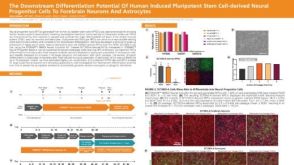 科学海报The Downstream Differentiation Potential of Human Induced Pluripotent Stem Cell-Derived Neural Progenitor Cells to Forebrain Neurons and Astrocytes

 沪公网安备31010102008431号