Bhattacharyya S and Khanduja KL (APR 2010)
Acta biochimica et biophysica Sinica 42 4 237--42
New hope in the horizon: cancer stem cells.
The major goal of researchers and oncologists is to develop promising ground for novel therapeutic strategies to prevent recurrence or relapse of cancer. Recent evidences suggest that a subset of cells called cancer stem cells (CSCs) are present within the tumor mass which possess tumorigenic capacity and may be responsible for propagation,relapse,and metastatic dissemination. These cells have certain stem cell-like properties,e.g. quiescence,selfrenewal,asymmetric division,and multidrug resistance which allow them to drive tumor growth and evade conventional therapies. A number of markers and assays have been designed to isolate and characterize the CSC population from the bulk tumor. The objective now is to selectively target the CSCs in order to eliminate the tumor from root,overcoming the emergence of clones capable of evading traditional therapy. This approach may help in increasing the overall disease-free survival in some cancers.
View Publication
产品类型:
产品号#:
01700
01705
01702
产品名:
ALDEFLUOR™ 试剂盒
ALDEFLUOR™ DEAB试剂, 1.5 mM, 1 mL
ALDEFLUOR™检测缓冲液
Kawatsu K et al. (APR 2008)
Journal of clinical microbiology 46 4 1226--31
Development and evaluation of immunochromatographic assay for simple and rapid detection of Campylobacter jejuni and Campylobacter coli in human stool specimens.
An immunochromatographic assay (Campy-ICA) using a newly generated single monoclonal antibody against a 15-kDa cell surface protein of Campylobacter jejuni was developed. When cell suspensions of 86 C. jejuni strains and 27 Campylobacter coli strains were treated with a commercially available bacterial protein extraction reagent and the resulting extracts were tested with the Campy-ICA,they all yielded positive results. The minimum detectable limits for the C. jejuni strains ranged from 1.8 x 10(4) to 8.2 x 10(5) CFU/ml of cell suspension,and those for the C. coli strains ranged from 1.4 x 10(5) to 4.6 x 10(6) CFU/ml of cell suspension. All 26 non-Campylobacter species tested yielded negative results with the Campy-ICA. To evaluate the ability of the Campy-ICA to detect C. jejuni and C. coli in human stool specimens,suspensions of 222 stool specimens from patients with acute gastroenteritis were treated with the bacterial protein extraction reagent,and the resulting extracts were tested with the Campy-ICA. The Campy-ICA results showed a sensitivity of 84.8% (28 of 33 specimens) and a specificity of 100% (189 of 189 specimens) compared to the results of isolation of C. jejuni and C. coli from the stool specimens by a bacterial culture test. The Campy-ICA was simple to perform and was able to detect Campylobacter antigen in a fecal extract within 15 min. These results suggest that Campy-ICA testing of fecal extracts may be useful as a simple and rapid adjunct to stool culture for detecting C. jejuni and C. coli in human stool specimens.
View Publication
Reichert AJ et al. (DEC 2015)
Protein Engineering Design and Selection 28 12 553--65
Optimisation of a system for the co-translational incorporation of a keto amino acid and its application to a tumour-specific Anticalin
The bioorthogonal keto group has attracted interest for the site-specific chemical conjugation of recombinant proteins under mild conditions,e.g. with aminooxy-functionalised fluorescent probes,radiometal chelates,toxins or polymers. However,the cotranslational incorporation of the corresponding non-canonical amino acid p-acetyl-L-phenylalanine (Apa) into proteins expressed in Escherichia coli by means of amber suppression using a previously described system with a mutated tRNA and an engineered tyrosyl-tRNA synthetase from Methanococcus jannaschii shows limited efficiency and considerable promiscuity towards endogenous amino acids. Employing a one-plasmid system that encodes all three components required for selection,i.e. the modified aminoacyl-tRNA synthetase (aaRS),the cognate amber suppressor tRNA and the enhanced green fluorescent protein equipped with an amber stop codon and serving as reporter,we have generated an Apa-specific aaRS&tRNA pair with considerably improved efficiency (17-fold increased expression) and also fidelity (6-fold). To this end,both the aaRS and the tRNA were subjected to doped random mutagenesis and selection in altogether four evolutionary cycles using fluorescence-activated bacterial cell sorting as well as automated screening of microcultures. The resulting aaRS&tRNA pair was applied to the functionalisation of an Anticalin with specificity towards oncofetal fibronectin by introducing a keto group at a permissible site for subsequent conjugation with a fluorescent dye,thus allowing visualisation of this tumour target under the microscope.
View Publication
Geldanamycin and herbimycin A induce apoptotic killing of B chronic lymphocytic leukemia cells and augment the cells' sensitivity to cytotoxic drugs.
We studied the actions of geldanamycin (GA) and herbimycin A (HMA),inhibitors of the chaperone proteins Hsp90 and GRP94,on B chronic lymphocytic leukemia (CLL) cells in vitro. Both drugs induced apoptosis of the majority of CLL isolates studied. Whereas exposure to 4-hour pulses of 30 to 100 nM GA killed normal B lymphocytes and CLL cells with similar dose responses,T lymphocytes from healthy donors as well as those present in the CLL isolates were relatively resistant. GA,but not HMA,showed a modest cytoprotective effect toward CD34+ hematopoietic progenitors from normal bone marrow. The ability of bone marrow progenitors to form hematopoietic colonies was unaffected by pulse exposures to GA. Both GA and HMA synergized with chlorambucil and fludarabine in killing a subset of CLL isolates. GA- and HMA-induced apoptosis was preceded by the up-regulation of the stress-responsive chaperones Hsp70 and BiP. Both ansamycins also resulted in down-regulation of Akt protein kinase,a modulator of cell survival. The relative resistance of T lymphocytes and of CD34+ bone marrow progenitors to GA coupled with its ability to induce apoptosis following brief exposures and to synergize with cytotoxic drugs warrant further investigation of ansamycins as potential therapeutic agents in CLL.
View Publication
Imatinib mesylate has shown remarkable efficacy in the treatment of patients in the chronic phase of chronic myeloid leukemia. However,despite an overall significant hematological and cytogenetic response,imatinib therapy may favor the emergence of drug-resistant clones,ultimately leading to relapse. Some imatinib resistance mechanisms had not been fully elucidated yet. In this study we used sensitive and resistant sublines from a Bcr-Abl positive cell line to investigate the putative involvement of telomerase in the promotion of imatinib resistance. We showed that sensitivity to imatinib can be partly restored in imatinib-resistant cells by targeting telomerase expression,either by the introduction of a dominant-negative form of the catalytic protein subunit of the telomerase (hTERT) or by the treatment with all-trans-retinoic acid,a clinically used drug. Furthermore,we showed that hTERT overexpression favors the development of imatinib resistance through both its antiapoptotic and telomere maintenance functions. Therefore,combining antitelomerase strategies to imatinib treatment at the beginning of the treatment should be promoted to reduce the risk of imatinib resistance development and increase the probability of eradicating the disease.
View Publication


 EasySep™小鼠TIL(CD45)正选试剂盒




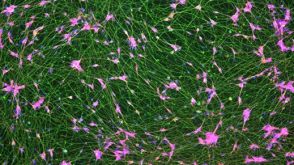 实验方案How to Culture Human Pluripotent Stem Cell (hPSC)-Derived Induced Forebrain Neurons for MEA Analysis Using the Maestro MEA™ System
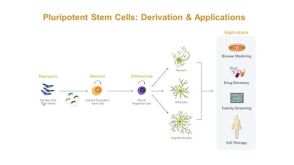
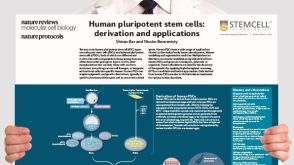 挂图Derivation and Applications of Human Pluripotent Stem Cells Overview of the derivation of human embryonic stem cells (hESCs) and induced pluripotent stem cells (iPSCs)发布日期: 11/26/2020
 产品手册Derive, Expand, and Differentiate Human Skeletal Muscle Progenitor Cells


 沪公网安备31010102008431号