Generation and characterization of a unique reagent that recognizes a panel of recombinant human monoclonal antibody therapeutics in the presence of endogenous human IgG
Pharmacokinetic (PK) and immunohistochemistry (IHC) assays are essential to the evaluation of the safety and efficacy of therapeutic monoclonal antibodies (mAb) during drug development. These methods require reagents with a high degree of specificity because low concentrations of therapeutic antibody need to be detected in samples containing high concentrations of endogenous human immunoglobulins. Current assay reagent generation practices are labor-intensive and time-consuming. Moreover,these practices are molecule-specific and so only support one assay for one program at a time. Here,we describe a strategy to generate a unique assay reagent,10C4,that preferentially recognizes a panel of recombinant human mAbs over endogenous human immunoglobulins. This panel-specific" feature enables the reagent to be used in PK and IHC assays for multiple structurally-related therapeutic mAbs. Characterization revealed that the 10C4 epitope is conformational�
View Publication
产品类型:
产品号#:
03800
03801
03802
03803
03804
03805
03806
产品名:
ClonaCell™-HY杂交瘤试剂盒
ClonaCell™-HY培养基A
ClonaCell™-HY 培养基 B
ClonaCell™-HY 培养基 C
ClonaCell™-HY 培养基 D
ClonaCell™-HY 培养基 E
ClonaCell™-HY PEG
Pessina A et al. (FEB 2009)
Toxicology in vitro : an international journal published in association with BIBRA 23 1 194--200
Application of human CFU-Mk assay to predict potential thrombocytotoxicity of drugs.
Megakaryocytopoiesis gives rise to platelets by proliferation and differentiation of lineage-specific progenitors,identified in vitro as Colony Forming Unit-Megakaryocytes (CFU-Mk). The aim of this study was to refine and optimize the in vitro Standard Operating Procedure (SOP) of the CFU-Mk assay for detecting drug-induced thrombocytopenia and to prevalidate a model for predicting the acute exposure levels that cause maximum tolerated decreases in the platelets count,based on the correlation with the maximal plasma concentrations (C max) in vivo. The assay was linear under the SOP conditions,and the in vitro endpoints (percentage of colonies growing) were reproducible within and across laboratories. The protocol performance phase was carried out testing 10 drugs (selected on the base of their recognised or potential in vivo haematotoxicity,according to the literature). Results showed that a relationship can be established between the maximal concentration in plasma (C max) and the in vitro concentrations that inhibited the 10-50-90 percent of colonies growth (ICs). When C max is lower than IC10,it is possible to predict that the chemicals have no direct toxicity effect on CFU-Mk and could not induce thrombocytopenia due to bone marrow damage. When the C max is higher than IC90 and/or IC50,thrombocytopenia can occur due to direct toxicity of chemicals on CFU-Mk progenitors.
View Publication
Bhattacharyya S and Khanduja KL (APR 2010)
Acta biochimica et biophysica Sinica 42 4 237--42
New hope in the horizon: cancer stem cells.
The major goal of researchers and oncologists is to develop promising ground for novel therapeutic strategies to prevent recurrence or relapse of cancer. Recent evidences suggest that a subset of cells called cancer stem cells (CSCs) are present within the tumor mass which possess tumorigenic capacity and may be responsible for propagation,relapse,and metastatic dissemination. These cells have certain stem cell-like properties,e.g. quiescence,selfrenewal,asymmetric division,and multidrug resistance which allow them to drive tumor growth and evade conventional therapies. A number of markers and assays have been designed to isolate and characterize the CSC population from the bulk tumor. The objective now is to selectively target the CSCs in order to eliminate the tumor from root,overcoming the emergence of clones capable of evading traditional therapy. This approach may help in increasing the overall disease-free survival in some cancers.
View Publication
产品类型:
产品号#:
01700
01705
01702
产品名:
ALDEFLUOR™ 试剂盒
ALDEFLUOR™ DEAB试剂, 1.5 mM, 1 mL
ALDEFLUOR™检测缓冲液
Malerba I et al. (OCT 2002)
Toxicological sciences : an official journal of the Society of Toxicology 69 2 433--8
In vitro myelotoxicity of propanil and 3,4-dichloroaniline on murine and human CFU-E/BFU-E progenitors.
Because of the wide use of pesticides for domestic and industrial purposes,the evaluation of their potential effects is of major concern for public health. The myelotoxicity of the herbicide propanil (3,4-dichloroproprioanilide) and its metabolite 3,4-dichloroaniline (DCA) is well documented in mice,but evidence that pesticides may severely compromise hematopoiesis in humans is lacking. In this study,an interspecies comparison of in vitro toxicity of these two compounds on murine and human burst- and colony-forming unit-erythrocyte (BFU-E,CFU-E) and colony-forming unit-granulocyte/macrophage (CFU-GM) progenitors,has been carried out. Murine bone marrow progenitors and human cord blood cells were exposed to propanil or DCA in doses ranging from 10 micro M to 1000 micro M,and the toxic effect was detected by a clonogenic assay with continuous exposure to the compounds. The results on murine cells indicate that the erythrocytic lineage is the most sensitive target for propanil and DCA. On the other hand,human progenitors seem to be less sensitive to the toxic effects of both compounds than murine progenitors at the same concentrations (IC(50) values are 305.2 +/- 22.6 micro M [total erythroid colonies] and textgreater500 micro M [CFU-GM] for propanil). Propanil was significantly more toxic to human erythroid progenitors than to human CFU-GM progenitors,as was found for the murine cells,emphasizing the role of the heme pathway as the target for propanil. These data confirm the evidence that the compounds investigated interfere with erythroid colony formation at different stages of the differentiation pathway and have different effects according to the dose.
View Publication


 EasySep™小鼠TIL(CD45)正选试剂盒




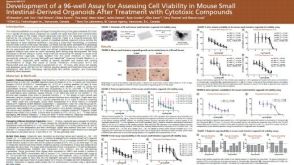 科学海报Development of a 96-well Assay for Assessing Cell Viability in Mouse Small Intestinal-Derived Organoids after Treatment with Cytotoxic Compounds
 技术手册Generation of Human Kidney Organoids Using STEMdiff™ Kidney Organoid Kit
 1:02:03
线上讲座Building Brain Organoids and AssemBloids™ to Study Human Development and Disease发布日期: 10/30/2020
1:02:03
线上讲座Building Brain Organoids and AssemBloids™ to Study Human Development and Disease发布日期: 10/30/2020





 沪公网安备31010102008431号