Lioznov MV et al. (MAY 2005)
Bone marrow transplantation 35 9 909--14
Aldehyde dehydrogenase activity as a marker for the quality of hematopoietic stem cell transplants.
Taking advantage of fluorescent substrates for their metabolic marker aldehyde dehydrogenase (ALDH),hematopoietic stem cells (HSC) were defined as SSC(lo)ALDH(br) - reflecting their low orthogonal light scattering and bright fluorescence intensity in flow cytometry. Based thereon,we investigated the usefulness of ALDH activity for characterizing HSC graft quality,particularly under stress conditions. We first compared the expression of ALDH vs CD34 in bone marrow and peripheral blood stem cell (PBSC) samples over 7 days. We noted that (i) only ALDH activity but not CD34 expression strongly reflected colony-forming ability over time,and that (ii) PBSC grafts stored at room temperature lost most of their progenitor cells within just 48 h. We then retrospectively related ALDH and CD34 expression as well as granulocyte-macrophage colony-forming units (CFU-GM) potential for 19 cryopreserved allogeneic PBSC grafts to engraftment data. Strikingly,in all six patients who received markedly decreased numbers of SSC(lo)ALDH(br) cells,this was associated not only with almost complete loss of CFU-GM potential but also with delayed establishment/permanent absence of full hematopoietic donor cell chimerism,whereas all other patients showed early complete donor chimerism. In conclusion,we suggest to measure ALDH activity as a surrogate marker for HSC activity,and to transport and store PBSC under controlled cooling conditions.
View Publication
Liang M et al. (MAR 2009)
The journal of gene medicine 11 3 185--96
Targeted transduction of CD34+ hematopoietic progenitor cells in nonpurified human mobilized peripheral blood mononuclear cells.
BACKGROUND: Conventional gene-therapy applications of hematopoietic stem cells (HSCs) involve purification of CD34+ progenitor cells from the mobilized peripheral blood,ex vivo transduction of the gene of interest into them,and reinfusion of the transduced CD34+ progenitor cells into patients. Eliminating the process of purification would save labor,time and money,while enhancing HSCs viability,transplantability and pluripotency. Lentiviral vectors have been widely used in gene therapy because they infect both dividing and nondividing cells and provide sustained transgene expression. One of the exceptions to this rule is quiescent primary lymphocytes,in which reverse transcription of viral DNA is not completed. METHODS: In the present study,we tested the possibility of targeting CD34+ progenitor cells within nonpurified human mobilized peripheral blood mononuclear cells (mPBMCs) utilizing vesicular stomatitis virus G (VSV-G) pseudotyped lentiviral vectors,based on the assumption that the CD34+ progenitor cells would be preferentially transduced. To further enhance the specificity of vector transduction,we also examined utilizing a modified Sindbis virus envelope (2.2) pseudotyped lentiviral vector,developed in our laboratory,that allows targeted transduction to specific cell receptors via antibody recognition. RESULTS: Both the VSV-G and 2.2 pseudotyped vectors achieved measurable results when they were used to target CD34+ progenitor cells in nonpurified mPBMCs. CONCLUSIONS: Overall,the data obtained demonstrate the potential of ex vivo targeting of CD34+ progenitor cells without purification.
View Publication
产品类型:
产品号#:
04434
04444
产品名:
MethoCult™H4434经典
MethoCult™H4434经典
Tchernychev B et al. (DEC 2010)
Proceedings of the National Academy of Sciences of the United States of America 107 51 22255--9
Discovery of a CXCR4 agonist pepducin that mobilizes bone marrow hematopoietic cells.
The G protein-coupled receptor (GPCR),chemokine CXC-type receptor 4 (CXCR4),and its ligand,CXCL12,mediate the retention of polymorphonuclear neutrophils (PMNs) and hematopoietic stem and progenitor cells (HSPCs) in the bone marrow. Agents that disrupt CXCL12-mediated chemoattraction of CXCR4-expressing cells mobilize PMNs and HSPCs into the peripheral circulation and are therapeutically useful for HSPC collection before autologous bone marrow transplantation (ABMT). Our aim was to develop unique CXCR4-targeted therapeutics using lipopeptide GPCR modulators called pepducins. A pepducin is a synthetic molecule composed of a peptide derived from the amino acid sequence of one of the intracellular (IC) loops of a target GPCR coupled to a lipid tether. We prepared and screened a small CXCR4-targeted pepducin library and identified several pepducins with in vitro agonist activity,including ATI-2341,whose peptide sequence derives from the first IC loop. ATI-2341 induced CXCR4- and G protein-dependent signaling,receptor internalization,and chemotaxis in CXCR4-expressing cells. It also induced dose-dependent peritoneal recruitment of PMNs when administered i.p. to mice. However,when administered systemically by i.v. bolus,ATI-2341 acted as a functional antagonist and dose-dependently mediated release of PMNs from the bone marrow of both mice and cynomolgus monkeys. ATI-2341-mediated release of granulocyte/macrophage progenitor cells from the bone marrow was confirmed by colony-forming assays. We conclude that ATI-2341 is a potent and efficacious mobilizer of bone marrow PMNs and HSPCs and could represent a previously undescribed therapeutic approach for the recruitment of HSPCs before ABMT.
View Publication
产品类型:
产品号#:
03534
产品名:
MethoCult™GF M3534
Tondelli B et al. (MAR 2009)
The American journal of pathology 174 3 727--35
Fetal liver cells transplanted in utero rescue the osteopetrotic phenotype in the oc/oc mouse.
Autosomal recessive osteopetrosis (ARO) is a group of genetic disorders that involve defects that preclude the normal function of osteoclasts,which differentiate from hematopoietic precursors. In half of human cases,ARO is the result of mutations in the TCIRG1 gene,which codes for a subunit of the vacuolar proton pump that plays a fundamental role in the acidification of the cell-bone interface. Functional mutations of this pump severely impair the resorption of bone mineral. Although postnatal hematopoietic stem cell transplantation can partially rescue the hematological phenotype of ARO,other stigmata of the disease,such as secondary neurological and growth defects,are not reversed. For this reason,ARO is a paradigm for genetic diseases that would benefit from effective prenatal treatment. Using the oc/oc mutant mouse,a murine model whose osteopetrotic phenotype closely recapitulates human TCIRG1-dependent ARO,we report that in utero transplantation of adult bone marrow hematopoietic stem cells can correct the ARO phenotype in a limited number of mice. Here we report that in utero injection of allogeneic fetal liver cells,which include hematopoietic stem cells,into oc/oc mouse fetuses at 13.5 days post coitum produces a high level of engraftment,and the oc/oc phenotype is completely rescued in a high percentage of these mice. Therefore,oc/oc pathology appears to be particularly sensitive to this form of early treatment of the ARO genetic disorder.
View Publication
产品类型:
产品号#:
03434
03444
产品名:
MethoCult™GF M3434
MethoCult™GF M3434
Huijskens MJAJ et al. (DEC 2014)
Journal of leukocyte biology 96 6 1165--75
Technical advance: ascorbic acid induces development of double-positive T cells from human hematopoietic stem cells in the absence of stromal cells.
The efficacy of donor HSCT is partly reduced as a result of slow post-transplantation immune recovery. In particular,T cell regeneration is generally delayed,resulting in high infection-related mortality in the first years post-transplantation. Adoptive transfer of in vitro-generated human T cell progenitors seems a promising approach to accelerate T cell recovery in immunocompromised patients. AA may enhance T cell proliferation and differentiation in a controlled,feeder-free environment containing Notch ligands and defined growth factors. Our experiments show a pivotal role for AA during human in vitro T cell development. The blocking of NOS diminished this effect,indicating a role for the citrulline/NO cycle. AA promotes the transition of proT1 to proT2 cells and of preT to DP T cells. Furthermore,the addition of AA to feeder cocultures resulted in development of DP and SP T cells,whereas without AA,a preT cell-stage arrest occurred. We conclude that neither DLL4-expressing feeder cells nor feeder cell conditioned media are required for generating DP T cells from CB and G-CSF-mobilized HSCs and that generation and proliferation of proT and DP T cells are greatly improved by AA. This technology could potentially be used to generate T cell progenitors for adoptive therapy.
View Publication
产品类型:
产品号#:
09605
09655
产品名:
StemSpan™ SFEM II
StemSpan™ SFEM II
Suzuki T et al. (NOV 2006)
Stem cells (Dayton,Ohio) 24 11 2456--65
Highly efficient ex vivo expansion of human hematopoietic stem cells using Delta1-Fc chimeric protein.
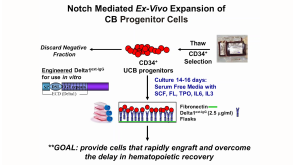
Ex vivo expansion of hematopoietic stem cells (HSCs) has been explored in the fields of stem cell biology,gene therapy,and clinical transplantation. Here,we demonstrate efficient ex vivo expansion of HSCs measured by long-term severe combined immunodeficient (SCID) repopulating cells (SRCs) from human cord blood CD133-sorted cells using a soluble form of Delta1. After a 3-week culture on immobilized Delta1 supplemented with stem cell factor,thrombopoietin,Flt-3 ligand,interleukin (IL)-3,and IL-6/soluble IL-6 receptor chimeric protein (FP6) in a serum- and stromal cell-free condition,we achieved approximately sixfold expansion of SRCs when evaluated by limiting dilution/transplantation assays. The maintenance of full multipotency and self-renewal capacity during culture was confirmed by transplantation to nonobese diabetic/SCID/gammac(null) mice,which showed myeloid,B,T,and natural killer cells as well as CD133(+)CD34(+) cells,and hematopoietic reconstitution in the secondary recipients. Interestingly,the CD133-sorted cells contained approximately 4.5 times more SRCs than the CD34-sorted cells. The present study provides a promising method to expand HSCs and encourages future trials on clinical transplantation.
View Publication
产品类型:
产品号#:
04434
04444
产品名:
MethoCult™H4434经典
MethoCult™H4434经典
Liang Y et al. (AUG 2005)
Blood 106 4 1479--87
Effects of aging on the homing and engraftment of murine hematopoietic stem and progenitor cells.
To test the hypothesis that aging has negative effects on stem-cell homing and engraftment,young or old C57BL/6 bone marrow (BM) cells were injected,using a limiting-dilution,competitive transplantation method,into old or young Ly5 congenic mice. Numbers of hematopoietic stem cells (HSCs) and progenitor cells (HPCs) recovered from BM or spleen were measured and compared with the numbers initially transplanted. Although the frequency of marrow competitive repopulation units (CRUs) increased approximately 2-fold from 2 months to 2 years of age,the BM homing efficiency of old CRUs was approximately 3-fold lower than that of young CRUs. Surprisingly,the overall size of individual stem-cell clones generated in recipients receiving a single CRU was not affected by donor age. However,the increased ages of HSC donors and HSC transplant recipients caused marked skewing of the pattern of engraftment toward the myeloid lineage,indicating that HSC-intrinsic and HSC-extrinsic (microenvironmental) age-related changes favor myelopoiesis. This correlated with changes after transplantation in the rate of recovery of circulating leukocytes,erythrocytes,and platelets. Recovery of the latter was especially blunted in aged recipients. Collectively,these findings may have implications for clinical HSC transplantation in which older persons increasingly serve as donors for elderly patients.
View Publication
Moreau-Gaudry F et al. (NOV 2001)
Blood 98 9 2664--72
High-level erythroid-specific gene expression in primary human and murine hematopoietic cells with self-inactivating lentiviral vectors.
Use of oncoretroviral vectors in gene therapy for hemoglobinopathies has been impeded by low titer vectors,genetic instability,and poor expression. Fifteen self- inactivating (SIN) lentiviral vectors using 4 erythroid promoters in combination with 4 erythroid enhancers with or without the woodchuck hepatitis virus postregulatory element (WPRE) were generated using the enhanced green fluorescent protein as a reporter gene. Vectors with high erythroid-specific expression in cell lines were tested in primary human CD34(+) cells and in vivo in the murine bone marrow (BM) transplantation model. Vectors containing the ankyrin-1 promoter showed high-level expression and stable proviral transmission. Two vectors containing the ankyrin-1 promoter and 2 erythroid enhancers (HS-40 plus GATA-1 or HS-40 plus 5-aminolevulinate synthase intron 8 [I8] enhancers) and WPRE expressed at levels higher than the HS2/beta-promoter vector in bulk unilineage erythroid cultures and individual erythroid blast-forming units derived from human BM CD34(+) cells. Sca1(+)/lineage(-) Ly5.1 mouse hematopoietic cells,transduced with these 2 ankyrin-1 promoter vectors,were injected into lethally irradiated Ly5.2 recipients. Eleven weeks after transplantation,high-level expression was seen from both vectors in blood (63%-89% of red blood cells) and erythroid cells in BM (70%-86% engraftment),compared with negligible expression in myeloid and lymphoid lineages in blood,BM,spleen,and thymus (0%-4%). The I8/HS-40-containing vector encoding a hybrid human beta/gamma-globin gene led to 43% to 113% human gamma-globin expression/copy of the mouse alpha-globin gene. Thus,modular use of erythroid-specific enhancers/promoters and WPRE in SIN-lentiviral vectors led to identification of high-titer,stably transmitted vectors with high-level erythroid-specific expression for gene therapy of red cell diseases.
View Publication
产品类型:
产品号#:
产品名:
Qian H et al. (OCT 2007)
Blood 110 7 2399--407
Distinct roles of integrins alpha6 and alpha4 in homing of fetal liver hematopoietic stem and progenitor cells.
Homing of hematopoietic stem cells (HSCs) into the bone marrow (BM) is a prerequisite for establishment of hematopoiesis during development and following transplantation. However,the molecular interactions that control homing of HSCs,in particular,of fetal HSCs,are not well understood. Herein,we studied the role of the alpha6 and alpha4 integrin receptors for homing and engraftment of fetal liver (FL) HSCs and hematopoietic progenitor cells (HPCs) to adult BM by using integrin alpha6 gene-deleted mice and function-blocking antibodies. Both integrins were ubiquitously expressed in FL Lin(-)Sca-1(+)Kit(+) (LSK) cells. Deletion of integrin alpha6 receptor or inhibition by a function-blocking antibody inhibited FL LSK cell adhesion to its extracellular ligands,laminins-411 and -511 in vitro,and significantly reduced homing of HPCs to BM. In contrast,the anti-integrin alpha6 antibody did not inhibit BM homing of HSCs. In agreement with this,integrin alpha6 gene-deleted FL HSCs did not display any homing or engraftment defect compared with wild-type littermates. In contrast,inhibition of integrin alpha4 receptor by a function-blocking antibody virtually abrogated homing of both FL HSCs and HPCs to BM,indicating distinct functions for integrin alpha6 and alpha4 receptors during homing of fetal HSCs and HPCs.
View Publication


 EasySep™小鼠TIL(CD45)正选试剂盒






 沪公网安备31010102008431号