Raouf A et al. (JUL 2008)
Cell stem cell 3 1 109--18
Transcriptome analysis of the normal human mammary cell commitment and differentiation process.
Mature mammary epithelial cells are generated from undifferentiated precursors through a hierarchical process,but the molecular mechanisms involved,particularly in the human mammary gland,are poorly understood. To address this issue,we isolated highly purified subpopulations of primitive bipotent and committed luminal progenitor cells as well as mature luminal and myoepithelial cells from normal human mammary tissue and compared their transcriptomes obtained using three different methods. Elements unique to each subset of mammary cells were identified,and changes that accompany their differentiation in vivo were shown to be recapitulated in vitro. These include a stage-specific change in NOTCH pathway gene expression during the commitment of bipotent progenitors to the luminal lineage. Functional studies further showed NOTCH3 signaling to be critical for this differentiation event to occur in vitro. Taken together,these findings provide an initial foundation for future delineation of mechanisms that perturb primitive human mammary cell growth and differentiation.
View Publication
产品类型:
产品号#:
05601
产品名:
EpiCult™-B 人培养基
Tan Q et al. ( 2017)
Biomaterials 113 118--132
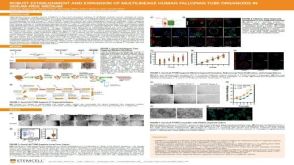
Human airway organoid engineering as a step toward lung regeneration and disease modeling
Organoids represent both a potentially powerful tool for the study cell-cell interactions within tissue-like environments,and a platform for tissue regenerative approaches. The development of lung tissue-like organoids from human adult-derived cells has not previously been reported. Here we combined human adult primary bronchial epithelial cells,lung fibroblasts,and lung microvascular endothelial cells in supportive 3D culture conditions to generate airway organoids. We demonstrate that randomly-seeded mixed cell populations undergo rapid condensation and self-organization into discrete epithelial and endothelial structures that are mechanically robust and stable during long term culture. After condensation airway organoids generate invasive multicellular tubular structures that recapitulate limited aspects of branching morphogenesis,and require actomyosin-mediated force generation and YAP/TAZ activation. Despite the proximal source of primary epithelium used in the airway organoids,discrete areas of both proximal and distal epithelial markers were observed over time in culture,demonstrating remarkable epithelial plasticity within the context of organoid cultures. Airway organoids also exhibited complex multicellular responses to a prototypical fibrogenic stimulus (TGF-??1) in culture,and limited capacity to undergo continued maturation and engraftment after ectopic implantation under the murine kidney capsule. These results demonstrate that the airway organoid system developed here represents a novel tool for the study of disease-relevant cell-cell interactions,and establishes this platform as a first step toward cell-based therapy for chronic lung diseases based on de novo engineering of implantable airway tissues.
View Publication
产品类型:
产品号#:
05001
05021
05022
产品名:
PneumaCult™-ALI 培养基
PneumaCult™-ALI 培养基含12 mm Transwell®插件
PneumaCult™-ALI 培养基含6.5 mm Transwell®插件
Zhu S et al. (JUN 2017)
Nature 546 7660 667--670
Nlrp9b inflammasome restricts rotavirus infection in intestinal epithelial cells.
Rotavirus,a leading cause of severe gastroenteritis and diarrhoea in young children,accounts for around 215,000 deaths annually worldwide. Rotavirus specifically infects the intestinal epithelial cells in the host small intestine and has evolved strategies to antagonize interferon and NF-κB signalling,raising the question as to whether other host factors participate in antiviral responses in intestinal mucosa. The mechanism by which enteric viruses are sensed and restricted in vivo,especially by NOD-like receptor (NLR) inflammasomes,is largely unknown. Here we uncover and mechanistically characterize the NLR Nlrp9b that is specifically expressed in intestinal epithelial cells and restricts rotavirus infection. Our data show that,via RNA helicase Dhx9,Nlrp9b recognizes short double-stranded RNA stretches and forms inflammasome complexes with the adaptor proteins Asc and caspase-1 to promote the maturation of interleukin (Il)-18 and gasdermin D (Gsdmd)-induced pyroptosis. Conditional depletion of Nlrp9b or other inflammasome components in the intestine in vivo resulted in enhanced susceptibility of mice to rotavirus replication. Our study highlights an important innate immune signalling pathway that functions in intestinal epithelial cells and may present useful targets in the modulation of host defences against viral pathogens.
View Publication
产品类型:
产品号#:
06005
产品名:
IntestiCult™ 肠道类器官生长培养基 (小鼠)
C. L. Kraft et al. (NOV 2017)
Oncotarget 8 61 102923--102933
GUCY2C maintains intestinal LGR5+stem cells by opposing ER stress.
Long-lived multipotent stem cells (ISCs) at the base of intestinal crypts adjust their phenotypes to accommodate normal maintenance and post-injury regeneration of the epithelium. Their long life,lineage plasticity,and proliferative potential underlie the necessity for tight homeostatic regulation of the ISC compartment. In that context,the guanylate cyclase C (GUCY2C) receptor and its paracrine ligands regulate intestinal epithelial homeostasis,including proliferation,lineage commitment,and DNA damage repair. However,a role for this axis in maintaining ISCs remains unknown. Transgenic mice enabling analysis of ISCs (Lgr5-GFP) in the context of GUCY2C elimination (Gucy2c -/- ) were combined with immunodetection techniques and pharmacological treatments to define the role of the GUCY2C signaling axis in supporting ISCs. ISCs were reduced inGucy2c -/- mice,associated with loss of active Lgr5+cells but a reciprocal increase in reserve Bmi1+cells. GUCY2C was expressed in crypt base Lgr5+cells in which it mediates canonical cyclic (c) GMP-dependent signaling. Endoplasmic reticulum (ER) stress,typically absent from ISCs,was elevated throughout the crypt base inGucy2c -/- mice. The chemical chaperone tauroursodeoxycholic acid resolved this ER stress and restored the balance of ISCs,an effect mimicked by the GUCY2C effector 8Br-cGMP. Reduced ISCs inGucy2c -/- mice was associated with greater epithelial injury and impaired regeneration following sub-lethal doses of irradiation. These observations suggest that GUCY2C provides homeostatic signals that modulate ER stress and cell vulnerability as part of the machinery contributing to the integrity of ISCs.
View Publication
产品类型:
产品号#:
06005
产品名:
IntestiCult™ 肠道类器官生长培养基 (小鼠)
Cao X et al. (JAN 2015)
Respiratory research 16 30
Tight junction disruption by cadmium in an in vitro human airway tissue model.
BACKGROUND: The cadmium (Cd) present in air pollutants and cigarette smoke has the potential of causing multiple adverse health outcomes involving damage to pulmonary and cardiovascular tissue. Injury to pulmonary epithelium may include alterations in tight junction (TJ) integrity,resulting in impaired epithelial barrier function and enhanced penetration of chemicals and biomolecules. Herein,we investigated mechanisms involved in the disruption of TJ integrity by Cd exposure using an in vitro human air-liquid-interface (ALI) airway tissue model derived from normal primary human bronchial epithelial cells. METHODS: ALI cultures were exposed to noncytotoxic doses of CdCl2 basolaterally and TJ integrity was measured by Trans-Epithelial Electrical Resistance (TEER) and immunofluorescence staining with TJ markers. PCR array analysis was used to identify genes involved with TJ collapse. To explore the involvement of kinase signaling pathways,cultures were treated with CdCl2 in the presence of kinase inhibitors specific for cellular Src or Protein Kinase C (PKC). RESULTS: Noncytotoxic doses of CdCl2 resulted in the collapse of barrier function,as demonstrated by TEER measurements and Zonula occludens-1 (ZO-1) and occludin staining. CdCl2 exposure altered the expression of several groups of genes encoding proteins involved in TJ homeostasis. In particular,down-regulation of select junction-interacting proteins suggested that a possible mechanism for Cd toxicity involves disruption of the peripheral junctional complexes implicated in connecting membrane-bound TJ components to the actin cytoskeleton. Inhibition of kinase signaling using inhibitors specific for cellular Src or PKC preserved the integrity of TJs,possibly by preventing occludin tyrosine hyperphosphorylation,rather than reversing the down-regulation of the junction-interacting proteins. CONCLUSIONS: Our findings indicate that acute doses of Cd likely disrupt TJ integrity in human ALI airway cultures both through occludin hyperphosphorylation via kinase activation and by direct disruption of the junction-interacting complex.
View Publication
Graham JD et al. (JUL 2009)
Endocrinology 150 7 3318--26
DNA replication licensing and progenitor numbers are increased by progesterone in normal human breast.
Proliferation in the nonpregnant human breast is highest in the luteal phase of the menstrual cycle when serum progesterone levels are high,and exposure to progesterone analogues in hormone replacement therapy is known to elevate breast cancer risk,yet the proliferative effects of progesterone in the human breast are poorly understood. In a model of normal human breast,we have shown that progesterone increased incorporation of 5-bromo-2'-deoxyuridine and increased cell numbers by activation of pathways involved in DNA replication licensing,including E2F transcription factors,chromatin licensing and DNA replication factor 1 (Cdt1),and the minichromosome maintenance proteins and by increased expression of proteins involved in kinetochore formation including Ras-related nuclear protein (Ran) and regulation of chromosome condensation 1 (RCC1). Progenitor cells competent to give rise to both myoepithelial and luminal epithelial cells were increased by progesterone,showing that progesterone influences epithelial cell lineage differentiation. Therefore,we have demonstrated that progesterone augments proliferation of normal human breast cells by both activating DNA replication licensing and kinetochore formation and increasing bipotent progenitor numbers.
View Publication
产品类型:
产品号#:
01700
01705
01702
产品名:
ALDEFLUOR™ 试剂盒
ALDEFLUOR™ DEAB试剂
ALDEFLUOR™测定缓冲液
Yan Z et al. (AUG 2017)
Human gene therapy 28 8 612--625
Human Bocavirus Type-1 Capsid Facilitates the Transduction of Ferret Airways by Adeno-Associated Virus Genomes.
Human bocavirus type-1 (HBoV1) has a high tropism for the apical membrane of human airway epithelia. The packaging of a recombinant adeno-associated virus 2 (rAAV2) genome into HBoV1 capsid produces a chimeric vector (rAAV2/HBoV1) that also efficiently transduces human airway epithelia. As such,this vector is attractive for use in gene therapies to treat lung diseases such as cystic fibrosis. However,preclinical development of rAAV2/HBoV1 vectors has been hindered by the fact that humans are the only known host for HBoV1 infection. This study reports that rAAV2/HBoV1 vector is capable of efficiently transducing the lungs of both newborn (3- to 7-day-old) and juvenile (29-day-old) ferrets,predominantly in the distal airways. Analyses of in vivo,ex vivo,and in vitro models of the ferret proximal airway demonstrate that infection of this particular region is less effective than it is in humans. Studies of vector binding and endocytosis in polarized ferret proximal airway epithelial cultures revealed that a lack of effective vector endocytosis is the main cause of inefficient transduction in vitro. While transgene expression declined proportionally with growth of the ferrets following infection at 7 days of age,reinfection of ferrets with rAAV2/HBoV1 at 29 days gave rise to approximately 5-fold higher levels of transduction than observed in naive infected 29-day-old animals. The findings presented here lay the foundation for clinical development of HBoV1 capsid-based vectors for lung gene therapy in cystic fibrosis using ferret models.
View Publication
产品类型:
产品号#:
05001
05021
05022
产品名:
PneumaCult™-ALI 培养基
PneumaCult™-ALI 培养基含12 mm Transwell®插件
PneumaCult™-ALI 培养基含6.5 mm Transwell®插件
C. Bouffi et al. (Jun 2023)
Nature biotechnology 41 824-831
In vivo development of immune tissue in human intestinal organoids transplanted into humanized mice.
Human intestinal organoids (HIOs) derived from pluripotent stem cells provide a valuable model for investigating human intestinal organogenesis and physiology,but they lack the immune components required to fully recapitulate the complexity of human intestinal biology and diseases. To address this issue and to begin to decipher human intestinal-immune crosstalk during development,we generated HIOs containing immune cells by transplanting HIOs under the kidney capsule of mice with a humanized immune system. We found that human immune cells temporally migrate to the mucosa and form cellular aggregates that resemble human intestinal lymphoid follicles. Moreover,after microbial exposure,epithelial microfold cells are increased in number,leading to immune cell activation determined by the secretion of IgA antibodies in the HIO lumen. This in vivo HIO system with human immune cells provides a framework for future studies on infection- or allergen-driven intestinal diseases.
View Publication
Ibiza S et al. (JUL 2016)
Nature 535 7612 440--443
Glial-cell-derived neuroregulators control type 3 innate lymphoid cells and gut defence.
Group 3 innate lymphoid cells (ILC3) are major regulators of inflammation and infection at mucosal barriers. ILC3 development is thought to be programmed,but how ILC3 perceive,integrate and respond to local environmental signals remains unclear. Here we show that ILC3 in mice sense their environment and control gut defence as part of a glial"ILC3"epithelial cell unit orchestrated by neurotrophic factors. We found that enteric ILC3 express the neuroregulatory receptor RET. ILC3-autonomous Ret ablation led to decreased innate interleukin-22 (IL-22),impaired epithelial reactivity,dysbiosis and increased susceptibility to bowel inflammation and infection. Neurotrophic factors directly controlled innate Il22 downstream of the p38 MAPK/ERK-AKT cascade and STAT3 activation. Notably,ILC3 were adjacent to neurotrophic-factor-expressing glial cells that exhibited stellate-shaped projections into ILC3 aggregates. Glial cells sensed microenvironmental cues in a MYD88-dependent manner to control neurotrophic factors and innate IL-22. Accordingly,glial-intrinsic Myd88 deletion led to impaired production of ILC3-derived IL-22 and a pronounced propensity towards gut inflammation and infection. Our work sheds light on a novel multi-tissue defence unit,revealing that glial cells are central hubs of neuron and innate immune regulation by neurotrophic factor signals.
View Publication


 EasySep™小鼠TIL(CD45)正选试剂盒






 沪公网安备31010102008431号