Heringer-Walther S et al. (JUN 2009)
Haematologica 94 6 857--60
Angiotensin-(1-7) stimulates hematopoietic progenitor cells in vitro and in vivo.
Effects of angiotensin (Ang)-(1-7),an AngII metabolite,on bone marrow-derived hematopoietic cells were studied. We identified Ang-(1-7) to stimulate proliferation of human CD34(+) and mononuclear cells in vitro. Under in vivo conditions,we monitored proliferation and differentiation of human cord blood mononuclear cells in NOD/SCID mice. Ang-(1-7) stimulated differentially human cells in bone marrow and accumulated them in the spleen. The number of HLA-I(+) and CD34(+) cells in the bone marrow was increased 42-fold and 600-fold,respectively. These results indicate a decisive impact of Ang-(1-7) on hematopoiesis and its promising therapeutic potential in diseases requiring progenitor stimulation.
View Publication
产品类型:
产品号#:
09600
09650
产品名:
StemSpan™ SFEM
StemSpan™ SFEM
Esplin BL et al. (MAY 2011)
Journal of immunology (Baltimore,Md. : 1950) 186 9 5367--75
Chronic exposure to a TLR ligand injures hematopoietic stem cells.
Hematopoietic stem cells (HSC) can be harmed by disease,chemotherapy,radiation,and normal aging. We show in this study that damage also occurs in mice repeatedly treated with very low doses of LPS. Overall health of the animals was good,and there were relatively minor changes in marrow hematopoietic progenitors. However,HSC were unable to maintain quiescence,and transplantation revealed them to be myeloid skewed. Moreover,HSC from treated mice were not sustained in serial transplants and produced lymphoid progenitors with low levels of the E47 transcription factor. This phenomenon was previously seen in normal aging. Screening identified mAbs that resolve HSC subsets,and relative proportions of these HSC changed with age and/or chronic LPS treatment. For example,minor CD150(Hi)CD48(-) populations lacking CD86 or CD18 expanded. Simultaneous loss of CD150(Lo/-)CD48(-) HSC and gain of the normally rare subsets,in parallel with diminished transplantation potential,would be consistent with age- or TLR-related injury. In contrast,HSC in old mice differed from those in LPS-treated animals with respect to VCAM-1 or CD41 expression and lacked proliferation abnormalities. HSC can be exposed to endogenous and pathogen-derived TLR ligands during persistent low-grade infections. This stimulation might contribute in part to HSC senescence and ultimately compromise immunity.
View Publication
产品类型:
产品号#:
03434
03444
产品名:
MethoCult™GF M3434
MethoCult™GF M3434
Sakai R et al. (MAR 2003)
Toxicological sciences : an official journal of the Society of Toxicology 72 1 84--91
TCDD treatment eliminates the long-term reconstitution activity of hematopoietic stem cells.
2,3,7,8-tetrachlorodibenzo-p-dioxin (TCDD),an endocrine disrupting chemical (EDC),can cause carcinogenesis,immunosuppression,and teratogenesis,through a ligand-activated transcription factor,the aryl hydrocarbon receptor (AhR). Despite remarkable recent advances in stem cell biology,the influence of TCDD on hematopoietic stem cells (HSCs),which possess the ability to reconstitute long-term multilineage hematopoiesis,has not been well investigated. In this study we examined the influence of TCDD on HSCs enriched for CD34(-),c-kit(+),Sca-1(+),lineage negative (CD34-KSL) cells. The number of the CD34-KSL cells was found to be increased about four-fold upon a single oral administration of TCDD (40 micro g/kg body weight). Surprisingly,we found that these TCDD-treated cells almost lost long-term reconstitution activity. This defect was not present in AhR(-/-) mice. These findings suggest that modulation of AhR/ARNT system activity may have an effect on HSC function or survival.
View Publication
Singh KP et al. (JAN 2009)
Carcinogenesis 30 1 11--9
Treatment of mice with the Ah receptor agonist and human carcinogen dioxin results in altered numbers and function of hematopoietic stem cells.
The aryl hydrocarbon receptor (AhR) mediates the carcinogenicity of a family of environmental contaminants,the most potent being 2,3,7,8-tetrachlorodibenzo-p-dioxin (TCDD). Increased incidence of lymphoma and leukemia in humans is associated with TCDD exposure. Although AhR activation by TCDD has profound effects on the immune system,precise cellular and molecular mechanisms have yet to be determined. These studies tested the hypothesis that alteration of marrow populations following treatment of mice with TCDD is due to an effect on hematopoietic stem cells (HSCs). Treatment with TCDD resulted in an increased number and proliferation of bone marrow (BM) populations enriched for HSCs. There was a time-dependent decrease in B-lineage cells with a concomitant increase in myeloid populations. The decrease in the B-cell lineage colony-forming unit-preB progenitors along with a transient increase in myeloid progenitors were consistent with a skewing of lineage development from lymphoid to myeloid populations. However,HSCs from TCDD-treated mice exhibited diminished capacity to reconstitute and home to marrow of irradiated recipients. AhR messenger RNA was expressed in progenitor subsets but is downregulated during HSC proliferation. This result was consistent with the lack of response following the exposure of 5-fluorouracil-treated mice to TCDD. The direct exposure of cultured BM cells to TCDD inhibited the growth of immature hematopoietic progenitor cells,but not more mature lineage-restricted progenitors. Overall,these data are consistent with the hypothesis that TCDD,through AhR activation,alters the ability of HSCs to respond appropriately to signals within the marrow microenvironment.
View Publication
Young J et al. (SEP 2015)
Journal of Immunological Methods 424 91--99
A novel immunoassay to measure total serum lymphotoxin�?α levels in the presence of an anti-LTα therapeutic antibody
During drug development,measurement of suitable pharmacodynamic biomarkers is key to establishing in vivo drug activity. Binding of monoclonal antibody (mAb) therapeutics to soluble target proteins often results in elevated serum levels of their target antigen,and measuring total (free and bound) concentration of the target antigen can be an important means of demonstrating that the mAb has reached its specific target. However,accurately measuring soluble circulating antigen in preclinical or clinical samples in the presence of a therapeutic mAb presents a bioanalytical challenge. Particularly in the case of low molecular weight and/or multimeric targets,epitopes for capture and detection of the target by reagent antibodies can be obscured by bound therapeutic mAb. Lymphotoxin-alpha (LTα) is a cytokine in the TNF superfamily that has been implicated in the pathophysiology of autoimmune disease,and is a therapeutic target for neutralizing mAb. During preclinical safety studies in cynomolgus macaques,we encountered difficulties in measuring total LTα in serum of dosed animals. When serum LTα trimer was saturated with the anti-LTα mAb,binding of two reagent antibodies,as required for a classic sandwich ELISA,was not feasible,and dissociation methods were also found to be unsuitable. We therefore developed an approach in which excess anti-LTα mAb was added to the in vitro assay system to fully saturate all binding sites,and an anti-idiotypic antibody was used to detect bound therapeutic antibody. Using this method,total LTα could be accurately measured in cynomolgus macaque serum,and was observed to increase with increasing anti-LTα therapeutic mAb dose. Additional in vitro studies demonstrated that the method worked equally well in human serum. This assay strategy will be useful for quantifying total concentrations of other small and/or multimeric target proteins in the presence of a therapeutic antibody.
View Publication


 EasySep™小鼠TIL(CD45)正选试剂盒




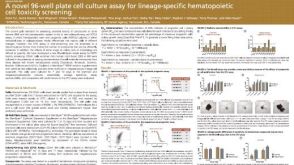 科学海报A Novel 96-well Plate Cell Culture Assay for Lineage-Specific Hematopoietic Cell Toxicity Screening
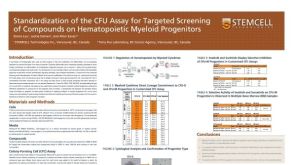 科学海报Standardization of the CFU Assay for Targeted Screening of Compounds on Hematopoietic Myeloid Progenitors




 沪公网安备31010102008431号