Heringer-Walther S et al. (JUN 2009)
Haematologica 94 6 857--60
Angiotensin-(1-7) stimulates hematopoietic progenitor cells in vitro and in vivo.
Effects of angiotensin (Ang)-(1-7),an AngII metabolite,on bone marrow-derived hematopoietic cells were studied. We identified Ang-(1-7) to stimulate proliferation of human CD34(+) and mononuclear cells in vitro. Under in vivo conditions,we monitored proliferation and differentiation of human cord blood mononuclear cells in NOD/SCID mice. Ang-(1-7) stimulated differentially human cells in bone marrow and accumulated them in the spleen. The number of HLA-I(+) and CD34(+) cells in the bone marrow was increased 42-fold and 600-fold,respectively. These results indicate a decisive impact of Ang-(1-7) on hematopoiesis and its promising therapeutic potential in diseases requiring progenitor stimulation.
View Publication
产品类型:
产品号#:
09600
09650
产品名:
StemSpan™ SFEM
StemSpan™ SFEM
Esplin BL et al. (MAY 2011)
Journal of immunology (Baltimore,Md. : 1950) 186 9 5367--75
Chronic exposure to a TLR ligand injures hematopoietic stem cells.
Hematopoietic stem cells (HSC) can be harmed by disease,chemotherapy,radiation,and normal aging. We show in this study that damage also occurs in mice repeatedly treated with very low doses of LPS. Overall health of the animals was good,and there were relatively minor changes in marrow hematopoietic progenitors. However,HSC were unable to maintain quiescence,and transplantation revealed them to be myeloid skewed. Moreover,HSC from treated mice were not sustained in serial transplants and produced lymphoid progenitors with low levels of the E47 transcription factor. This phenomenon was previously seen in normal aging. Screening identified mAbs that resolve HSC subsets,and relative proportions of these HSC changed with age and/or chronic LPS treatment. For example,minor CD150(Hi)CD48(-) populations lacking CD86 or CD18 expanded. Simultaneous loss of CD150(Lo/-)CD48(-) HSC and gain of the normally rare subsets,in parallel with diminished transplantation potential,would be consistent with age- or TLR-related injury. In contrast,HSC in old mice differed from those in LPS-treated animals with respect to VCAM-1 or CD41 expression and lacked proliferation abnormalities. HSC can be exposed to endogenous and pathogen-derived TLR ligands during persistent low-grade infections. This stimulation might contribute in part to HSC senescence and ultimately compromise immunity.
View Publication
产品类型:
产品号#:
03434
03444
产品名:
MethoCult™GF M3434
MethoCult™GF M3434
Sakai R et al. (MAR 2003)
Toxicological sciences : an official journal of the Society of Toxicology 72 1 84--91
TCDD treatment eliminates the long-term reconstitution activity of hematopoietic stem cells.
2,3,7,8-tetrachlorodibenzo-p-dioxin (TCDD),an endocrine disrupting chemical (EDC),can cause carcinogenesis,immunosuppression,and teratogenesis,through a ligand-activated transcription factor,the aryl hydrocarbon receptor (AhR). Despite remarkable recent advances in stem cell biology,the influence of TCDD on hematopoietic stem cells (HSCs),which possess the ability to reconstitute long-term multilineage hematopoiesis,has not been well investigated. In this study we examined the influence of TCDD on HSCs enriched for CD34(-),c-kit(+),Sca-1(+),lineage negative (CD34-KSL) cells. The number of the CD34-KSL cells was found to be increased about four-fold upon a single oral administration of TCDD (40 micro g/kg body weight). Surprisingly,we found that these TCDD-treated cells almost lost long-term reconstitution activity. This defect was not present in AhR(-/-) mice. These findings suggest that modulation of AhR/ARNT system activity may have an effect on HSC function or survival.
View Publication
Young J et al. (SEP 2015)
Journal of Immunological Methods 424 91--99
A novel immunoassay to measure total serum lymphotoxin�?α levels in the presence of an anti-LTα therapeutic antibody
During drug development,measurement of suitable pharmacodynamic biomarkers is key to establishing in vivo drug activity. Binding of monoclonal antibody (mAb) therapeutics to soluble target proteins often results in elevated serum levels of their target antigen,and measuring total (free and bound) concentration of the target antigen can be an important means of demonstrating that the mAb has reached its specific target. However,accurately measuring soluble circulating antigen in preclinical or clinical samples in the presence of a therapeutic mAb presents a bioanalytical challenge. Particularly in the case of low molecular weight and/or multimeric targets,epitopes for capture and detection of the target by reagent antibodies can be obscured by bound therapeutic mAb. Lymphotoxin-alpha (LTα) is a cytokine in the TNF superfamily that has been implicated in the pathophysiology of autoimmune disease,and is a therapeutic target for neutralizing mAb. During preclinical safety studies in cynomolgus macaques,we encountered difficulties in measuring total LTα in serum of dosed animals. When serum LTα trimer was saturated with the anti-LTα mAb,binding of two reagent antibodies,as required for a classic sandwich ELISA,was not feasible,and dissociation methods were also found to be unsuitable. We therefore developed an approach in which excess anti-LTα mAb was added to the in vitro assay system to fully saturate all binding sites,and an anti-idiotypic antibody was used to detect bound therapeutic antibody. Using this method,total LTα could be accurately measured in cynomolgus macaque serum,and was observed to increase with increasing anti-LTα therapeutic mAb dose. Additional in vitro studies demonstrated that the method worked equally well in human serum. This assay strategy will be useful for quantifying total concentrations of other small and/or multimeric target proteins in the presence of a therapeutic antibody.
View Publication
产品类型:
产品号#:
产品名:
Charrier S et al. (AUG 2004)
Blood 104 4 978--85
Inhibition of angiotensin I-converting enzyme induces radioprotection by preserving murine hematopoietic short-term reconstituting cells.
Angiotensin I-converting enzyme (ACE) inhibitors can affect hematopoiesis by several mechanisms including inhibition of angiotensin II formation and increasing plasma concentrations of AcSDKP (acetyl-N-Ser-Asp-Lys-Pro),an ACE substrate and a negative regulator of hematopoiesis. We tested whether ACE inhibition could decrease the hematopoietic toxicity of lethal or sublethal irradiation protocols. In all cases,short treatment with the ACE inhibitor perindopril protected against irradiation-induced death. ACE inhibition accelerated hematopoietic recovery and led to a significant increase in platelet and red cell counts. Pretreatment with perindopril increased bone marrow cellularity and the number of hematopoietic progenitors (granulocyte macrophage colony-forming unit [CFU-GM],erythroid burst-forming unit [BFU-E],and megakaryocyte colony-forming unit [CFU-MK]) from day 7 to 28 after irradiation. Perindopril also increased the number of hematopoietic stem cells with at least a short-term reconstitutive activity in animals that recovered from irradiation. To determine the mechanism of action involved,we evaluated the effects of increasing AcSDKP plasma concentrations and of an angiotensin II type 1 (AT1) receptor antagonist (telmisartan) on radioprotection. We found that the AT1-receptor antagonism mediated similar radioprotection as the ACE inhibitor. These results suggest that ACE inhibitors and AT1-receptor antagonists could be used to decrease the hematopoietic toxicity of irradiation.
View Publication
产品类型:
产品号#:
03134
产品名:
MethoCult™M3134
York D et al. (DEC 2016)
BMC Biotechnology 16 1 23
Generating aldehyde-tagged antibodies with high titers and high formylglycine yields by supplementing culture media with copper(II)
BACKGROUND The ability to site-specifically conjugate a protein to a payload of interest (e.g.,a fluorophore,small molecule pharmacophore,oligonucleotide,or other protein) has found widespread application in basic research and drug development. For example,antibody-drug conjugates represent a class of biotherapeutics that couple the targeting specificity of an antibody with the chemotherapeutic potency of a small molecule drug. While first generation antibody-drug conjugates (ADCs) used random conjugation approaches,next-generation ADCs are employing site-specific conjugation. A facile way to generate site-specific protein conjugates is via the aldehyde tag technology,where a five amino acid consensus sequence (CXPXR) is genetically encoded into the protein of interest at the desired location. During protein expression,the Cys residue within this consensus sequence can be recognized by ectopically-expressed formylglycine generating enzyme (FGE),which converts the Cys to a formylglycine (fGly) residue. The latter bears an aldehyde functional group that serves as a chemical handle for subsequent conjugation. RESULTS The yield of Cys conversion to fGly during protein production can be variable and is highly dependent on culture conditions. We set out to achieve consistently high yields by modulating culture conditions to maximize FGE activity within the cell. We recently showed that FGE is a copper-dependent oxidase that binds copper in a stoichiometric fashion and uses it to activate oxygen,driving enzymatic turnover. Building upon that work,here we show that by supplementing cell culture media with copper we can routinely reach high yields of highly converted protein. We demonstrate that cells incorporate copper from the media into FGE,which results in increased specific activity of the enzyme. The amount of copper required is compatible with large scale cell culture,as demonstrated in fed-batch cell cultures with antibody titers of 5 g textperiodcentered L(-1),specific cellular production rates of 75 pg textperiodcentered cell(-1) textperiodcentered d(-1),and fGly conversion yields of 95-98 %. CONCLUSIONS We describe a process with a high yield of site-specific formylglycine (fGly) generation during monoclonal antibody production in CHO cells. The conversion of Cys to fGly depends upon the activity of FGE,which can be ensured by supplementing the culture media with 50 uM copper(II) sulfate.
View Publication
产品类型:
产品号#:
03814
产品名:
ClonaCell™-TCS培养基
Kuroki MM et al. ( 2005)
Anticancer Research 25 6A 3733--9
Preparation of human IgG and IgM monoclonal antibodies for MK-1/Ep-CAM by using human immunoglobulin gene-transferred mouse and gene cloning of their variable regions.
For antibody-based therapy of cancer,monoclonal antibodies (mAbs) of human origin are superior to mouse,mouse/human chimeric or humanized mAbs,because of their minimum immunogenicity to humans and their efficient collaboration with human effector cells. In the present study,human mAbs were prepared against a pancarcinoma antigen,MK-1 (Ep-CAM),using a genetically-engineered mouse (KM mouse) that contains the human immunoglobulin genes. Spleen cells from KM mice,immunized with recombinant MK-1,were fused with P3-U1 mouse myeloma cells. Of 44 anti-MK-1 clones analyzed,two were of IgG4 and the others of IgM clones. Although the two IgG4 clones were suggested to recognize the same antigenic determinant or two closely located determinants,their VK regions were encoded by different light-chain genes while their VH sequences were identical. The two IgG4 and one of the IgM clones tested revealed antibody-dependent cell-mediated cytotoxicity and complement-dependent cytotoxicity,respectively,against MK-1-expressing cells in vitro,suggesting that these fully human mAbs produced against MK-1 and their V-region genes,which are applicable for the preparation of engineered antibody fragments that may be useful for antibody-based therapy of cancer.
View Publication


 EasySep™小鼠TIL(CD45)正选试剂盒




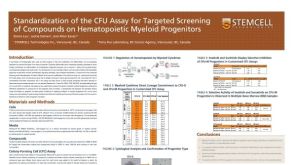 科学海报Standardization of the CFU Assay for Targeted Screening of Compounds on Hematopoietic Myeloid Progenitors
 产品手册Culture and Expand Mouse Myogenic Progenitors
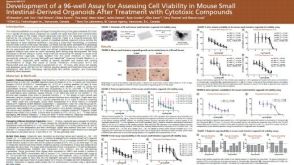 科学海报Development of a 96-well Assay for Assessing Cell Viability in Mouse Small Intestinal-Derived Organoids after Treatment with Cytotoxic Compounds


 沪公网安备31010102008431号