Shahbazi M et al. (JUL 2013)
Journal of the Neurological Sciences 330 1–2 85--93
Inhibitory effects of neural stem cells derived from human embryonic stem cells on differentiation and function of monocyte-derived dendritic cells
Neural stem cells (NSCs) possess immunosuppressive characteristics,but effects of NSCs on human dendritic cells (DCs),the most important antigen presenting cells,are less well studied. We used an in vitro approach to evaluate the effects of human NSCs on differentiation of human blood CD14+ monocytes into DCs. NSCs derived from H1 human embryonic stem cells (hESC-NSCs) and human ReNcell NSC line,as well as human bone marrow derived mesenchymal stem cells (MSCs),were tested. We observed that in response to treatment with interleukin-4 and granulocyte macrophage colony-stimulating factor CD14+ monocytes co-cultured with NSCs were able to down-regulate CD14 and up-regulate the differentiation marker CD1a,whereas MSC co-culture strongly inhibited CD1a expression and supported prolonged expression of CD14. A similar difference between NSCs and MSCs was noted when lipopolysaccharides were included to induce maturation of monocyte-derived DCs. However,when effects on the function of derived DCs were investigated,NSCs suppressed the elevation of the DC maturation marker CD83,although not the up-regulation of costimulatory molecules CD80,CD86 and CD40,and impaired the functional capacity of the derived DCs to stimulate alloreactive T cells. We did not observe any obvious difference between hESC-NSCs and ReNcell NSCs in inhibiting DC maturation and function. Our data suggest that although human NSCs are less effective than human MSCs in suppressing monocyte differentiation into DCs,these stem cells can still affect the function of DCs,ultimately regulating specific immune responses.
View Publication
Androgenetic embryonic stem cells form neural progenitor cells in vivo and in vitro.
Uniparental zygotes with two paternal (androgenetic [AG]) or two maternal (gynogenetic [GG]; parthenogenetic [PG]) genomes are not able to develop into viable offspring but can form blastocysts from which embryonic stem cells (ESCs) can be derived. Although some aspects of the in vitro and in vivo differentiation potential of PG and GG ESCs of several species have been studied,the developmental capacity of AG ESCs is much less clear. Here,we investigate the potential of murine AG ESCs to undergo neural differentiation. We observed that AG ESCs differentiate in vitro into pan-neural progenitor cells (pnPCs) that further give rise to cells that express neuronal- and astroglial-specific markers. Neural progeny of in vitro-differentiated AG ESCs exhibited fidelity of expression of six imprinted genes analyzed,with the exception of Ube3a. Bisulfite sequencing for two imprinting control regions suggested that pnPCs predominantly maintained their methylation pattern. Following blastocyst injection of AG and biparental (normal fertilized [N]) ESCs,we found widespread and evenly distributed contribution of ESC-derived cells in both AG and N chimeric early fetal brains. AG and N ESC-derived cells isolated from chimeric fetal brains by fluorescence-activated cell sorting exhibited similar neurosphere-initiating cell frequencies and neural multilineage differentiation potential. Our results indicate that AG ESC-derived neural progenitor/stem cells do not differ from N neural progenitor/stem cells in their self-renewal and neural multilineage differentiation potential. Disclosure of potential conflicts of interest is found at the end of this article.
View Publication
产品类型:
产品号#:
05703
产品名:
NeuroCult™ 分化添加物 (小鼠&大鼠)
Belkind-Gerson J et al. (JAN 2013)
Neurogastroenterology and motility : the official journal of the European Gastrointestinal Motility Society 25 1 61--9.e7
Nestin-expressing cells in the gut give rise to enteric neurons and glial cells.
BACKGROUND Neuronal stem cells (NSCs) are promising for neurointestinal disease therapy. Although NSCs have been isolated from intestinal musclularis,their presence in mucosa has not been well described. Mucosa-derived NSCs are accessible endoscopically and could be used autologously. Brain-derived Nestin-positive NSCs are important in endogenous repair and plasticity. The aim was to isolate and characterize mucosa-derived NSCs,determine their relationship to Nestin-expressing cells and to demonstrate their capacity to produce neuroglial networks in vitro and in vivo. METHODS Neurospheres were generated from periventricular brain,colonic muscularis (Musc),and mucosa-submucosa (MSM) of mice expressing green fluorescent protein (GFP) controlled by the Nestin promoter (Nestin-GFP). Neuronal stem cells were also grown as adherent colonies from intestinal mucosal organoids. Their differentiation potential was assessed using immunohistochemistry using glial and neuronal markers. Brain and gut-derived neurospheres were transplanted into explants of chick embryonic aneural hindgut to determine their fate. KEY RESULTS Musc- and MSM-derived neurospheres expressed Nestin and gave rise to cells of neuronal,glial,and mesenchymal lineage. Although Nestin expression in tissue was mostly limited to glia co-labelled with glial fibrillary acid protein (GFAP),neurosphere-derived neurons and glia both expressed Nestin in vitro,suggesting that Nestin+/GFAP+ glial cells may give rise to new neurons. Moreover,following transplantation into aneural colon,brain- and gut-derived NSCs were able to differentiate into neurons. CONCLUSIONS & INFERENCES Nestin-expressing intestinal NSCs cells give rise to neurospheres,differentiate into neuronal,glial,and mesenchymal lineages in vitro,generate neurons in vivo and can be isolated from mucosa. Further studies are needed for exploring their potential for treating neuropathies.
View Publication
产品类型:
产品号#:
05700
05701
05702
05703
05704
05715
产品名:
NeuroCult™ 基础培养基(小鼠&大鼠)
NeuroCult™ 扩增添加物 (小鼠&大鼠)
NeuroCult™ 扩增试剂盒 (小鼠&大鼠)
NeuroCult™ 分化添加物 (小鼠&大鼠)
NeuroCult™ 分化试剂盒 (小鼠&大鼠)
NeuroCult™成年中枢神经系统(CNS)组织酶解试剂盒(小鼠和大鼠)
Oz S et al. (JAN 2012)
PloS one 7 12 e51458
The ADNP derived peptide, NAP modulates the tubulin pool: implication for neurotrophic and neuroprotective activities.
Microtubules (MTs),key cytoskeletal elements in living cells,are critical for axonal transport,synaptic transmission,and maintenance of neuronal morphology. NAP (NAPVSIPQ) is a neuroprotective peptide derived from the essential activity-dependent neuroprotective protein (ADNP). In Alzheimer's disease models,NAP protects against tauopathy and cognitive decline. Here,we show that NAP treatment significantly affected the alpha tubulin tyrosination cycle in the neuronal differentiation model,rat pheochromocytoma (PC12) and in rat cortical astrocytes. The effect on tubulin tyrosination/detyrosination was coupled to increased MT network area (measured in PC12 cells),which is directly related to neurite outgrowth. Tubulin beta3,a marker for neurite outgrowth/neuronal differentiation significantly increased after NAP treatment. In rat cortical neurons,NAP doubled the area of dynamic MT invasion (Tyr-tubulin) into the neuronal growth cone periphery. NAP was previously shown to protect against zinc-induced MT/neurite destruction and neuronal death,here,in PC12 cells,NAP treatment reversed zinc-decreased tau-tubulin-MT interaction and protected against death. NAP effects on the MT pool,coupled with increased tau engagement on compromised MTs imply an important role in neuronal plasticity,protecting against free tau accumulation leading to tauopathy. With tauopathy representing a major pathological hallmark in Alzheimer's disease and related disorders,the current findings provide a mechanistic basis for further development. NAP (davunetide) is in phase 2/3 clinical trial in progressive supranuclear palsy,a disease presenting MT deficiency and tau pathology.
View Publication
Choi SA et al. (NOV 2012)
Cancer Letters 324 2 221--230
A distinct subpopulation within CD133 positive brain tumor cells shares characteristics with endothelial progenitor cells
The cell surface marker CD133 has been proposed as a brain tumor stem cell marker. However,there have been substantial controversies regarding the necessity and role of CD133 in tumorigenesis. This study aimed to characterize CD133(+) cells in brain tumors. Human brain tumor specimens and whole blood were collected from the same patients (N=12). We carried out dual FACS staining for CD133/CD34 and functional tumorigenesis and angiogenesis analyses of CD133(+) cells from different origins. We also investigated the in vivo tumorigenic potential and histological characteristics of four distinct groups on the basis of expression of CD133/CD34 markers (CD133(+),CD133(+)/CD34(+),CD133(+)/CD34(-),and CD133(-)). CD133(+) brain tumor cells coexpressed significantly higher positivity for CD34 (70.7±5.2% in CD133(+) vs. 12.3±4.2% in CD133(-) cells,P<0.001). CD133(+) brain tumor cells formed neurosphere-like spheroids and differentiated into multiple nervous system lineages unlike CD133(+) blood cells. They showed biological characteristics of endothelial cells,including vWF expression,LDL uptake and tube formation in vitro,unlike CD133(-) brain tumors cells. Pathologic analysis of brains implanted with CD133(+) cells showed large,markedly hypervascular tumors with well-demarcated boundary. CD133(+)/CD34(-) cells produced smaller but highly infiltrative tumors. Notably,pure angiogenic cell fractions (CD133(+)/CD34(+)) and CD133(-) tumor cells did not generate tumors in vivo. Our data suggest the presence of a distinct subpopulation of CD133(+) cells isolated from human brain tumors,with characteristics of endothelial progenitor cells (EPCs).
View Publication
产品类型:
产品号#:
05750
05752
产品名:
NeuroCult™ NS-A 基础培养基(人)
NeuroCult™ NS-A 分化试剂盒 (人)
Beckerman SR et al. (SEP 2015)
ASSAY and Drug Development Technologies 13 7 377--388
Phenotypic Assays to Identify Agents That Induce Reactive Gliosis: A Counter-Screen to Prioritize Compounds for Preclinical Animal Studies
Astrocyte phenotypes change in a process called reactive gliosis after traumatic central nervous system (CNS) injury. Astrogliosis is characterized by expansion of the glial fibrillary acidic protein (GFAP) cytoskeleton,adoption of stellate morphologies,and differential expression of some extracellular matrix molecules. The astrocytic response immediately after injury is beneficial,but in the chronic injury phase,reactive astrocytes produce inhibitory factors (i.e.,chondroitin sulfate proteoglycans [CSPGs]) that limit the regrowth of injured axons. There are no drugs that promote axon regeneration or functional recovery after CNS trauma in humans. To develop novel therapeutics for the injured CNS,we screened various libraries in a phenotypic assay to identify compounds that promote neurite outgrowth. However,the effects these compounds have on astrocytes are unknown. Specifically,we were interested in whether compounds could alter astrocytes in a manner that mimics the glial reaction to injury. To test this hypothesis,we developed cell-based phenotypic bioassays to measure changes in (1) GFAP morphology/localization and (2) CSPG expression/immunoreactivity from primary astrocyte cultures. These assays were optimized for six-point dose-response experiments in 96-well plates. The GFAP morphology assay is suitable for counter-screening with a Z-factor of 0.44±0.03 (mean±standard error of the mean; N=3 biological replicates). The CSPG assay is reproducible and informative,but does not satisfy common metrics for a screenable" assay. As proof of principle we tested a small set of hit compounds from our neurite outgrowth bioassay and identified one that can enhance axon growth without exacerbating the deleterious characteristics of reactive gliosis.
View Publication
产品类型:
产品号#:
05711
100-1281
产品名:
NeuroCult™ SM1 神经添加物
NeuroCult™ SM1 神经添加物
Chaumeil MM et al. ( 2016)
NeuroImage. Clinical 12 180--9
Hyperpolarized (13)C MR imaging detects no lactate production in mutant IDH1 gliomas: Implications for diagnosis and response monitoring.
Metabolic imaging of brain tumors using (13)C Magnetic Resonance Spectroscopy (MRS) of hyperpolarized [1-(13)C] pyruvate is a promising neuroimaging strategy which,after a decade of preclinical success in glioblastoma (GBM) models,is now entering clinical trials in multiple centers. Typically,the presence of GBM has been associated with elevated hyperpolarized [1-(13)C] lactate produced from [1-(13)C] pyruvate,and response to therapy has been associated with a drop in hyperpolarized [1-(13)C] lactate. However,to date,lower grade gliomas had not been investigated using this approach. The most prevalent mutation in lower grade gliomas is the isocitrate dehydrogenase 1 (IDH1) mutation,which,in addition to initiating tumor development,also induces metabolic reprogramming. In particular,mutant IDH1 gliomas are associated with low levels of lactate dehydrogenase A (LDHA) and monocarboxylate transporters 1 and 4 (MCT1,MCT4),three proteins involved in pyruvate metabolism to lactate. We therefore investigated the potential of (13)C MRS of hyperpolarized [1-(13)C] pyruvate for detection of mutant IDH1 gliomas and for monitoring of their therapeutic response. We studied patient-derived mutant IDH1 glioma cells that underexpress LDHA,MCT1 and MCT4,and wild-type IDH1 GBM cells that express high levels of these proteins. Mutant IDH1 cells and tumors produced significantly less hyperpolarized [1-(13)C] lactate compared to GBM,consistent with their metabolic reprogramming. Furthermore,hyperpolarized [1-(13)C] lactate production was not affected by chemotherapeutic treatment with temozolomide (TMZ) in mutant IDH1 tumors,in contrast to previous reports in GBM. Our results demonstrate the unusual metabolic imaging profile of mutant IDH1 gliomas,which,when combined with other clinically available imaging methods,could be used to detect the presence of the IDH1 mutation in vivo.
View Publication
产品类型:
产品号#:
05700
05750
05751
产品名:
NeuroCult™ 基础培养基(小鼠&大鼠)
NeuroCult™ NS-A 基础培养基(人)
NeuroCult™ NS-A 扩增试剂盒(人)
Bhinge A et al. (JAN 2016)
Stem cells (Dayton,Ohio) 34 1 124--134
MiR-375 is Essential for Human Spinal Motor Neuron Development and May Be Involved in Motor Neuron Degeneration.
The transcription factor REST is a key suppressor of neuronal genes in non-neuronal tissues. REST has been shown to suppress proneuronal microRNAs in neural progenitors indicating that REST-mediated neurogenic suppression may act in part via microRNAs. We used neural differentiation of Rest-null mouse ESC to identify dozens of microRNAs regulated by REST during neural development. One of the identified microRNAs,miR-375,was upregulated during human spinal motor neuron development. We found that miR-375 facilitates spinal motor neurogenesis by targeting the cyclin kinase CCND2 and the transcription factor PAX6. Additionally,miR-375 inhibits the tumor suppressor p53 and protects neurons from apoptosis in response to DNA damage. Interestingly,motor neurons derived from a spinal muscular atrophy patient displayed depressed miR-375 expression and elevated p53 protein levels. Importantly,SMA motor neurons were significantly more susceptible to DNA damage induced apoptosis suggesting that miR-375 may play a protective role in motor neurons.
View Publication
产品类型:
产品号#:
85850
85857
产品名:
mTeSR™1
mTeSR™1
Wang L et al. (NOV 2008)
PLoS Biology 6 11 e289
Gamma-Secretase Represents a Therapeutic Target for the Treatment of Invasive Glioma Mediated by the p75 Neurotrophin Receptor
The multifunctional signaling protein p75 neurotrophin receptor (p75(NTR)) is a central regulator and major contributor to the highly invasive nature of malignant gliomas. Here,we show that neurotrophin-dependent regulated intramembrane proteolysis (RIP) of p75(NTR) is required for p75(NTR)-mediated glioma invasion,and identify a previously unnamed process for targeted glioma therapy. Expression of cleavage-resistant chimeras of p75(NTR) or treatment of animals bearing p75(NTR)-positive intracranial tumors with clinically applicable gamma-secretase inhibitors resulted in dramatically decreased glioma invasion and prolonged survival. Importantly,proteolytic processing of p75(NTR) was observed in p75(NTR)-positive patient tumor specimens and brain tumor initiating cells. This work highlights the importance of p75(NTR) as a therapeutic target,suggesting that gamma-secretase inhibitors may have direct clinical application for the treatment of malignant glioma.
View Publication


 EasySep™小鼠TIL(CD45)正选试剂盒




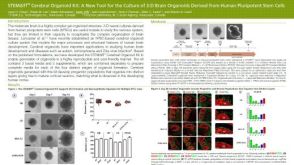 科学海报STEMdiff™ Cerebral Organoid Kit: A New Tool for the Culture of 3D Brain Organoids Derived from hPSCs

 沪公网安备31010102008431号