Metformin, a Diabetes Drug, Eliminates Tumor-Initiating Hepatocellular Carcinoma Cells
Metformin has been widely used as an oral drug for diabetes mellitus for approximately 60 years. Interestingly,recent reports showed that metformin exhibited an anti-tumor action in a wide range of malignancies including hepatocellular carcinoma (HCC). In the present study,we investigated its impact on tumor-initiating HCC cells. Metformin suppressed cell growth and induced apoptosis in a dose-dependent manner. Flow cytometric analysis showed that metformin treatment markedly reduced the number of tumor-initiating epithelial cell adhesion molecule (EpCAM)(+) HCC cells. Non-adherent sphere formation assays of EpCAM(+) cells showed that metformin impaired not only their sphere-forming ability,but also their self-renewal capability. Consistent with this,immunostaining of spheres revealed that metformin significantly decreased the number of component cells positive for hepatic stem cell markers such as EpCAM and α-fetoprotein. In a xenograft transplantation model using non-obese diabetic/severe combined immunodeficient mice,metformin and/or sorafenib treatment suppressed the growth of tumors derived from transplanted HCC cells. Notably,the administration of metformin but not sorafenib decreased the number of EpCAM(+) cells and impaired their self-renewal capability. As reported,metformin activated AMP-activated protein kinase (AMPK) through phosphorylation; however its inhibitory effect on the mammalian target of rapamycin (mTOR) pathway did not necessarily correlate with its anti-tumor activity toward EpCAM(+) tumor-initiating HCC cells. These results indicate that metformin is a promising therapeutic agent for the elimination of tumor-initiating HCC cells and suggest as-yet-unknown functions other than its inhibitory effect on the AMPK/mTOR pathway.
View Publication
Beliveau A et al. (MAY 2016)
Scientific reports 6 26143
Aligned Nanotopography Promotes a Migratory State in Glioblastoma Multiforme Tumor Cells.
Glioblastoma multiforme (GBM) is an aggressive,Grade IV astrocytoma with a poor survival rate,primarily due to the GBM tumor cells migrating away from the primary tumor site along the nanotopography of white matter tracts and blood vessels. It is unclear whether this nanotopography influences the biomechanical properties (i.e. cytoskeletal stiffness) of GBM tumor cells. Although GBM tumor cells have an innate propensity to migrate,we believe this capability is enhanced due to the influence of nanotopography on the tumor cells' biomechanical properties. In this study,we used an aligned nanofiber film that mimics the nanotopography in the tumor microenvironment to investigate the mechanical properties of GBM tumor cells in vitro. The data demonstrate that the cytoskeletal stiffness,cell traction stress,and focal adhesion area were significantly lower in the GBM tumor cells compared to healthy astrocytes. Moreover,the cytoskeletal stiffness was significantly reduced when cultured on aligned nanofiber films compared to smooth and randomly aligned nanofiber films. Gene expression analysis showed that tumor cells cultured on the aligned nanotopography upregulated key migratory genes and downregulated key proliferative genes. Therefore,our data suggest that the migratory potential is elevated when GBM tumor cells are migrating along aligned nanotopographical substrates.
View Publication
产品类型:
产品号#:
05750
05751
产品名:
NeuroCult™ NS-A 基础培养基(人)
NeuroCult™ NS-A 扩增试剂盒(人)
Blackmore DG et al. (JAN 2012)
PloS one 7 11 e49912
GH mediates exercise-dependent activation of SVZ neural precursor cells in aged mice.
Here we demonstrate,both in vivo and in vitro,that growth hormone (GH) mediates precursor cell activation in the subventricular zone (SVZ) of the aged (12-month-old) brain following exercise,and that GH signaling stimulates precursor activation to a similar extent to exercise. Our results reveal that both addition of GH in culture and direct intracerebroventricular infusion of GH stimulate neural precursor cells in the aged brain. In contrast,no increase in neurosphere numbers was observed in GH receptor null animals following exercise. Continuous infusion of a GH antagonist into the lateral ventricle of wild-type animals completely abolished the exercise-induced increase in neural precursor cell number. Given that the aged brain does not recover well after injury,we investigated the direct effect of exercise and GH on neural precursor cell activation following irradiation. This revealed that physical exercise as well as infusion of GH promoted repopulation of neural precursor cells in irradiated aged animals. Conversely,infusion of a GH antagonist during exercise prevented recovery of precursor cells in the SVZ following irradiation.
View Publication
CXCR7 Mediates Neural Progenitor Cells Migration to CXCL12 Independent of CXCR4
Neural progenitor cell (NPC) migration is an essential process for brain development,adult neurogenesis,and neuroregeneration after brain injury. Stromal cell-derived factor-1 (SDF-1,CXCL12) and its traditional receptor CXCR4 are well known to regulate NPC migration. However,the discovery of CXCR7,a newly identified CXCL12 receptor,adds to the dynamics of the existing CXCL12/CXCR4 pair. Antagonists for either CXCR4 or CXCR7 blocked CXCL12-mediated NPC migration in a transwell chemotaxis assay,suggesting that both receptors are required for CXCL12 action. We derived NPC cultures from Cxcr4 knockout (KO) mice and used transwell and stripe assays to determine the cell migration. NPCs derived from Cxcr4 KO mice polarized and migrated in response to CXCL12 gradient,suggesting that CXCR7 could serve as an independent migration receptor. Furthermore,Cxcr4 KO NPCs transplanted into the adult mouse striatum migrated in response to the adjacent injection of CXCL12,an effect that was blocked by a CXCR7 antagonist,suggesting that CXCR7 also mediates NPC migration in vivo. Molecular mechanism studies revealed that CXCR7 interact with Rac1 in the leading edge of the polarized NPCs in the absence of CXCR4. Both CXCR7 and Rac1 are required for extracellular signal-regulated kinases (ERK) 1/2 activation and subsequent NPC migration,indicating that CXCR7 could serve as a functional receptor in CXCL12-mediated NPC migration independent of CXCR4. Together these results reveal an essential role of CXCR7 for CXCL12-mediated NPC migration that will be important to understand neurogenesis during development and in adulthood.
View Publication
产品类型:
产品号#:
05700
05701
05702
产品名:
NeuroCult™ 基础培养基(小鼠和大鼠)
NeuroCult™ 扩增添加物(小鼠和大鼠)
NeuroCult™扩增试剂盒(小鼠和大鼠)
Kucia M et al. (JUL 2005)
Leukemia 19 7 1118--27
Bone marrow as a home of heterogenous populations of nonhematopoietic stem cells.
Evidence is presented that bone marrow (BM) in addition to CD45(positive) hematopoietic stem cells contains a rare population of heterogenous CD45(negative) nonhematopoietic tissue committed stem cells (TCSC). These nonhematopoietic TCSC (i) are enriched in population of CXCR4(+) CD34(+) AC133(+) lin(-) CD45(-) and CXCR4(+) Sca-1(+) lin(-) CD45(-) in humans and mice,respectively,(ii) display several markers of pluripotent stem cells (PSC) and (iii) as we envision are deposited in BM early in development. Thus,since BM contains versatile nonhematopoietic stem cells,previous studies on plasticity trans-dedifferentiation of BM-derived hematopoietic stem cells (HSC) that did not include proper controls to exclude this possibility could lead to wrong interpretations. Therefore,in this spotlight review we present this alternative explanation of 'plasticity' of BM-derived stem cells based on the assumption that BM stem cells are heterogenous. We also discuss a potential relationship of TCSC/PSC identified by us with other BM-derived CD45(negative) nonhematopoietic stem cells that were recently identified by other investigators (eg MSC,MAPC,USSC and MIAMI cells). Finally,we discuss perspectives and pitfalls in potential application of these cells in regenerative medicine.
View Publication
产品类型:
产品号#:
05700
05701
05702
05703
05704
产品名:
NeuroCult™ 基础培养基(小鼠和大鼠)
NeuroCult™ 扩增添加物(小鼠和大鼠)
NeuroCult™扩增试剂盒(小鼠和大鼠)
NeuroCult™ 分化添加物(小鼠和大鼠)
NeuroCult™ 分化试剂盒(小鼠和大鼠)
Chen C et al. (JUL 2014)
Nature communications 5 4430
Role of astroglia in Down's syndrome revealed by patient-derived human-induced pluripotent stem cells.
Down's syndrome (DS),caused by trisomy of human chromosome 21,is the most common genetic cause of intellectual disability. Here we use induced pluripotent stem cells (iPSCs) derived from DS patients to identify a role for astrocytes in DS pathogenesis. DS astroglia exhibit higher levels of reactive oxygen species and lower levels of synaptogenic molecules. Astrocyte-conditioned medium collected from DS astroglia causes toxicity to neurons,and fails to promote neuronal ion channel maturation and synapse formation. Transplantation studies show that DS astroglia do not promote neurogenesis of endogenous neural stem cells in vivo. We also observed abnormal gene expression profiles from DS astroglia. Finally,we show that the FDA-approved antibiotic drug,minocycline,partially corrects the pathological phenotypes of DS astroglia by specifically modulating the expression of S100B,GFAP,inducible nitric oxide synthase,and thrombospondins 1 and 2 in DS astroglia. Our studies shed light on the pathogenesis and possible treatment of DS by targeting astrocytes with a clinically available drug.
View Publication
产品类型:
产品号#:
05850
05857
05870
05875
85850
85857
85870
85875
产品名:
mTeSR™1
mTeSR™1
Conte D et al. (JAN 2012)
PloS one 7 12 e52167
Loss of Atrx sensitizes cells to DNA damaging agents through p53-mediated death pathways.
Prevalent cell death in forebrain- and Sertoli cell-specific Atrx knockout mice suggest that Atrx is important for cell survival. However,conditional ablation in other tissues is not associated with increased death indicating that diverse cell types respond differently to the loss of this chromatin remodeling protein. Here,primary macrophages isolated from Atrx(f/f) mice were infected with adenovirus expressing Cre recombinase or β-galactosidase,and assayed for cell survival under different experimental conditions. Macrophages survive without Atrx but undergo rapid apoptosis upon lipopolysaccharide (LPS) activation suggesting that chromatin reorganization in response to external stimuli is compromised. Using this system we next tested the effect of different apoptotic stimuli on cell survival. We observed that survival of Atrx-null cells were similar to wild type cells in response to serum withdrawal,anti-Fas antibody,C2 ceramide or dexamethasone treatment but were more sensitive to 5-fluorouracil (5-FU). Cell survival could be rescued by re-introducing Atrx or by removal of p53 demonstrating the cell autonomous nature of the effect and its p53-dependence. Finally,we demonstrate that multiple primary cell types (myoblasts,embryonic fibroblasts and neurospheres) were sensitive to 5-FU,cisplatin,and UV light treatment. Together,our results suggest that cells lacking Atrx are more sensitive to DNA damaging agents and that this may result in enhanced death during development when cells are at their proliferative peak. Moreover,it identifies potential treatment options for cancers associated with ATRX mutations,including glioblastoma and pancreatic neuroendocrine tumors.
View Publication
产品类型:
产品号#:
05700
05701
05702
产品名:
NeuroCult™ 基础培养基(小鼠和大鼠)
NeuroCult™ 扩增添加物(小鼠和大鼠)
NeuroCult™扩增试剂盒(小鼠和大鼠)
Louis SA et al. (APR 2008)
Stem cells (Dayton,Ohio) 26 4 988--96
Enumeration of neural stem and progenitor cells in the neural colony-forming cell assay.
Advancement in our understanding of the biology of adult stem cells and their therapeutic potential relies heavily on meaningful functional assays that can identify and measure stem cell activity in vivo and in vitro. In the mammalian nervous system,neural stem cells (NSCs) are often studied using a culture system referred to as the neurosphere assay. We previously challenged a central tenet of this assay,that all neurospheres are derived from a NSC,and provided evidence that it overestimates NSC frequency,rendering it inappropriate for quantitation of NSC frequency in relation to NSC regulation. Here we report the development and validation of the neural colony-forming cell assay (NCFCA),which discriminates stem from progenitor cells on the basis of their proliferative potential. We anticipate that the NCFCA will provide additional clarity in discerning the regulation of NSCs,thereby facilitating further advances in the promising application of NSCs for therapeutic use.
View Publication
Sox2 expression defines a heterogeneous population of neurosphere-forming cells in the adult murine brain.
The identification of neural stem cells (NSCs) in situ has been prevented by the inability to identify a marker consistently expressed in all adult NSCs and is thus generally accomplished using the in vitro neurosphere-forming assay. The high-mobility group transcription factor Sox2 is expressed in embryonic neural epithelial stem cells; because these cells are thought to give rise to the adult NSC population,we hypothesized that Sox2 may continue to be expressed in adult NSCs. Using Sox2:EGFP transgenic mice,we show that Sox2 is expressed in neurogenic regions along the rostral-caudal axis of the central nervous system throughout life. Furthermore,all neurospheres derived from these neurogenic regions express Sox2,suggesting that Sox2 is indeed expressed in adult NSCs. We demonstrate that NSCs are heterogeneous within the adult brain,with differing capacities for cell production. In vitro,all neurospheres express Sox2,but the expression of markers common to early progenitor cells within individual neurospheres varies; this heterogeneity of NSCs is mirrored in vivo. For example,both glial fibrillary acidic protein and NG2 are expressed within individual neurospheres,but their expression is mutually exclusive; likewise,these two markers show distinct staining patterns within the Sox2+ regions of the brain's neurogenic regions. Thus,we propose that the expression of Sox2 is a unifying characteristic of NSCs in the adult brain,but that not all NSCs maintain the ability to form all neural cell types in vivo.
View Publication
产品类型:
产品号#:
05700
05701
05702
产品名:
NeuroCult™ 基础培养基(小鼠和大鼠)
NeuroCult™ 扩增添加物(小鼠和大鼠)
NeuroCult™扩增试剂盒(小鼠和大鼠)
Binder ZA et al. ( 2013)
PloS one 8 10 e75945
Podocalyxin-like protein is expressed in glioblastoma multiforme stem-like cells and is associated with poor outcome.
Glioblastoma multiforme (GBM) is the most common primary malignant adult brain tumor and is associated with poor survival. Recently,stem-like cell populations have been identified in numerous malignancies including GBM. To identify genes whose expression is changed with differentiation,we compared transcript profiles from a GBM oncosphere line before and after differentiation. Bioinformatic analysis of the gene expression profiles identified podocalyxin-like protein (PODXL),a protein highly expressed in human embryonic stem cells,as a potential marker of undifferentiated GBM stem-like cells. The loss of PODXL expression upon differentiation of GBM stem-like cell lines was confirmed by quantitative real-time PCR and flow cytometry. Analytical flow cytometry of numerous GBM oncosphere lines demonstrated PODXL expression in all lines examined. Knockdown studies and flow cytometric cell sorting experiments demonstrated that PODXL is involved in GBM stem-like cell proliferation and oncosphere formation. Compared to PODXL-negative cells,PODXL-positive cells had increased expression of the progenitor/stem cell markers Musashi1,SOX2,and BMI1. Finally,PODXL expression directly correlated with increasing glioma grade and was a marker for poor outcome in patients with GBM. In summary,we have demonstrated that PODXL is expressed in GBM stem-like cells and is involved in cell proliferation and oncosphere formation. Moreover,high PODXL expression correlates with increasing glioma grade and decreased overall survival in patients with GBM.
View Publication


 EasySep™小鼠TIL(CD45)正选试剂盒




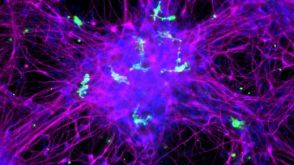 实验方案How to Co-Culture Human Pluripotent Stem Cell (hPSC)-Derived Forebrain Neurons and Microglia

 沪公网安备31010102008431号