Synaptic dysregulation in a human iPS cell model of mental disorders
Dysregulated neurodevelopment with altered structural and functional connectivity is believed to underlie many neuropsychiatric disorders,and /`a disease of synapses/' is the major hypothesis for the biological basis of schizophrenia. Although this hypothesis has gained indirect support from human post-mortem brain analyses and genetic studies,little is known about the pathophysiology of synapses in patient neurons and how susceptibility genes for mental disorders could lead to synaptic deficits in humans. Genetics of most psychiatric disorders are extremely complex due to multiple susceptibility variants with low penetrance and variable phenotypes. Rare,multiply affected,large families in which a single genetic locus is probably responsible for conferring susceptibility have proven invaluable for the study of complex disorders. Here we generated induced pluripotent stem (iPS) cells from four members of a family in which a frameshift mutation of disrupted in schizophrenia 1 (DISC1) co-segregated with major psychiatric disorders and we further produced different isogenic iPS cell lines via gene editing. We showed that mutant DISC1 causes synaptic vesicle release deficits in iPS-cell-derived forebrain neurons. Mutant DISC1 depletes wild-type DISC1 protein and,furthermore,dysregulates expression of many genes related to synapses and psychiatric disorders in human forebrain neurons. Our study reveals that a psychiatric disorder relevant mutation causes synapse deficits and transcriptional dysregulation in human neurons and our findings provide new insight into the molecular and synaptic etiopathology of psychiatric disorders.
View Publication
产品类型:
产品号#:
05850
05857
05870
05875
85850
85857
85870
85875
产品名:
mTeSR™1
mTeSR™1
Fortin JM et al. (MAR 2016)
Scientific Reports 2016 6 6 23579
Transplantation of Defined Populations of Differentiated Human Neural Stem Cell Progeny
Transplantation of Defined Populations of Differentiated Human Neural Stem Cell Progeny
View Publication
产品类型:
产品号#:
05750
05751
产品名:
NeuroCult™ NS-A 基础培养基(人)
NeuroCult™ NS-A 扩增试剂盒(人)
Barnea-Cramer AO et al. (JUL 2016)
Scientific reports 6 29784
Function of human pluripotent stem cell-derived photoreceptor progenitors in blind mice.
Photoreceptor degeneration due to retinitis pigmentosa (RP) is a primary cause of inherited retinal blindness. Photoreceptor cell-replacement may hold the potential for repair in a completely degenerate retina by reinstating light sensitive cells to form connections that relay information to downstream retinal layers. This study assessed the therapeutic potential of photoreceptor progenitors derived from human embryonic and induced pluripotent stem cells (ESCs and iPSCs) using a protocol that is suitable for future clinical trials. ESCs and iPSCs were cultured in four specific stages under defined conditions,resulting in generation of a near-homogeneous population of photoreceptor-like progenitors. Following transplantation into mice with end-stage retinal degeneration,these cells differentiated into photoreceptors and formed a cell layer connected with host retinal neurons. Visual function was partially restored in treated animals,as evidenced by two visual behavioral tests. Furthermore,the magnitude of functional improvement was positively correlated with the number of engrafted cells. Similar efficacy was observed using either ESCs or iPSCs as source material. These data validate the potential of human pluripotent stem cells for photoreceptor replacement therapies aimed at photoreceptor regeneration in retinal disease.
View Publication
Heterotopically transplanted CVO neural stem cells generate neurons and migrate with SVZ cells in the adult mouse brain.
Production of new neurons throughout adulthood has been well characterized in two brain regions,the subventricular zone (SVZ) of the anterolateral ventricle and the subgranular zone (SGZ) of the hippocampus. The neurons produced from these regions arise from neural stem cells (NSCs) found in highly regulated stem cell niches. We recently showed that midline structures called circumventricular organs (CVOs) also contain NSCs capable of neurogenesis and/or astrogliogenesis in vitro and in situ (Bennett et al.). The present study demonstrates that NSCs derived from two astrogliogenic CVOs,the median eminence and organum vasculosum of the lamina terminalis of the nestin-GFP mouse,possess the potential to integrate into the SVZ and differentiate into cells with a neuronal phenotype. These NSCs,following expansion and BrdU-labeling in culture and heterotopic transplantation into a region proximal to the SVZ in adult mice,migrate caudally to the SVZ and express early neuronal markers (TUC-4,PSA-NCAM) as they migrate along the rostral migratory stream. CVO-derived BrdU(+) cells ultimately reach the olfactory bulb where they express early (PSA-NCAM) and mature (NeuN) neuronal markers. Collectively,these data suggest that although NSCs derived from the ME and OVLT CVOs are astrogliogenic in situ,they produce cells phenotypic of neurons in vivo when placed in a neurogenic environment. These findings may have implications for neural repair in the adult brain.
View Publication
Booth L et al. (AUG 2015)
Journal of cellular physiology 230 8 1982--98
OSU-03012 and Viagra Treatment Inhibits the Activity of Multiple Chaperone Proteins and Disrupts the Blood-Brain Barrier: Implications for Anti-Cancer Therapies.
We examined the interaction between OSU-03012 (also called AR-12) with phosphodiesterase 5 (PDE5) inhibitors to determine the role of the chaperone glucose-regulated protein (GRP78)/BiP/HSPA5 in the cellular response. Sildenafil (Viagra) interacted in a greater than additive fashion with OSU-03012 to kill stem-like GBM cells. Treatment of cells with OSU-03012/sildenafil: abolished the expression of multiple oncogenic growth factor receptors and plasma membrane drug efflux pumps and caused a rapid degradation of GRP78 and other HSP70 and HSP90 family chaperone proteins. Decreased expression of plasma membrane receptors and drug efflux pumps was dependent upon enhanced PERK-eIF2α-ATF4-CHOP signaling and was blocked by GRP78 over-expression. In vivo OSU-03012/sildenafil was more efficacious than treatment with celecoxib and sildenafil at killing tumor cells without damaging normal tissues and in parallel reduced expression of ABCB1 and ABCG2 in the normal brain. The combination of OSU-03012/sildenafil synergized with low concentrations of sorafenib to kill tumor cells,and with lapatinib to kill ERBB1 over-expressing tumor cells. In multiplex assays on plasma and human tumor tissue from an OSU-03012/sildenafil treated mouse,we noted a profound reduction in uPA signaling and identified FGF and JAK1/2 as response biomarkers for potentially suppressing the killing response. Inhibition of FGFR signaling and to a lesser extent JAK1/2 signaling profoundly enhanced OSU-03012/sildenafil lethality.
View Publication
产品类型:
产品号#:
05750
05751
产品名:
NeuroCult™ NS-A 基础培养基(人)
NeuroCult™ NS-A 扩增试剂盒(人)
Huat T et al. (JUL 2014)
BMC Neuroscience 15 1 91
IGF-1 enhances cell proliferation and survival during early differentiation of mesenchymal stem cells to neural progenitor-like cells
BACKGROUND There has been increasing interest recently in the plasticity of mesenchymal stem cells (MSCs) and their potential to differentiate into neural lineages. To unravel the roles and effects of different growth factors in the differentiation of MSCs into neural lineages,we have differentiated MSCs into neural lineages using different combinations of growth factors. Based on previous studies of the roles of insulin-like growth factor 1 (IGF-1) in neural stem cell isolation in the laboratory,we hypothesized that IGF-1 can enhance proliferation and reduce apoptosis in neural progenitor-like cells (NPCs) during differentiation of MSCs into NCPs.We induced MSCs differentiation under four different combinations of growth factors: (A) EGF%+%bFGF,(B) EGF%+%bFGF%+%IGF-1,(C) EGF%+%bFGF%+%LIF,(D) EGF%+%bFGF%+%BDNF,and (E) without growth factors,as a negative control. The neurospheres formed were characterized by immunofluorescence staining against nestin,and the expression was measured by flow cytometry. Cell proliferation and apoptosis were also studied by MTS and Annexin V assay,respectively,at three different time intervals (24 hr,3 days,and 5 days). The neurospheres formed in the four groups were then terminally differentiated into neuron and glial cells. RESULTS The four derived NPCs showed a significantly higher expression of nestin than was shown by the negative control. Among the groups treated with growth factors,NPCs treated with IGF-1 showed the highest expression of nestin. Furthermore,NPCs derived using IGF-1 exhibited the highest cell proliferation and cell survival among the treated groups. The NPCs derived from IGF-1 treatment also resulted in a better yield after the terminal differentiation into neurons and glial cells than that of the other treated groups. CONCLUSIONS Our results suggested that IGF-1 has a crucial role in the differentiation of MSCs into neuronal lineage by enhancing the proliferation and reducing the apoptosis in the NPCs. This information will be beneficial in the long run for improving both cell-based and cell-free therapy for neurodegenerative diseases.
View Publication
产品类型:
产品号#:
05771
产品名:
Lee SJ et al. (DEC 2014)
Stem Cells and Development 23 23 2831--2840
Adult Stem Cells from the Hyaluronic Acid-Rich Node and Duct System Differentiate into Neuronal Cells and Repair Brain Injury
The existence of a hyaluronic acid-rich node and duct system (HAR-NDS) within the lymphatic and blood vessels was demonstrated previously. The HAR-NDS was enriched with small (3.0-5.0 μm in diameter),adult stem cells with properties similar to those of the very small embryonic-like stem cells (VSELs). Sca-1(+)Lin(-)CD45(-) cells were enriched approximately 100-fold in the intravascular HAR-NDS compared with the bone marrow. We named these adult stem cells node and duct stem cells (NDSCs)." NDSCs formed colonies on C2C12 feeder layers were positive for fetal alkaline phosphatase and could be subcultured on the feeder layers. NDSCs were Oct4(+)Nanog(+)SSEA-1(+)Sox2(+) while VSELs were Oct4(+)Nanog(+)SSEA-1(+)Sox2(-). NDSCs had higher sphere-forming efficiency and proliferative potential than VSELs and they were found to differentiate into neuronal cells in vitro. Injection of NDSCs into mice partially repaired ischemic brain damage. Thus we report the discovery of potential adult stem cells that may be involved in tissue regeneration. The intravascular HAR-NDS may serve as a route that delivers these stem cells to their target tissues.
View Publication


 EasySep™小鼠TIL(CD45)正选试剂盒




 1:02:03
线上讲座Building Brain Organoids and AssemBloids™ to Study Human Development and Disease发布日期: 10/30/2020
1:02:03
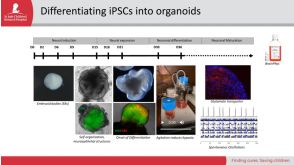
线上讲座Building Brain Organoids and AssemBloids™ to Study Human Development and Disease发布日期: 10/30/2020
 科学海报Establishing Conditions for the Enrichment of Oligodendrocytes from Cultures of Neurospheres Derived from Embryonic Rat and Mouse Brains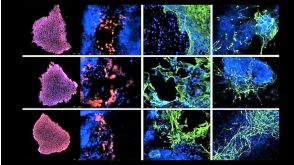


 沪公网安备31010102008431号