Xia G and Ashizawa T (JUN 2015)
Histochemistry and cell biology 143 6 557--64
Dynamic changes of nuclear RNA foci in proliferating DM1 cells.
Nuclear RNA foci are molecular hallmarks of myotonic dystrophy type 1 (DM1). However,no designated study has investigated their formation and changes in proliferating cells. Proliferating cells,as stem cells,consist of an important cellular pool in the human body. The revelation of foci changes in these cells might shed light on the effects of the mutation on these specific cells and tissues. In this study,we used human DM1 iPS-cell-derived neural stem cells (NSCs) as cellular models to investigate the formation and dynamic changes of RNA foci in proliferating cells. Human DM1 NSCs derived from human DM1 iPS cells were cultured under proliferation conditions and nonproliferation conditions following mitomycin C treatment. The dynamic changes of foci during the cell cycle were investigated by fluorescence in situ hybridization. We found RNA foci formed and dissociated during the cell cycle. Nuclear RNA foci were most prominent in number and size just prior to entering mitosis (early prophase). During mitosis,most foci disappeared. After entering interphase,RNA foci accumulated again in the nuclei. After stopping cell dividing by treatment of mitomycin C,the number of nuclear RNA foci increased significantly. In summary,DM1 NSC nuclear RNA foci undergo dynamic changes during cell cycle,and mitosis is a mechanism to decrease foci load in the nuclei,which may explain why dividing cells are less affected by the mutation. The dynamic changes need to be considered when using foci as a marker to monitor the effects of therapeutic drugs.
View Publication
产品类型:
产品号#:
05750
05751
产品名:
NeuroCult™ NS-A 基础培养基(人)
NeuroCult™ NS-A 扩增试剂盒(人)
Wang F et al. (DEC 2017)
Stem Cell Research & Therapy 8 1 26
CCL11 promotes migration and proliferation of mouse neural progenitor cells
BACKGROUND Neonatal hypoxia-ischemia induces massive brain damage during the perinatal period,resulting in long-term consequences to central nervous system structural and functional maturation. Although neural progenitor cells (NPCs) migrate through the parenchyma and home in to injury sites in the rodent brain,the molecular mechanisms are unknown. We examined the role of chemokines in mediating NPC migration after neonatal hypoxic-ischemic brain injury. METHODS Nine-day-old mice were exposed to a 120-minute hypoxia following unilateral carotid occlusion. Chemokine levels were quantified in mouse brain extract. Migration and proliferation assays were performed using embryonic and infant mouse NPCs. RESULTS The neonatal hypoxic-ischemic brain injury resulted in an ipsilateral lesion,which was extended to the cortical and striatal areas. NPCs migrated toward an injured area,where a marked increase of CC chemokines was detected. In vitro studies showed that incubation of NPCs with recombinant mouse CCL11 promoted migration and proliferation. These effects were partly inhibited by a CCR3 antagonist,SB297006. CONCLUSIONS Our data implicate an important effect of CCL11 for mouse NPCs. The effective activation of NPCs may offer a promising strategy for neuroregeneration in neonatal hypoxic-ischemic brain injury.
View Publication
产品类型:
产品号#:
05700
05701
05702
产品名:
NeuroCult™ 基础培养基(小鼠和大鼠)
NeuroCult™ 扩增添加物(小鼠和大鼠)
NeuroCult™扩增试剂盒(小鼠和大鼠)
Relañ et al. (AUG 2013)
PLoS Pathogens 9 8 e1003485
Prion Replication Occurs in Endogenous Adult Neural Stem Cells and Alters Their Neuronal Fate: Involvement of Endogenous Neural Stem Cells in Prion Diseases
Prion diseases are irreversible progressive neurodegenerative diseases,leading to severe incapacity and death. They are characterized in the brain by prion amyloid deposits,vacuolisation,astrocytosis,neuronal degeneration,and by cognitive,behavioural and physical impairments. There is no treatment for these disorders and stem cell therapy therefore represents an interesting new approach. Gains could not only result from the cell transplantation,but also from the stimulation of endogenous neural stem cells (NSC) or by the combination of both approaches. However,the development of such strategies requires a detailed knowledge of the pathology,particularly concerning the status of the adult neurogenesis and endogenous NSC during the development of the disease. During the past decade,several studies have consistently shown that NSC reside in the adult mammalian central nervous system (CNS) and that adult neurogenesis occurs throughout the adulthood in the subventricular zone of the lateral ventricle or the Dentate Gyrus of the hippocampus. Adult NSC are believed to constitute a reservoir for neuronal replacement during normal cell turnover or after brain injury. However,the activation of this system does not fully compensate the neuronal loss that occurs during neurodegenerative diseases and could even contribute to the disease progression. We investigated here the status of these cells during the development of prion disorders. We were able to show that NSC accumulate and replicate prions. Importantly,this resulted in the alteration of their neuronal fate which then represents a new pathologic event that might underlie the rapid progression of the disease.
View Publication
产品类型:
产品号#:
05700
05701
05702
05715
产品名:
NeuroCult™ 基础培养基(小鼠和大鼠)
NeuroCult™ 扩增添加物(小鼠和大鼠)
NeuroCult™扩增试剂盒(小鼠和大鼠)
NeuroCult™成年中枢神经系统(CNS)组织酶解试剂盒(小鼠和大鼠)
Mizutani E et al. (DEC 2006)
Reproduction (Cambridge,England) 132 6 849--57
Developmental ability of cloned embryos from neural stem cells.
The success rate is generally higher when cloning mice from embryonic stem (ES) cell nuclei than from somatic cell nuclei,suggesting that the embryonic nature or the undifferentiated state of the donor cell increases cloning efficiency. We assessed the developmental ability of cloned embryos derived from cultured neural stem cell (NSC) nuclei and compared the success rate with that of embryos cloned from other donor cells such as differentiated NSCs,cumulus cells,Sertoli cells and ES cells in the mouse. The transfer of two-cell cloned embryos derived from cultured NSC nuclei into surrogate mothers produced five live cloned mice. However,the success rate (0.5%) was higher in embryos cloned from cultured NSC nuclei than from differentiated NSCs (0%),but lower than that obtained by cloning mice from other cell nuclei (2.2-3.5%). Although the in vitro developmental potential to the two-cell stage of the cloned embryos derived from NSC nuclei (73%) was similar to that of the cloned embryos derived from other somatic cell nuclei (e.g.,85% in Sertoli cells and 75% in cumulus cells),the developmental rate to the morula-blastocyst stage was only 7%. This rate is remarkably lower than that produced from other somatic cells (e.g.,50% in Sertoli cells and 54% in cumulus cells). These results indicate that the undifferentiated state of neural cells does not enhance the cloning efficiency in mice and that the arrest point for in vitro development of cloned embryos depends on the donor cell type.
View Publication
产品类型:
产品号#:
05700
05701
05702
05703
05704
产品名:
NeuroCult™ 基础培养基(小鼠和大鼠)
NeuroCult™ 扩增添加物(小鼠和大鼠)
NeuroCult™扩增试剂盒(小鼠和大鼠)
NeuroCult™ 分化添加物(小鼠和大鼠)
NeuroCult™ 分化试剂盒(小鼠和大鼠)
Walker TL et al. (JAN 2012)
PloS one 7 9 e44371
Prolactin stimulates precursor cells in the adult mouse hippocampus.
In the search for ways to combat degenerative neurological disorders,neurogenesis-stimulating factors are proving to be a promising area of research. In this study,we show that the hormonal factor prolactin (PRL) can activate a pool of latent precursor cells in the adult mouse hippocampus. Using an in vitro neurosphere assay,we found that the addition of exogenous PRL to primary adult hippocampal cells resulted in an approximate 50% increase in neurosphere number. In addition,direct infusion of PRL into the adult dentate gyrus also resulted in a significant increase in neurosphere number. Together these data indicate that exogenous PRL can increase hippocampal precursor numbers both in vitro and in vivo. Conversely,PRL null mice showed a significant reduction (approximately 80%) in the number of hippocampal-derived neurospheres. Interestingly,no deficit in precursor proliferation was observed in vivo,indicating that in this situation other niche factors can compensate for a loss in PRL. The PRL loss resulted in learning and memory deficits in the PRL null mice,as indicated by significant deficits in the standard behavioral tests requiring input from the hippocampus. This behavioral deficit was rescued by direct infusion of recombinant PRL into the hippocampus,indicating that a lack of PRL in the adult mouse hippocampus can be correlated with impaired learning and memory.
View Publication
Ito N et al. (APR 2016)
Disease models & mechanisms 9 4 451--462
Decreased N-TAF1 expression in X-linked dystonia-parkinsonism patient-specific neural stem cells.
X-linked dystonia-parkinsonism (XDP) is a hereditary neurodegenerative disorder involving a progressive loss of striatal medium spiny neurons. The mechanisms underlying neurodegeneration are not known,in part because there have been few cellular models available for studying the disease. The XDP haplotype consists of multiple sequence variations in a region of the X chromosome containingTAF1,a large gene with at least 38 exons,and a multiple transcript system (MTS) composed of five unconventional exons. A previous study identified an XDP-specific insertion of a SINE-VNTR-Alu (SVA)-type retrotransposon in intron 32 ofTAF1,as well as a neural-specific TAF1 isoform,N-TAF1,which showed decreased expression in post-mortem XDP brain compared with control tissue. Here,we generated XDP patient and control fibroblasts and induced pluripotent stem cells (iPSCs) in order to further probe cellular defects associated with this disease. As initial validation of the model,we compared expression ofTAF1and MTS transcripts in XDP versus control fibroblasts and iPSC-derived neural stem cells (NSCs). Compared with control cells,XDP fibroblasts exhibited decreased expression ofTAF1transcript fragments derived from exons 32-36,a region spanning the SVA insertion site. N-TAF1,which incorporates an alternative exon (exon 34'),was not expressed in fibroblasts,but was detectable in iPSC-differentiated NSCs at levels that were ∼threefold lower in XDP cells than in controls. These results support the previous findings that N-TAF1 expression is impaired in XDP,but additionally indicate that this aberrant transcription might occur in neural cells at relatively early stages of development that precede neurodegeneration.
View Publication
产品类型:
产品号#:
产品名:
Bhinge A et al. (JUN 2014)
EMBO Journal 33 11 1271--1283
MiR-135b is a direct PAX6 target and specifies human neuroectoderm by inhibiting TGF-$\$/BMP signaling.
Several transcription factors (TFs) have been implicated in neuroectoderm (NE) development,and recently,the TF PAX6 was shown to be critical for human NE specification. However,microRNA networks regulating human NE development have been poorly documented. We hypothesized that microRNAs activated by PAX6 should promote NE development. Using a genomics approach,we identified PAX6 binding sites and active enhancers genome-wide in an in vitro model of human NE development that was based on neural differentiation of human embryonic stem cells (hESC). PAX6 binding to active enhancers was found in the proximity of several microRNAs,including hsa-miR-135b. MiR-135b was activated during NE development,and ectopic expression of miR-135b in hESC promoted differentiation toward NE. MiR-135b promotes neural conversion by targeting components of the TGF-β and BMP signaling pathways,thereby inhibiting differentiation into alternate developmental lineages. Our results demonstrate a novel TF-miRNA module that is activated during human neuroectoderm development and promotes the irreversible fate specification of human pluripotent cells toward the neural lineage.
View Publication
产品类型:
产品号#:
05850
05857
05870
05875
85850
85857
85870
85875
产品名:
mTeSR™1
mTeSR™1
Devlin A-C et al. (JAN 2015)
Nature Communications 6 1--12
Human iPSC-derived motoneurons harbouring TARDBP or C9ORF72 ALS mutations are dysfunctional despite maintaining viability
M. T. Dell'anno et al. ( 2018)
Nature Communications
Human neuroepithelial stem cell regional specificity enables spinal cord repair through a relay circuit
Traumatic spinal cord injury results in persistent disability due to disconnection of surviving neural elements. Neural stem cell transplantation has been proposed as a therapeutic option,but optimal cell type and mechanistic aspects remain poorly defined. Here,we describe robust engraftment into lesioned immunodeficient mice of human neuroepithelial stem cells derived from the developing spinal cord and maintained in self-renewing adherent conditions for long periods. Extensive elongation of both graft and host axons occurs. Improved functional recovery after transplantation depends on neural relay function through the grafted neurons,requires the matching of neural identity to the anatomical site of injury,and is accompanied by expression of specific marker proteins. Thus,human neuroepithelial stem cells may provide an anatomically specific relay function for spinal cord injury recovery.
View Publication
产品类型:
产品号#:
05790
05792
05793
05794
05795
产品名:
BrainPhys™神经元培养基
BrainPhys™神经元培养基和SM1试剂盒
BrainPhys™ 神经元培养基N2-A和SM1试剂盒
BrainPhys™原代神经元试剂盒
BrainPhys™ hPSC 神经元试剂盒
Tomov ML et al. (DEC 2016)
Scientific Reports 6 1 37637
Distinct and Shared Determinants of Cardiomyocyte Contractility in Multi-Lineage Competent Ethnically Diverse Human iPSCs
The realization of personalized medicine through human induced pluripotent stem cell (iPSC) technology can be advanced by transcriptomics,epigenomics,and bioinformatics that inform on genetic pathways directing tissue development and function. When possible,population diversity should be included in new studies as resources become available. Previously we derived replicate iPSC lines of African American,Hispanic-Latino and Asian self-designated ethnically diverse (ED) origins with normal karyotype,verified teratoma formation,pluripotency biomarkers,and tri-lineage in vitro commitment. Here we perform bioinformatics of RNA-Seq and ChIP-seq pluripotency data sets for two replicate Asian and Hispanic-Latino ED-iPSC lines that reveal differences in generation of contractile cardiomyocytes but similar and robust differentiation to multiple neural,pancreatic,and smooth muscle cell types. We identify shared and distinct genes and contributing pathways in the replicate ED-iPSC lines to enhance our ability to understand how reprogramming to iPSC impacts genes and pathways contributing to cardiomyocyte contractility potential.
View Publication


 EasySep™小鼠TIL(CD45)正选试剂盒




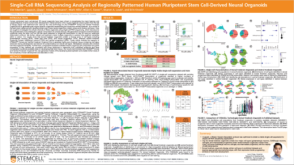 科学海报Single-Cell RNA Sequencing Analysis of Regionally Patterned Human Pluripotent Stem Cell-Derived Neural Organoids

 沪公网安备31010102008431号