Choi H et al. (AUG 2013)
Stem Cells and Development 22 15 2112--2120
Coenzyme Q10 Restores Amyloid Beta-Inhibited Proliferation of Neural Stem Cells by Activating the PI3K Pathway
Neurogenesis in the adult brain is important for memory and learning,and the alterations in neural stem cells (NSCs) may be an important part of Alzheimer's disease pathogenesis. The phosphatidylinositol 3-kinase (PI3K) pathway has been suggested to play an important role in neuronal cell survival and is highly involved in adult neurogenesis. Recently,coenzyme Q10 (CoQ10) was found to affect the PI3K pathway. We investigated whether CoQ10 could restore amyloid β (Aβ)25-35 oligomer-inhibited proliferation of NSCs by focusing on the PI3K pathway. To evaluate the effects of CoQ10 on Aβ25-35 oligomer-inhibited proliferation of NSCs,NSCs were treated with several concentrations of CoQ10 and/or Aβ25-35 oligomers. BrdU labeling,Colony Formation Assays,and immunoreactivity of Ki-67,a marker of proliferative activity,showed that NSC proliferation decreased with Aβ25-35 oligomer treatment,but combined treatment with CoQ10 restored it. Western blotting showed that CoQ10 treatment increased the expression levels of p85α PI3K,phosphorylated Akt (Ser473),phosphorylated glycogen synthase kinase-3β (Ser9),and heat shock transcription factor,which are proteins related to the PI3K pathway in Aβ25-35 oligomers-treated NSCs. To confirm a direct role for the PI3K pathway in CoQ10-induced restoration of proliferation of NSCs inhibited by Aβ25-35 oligomers,NSCs were pretreated with a PI3K inhibitor,LY294002; the effects of CoQ10 on the proliferation of NSCs inhibited by Aβ25-35 oligomers were almost completely blocked. Together,these results suggest that CoQ10 restores Aβ25-35 oligomer-inhibited proliferation of NSCs by activating the PI3K pathway.
View Publication
产品类型:
产品号#:
05700
05701
05702
产品名:
NeuroCult™ 基础培养基(小鼠&大鼠)
NeuroCult™ 扩增添加物 (小鼠&大鼠)
NeuroCult™ 扩增试剂盒 (小鼠&大鼠)
M.-Y. Lin et al. (NOV 2017)
Scientific reports 7 1 14883
Zika Virus Infects Intermediate Progenitor Cells and Post-mitotic Committed Neurons in Human Fetal Brain Tissues.
Zika virus (ZIKV) infection is associated with microcephaly in fetuses,but the pathogenesis of ZIKV-related microcephaly is not well understood. Here we show that ZIKV infects the subventricular zone in human fetal brain tissues and that the tissue tropism broadens with the progression of gestation. Our research demonstrates also that intermediate progenitor cells (IPCs) are the main target cells for ZIKV. Post-mitotic committed neurons become susceptible to ZIKV infection as well at later stages of gestation. Furthermore,activation of microglial cells,DNA fragmentation,and apoptosis of infected or uninfected cells could be found in ZIKV-infected brain tissues. Our studies identify IPCs as the main target cells for ZIKV. They also suggest that immune activation after ZIKV infection may play an important role in the pathogenesis of ZIKV-related microcephaly.
View Publication
产品类型:
产品号#:
05711
07152
05790
05792
05793
05794
05795
100-1281
产品名:
NeuroCult™ SM1 神经添加物
N2 添加物-A
BrainPhys™神经元培养基
BrainPhys™神经元培养基和SM1试剂盒
BrainPhys™ 神经元培养基N2-A和SM1试剂盒
BrainPhys™原代神经元试剂盒
BrainPhys™ hPSC 神经元试剂盒
NeuroCult™ SM1 神经添加物
Jiang P et al. (OCT 2014)
British Journal of Cancer 111 8 1562--1571
In vitro and in vivo anticancer effects of mevalonate pathway modulation on human cancer cells
BACKGROUND The increasing usage of statins (the 3-hydroxy-3-methylglutaryl-coenzyme A reductase inhibitors) has revealed a number of unexpected beneficial effects,including a reduction in cancer risk. METHODS We investigated the direct anticancer effects of different statins approved for clinical use on human breast and brain cancer cells. We also explored the effects of statins on cancer cells using in silico simulations. RESULTS In vitro studies showed that cerivastatin,pitavastatin,and fluvastatin were the most potent anti-proliferative,autophagy inducing agents in human cancer cells including stem cell-like primary glioblastoma cell lines. Consistently,pitavastatin was more effective than fluvastatin in inhibiting U87 tumour growth in vivo. Intraperitoneal injection was much better than oral administration in delaying glioblastoma growth. Following statin treatment,tumour cells were rescued by adding mevalonate and geranylgeranyl pyrophosphate. Knockdown of geranylgeranyl pyrophosphate synthetase-1 also induced strong cell autophagy and cell death in vitro and reduced U87 tumour growth in vivo. These data demonstrate that statins main effect is via targeting the mevalonate synthesis pathway in tumour cells. CONCLUSIONS Our study demonstrates the potent anticancer effects of statins. These safe and well-tolerated drugs need to be further investigated as cancer chemotherapeutics in comprehensive clinical studies.
View Publication
产品类型:
产品号#:
05700
05702
产品名:
NeuroCult™ 基础培养基(小鼠&大鼠)
NeuroCult™ 扩增试剂盒 (小鼠&大鼠)
Khaled WT et al. (JAN 2015)
Nature communications 6 5987
BCL11A is a triple-negative breast cancer gene with critical functions in stem and progenitor cells.
Triple-negative breast cancer (TNBC) has poor prognostic outcome compared with other types of breast cancer. The molecular and cellular mechanisms underlying TNBC pathology are not fully understood. Here,we report that the transcription factor BCL11A is overexpressed in TNBC including basal-like breast cancer (BLBC) and that its genomic locus is amplified in up to 38% of BLBC tumours. Exogenous BCL11A overexpression promotes tumour formation,whereas its knockdown in TNBC cell lines suppresses their tumourigenic potential in xenograft models. In the DMBA-induced tumour model,Bcl11a deletion substantially decreases tumour formation,even in p53-null cells and inactivation of Bcl11a in established tumours causes their regression. At the cellular level,Bcl11a deletion causes a reduction in the number of mammary epithelial stem and progenitor cells. Thus,BCL11A has an important role in TNBC and normal mammary epithelial cells. This study highlights the importance of further investigation of BCL11A in TNBC-targeted therapies.
View Publication
产品类型:
产品号#:
05750
05751
产品名:
NeuroCult™ NS-A 基础培养基(人)
NeuroCult™ NS-A 扩增试剂盒(人)
Shingu T et al. (JAN 2017)
Nature genetics 49 1 75--86
Qki deficiency maintains stemness of glioma stem cells in suboptimal environment by downregulating endolysosomal degradation.
Stem cells,including cancer stem cells (CSCs),require niches to maintain stemness,yet it is unclear how CSCs maintain stemness in the suboptimal environment outside their niches during invasion. Postnatal co-deletion of Pten and Trp53 in mouse neural stem cells (NSCs) leads to the expansion of these cells in their subventricular zone (SVZ) niches but fails to maintain stemness outside the SVZ. We discovered that Qki is a major regulator of NSC stemness. Qk deletion on a Pten-/-; Trp53-/- background helps NSCs maintain their stemness outside the SVZ in Nes-CreERT2; QkL/L; PtenL/L; Trp53L/L mice,which develop glioblastoma with a penetrance of 92% and a median survival time of 105 d. Mechanistically,Qk deletion decreases endolysosome-mediated degradation and enriches receptors essential for maintaining self-renewal on the cytoplasmic membrane to cope with low ligand levels outside niches. Thus,downregulation of endolysosome levels by Qki loss helps glioma stem cells (GSCs) maintain their stemness in suboptimal environments outside their niches.
View Publication
产品类型:
产品号#:
05700
05701
05702
产品名:
NeuroCult™ 基础培养基(小鼠&大鼠)
NeuroCult™ 扩增添加物 (小鼠&大鼠)
NeuroCult™ 扩增试剂盒 (小鼠&大鼠)
Binder ZA et al. ( 2013)
PloS one 8 10 e75945
Podocalyxin-like protein is expressed in glioblastoma multiforme stem-like cells and is associated with poor outcome.
Glioblastoma multiforme (GBM) is the most common primary malignant adult brain tumor and is associated with poor survival. Recently,stem-like cell populations have been identified in numerous malignancies including GBM. To identify genes whose expression is changed with differentiation,we compared transcript profiles from a GBM oncosphere line before and after differentiation. Bioinformatic analysis of the gene expression profiles identified podocalyxin-like protein (PODXL),a protein highly expressed in human embryonic stem cells,as a potential marker of undifferentiated GBM stem-like cells. The loss of PODXL expression upon differentiation of GBM stem-like cell lines was confirmed by quantitative real-time PCR and flow cytometry. Analytical flow cytometry of numerous GBM oncosphere lines demonstrated PODXL expression in all lines examined. Knockdown studies and flow cytometric cell sorting experiments demonstrated that PODXL is involved in GBM stem-like cell proliferation and oncosphere formation. Compared to PODXL-negative cells,PODXL-positive cells had increased expression of the progenitor/stem cell markers Musashi1,SOX2,and BMI1. Finally,PODXL expression directly correlated with increasing glioma grade and was a marker for poor outcome in patients with GBM. In summary,we have demonstrated that PODXL is expressed in GBM stem-like cells and is involved in cell proliferation and oncosphere formation. Moreover,high PODXL expression correlates with increasing glioma grade and decreased overall survival in patients with GBM.
View Publication
产品类型:
产品号#:
05750
05751
产品名:
NeuroCult™ NS-A 基础培养基(人)
NeuroCult™ NS-A 扩增试剂盒(人)
Galavotti S et al. (FEB 2013)
Oncogene 32 6 699--712
The autophagy-associated factors DRAM1 and p62 regulate cell migration and invasion in glioblastoma stem cells.
The aggressiveness of glioblastoma multiforme (GBM) is defined by local invasion and resistance to therapy. Within established GBM,a subpopulation of tumor-initiating cells with stem-like properties (GBM stem cells,GSCs) is believed to underlie resistance to therapy. The metabolic pathway autophagy has been implicated in the regulation of survival in GBM. However,the status of autophagy in GBM and its role in the cancer stem cell fraction is currently unclear. We found that a number of autophagy regulators are highly expressed in GBM tumors carrying a mesenchymal signature,which defines aggressiveness and invasion,and are associated with components of the MAPK pathway. This autophagy signature included the autophagy-associated genes DRAM1 and SQSTM1,which encode a key regulator of selective autophagy,p62. High levels of DRAM1 were associated with shorter overall survival in GBM patients. In GSCs,DRAM1 and SQSTM1 expression correlated with activation of MAPK and expression of the mesenchymal marker c-MET. DRAM1 knockdown decreased p62 localization to autophagosomes and its autophagy-mediated degradation,thus suggesting a role for DRAM1 in p62-mediated autophagy. In contrast,autophagy induced by starvation or inhibition of mTOR/PI-3K was not affected by either DRAM1 or p62 downregulation. Functionally,DRAM1 and p62 regulate cell motility and invasion in GSCs. This was associated with alterations of energy metabolism,in particular reduced ATP and lactate levels. Taken together,these findings shed new light on the role of autophagy in GBM and reveal a novel function of the autophagy regulators DRAM1 and p62 in control of migration/invasion in cancer stem cells.
View Publication
产品类型:
产品号#:
05751
产品名:
NeuroCult™ NS-A 扩增试剂盒(人)
Su H et al. (JUL 2013)
Stem Cell Research 11 1 529--539
Transplanted motoneurons derived from human induced pluripotent stem cells form functional connections with target muscle
Induced pluripotent stem cells (iPSCs) hold promise for the treatment of motoneuron diseases because of their distinct features including pluripotency,self-derivation and potential ability to differentiate into motoneurons. However,it is still unknown whether human iPSC-derived motoneurons can functionally innervate target muscles in vivo,which is the definitive sign of successful cell therapy for motoneuron diseases. In the present study,we demonstrated that human iPSCs derived from mesenchymal cells of the umbilical cord possessed a high yield in neural differentiation. Using a chemically-defined in vitro system,human iPSCs efficiently differentiated into motoneurons which displayed typical morphology,expressed specific molecules,and generated repetitive trains of action potentials. When transplanted into the injured musculocutaneous nerve of rats,they survived robustly,extended axons along the nerve,and formed functional connections with the target muscle (biceps brachii),thereby protecting the muscle from atrophy. Our study provides evidence for the first time that human iPSC-derived motoneurons are truly functional not only in vitro but also in vivo,and they have potential for stem cell-based therapies for motoneuron diseases. textcopyright 2013 Elsevier B.V.
View Publication
Jebbett NJ et al. (SEP 2013)
NeuroToxicology 38 91--100
Low level methylmercury enhances CNTF-evoked STAT3 signaling and glial differentiation in cultured cortical progenitor cells
Although many previous investigations have studied how mercury compounds cause cell death,sub-cytotoxic levels may affect mechanisms essential for the proper development of the nervous system. The present study investigates whether low doses of methylmercury (MeHg) and mercury chloride (HgCl2) can modulate the activity of JAK/STAT signaling,a pathway that promotes gliogenesis. We report that sub-cytotoxic doses of MeHg enhance ciliary neurotrophic factor (CNTF) evoked STAT3 phosphorylation in human SH-SY5Y neuroblastoma and mouse cortical neural progenitor cells (NPCs). This effect is specific for MeHg,since HgCl2 fails to enhance JAK/STAT signaling. Exposing NPCs to these low doses of MeHg (30-300nM) enhances CNTF-induced expression of STAT3-target genes such as glial fibrillary acidic protein (GFAP) and suppressors of cytokine signaling 3 (SOCS3),and increases the proportion of cells expressing GFAP following 2 days of differentiation. Higher,near-cytotoxic concentrations of MeHg and HgCl2 inhibit STAT3 phosphorylation and lead to increased production of superoxide. Lower concentrations of MeHg effective in enhancing JAK/STAT signaling (30nM) do not result in a detectable increase in superoxide nor increased expression of the oxidant-responsive genes,heme oxygenase 1,heat shock protein A5 and sirtuin 1. These findings suggest that low concentrations of MeHg inappropriately enhance STAT3 phosphorylation and glial differentiation,and that the mechanism causing this enhancement is distinct from the reactive oxygen species-associated cell death observed at higher concentrations of MeHg and HgCl2.
View Publication
产品类型:
产品号#:
05707
产品名:
NeuroCult™化学解离试剂盒(小鼠)
B. S. Souza et al. (dec 2016)
Scientific Reports 6 1 39775
Zika virus infection induces mitosis abnormalities and apoptotic cell death of human neural progenitor cells
Zika virus (ZIKV) infection has been associated with severe complications both in the developing and adult nervous system. To investigate the deleterious effects of ZIKV infection,we used human neural progenitor cells (NPC),derived from induced pluripotent stem cells (iPSC). We found that NPC are highly susceptible to ZIKV and the infection results in cell death. ZIKV infection led to a marked reduction in cell proliferation,ultrastructural alterations and induction of autophagy. Induction of apoptosis of Sox2 + cells was demonstrated by activation of caspases 3/7,8 and 9,and by ultrastructural and flow cytometry analyses. ZIKV-induced death of Sox2 + cells was prevented by incubation with the pan-caspase inhibitor,Z-VAD-FMK. By confocal microscopy analysis we found an increased number of cells with supernumerary centrosomes. Live imaging showed a significant increase in mitosis abnormalities,including multipolar spindle,chromosome laggards,micronuclei and death of progeny after cell division. FISH analysis for chromosomes 12 and 17 showed increased frequency of aneuploidy,such as monosomy,trisomy and polyploidy. Our study reinforces the link between ZIKV and abnormalities in the developing human brain,including microcephaly.
View Publication
产品类型:
产品号#:
05832
05833
19851
19851RF
19852
19852RF
19854
19854RF
05835
05839
产品名:
STEMdiff™ 神经花环选择试剂
STEMdiff™神经前体细胞培养基
EasySep™小鼠T细胞分选试剂盒
RoboSep™ 小鼠T细胞分选试剂盒
EasySep™小鼠CD4+ T细胞分选试剂盒
RoboSep™ 小鼠CD4+ T细胞分选试剂盒
EasySep™小鼠B细胞分选试剂盒
RoboSep™ 小鼠B细胞分选试剂盒
STEMdiff™ 神经诱导培养基
STEMdiff™ 神经诱导培养基
Yan B et al. (MAY 2015)
BMC cancer 15 1 401
Mitochondrially targeted vitamin E succinate efficiently kills breast tumour-initiating cells in a complex II-dependent manner.
BACKGROUND Accumulating evidence suggests that breast cancer involves tumour-initiating cells (TICs),which play a role in initiation,metastasis,therapeutic resistance and relapse of the disease. Emerging drugs that target TICs are becoming a focus of contemporary research. Mitocans,a group of compounds that induce apoptosis of cancer cells by destabilising their mitochondria,are showing their potential in killing TICs. In this project,we investigated mitochondrially targeted vitamin E succinate (MitoVES),a recently developed mitocan,for its in vitro and in vivo efficacy against TICs. METHODS The mammosphere model of breast TICs was established by culturing murine NeuTL and human MCF7 cells as spheres. This model was verified by stem cell marker expression,tumour initiation capacity and chemotherapeutic resistance. Cell susceptibility to MitoVES was assessed and the cell death pathway investigated. In vivo efficacy was studied by grafting NeuTL TICs to form syngeneic tumours. RESULTS Mammospheres derived from NeuTL and MCF7 breast cancer cells were enriched in the level of stemness,and the sphere cells featured altered mitochondrial function. Sphere cultures were resistant to several established anti-cancer agents while they were susceptible to MitoVES. Killing of mammospheres was suppressed when the mitochondrial complex II,the molecular target of MitoVES,was knocked down. Importantly,MitoVES inhibited progression of syngeneic HER2(high) tumours derived from breast TICs by inducing apoptosis in tumour cells. CONCLUSIONS These results demonstrate that using mammospheres,a plausible model for studying TICs,drugs that target mitochondria efficiently kill breast tumour-initiating cells.
View Publication


 EasySep™小鼠TIL(CD45)正选试剂盒




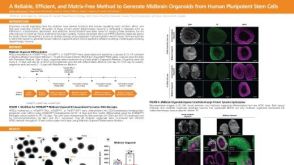 科学海报A Reliable, Efficient, and Matrix-Free Method to Generate Midbrain Organoids from Human Pluripotent Stem Cells
 沪公网安备31010102008431号