Pineda JR et al. (APR 2013)
EMBO Molecular Medicine 5 4 548--562
Vascular-derived TGF-β increases in the stem cell niche and perturbs neurogenesis during aging and following irradiation in the adult mouse brain
Neurogenesis decreases during aging and following cranial radiotherapy,causing a progressive cognitive decline that is currently untreatable. However,functional neural stem cells remained present in the subventricular zone of high dose-irradiated and aged mouse brains. We therefore investigated whether alterations in the neurogenic niches are perhaps responsible for the neurogenesis decline. This hypothesis was supported by the absence of proliferation of neural stem cells that were engrafted into the vascular niches of irradiated host brains. Moreover,we observed a marked increase in TGF-β1 production by endothelial cells in the stem cell niche in both middle-aged and irradiated mice. In co-cultures,irradiated brain endothelial cells induced the apoptosis of neural stem/progenitor cells via TGF-β/Smad3 signalling. Strikingly,the blockade of TGF-β signalling in vivo using a neutralizing antibody or the selective inhibitor SB-505124 significantly improved neurogenesis in aged and irradiated mice,prevented apoptosis and increased the proliferation of neural stem/progenitor cells. These findings suggest that anti-TGF-β-based therapy may be used for future interventions to prevent neurogenic collapse following radiotherapy or during aging.
View Publication
产品类型:
产品号#:
05700
05701
05702
产品名:
NeuroCult™ 基础培养基(小鼠&大鼠)
NeuroCult™ 扩增添加物 (小鼠&大鼠)
NeuroCult™ 扩增试剂盒 (小鼠&大鼠)
Villa GR et al. (NOV 2016)
Cancer cell 30 5 683--693
An LXR-Cholesterol Axis Creates a Metabolic Co-Dependency for Brain Cancers.
Small-molecule inhibitors targeting growth factor receptors have failed to show efficacy for brain cancers,potentially due to their inability to achieve sufficient drug levels in the CNS. Targeting non-oncogene tumor co-dependencies provides an alternative approach,particularly if drugs with high brain penetration can be identified. Here we demonstrate that the highly lethal brain cancer glioblastoma (GBM) is remarkably dependent on cholesterol for survival,rendering these tumors sensitive to Liver X receptor (LXR) agonist-dependent cell death. We show that LXR-623,a clinically viable,highly brain-penetrant LXRα-partial/LXRβ-full agonist selectively kills GBM cells in an LXRβ- and cholesterol-dependent fashion,causing tumor regression and prolonged survival in mouse models. Thus,a metabolic co-dependency provides a pharmacological means to kill growth factor-activated cancers in the CNS.
View Publication
产品类型:
产品号#:
05750
05751
产品名:
NeuroCult™ NS-A 基础培养基(人)
NeuroCult™ NS-A 扩增试剂盒(人)
Halvorson KG et al. ( 2015)
PloS one 10 3 e0118926
A high-throughput in vitro drug screen in a genetically engineered mouse model of diffuse intrinsic pontine glioma identifies BMS-754807 as a promising therapeutic agent.
Diffuse intrinsic pontine gliomas (DIPGs) represent a particularly lethal type of pediatric brain cancer with no effective therapeutic options. Our laboratory has previously reported the development of genetically engineered DIPG mouse models using the RCAS/tv-a system,including a model driven by PDGF-B,H3.3K27M,and p53 loss. These models can serve as a platform in which to test novel therapeutics prior to the initiation of human clinical trials. In this study,an in vitro high-throughput drug screen as part of the DIPG preclinical consortium using cell-lines derived from our DIPG models identified BMS-754807 as a drug of interest in DIPG. BMS-754807 is a potent and reversible small molecule multi-kinase inhibitor with many targets including IGF-1R,IR,MET,TRKA,TRKB,AURKA,AURKB. In vitro evaluation showed significant cytotoxic effects with an IC50 of 0.13 μM,significant inhibition of proliferation at a concentration of 1.5 μM,as well as inhibition of AKT activation. Interestingly,IGF-1R signaling was absent in serum-free cultures from the PDGF-B; H3.3K27M; p53 deficient model suggesting that the antitumor activity of BMS-754807 in this model is independent of IGF-1R. In vivo,systemic administration of BMS-754807 to DIPG-bearing mice did not prolong survival. Pharmacokinetic analysis demonstrated that tumor tissue drug concentrations of BMS-754807 were well below the identified IC50,suggesting that inadequate drug delivery may limit in vivo efficacy. In summary,an unbiased in vitro drug screen identified BMS-754807 as a potential therapeutic agent in DIPG,but BMS-754807 treatment in vivo by systemic delivery did not significantly prolong survival of DIPG-bearing mice.
View Publication
Neural Stem Cells
Overview of the types of NSCs and their potential use as therapeutic agents for disease
Rahman M et al. (MAR 2015)
Anatomy & cell biology 48 1 25--35
Neurosphere and adherent culture conditions are equivalent for malignant glioma stem cell lines.
Certain limitations of the neurosphere assay (NSA) have resulted in a search for alternative culture techniques for brain tumor-initiating cells (TICs). Recently,reports have described growing glioblastoma (GBM) TICs as a monolayer using laminin. We performed a side-by-side analysis of the NSA and laminin (adherent) culture conditions to compare the growth and expansion of GBM TICs. GBM cells were grown using the NSA and adherent culture conditions. Comparisons were made using growth in culture,apoptosis assays,protein expression,limiting dilution clonal frequency assay,genetic affymetrix analysis,and tumorigenicity in vivo. In vitro expansion curves for the NSA and adherent culture conditions were virtually identical (P=0.24) and the clonogenic frequencies (5.2% for NSA vs. 5.0% for laminin,P=0.9) were similar as well. Likewise,markers of differentiation (glial fibrillary acidic protein and beta tubulin III) and proliferation (Ki67 and MCM2) revealed no statistical difference between the sphere and attachment methods. Several different methods were used to determine the numbers of dead or dying cells (trypan blue,DiIC,caspase-3,and annexin V) with none of the assays noting a meaningful variance between the two methods. In addition,genetic expression analysis with microarrays revealed no significant differences between the two groups. Finally,glioma cells derived from both methods of expansion formed large invasive tumors exhibiting GBM features when implanted in immune-compromised animals. A detailed functional,protein and genetic characterization of human GBM cells cultured in serum-free defined conditions demonstrated no statistically meaningful differences when grown using sphere (NSA) or adherent conditions. Hence,both methods are functionally equivalent and remain suitable options for expanding primary high-grade gliomas in tissue culture.
View Publication
Polyglutamine Disease Modeling: Epitope Based Screen for Homologous Recombination using CRISPR/Cas9 System.
We have previously reported the genetic correction of Huntington's disease (HD) patient-derived induced pluripotent stem cells using traditional homologous recombination (HR) approaches. To extend this work,we have adopted a CRISPR-based genome editing approach to improve the efficiency of recombination in order to generate allelic isogenic HD models in human cells. Incorporation of a rapid antibody-based screening approach to measure recombination provides a powerful method to determine relative efficiency of genome editing for modeling polyglutamine diseases or understanding factors that modulate CRISPR/Cas9 HR.
View Publication
Katori S et al. (JUL 2009)
The Journal of neuroscience : the official journal of the Society for Neuroscience 29 29 9137--47
Protocadherin-alpha family is required for serotonergic projections to appropriately innervate target brain areas.
Serotonergic axons from the raphe nuclei in the brainstem project to every region of the brain,where they make connections through their extensive terminal arborizations. This serotonergic innervation contributes to various normal behaviors and psychiatric disorders. The protocadherin-alpha (Pcdha) family of clustered protocadherins consists of 14 cadherin-related molecules generated from a single gene cluster. We found that the Pcdhas were strongly expressed in the serotonergic neurons. To elucidate their roles,we examined serotonergic fibers in a mouse mutant (Pcdha(Delta CR/Delta CR)) lacking the Pcdha cytoplasmic region-encoding exons,which are common to the gene cluster. In the first week after birth,the distribution pattern of serotonergic fibers in Pcdha(Delta CR/Delta CR) mice was similar to wild-type,but by 3 weeks of age,when the serotonergic axonal termini complete their arborizations,the distribution of the projections was abnormal. In some target regions,notably the globus pallidus and substantia nigra,the normally even distribution of serotonin axonal terminals was,in the mutants,dense at the periphery of each region,but sparse in the center. In the stratum lacunosum-molecular of the hippocampus,the mutants showed denser serotonergic innervation than in wild-type,and in the dentate gyrus of the hippocampus and the caudate-putamen,the innervation was sparser. Together,the abnormalities suggested that Pcdha proteins are important in the late-stage maturation of serotonergic projections. Further examination of alternatively spliced exons encoding the cytoplasmic tail showed that the A-type (but not the B-type) cytoplasmic tail was essential for the normal development of serotonergic projections.
View Publication


 EasySep™小鼠TIL(CD45)正选试剂盒




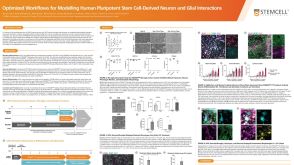 科学海报Optimized Workflows for Modelling Human Pluripotent Stem Cell-Derived Neuron and Glial Interactions
 科学海报Using Human Pluripotent Stem Cell-Derived Microglia As Models For Neurological Disease Research
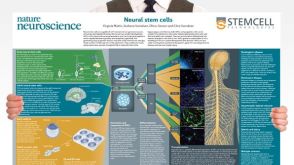 挂图Neural Stem Cells Overview of the types of NSCs and their potential use as therapeutic agents for disease


 沪公网安备31010102008431号