Jung J-H et al. (APR 2015)
Stem cells and development 24 8 948--61
CXCR2 and its related ligands play a novel role in supporting the pluripotency and proliferation of human pluripotent stem cells.
Basic fibroblast growth factor (bFGF) is a crucial factor sustaining human pluripotent stem cells (hPSCs). We designed this study to search the substitutive factors other than bFGF for the maintenance of hPSCs by using human placenta-derived conditioned medium without exogenous bFGF (hPCCM-),containing chemokine (C-X-C motif) receptor 2 (CXCR2) ligands,including interleukin (IL)-8 and growth-related oncogene $\$(GRO$\$),which were developed on the basis of our previous studies. First,we confirmed that IL-8 and/or GRO$\$ independent roles to preserve the phenotype of hPSCs. Then,we tried CXCR2 blockage of hPSCs in hPCCM- and verified the significant decrease of pluripotency-associated genes expression and the proliferation of hPSCs. Interestingly,CXCR2 suppression of hPSCs in mTeSR™1 containing exogenous bFGF decreased the proliferation of hPSCs while maintaining pluripotency characteristics. Lastly,we found that hPSCs proliferated robustly for more than 35 passages in hPCCM- on a gelatin substratum. Higher CXCR2 expression of hPSCs cultured in hPCCM- than those in mTeSR™1 was observable. Our findings suggest that CXCR2 and its related ligands might be novel factors comparable to bFGF supporting the characteristics of hPSCs and hPCCM- might be useful for the maintenance of hPSCs as well as for the accurate evaluation of CXCR2 role in hPSCs without the confounding influence of exogenous bFGF.
View Publication
ndrea de Oliveira Georges JA et al. (AUG 2014)
Stem cell reviews 10 4 472--479
Aberrant patterns of X chromosome inactivation in a new line of human embryonic stem cells established in physiological oxygen concentrations
One of the differences between murine and human embryonic stem cells (ESCs) is the epigenetic state of the X chromosomes in female lines. Murine ESCs (mESCs) present two transcriptionally active Xs that will undergo the dosage compensation process of XCI upon differentiation,whereas most human ESCs (hESCs) spontaneously inactivate one X while keeping their pluripotency. Whether this reflects differences in embryonic development of mice and humans,or distinct culture requirements for the two kinds of pluripotent cells is not known. Recently it has been shown that hESCs established in physiological oxygen levels are in a stable pre-XCI state equivalent to that of mESCs,suggesting that culture in low oxygen concentration is enough to preserve that epigenetic state of the X chromosomes. Here we describe the establishment of two new lines of hESCs under physiological oxygen level and the characterization of the XCI state in the 46,XX line BR-5. We show that a fraction of undifferentiated cells present XIST RNA accumulation and single H3K27me foci,characteristic of the inactive X. Moreover,analysis of allele specific gene expression suggests that pluripotent BR-5 cells present completely skewed XCI. Our data indicate that physiological levels of oxygen are not sufficient for the stabilization of the pre-XCI state in hESCs.
View Publication
产品类型:
产品号#:
05850
05857
05870
05875
85850
85857
85870
85875
产品名:
mTeSR™1
mTeSR™1
Flyak AI et al. (FEB 2015)
Cell 160 5 893--903
Mechanism of human antibody-mediated neutralization of Marburg virus
The mechanisms by which neutralizing antibodies inhibit Marburg virus (MARV) are not known. We isolated a panel of neutralizing antibodies from a human MARV survivor that bind to MARV glycoprotein (GP) and compete for binding to a single major antigenic site. Remarkably,several of the antibodies also bind to Ebola virus (EBOV) GP. Single-particle EM structures of antibody-GP complexes reveal that all of the neutralizing antibodies bind to MARV GP at or near the predicted region of the receptor-binding site. The presence of the glycan cap or mucin-like domain blocks binding of neutralizing antibodies to EBOV GP,but not to MARV GP. The data suggest that MARV-neutralizing antibodies inhibit virus by binding to infectious virions at the exposed MARV receptor-binding site,revealing a mechanism of filovirus inhibition.
View Publication
产品类型:
产品号#:
03800
03801
03802
03803
03804
03805
03806
产品名:
ClonaCell™-HY杂交瘤试剂盒
ClonaCell™-HY培养基A
ClonaCell™-HY 培养基 B
ClonaCell™-HY 培养基 C
ClonaCell™-HY 培养基 D
ClonaCell™-HY 培养基 E
ClonaCell™-HY PEG
Ye L et al. ( 2015)
1299 103--114
Fabrication of a myocardial patch with cells differentiated from human-induced pluripotent stem cells
The incidence of cardiovascular disease represents a significant and growing health-care challenge to the developed and developing world. The ability of native heart muscle to regenerate in response to myocardial infarct is minimal. Tissue engineering and regenerative medicine approaches represent one promising response to this difficulty. Here,we present methods for the construction of a cell-seeded cardiac patch with the potential to promote regenerative outcomes in heart muscle with damage secondary to myocardial infarct. This method leverages iPS cells and a fibrin-based scaffold to create a simple and commercially viable tissue-engineered cardiac patch. Human-induced pluripotent stem cells (hiPSCs) can,in principle,be differentiated into cells of any lineage. However,most of the protocols used to generate hiPSC-derived endothelial cells (ECs) and cardiomyocytes (CMs) are unsatisfactory because the yield and phenotypic stability of the hiPSC-ECs are low,and the hiPSC-CMs are often purified via selection for expression of a promoter-reporter construct. In this chapter,we describe an hiPSC-EC differentiation protocol that generates large numbers of stable ECs and an hiPSC-CM differentiation protocol that does not require genetic manipulation,single-cell selection,or sorting with fluorescent dyes or other reagents. We also provide a simple but effective method that can be used to combine hiPSC-ECs and hiPSC-CMs with hiPSC-derived smooth muscle cells to engineer a contracting patch of cardiac cells.
View Publication
产品类型:
产品号#:
05850
05857
05870
05875
85850
85857
85870
85875
产品名:
mTeSR™1
mTeSR™1
Xing Q et al. (AUG 2014)
Digestive and liver disease : official journal of the Italian Society of Gastroenterology and the Italian Association for the Study of the Liver 46 8 731--737
Hepatectomised patient sera promote hepatocyte differentiation of human-induced pluripotent stem cells.
Background: Human induced pluripotent stem cells,which can be differentiated into hepatocyte-like cells,could provide a source for liver regeneration and bio-artificial liver devices. However,the functionality of hepatocyte-like cells is significantly lower than that of primary hepatocytes. Aims: To investigate whether serum from patients undergoing hepatectomy might promote differentiation from human induced pluripotent stem cells to hepatocyte-like cells. Methods: Serum from patients undergoing hepatectomy (acquired pre-hepatectomy and 3. hours,1 day and 3 days post-hepatectomy) was used to replace foetal bovine serum when differentiating human induced pluripotent stem cells into hepatocyte-like cells. Properties of hepatocyte-like cells were assessed and compared with cells cultured in foetal bovine serum. Results: The differentiation efficiency and functionality of hepatocyte-like cells cultured in human serum 3. hours and 1 day post-hepatectomy were superior to those cultured in foetal bovine serum and human serum pre-hepatectomy. Human serum 3 days post-hepatectomy had an equal effect to that of human serum pre-hepatectomy. Some cytochrome P450 isozyme transcript levels of hepatocyte-like cells cultured in human serum were higher than those cultured in foetal bovine serum. Conclusion: Human serum,particularly that acquired relatively soon after hepatectomy,can enhance the differentiation efficiency and functionality of hepatocyte-like cells derived from human induced pluripotent stem cells. textcopyright 2014 Editrice Gastroenterologica Italiana S.r.l.
View Publication
产品类型:
产品号#:
05850
05857
05870
05875
07920
85850
85857
85870
85875
27845
27945
27840
27865
27940
27965
07922
产品名:
ACCUTASE™
mTeSR™1
mTeSR™1
ACCUTASE™
Shi S et al. (SEP 2011)
Journal of Visualized Experiments 55 e3010
A high-throughput automated platform for the development of manufacturing cell lines for protein therapeutics
The fast-growing biopharmaceutical industry demands speedy development of highly efficient and reliable production systems to meet the increasing requirement for drug supplies. The generation of production cell lines has traditionally involved manual operations that are labor-intensive,low-throughput and vulnerable to human errors. We report here an integrated high-throughput and automated platform for development of manufacturing cell lines for the production of protein therapeutics. The combination of BD FACS Aria Cell Sorter,CloneSelect Imager and TECAN Freedom EVO liquid handling system has enabled a high-throughput and more efficient cell line development process. In this operation,production host cells are first transfected with an expression vector carrying the gene of interest (1),followed by the treatment with a selection agent. The stably-transfected cells are then stained with fluorescence-labeled anti-human IgG antibody,and are subsequently subject to flow cytometry analysis (2-4). Highly productive cells are selected based on fluorescence intensity and are isolated by single-cell sorting on a BD FACSAria. Colony formation from single-cell stage was detected microscopically and a series of time-laps digital images are taken by CloneSelect Imager for the documentation of cell line history. After single clones have formed,these clones were screened for productivity by ELISA performed on a TECAN Freedom EVO liquid handling system. Approximately 2,000 - 10,000 clones can be screened per operation cycle with the current system setup. This integrated approach has been used to generate high producing Chinese hamster ovary (CHO) cell lines for the production of therapeutic monoclonal antibody (mAb) as well as their fusion proteins. With the aid of different types of detecting probes,the method can be used for developing other protein therapeutics or be applied to other production host systems. Comparing to the traditional manual procedure,this automated platform demonstrated advantages of significantly increased capacity,ensured clonality,traceability in cell line history with electronic documentation and much reduced opportunity in operator error.
View Publication
Smith Sa et al. (MAR 2012)
Journal of Virology 86 5 2665--75
Persistence of circulating memory B cell clones with potential for Dengue virus disease enhancement for decades following infection
Symptomatic dengue virus infection ranges in disease severity from an influenza-like illness to life-threatening shock. One model of the mechanism underlying severe disease proposes that weakly neutralizing,dengue serotype cross-reactive antibodies induced during a primary infection facilitate virus entry into Fc receptor-bearing cells during a subsequent secondary infection,increasing viral replication and the release of cytokines and vasoactive mediators,culminating in shock. This process has been termed antibody-dependent enhancement of infection and has significantly hindered vaccine development. Much of our understanding of this process has come from studies using mouse monoclonal antibodies (MAbs); however,antibody responses in mice typically exhibit less complexity than those in humans. A better understanding of the humoral immune response to natural dengue virus infection in humans is sorely needed. Using a high-efficiency human hybridoma technology,we isolated 37 hybridomas secreting human MAbs to dengue viruses from 12 subjects years or even decades following primary or secondary infection. The majority of the human antibodies recovered were broadly cross-reactive,directed against either envelope or premembrane proteins,and capable of enhancement of infection in vitro; few exhibited serotype-specific binding or potent neutralizing activity. Memory B cells encoding enhancing antibodies predominated in the circulation,even two or more decades following infection. Mapping the epitopes and activity of naturally occurring dengue antibodies should prove valuable in determining whether the enhancing and neutralizing activity of antibodies can be separated. Such principles could be used in the rational design of vaccines that enhance the induction of neutralizing antibodies,while lowering the risk of dengue shock syndrome.
View Publication


 EasySep™小鼠TIL(CD45)正选试剂盒




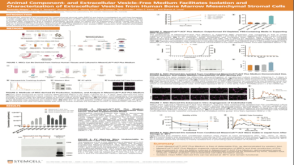 科学海报Animal Component- and Extracellular Vesicle-Free Medium Facilitates Isolation and Characterization of Extracellular Vesicles from Human Bone Marrow Mesenchymal Stromal Cells




 沪公网安备31010102008431号