Lou Y-R et al. (FEB 2014)
Stem Cells and Development 23 4 380--392
The Use of Nanofibrillar Cellulose Hydrogel As a Flexible Three-Dimensional Model to Culture Human Pluripotent Stem Cells
Human embryonic stem cells and induced pluripotent stem cells have great potential in research and thera-pies. The current in vitro culture systems for human pluripotent stem cells (hPSCs) do not mimic the three-dimensional (3D) in vivo stem cell niche that transiently supports stem cell proliferation and is subject to changes which facilitate subsequent differentiation during development. Here,we demonstrate,for the first time,that a novel plant-derived nanofibrillar cellulose (NFC) hydrogel creates a flexible 3D environment for hPSC culture. The pluripotency of hPSCs cultured in the NFC hydrogel was maintained for 26 days as evidenced by the expression of OCT4,NANOG,and SSEA-4,in vitro embryoid body formation and in vivo teratoma formation. The use of a cellulose enzyme,cellulase,enables easy cell propagation in 3D culture as well as a shift between 3D and two-dimensional cultures. More importantly,the removal of the NFC hydrogel facilitates differentiation while retaining 3D cell organization. Thus,the NFC hydrogel represents a flexible,xeno-free 3D culture system that supports pluripotency and will be useful in hPSC-based drug research and regenerative medicine.
View Publication
产品类型:
产品号#:
05850
05857
05870
05875
07923
85850
85857
85870
85875
产品名:
Dispase (1 U/mL)
mTeSR™1
mTeSR™1
Greene WA et al. (JUN 2014)
Journal of visualized experiments : JoVE 88 e51589
MicroRNA expression profiles of human iPS cells, retinal pigment epithelium derived from iPS, and fetal retinal pigment epithelium.
The objective of this report is to describe the protocols for comparing the microRNA (miRNA) profiles of human induced-pluripotent stem (iPS) cells,retinal pigment epithelium (RPE) derived from human iPS cells (iPS-RPE),and fetal RPE. The protocols include collection of RNA for analysis by microarray,and the analysis of microarray data to identify miRNAs that are differentially expressed among three cell types. The methods for culture of iPS cells and fetal RPE are explained. The protocol used for differentiation of RPE from human iPS is also described. The RNA extraction technique we describe was selected to allow maximal recovery of very small RNA for use in a miRNA microarray. Finally,cellular pathway and network analysis of microarray data is explained. These techniques will facilitate the comparison of the miRNA profiles of three different cell types.
View Publication
产品类型:
产品号#:
05850
05857
05870
05875
85850
85857
85870
85875
产品名:
mTeSR™1
mTeSR™1
Lee J et al. (AUG 2015)
FASEB journal : official publication of the Federation of American Societies for Experimental Biology 29 8 3399--3410
Early induction of a prechondrogenic population allows efficient generation of stable chondrocytes from human induced pluripotent stem cells.
Regeneration of human cartilage is inherently inefficient; an abundant autologous source,such as human induced pluripotent stem cells (hiPSCs),is therefore attractive for engineering cartilage. We report a growth factor-based protocol for differentiating hiPSCs into articular-like chondrocytes (hiChondrocytes) within 2 weeks,with an overall efficiency textgreater90%. The hiChondrocytes are stable and comparable to adult articular chondrocytes in global gene expression,extracellular matrix production,and ability to generate cartilage tissue in vitro and in immune-deficient mice. Molecular characterization identified an early SRY (sex-determining region Y) box (Sox)9(low) cluster of differentiation (CD)44(low)CD140(low) prechondrogenic population during hiPSC differentiation. In addition,2 distinct Sox9-regulated gene networks were identified in the Sox9(low) and Sox9(high) populations providing novel molecular insights into chondrogenic fate commitment and differentiation. Our findings present a favorable method for generating hiPSC-derived articular-like chondrocytes. The hiChondrocytes are an attractive cell source for cartilage engineering because of their abundance,autologous nature,and potential to generate articular-like cartilage rather than fibrocartilage. In addition,hiChondrocytes can be excellent tools for modeling human musculoskeletal diseases in a dish and for rapid drug screening.
View Publication
Vieillard V et al. (AUG 2005)
Proceedings of the National Academy of Sciences 102 31 10981--86
NK cytotoxicity against CD4+ T cells during HIV-1 infection: A gp41 peptide induces the expression of an NKp44 ligand
HIV infection leads to a state of chronic immune activation and progressive deterioration in immune function,manifested most recognizably by the progressive depletion of CD4+ T cells. A substantial percentage of natural killer (NK) cells from patients with HIV infection are activated and express the natural cytotoxicity receptor (NCR) NKp44. Here we show that a cellular ligand for NKp44 (NKp44L) is expressed during HIV-1 infection and is correlated with both the progression of CD4+ T cell depletion and the increase of viral load. CD4+ T cells expressing this ligand are highly sensitive to the NK lysis activity mediated by NKp44+ NK cells. The expression of NKp44L is induced by the linear motif NH2-SWSNKS-COOH of the HIV-1 envelope gp41 protein. This highly conserved motif appears critical to the sharp increase in NK lysis of CD4+ T cells from HIV-infected patients. These studies strongly suggest that induction of NKp44L plays a key role in the lysis of CD4+ T cells by activated NK cells in HIV infection and consequently provide a framework for considering how HIV-1 may use NK cell immune surveillance to trigger CD4+ T cells. Understanding this mechanism may help to develop future therapeutic strategies and vaccines against HIV-1 infection.
View Publication
产品类型:
产品号#:
03800
03801
03802
03803
03804
03805
03806
05150
15021
15061
产品名:
ClonaCell™-HY杂交瘤试剂盒
ClonaCell™-HY培养基A
ClonaCell™-HY 培养基 B
ClonaCell™-HY 培养基 C
ClonaCell™-HY 培养基 D
ClonaCell™-HY 培养基 E
ClonaCell™-HY PEG
MyeloCult™ H5100
RosetteSep™人T细胞富集抗体混合物
RosetteSep™人T细胞富集抗体混合物
Jung J-H et al. (APR 2015)
Stem cells and development 24 8 948--61
CXCR2 and its related ligands play a novel role in supporting the pluripotency and proliferation of human pluripotent stem cells.
Basic fibroblast growth factor (bFGF) is a crucial factor sustaining human pluripotent stem cells (hPSCs). We designed this study to search the substitutive factors other than bFGF for the maintenance of hPSCs by using human placenta-derived conditioned medium without exogenous bFGF (hPCCM-),containing chemokine (C-X-C motif) receptor 2 (CXCR2) ligands,including interleukin (IL)-8 and growth-related oncogene $\$(GRO$\$),which were developed on the basis of our previous studies. First,we confirmed that IL-8 and/or GRO$\$ independent roles to preserve the phenotype of hPSCs. Then,we tried CXCR2 blockage of hPSCs in hPCCM- and verified the significant decrease of pluripotency-associated genes expression and the proliferation of hPSCs. Interestingly,CXCR2 suppression of hPSCs in mTeSR™1 containing exogenous bFGF decreased the proliferation of hPSCs while maintaining pluripotency characteristics. Lastly,we found that hPSCs proliferated robustly for more than 35 passages in hPCCM- on a gelatin substratum. Higher CXCR2 expression of hPSCs cultured in hPCCM- than those in mTeSR™1 was observable. Our findings suggest that CXCR2 and its related ligands might be novel factors comparable to bFGF supporting the characteristics of hPSCs and hPCCM- might be useful for the maintenance of hPSCs as well as for the accurate evaluation of CXCR2 role in hPSCs without the confounding influence of exogenous bFGF.
View Publication
产品类型:
产品号#:
05850
05857
05870
05875
85850
85857
85870
85875
产品名:
mTeSR™1
mTeSR™1
ndrea de Oliveira Georges JA et al. (AUG 2014)
Stem cell reviews 10 4 472--479
Aberrant patterns of X chromosome inactivation in a new line of human embryonic stem cells established in physiological oxygen concentrations
One of the differences between murine and human embryonic stem cells (ESCs) is the epigenetic state of the X chromosomes in female lines. Murine ESCs (mESCs) present two transcriptionally active Xs that will undergo the dosage compensation process of XCI upon differentiation,whereas most human ESCs (hESCs) spontaneously inactivate one X while keeping their pluripotency. Whether this reflects differences in embryonic development of mice and humans,or distinct culture requirements for the two kinds of pluripotent cells is not known. Recently it has been shown that hESCs established in physiological oxygen levels are in a stable pre-XCI state equivalent to that of mESCs,suggesting that culture in low oxygen concentration is enough to preserve that epigenetic state of the X chromosomes. Here we describe the establishment of two new lines of hESCs under physiological oxygen level and the characterization of the XCI state in the 46,XX line BR-5. We show that a fraction of undifferentiated cells present XIST RNA accumulation and single H3K27me foci,characteristic of the inactive X. Moreover,analysis of allele specific gene expression suggests that pluripotent BR-5 cells present completely skewed XCI. Our data indicate that physiological levels of oxygen are not sufficient for the stabilization of the pre-XCI state in hESCs.
View Publication
Řeboun M et al. ( 2016)
Folia biologica 62 2 82--89
X-Chromosome Inactivation Analysis in Different Cell Types and Induced Pluripotent Stem Cells Elucidates the Disease Mechanism in a Rare Case of Mucopolysaccharidosis Type II in a Female.
Mucopolysaccharidosis type II (MPS II) is an X-linked lysosomal storage disorder resulting from deficiency of iduronate-2-sulphatase activity. The disease manifests almost exclusively in males; only 16 symptomatic heterozygote girls have been reported so far. We describe the results of X-chromosome inactivation analysis in a 5-year-old girl with clinically severe disease and heterozygous mutation p.Arg468Gln in the IDS gene. X inactivation analysed at three X-chromosome loci showed extreme skewing (96/4 to 99/1) in two patient's cell types. This finding correlated with exclusive expression of the mutated allele. Induced pluripotent stem cells (iPSC) generated from the patient's peripheral blood demonstrated characteristic pluripotency markers,deficiency of enzyme activity,and mutation in the IDS gene. These cells were capable of differentiation into other cell types (cardiomyocytes,neurons). In MPS II iPSC clones,the X inactivation ratio remained highly skewed in culture conditions that led to partial X inactivation reset in Fabry disease iPSC clones. Our data,in accordance with the literature,suggest that extremely skewed X inactivation favouring the mutated allele is a crucial condition for manifestation of MPS II in females. This suggests that the X inactivation status and enzyme activity have a prognostic value and should be used to evaluate MPS II in females. For the first time,we show generation of iPSC from a symptomatic MPS II female patient that can serve as a cellular model for further research of the pathogenesis and treatment of this disease.
View Publication
Alternative splicing of vasohibin-1 generates an inhibitor of endothelial cell proliferation, migration, and capillary tube formation.
OBJECTIVE: In this study,the alternative splicing product of vasohibin 1 (VASH1B) was analyzed in direct comparison to the major isoform (VASH1A) for antiangiogenic effects on endothelial colony forming cells (ECFCs) from peripheral blood and on human umbilical vein endothelial cells (HUVECs). METHODS AND RESULTS: Expression studies in primary human endothelial cells revealed that both vasohibin proteins,hVASH1A and hVASH1B,localized in the nucleus and cytoplasm. Adenoviruses carrying the cDNA for VASH1A/B and purified recombinant proteins were used to study the function of both molecules in ECFCs and HUVECs. Recombinant VASH1A protein did not inhibit cell proliferation,tube formation,or vessel growth in vivo in the chick chorioallantoic membrane (CAM) assay,but promoted endothelial cell migration in vitro. The VASH1B protein had an inhibitory effect on cell proliferation,migration,tube formation,and inhibited blood vessel formation in the CAM assay. Adenoviral overexpression of VASH1B,but not of VASH1A,resulted in inhibition of endothelial cell growth,migration,and capillary formation. Interestingly,overexpression of VASH1A and B induced apoptosis in proliferating human fibroblasts,but did not affect cell growth of keratinocytes. CONCLUSIONS: Our data point out that alternative splicing of the VASH1 pre-mRNA transcript generates a potent antiangiogenic protein.
View Publication
产品类型:
产品号#:
03814
产品名:
ClonaCell™-TCS 培养基
Cindric Vranesic A et al. (MAY 2016)
Human Molecular Genetics May 11 ddw140
Characterization of SKAP/kinastrin isoforms: the N-terminus defines tissue specificity and Pontin binding
Small Kinetochore-Associated Protein (SKAP)/Kinastrin is a multifunctional protein with proposed roles in mitosis,apoptosis and cell migration. Exact mechanisms underlying its activities in these cellular processes are not completely understood. SKAP is predicted to have different isoforms,however,previous studies did not differentiate between them. Since distinct molecular architectures of protein isoforms often influence their localization and functions,this study aimed to examine the expression profile and functional differences between SKAP isoforms in human and mouse. Analyses of various human tissues and cells of different origin by RT-PCR,and by Western blotting and immunocytochemistry applying newly generated anti-SKAP monoclonal antibodies revealed that human SKAP exists in two protein isoforms: ubiquitously expressed SKAP16 and testis/sperm-specific SKAP1. In mouse,SKAP1 expression is detectable in testis at 4 weeks postnatally,when the first wave of spermatogenesis in mice is complete and the elongated spermatids are present in the testes. Furthermore,we identified Pontin as a new SKAP1 interaction partner. SKAP1 and Pontin co-localized in the flagellar region of human sperm suggesting a functional relevance for SKAP1-Pontin interaction in sperm motility. Since most previous studies on SKAP were performed with the testis-specific isoform SKAP1,our findings provide a new basis for future studies on the role of SKAP in both human somatic cells and male germ cells,including studies on male fertility.
View Publication


 EasySep™小鼠TIL(CD45)正选试剂盒




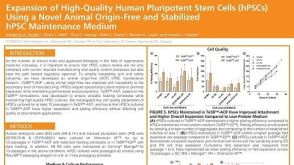 科学海报Expansion of High-Quality Human Pluripotent Stem Cells (hPSCs) Using a Novel Animal Origin-Free and Stabilized hPSC Maintenance Medium
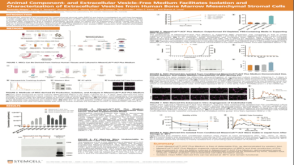 科学海报Animal Component- and Extracellular Vesicle-Free Medium Facilitates Isolation and Characterization of Extracellular Vesicles from Human Bone Marrow Mesenchymal Stromal Cells

 沪公网安备31010102008431号