Pelicano H et al. (DEC 2006)
The Journal of cell biology 175 6 913--23
Mitochondrial respiration defects in cancer cells cause activation of Akt survival pathway through a redox-mediated mechanism.
Cancer cells exhibit increased glycolysis for ATP production due,in part,to respiration injury (the Warburg effect). Because ATP generation through glycolysis is less efficient than through mitochondrial respiration,how cancer cells with this metabolic disadvantage can survive the competition with other cells and eventually develop drug resistance is a long-standing paradox. We report that mitochondrial respiration defects lead to activation of the Akt survival pathway through a novel mechanism mediated by NADH. Respiration-deficient cells (rho(-)) harboring mitochondrial DNA deletion exhibit dependency on glycolysis,increased NADH,and activation of Akt,leading to drug resistance and survival advantage in hypoxia. Similarly,chemical inhibition of mitochondrial respiration and hypoxia also activates Akt. The increase in NADH caused by respiratory deficiency inactivates PTEN through a redox modification mechanism,leading to Akt activation. These findings provide a novel mechanistic insight into the Warburg effect and explain how metabolic alteration in cancer cells may gain a survival advantage and withstand therapeutic agents.
View Publication
产品类型:
产品号#:
04230
产品名:
MethoCult™ H4230
Carlsten M et al. (FEB 2007)
Cancer research 67 3 1317--25
DNAX accessory molecule-1 mediated recognition of freshly isolated ovarian carcinoma by resting natural killer cells.
Although natural killer (NK) cells are well known for their ability to kill tumors,few studies have addressed the interactions between resting (nonactivated) NK cells and freshly isolated human tumors. Here,we show that human leukocyte antigen class I(low) tumor cells isolated directly from patients with advanced ovarian carcinoma trigger degranulation by resting allogeneic NK cells. This was paralleled by induction of granzyme B and caspase-6 activities in the tumor cells and significant tumor cell lysis. Ovarian carcinoma cells displayed ubiquitous expression of the DNAX accessory molecule-1 (DNAM-1) ligand PVR and sparse/heterogeneous expression of the NKG2D ligands MICA/MICB and ULBP1,ULBP2,and ULBP3. In line with the NK receptor ligand expression profiles,antibody-mediated blockade of activating receptor pathways revealed a dominant role for DNAM-1 and a complementary contribution of NKG2D signaling in tumor cell recognition. These results show that resting NK cells are capable of directly recognizing freshly isolated human tumor cells and identify ovarian carcinoma as a potential target for adoptive NK cell-based immunotherapy.
View Publication
产品类型:
产品号#:
18259
18259RF
产品名:
Sloand EM et al. (SEP 2006)
Proceedings of the National Academy of Sciences of the United States of America 103 39 14483--8
Granulocyte colony-stimulating factor preferentially stimulates proliferation of monosomy 7 cells bearing the isoform IV receptor.
Granulocyte colony-stimulating factor (GCSF) administration has been linked to the development of monosomy 7 in severe congenital neutropenia and aplastic anemia. We assessed the effect of pharmacologic doses of GCSF on monosomy 7 cells to determine whether this chromosomal abnormality developed de novo or arose as a result of favored expansion of a preexisting clone. Fluorescence in situ hybridization (FISH) of chromosome 7 was used to identify small populations of aneuploid cells. When bone marrow mononuclear cells from patients with monosomy 7 were cultured with 400 ng/ml GCSF,all samples showed significant increases in the proportion of monosomy 7 cells. In contrast,bone marrow from karyotypically normal aplastic anemia,myelodysplastic syndrome,or healthy individuals did not show an increase in monosomy 7 cells in culture. In bone marrow CD34 cells of patients with myelodysplastic syndrome and monosomy 7,GCSF receptor (GCSFR) protein was increased. Although no mutation was found in genomic GCSFR DNA,CD34 cells showed increased expression of the GCSFR class IV mRNA isoform,which is defective in signaling cellular differentiation. GCSFR signal transduction via the Jak/Stat system was abnormal in monosomy 7 CD34 cells,with increased phosphorylated signal transducer and activation of transcription protein,STAT1-P,and increased STAT5-P relative to STAT3-P. Our results suggest that pharmacologic doses of GCSF increase the proportion of preexisting monosomy 7 cells. The abnormal response of monosomy 7 cells to GCSF would be explained by the expansion of undifferentiated monosomy 7 clones expressing the class IV GCSFR,which is defective in signaling cell maturation.
View Publication
产品类型:
产品号#:
05150
产品名:
MyeloCult™ H5100
Kanai R et al. (JAN 2012)
Journal of the National Cancer Institute 104 1 42--55
Oncolytic virus-mediated manipulation of DNA damage responses: synergy with chemotherapy in killing glioblastoma stem cells.
BACKGROUND: Although both the alkylating agent temozolomide (TMZ) and oncolytic viruses hold promise for treating glioblastoma,which remains uniformly lethal,the effectiveness of combining the two treatments and the mechanism of their interaction on cancer stem cells are unknown. METHODS: We investigated the efficacy of combining TMZ and the oncolytic herpes simplex virus (oHSV) G47Δ in killing glioblastoma stem cells (GSCs),using Chou-Talalay combination index analysis,immunocytochemistry and fluorescence microscopy,and neutral comet assay. The role of treatment-induced DNA double-strand breaks,activation of DNA damage responses,and virus replication in the cytotoxic interaction between G47Δ and TMZ was examined with a panel of pharmacological inhibitors and short-hairpin RNA (shRNA)-mediated knockdown of DNA repair pathways. Comparisons of cell survival and virus replication were performed using a two-sided t test (unpaired). The survival of athymic mice (n = 6-8 mice per group) bearing GSC-derived glioblastoma tumors treated with the combination of G47Δ and TMZ was analyzed by the Kaplan-Meier method and evaluated with a two-sided log-rank test. RESULTS: The combination of G47Δ and TMZ acted synergistically in killing GSCs but not neurons,with associated robust induction of DNA damage. Pharmacological and shRNA-mediated knockdown studies suggested that activated ataxia telangiectasia mutated (ATM) is a crucial mediator of synergy. Activated ATM relocalized to HSV DNA replication compartments where it likely enhanced oHSV replication and could not participate in repairing TMZ-induced DNA damage. Sensitivity to TMZ and synergy with G47Δ decreased with O(6)-methylguanine-DNA-methyltransferase (MGMT) expression and MSH6 knockdown. Combined G47Δ and TMZ treatment extended survival of mice bearing GSC-derived intracranial tumors,achieving long-term remission in four of eight mice (median survival = 228 days; G47Δ alone vs G47Δ + TMZ,hazard ratio of survival = 7.1,95% confidence interval = 1.9 to 26.1,P = .003) at TMZ doses attainable in patients. CONCLUSIONS: The combination of G47Δ and TMZ acts synergistically in killing GSCs through oHSV-mediated manipulation of DNA damage responses. This strategy is highly efficacious in representative preclinical models and warrants clinical translation.
View Publication
产品类型:
产品号#:
05707
05751
产品名:
NeuroCult™化学解离试剂盒(小鼠)
NeuroCult™ NS-A 扩增试剂盒(人)
Golay J et al. (MAR 2006)
Haematologica 91 3 322--30
The sensitivity of acute lymphoblastic leukemia cells carrying the t(12;21) translocation to campath-1H-mediated cell lysis.
BACKGROUND AND OBJECTIVES: Campath-1H is used in conditioning regimens and more recently as an anti-leukemic therapy in acute lymphoblastic leukemias (ALL). We therefore investigated CD52 expression and campath-1H-mediated lysis of ALL cells in vitro. DESIGN AND METHODS: Complement-mediated cytotoxicity assays were performed on freshly isolated neoplastic cells and cell lines using human serum. Antibody-dependent cellular cytotoxicity (ADCC) was performed by calcein-AM release assays. RESULTS: CD52 was expressed in four out of eight ALL cell lines studied. Among 61 freshly isolated ALL samples CD52 was expressed at varying levels in 87% of cases. Whereas ADCC was equivalent in different CD52+ lines,complement-dependent cytotoxicity (CDC) was variable. The REH cell line bearing the t(12;21) translocation showed 47-60% lysis when treated with 10 microg/mL campath-1H compared to 0-6% for the other cell lines expressing equivalent amounts of CD52. Furthermore all nine ALL samples with t(12;21) showed very high CDC (mean 97%) compared to the other 24 CD52+cases (mean 24%)(ptextless0.0001). In t(12;21) samples,efficient CDC was obtained with as little as 1 microg/mL campath-1H. CDC correlated in part with CD52 levels,suggesting that CD52 expression and other yet undefined factors contribute to the particular sensitivity of t(12;21) cells. The resistance of non t(12;21) ALL cases could be overcome to a limited extent by increasing the concentration of campath-1H,blocking the CD55 and CD59 complement inhibitors,and more effectively by combining campath-1H with fludarabine. INTERPRETATION AND CONCLUSIONS: We conclude that most ALL samples express CD52 to a variable level and that campath-1H has cytotoxic activity against CD52+ALL,alone or in combination with cytotoxic drugs.
View Publication
Charafe-Jauffret E et al. (JAN 2010)
Clinical cancer research : an official journal of the American Association for Cancer Research 16 1 45--55
Aldehyde dehydrogenase 1-positive cancer stem cells mediate metastasis and poor clinical outcome in inflammatory breast cancer.
PURPOSE: To examine the role of cancer stem cells (CSC) in mediating metastasis in inflammatory breast cancer (IBC) and the association of these cells with patient outcome in this aggressive type of breast cancer. EXPERIMENTAL DESIGN: CSCs were isolated from SUM149 and MARY-X,an IBC cell line and primary xenograft,by virtue of increased aldehyde dehydrogenase (ALDH) activity as assessed by the ALDEFLUOR assay. Invasion and metastasis of CSC populations were assessed by in vitro and mouse xenograft assays. Expression of ALDH1 was determined on a retrospective series of 109 IBC patients and this was correlated with histoclinical data. All statistical tests were two sided. Log-rank tests using Kaplan-Meier analysis were used to determine the correlation of ALDH1 expression with development of metastasis and patient outcome. RESULTS: Both in vitro and xenograft assays showed that invasion and metastasis in IBC are mediated by a cellular component that displays ALDH activity. Furthermore,expression of ALDH1 in IBC was an independent predictive factor for early metastasis and decreased survival in this patient population. CONCLUSIONS: These results suggest that the metastatic,aggressive behavior of IBC may be mediated by a CSC component that displays ALDH enzymatic activity. ALDH1 expression represents the first independent prognostic marker to predict metastasis and poor patient outcome in IBC. The results illustrate how stem cell research can translate into clinical practice in the IBC field.
View Publication
产品类型:
产品号#:
01700
01705
01701
01702
产品名:
ALDEFLUOR™ 试剂盒
ALDEFLUOR™ DEAB试剂, 1.5 mM, 1 mL
ALDEFLUOR™检测缓冲液
Grudzien P et al. (OCT 2010)
Anticancer research 30 10 3853--67
Inhibition of Notch signaling reduces the stem-like population of breast cancer cells and prevents mammosphere formation.
BACKGROUND: Cancer stem cells (CSCs) are believed to be responsible for breast cancer formation and recurrence; therefore,therapeutic strategies targeting CSCs must be developed. One approach may be targeting signaling pathways,like Notch,that are involved in stem cell self-renewal and survival. MATERIALS AND METHODS: Breast cancer stem-like cells derived from cell lines and patient samples were examined for Notch expression and activation. The effect of Notch inhibition on sphere formation,proliferation,and colony formation was determined. RESULTS: Breast cancer stem-like cells consistently expressed elevated Notch activation compared with bulk tumor cells. Blockade of Notch signaling using pharmacologic and genomic approaches prevented sphere formation,proliferation,and/or colony formation in soft agar. Interestingly,a gamma-secretase inhibitor,MRK003,induced apoptosis in these cells. CONCLUSION: Our findings support a crucial role for Notch signaling in maintenance of breast cancer stem-like cells,and suggest Notch inhibition may have clinical benefits in targeting CSCs.
View Publication
产品类型:
产品号#:
01700
01705
01702
产品名:
ALDEFLUOR™ 试剂盒
ALDEFLUOR™ DEAB试剂, 1.5 mM, 1 mL
ALDEFLUOR™检测缓冲液
Podar K et al. (FEB 2003)
The Journal of biological chemistry 278 8 5794--801
Essential role of caveolae in interleukin-6- and insulin-like growth factor I-triggered Akt-1-mediated survival of multiple myeloma cells.
Caveolae,specialized flask-shaped lipid rafts on the cell surface,are composed of cholesterol,sphingolipids,and structural proteins termed caveolins; functionally,these plasma membrane microdomains have been implicated in signal transduction and transmembrane transport. In the present study,we examined the role of caveolin-1 in multiple myeloma cells. We show for the first time that caveolin-1,which is usually absent in blood cells,is expressed in multiple myeloma cells. Analysis of myeloma cell-derived plasma membrane fractions shows that caveolin-1 is co-localized with interleukin-6 receptor signal transducing chain gp130 and with insulin-like growth factor-I receptor. Cholesterol depletion by beta-cyclodextrin results in the loss of caveola structure in myeloma cells,as shown by transmission electron microscopy,and loss of caveolin-1 function. Interleukin-6 and insulin-like growth factor-I,growth and survival factors in multiple myeloma,induce caveolin-1 phosphorylation,which is abrogated by pre-treatment with beta-cyclodextrin. Importantly,inhibition of caveolin-1 phosphorylation blocks both interleukin-6-induced protein complex formation with caveolin-1 and downstream activation of the phosphatidylinositol 3-kinase/Akt-1 pathway. beta-Cyclodextrin also blocks insulin-like growth factor-I-induced tyrosine phosphorylation of insulin-responsive substrate-1 and downstream activation of the phosphatidylinositol 3-kinase/Akt-1 pathway. Therefore,cholesterol depletion by beta-cyclodextrin abrogates both interleukin-6- and insulin-like growth factor-I-triggered multiple myeloma cell survival via negative regulation of caveolin-1. Taken together,this study identifies caveolin-1 and other structural membrane components as potential new therapeutic targets in multiple myeloma.
View Publication
产品类型:
产品号#:
15129
15169
产品名:
RosetteSep™人多发性骨髓瘤细胞富集抗体混合物
RosetteSep™人多发性骨髓瘤细胞富集抗体混合物
Fuertes MB et al. (APR 2008)
Journal of immunology (Baltimore,Md. : 1950) 180 7 4606--14
Intracellular retention of the NKG2D ligand MHC class I chain-related gene A in human melanomas confers immune privilege and prevents NK cell-mediated cytotoxicity.
Most tumors grow in immunocompetent hosts despite expressing NKG2D ligands (NKG2DLs) such as the MHC class I chain-related genes A and B (MICA/B). However,their participation in tumor cell evasion is still not completely understood. Here we demonstrate that several human melanomas (cell lines and freshly isolated metastases) do not express MICA on the cell surface but have intracellular deposits of this NKG2DL. Susceptibility to NK cell-mediated cytotoxicity correlated with the ratio of NKG2DLs to HLA class I molecules but not with the amounts of MICA on the cell surface of tumor cells. Transfection-mediated overexpression of MICA restored cell surface expression and resulted in an increased in vitro cytotoxicity and IFN-gamma secretion by human NK cells. In xenografted nude mice,these melanomas exhibited a delayed growth and extensive in vivo apoptosis. Retardation of tumor growth was due to NK cell-mediated antitumor activity against MICA-transfected tumors,given that this effect was not observed in NK cell-depleted mice. Also,mouse NK cells killed MICA-overexpressing melanomas in vitro. A mechanistic analysis revealed the retention of MICA in the endoplasmic reticulum,an effect that was associated with accumulation of endoH-sensitive (immature) forms of MICA,retrograde transport to the cytoplasm,and degradation by the proteasome. Our study identifies a novel strategy developed by melanoma cells to evade NK cell-mediated immune surveillance based on the intracellular sequestration of immature forms of MICA in the endoplasmic reticulum. Furthermore,this tumor immune escape strategy can be overcome by gene therapy approaches aimed at overexpressing MICA on tumor cells.
View Publication
产品类型:
产品号#:
15025
15065
产品名:
RosetteSep™人NK细胞富集抗体混合物
RosetteSep™人NK细胞富集抗体混合物
Castriconi R et al. (DEC 2004)
Cancer research 64 24 9180--4
Natural killer cell-mediated killing of freshly isolated neuroblastoma cells: critical role of DNAX accessory molecule-1-poliovirus receptor interaction.
In the present study,we assessed the susceptibility of freshly isolated neuroblastoma cells to killing mediated by normal human natural killer (NK) cells and analyzed the receptor-ligand interactions that regulate this event. We show that killing of freshly isolated neuroblasts,similar to neuroblastoma cell lines,involves NKp46 and NKp30 (natural cytotoxicity receptors). However,freshly isolated neuroblasts were generally more resistant to NK-mediated lysis than conventional neuroblastoma cell lines. Moreover,a significant heterogeneity in susceptibility to lysis existed among neuroblastomas derived from different patients. Remarkably,susceptibility to lysis directly correlated with the surface expression,on neuroblasts,of poliovirus receptor [PVR (CD155)],a ligand for the DNAX accessory molecule-1 [DNAM-1 (CD226)] triggering receptor expressed by NK cells. Indeed,PVR-expressing neuroblastomas were efficiently killed by NK cells. Moreover,monoclonal antibody-mediated masking of either DNAM-1 (on NK cells) or PVR (on neuroblasts) resulted in strong inhibition of tumor cell lysis. Thus,assessment of the PVR surface levels may represent a novel useful criterion to predict the susceptibility/resistance of neuroblastomas to NK-mediated killing.
View Publication
产品类型:
产品号#:
15122
15162
产品名:
RosetteSep™人CD45去除抗体混合物
RosetteSep™人CD45去除抗体混合物
Puissant A et al. (FEB 2010)
Cancer research 70 3 1042--52
Resveratrol promotes autophagic cell death in chronic myelogenous leukemia cells via JNK-mediated p62/SQSTM1 expression and AMPK activation.
Autophagy that is induced by starvation or cellular stress can enable cancer cell survival by sustaining energy homeostasis and eliminating damaged organelles and proteins. In response to stress,cancer cells have been reported to accumulate the protein p62/SQSTM1 (p62),but its role in the regulation of autophagy is controversial. Here,we report that the plant phytoalexin resveratrol (RSV) triggers autophagy in imatinib-sensitive and imatinib-resistant chronic myelogenous leukemia (CML) cells via JNK-dependent accumulation of p62. JNK inhibition or p62 knockdown prevented RSV-mediated autophagy and antileukemic effects. RSV also stimulated AMPK,thereby inhibiting the mTOR pathway. AMPK knockdown or mTOR overexpression impaired RSV-induced autophagy but not JNK activation. Lastly,p62 expression and autophagy in CD34+ progenitors from patients with CML was induced by RSV,and disrupting autophagy protected CD34+ CML cells from RSV-mediated cell death. We concluded that RSV triggered autophagic cell death in CML cells via both JNK-mediated p62 overexpression and AMPK activation. Our findings show that the JNK and AMPK pathways can cooperate to eliminate CML cells via autophagy.
View Publication


 EasySep™小鼠TIL(CD45)正选试剂盒




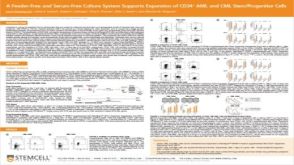 科学海报A Feeder-Free and Serum-Free Culture System Supports Expansion of CD34+ AML and CML Stem/Progenitor Cells
 沪公网安备31010102008431号