Li J et al. (MAR 2005)
Clinical Cancer Research 11 6 2195--2204
Generation of PRL-3- and PRL-1-specific monoclonal antibodies as potential diagnostic markers for cancer metastases
PURPOSE: The PRL-3 mRNA is consistently elevated in metastatic samples derived from colorectal cancers. We sought to generate a specific PRL-3 monoclonal antibody (mAb) that might serve as a potential diagnostic marker for colorectal cancer metastasis. EXPERIMENTAL DESIGN: PRL-3 is one of three members (PRL-1,PRL-2,and PRL-3) in a unique protein-tyrosine phosphatase family. Because the three PRLs are 76% to 87% identical in their amino acid sequences,it poses a great challenge to obtain mAbs that are specific for respective phosphatase of regenerating liver (PRL) but not for the other two in the family. We screened over 1,400 hybridoma clones to generate mAbs specific to each PRL member. RESULTS: We obtained two hybridoma clones specifically against PRL-3 and another two clones specifically against PRL-1. These antibodies had been evaluated by several critical tests to show their own specificities and applications. Most importantly,the PRL-3 mAbs were assessed on 282 human colorectal tissue samples (121 normal,17 adenomas,and 144 adenocarcinomas). PRL-3 protein was detected in 11% of adenocarcinoma samples. The PRL-3- and PRL-1-specific mAbs were further examined on 204 human multiple cancer tissues. The differential expressions of PRL-3 and PRL-1 confirmed the mAbs' specificity. CONCLUSIONS: Using several approaches,we show that PRL-3- or PRL-1-specific mAbs react only to their respective antigen. The expression of PRL-3 in textgreater10% of primary colorectal cancer samples indicates that PRL-3 may prime the metastatic process. These mAbs will be useful as markers in clinical diagnosis for assessing tumor aggressiveness.
View Publication
Ji R-R et al. (SEP 2009)
PLoS computational biology 5 9 e1000512
Transcriptional profiling of the dose response: a more powerful approach for characterizing drug activities.
The dose response curve is the gold standard for measuring the effect of a drug treatment,but is rarely used in genomic scale transcriptional profiling due to perceived obstacles of cost and analysis. One barrier to examining transcriptional dose responses is that existing methods for microarray data analysis can identify patterns,but provide no quantitative pharmacological information. We developed analytical methods that identify transcripts responsive to dose,calculate classical pharmacological parameters such as the EC50,and enable an in-depth analysis of coordinated dose-dependent treatment effects. The approach was applied to a transcriptional profiling study that evaluated four kinase inhibitors (imatinib,nilotinib,dasatinib and PD0325901) across a six-logarithm dose range,using 12 arrays per compound. The transcript responses proved a powerful means to characterize and compare the compounds: the distribution of EC50 values for the transcriptome was linked to specific targets,dose-dependent effects on cellular processes were identified using automated pathway analysis,and a connection was seen between EC50s in standard cellular assays and transcriptional EC50s. Our approach greatly enriches the information that can be obtained from standard transcriptional profiling technology. Moreover,these methods are automated,robust to non-optimized assays,and could be applied to other sources of quantitative data.
View Publication
产品类型:
产品号#:
73302
73304
产品名:
Nilotinib
Nilotinib
Liu S et al. (FEB 2008)
Proceedings of the National Academy of Sciences of the United States of America 105 5 1680--5
BRCA1 regulates human mammary stem/progenitor cell fate.
Although it is well established that women with germ-line mutations in the BRCA1 gene have a greatly increased lifetime incidence of breast and ovarian cancer,the molecular mechanisms responsible for this tissue-specific carcinogenesis remain undefined. The majority of these breast cancers are of the basal-like phenotype characterized by lack of expression of ER,PR,and ERBB2. Because this phenotype has been proposed to resemble that of normal breast stem cells,we examined the role of BRCA1 in human mammary stem cell fate. Using both in vitro systems and a humanized NOD/SCID mouse model,we demonstrate that BRCA1 expression is required for the differentiation of ER-negative stem/progenitor cells to ER-positive luminal cells. Knockdown of BRCA1 in primary breast epithelial cells leads to an increase in cells displaying the stem/progenitor cell marker ALDH1 and a decrease in cells expressing luminal epithelial markers and estrogen receptor. In breast tissues from women with germ-line BRCA1 mutations,but not normal controls,we detect entire lobules that,although histologically normal,are positive for ALDH1 expression but are negative for the expression of ER. Loss of heterozygosity for BRCA1 was documented in these ALDH1-positive lobules but not in adjacent ALDH1-negative lobules. Taken together,these studies demonstrate that BRCA1 plays a critical role in the differentiation of ER-negative stem/progenitor cells to ER-positive luminal cells. Because BRCA1 also plays a role in DNA repair,our work suggests that loss of BRCA1 may result in the accumulation of genetically unstable breast stem cells,providing prime targets for further carcinogenic events.
View Publication
Downregulation of miRNA-200c links breast cancer stem cells with normal stem cells.
Human breast tumors contain a breast cancer stem cell (BCSC) population with properties reminiscent of normal stem cells. We found 37 microRNAs that were differentially expressed between human BCSCs and nontumorigenic cancer cells. Three clusters,miR-200c-141,miR-200b-200a-429,and miR-183-96-182 were downregulated in human BCSCs,normal human and murine mammary stem/progenitor cells,and embryonal carcinoma cells. Expression of BMI1,a known regulator of stem cell self-renewal,was modulated by miR-200c. miR-200c inhibited the clonal expansion of breast cancer cells and suppressed the growth of embryonal carcinoma cells in vitro. Most importantly,miR-200c strongly suppressed the ability of normal mammary stem cells to form mammary ducts and tumor formation driven by human BCSCs in vivo. The coordinated downregulation of three microRNA clusters and the similar functional regulation of clonal expansion by miR-200c provide a molecular link that connects BCSCs with normal stem cells.
View Publication
产品类型:
产品号#:
05610
产品名:
EpiCult™-B 小鼠培养基
Cantù et al. (MAR 2011)
Blood 117 13 3669--79
Sox6 enhances erythroid differentiation in human erythroid progenitors.
Sox6 belongs to the Sry (sex-determining region Y)-related high-mobility-group-box family of transcription factors,which control cell-fate specification of many cell types. Here,we explored the role of Sox6 in human erythropoiesis by its overexpression both in the erythroleukemic K562 cell line and in primary erythroid cultures from human cord blood CD34+ cells. Sox6 induced significant erythroid differentiation in both models. K562 cells underwent hemoglobinization and,despite their leukemic origin,died within 9 days after transduction; primary erythroid cultures accelerated their kinetics of erythroid maturation and increased the number of cells that reached the final enucleation step. Searching for direct Sox6 targets,we found SOCS3 (suppressor of cytokine signaling-3),a known mediator of cytokine response. Sox6 was bound in vitro and in vivo to an evolutionarily conserved regulatory SOCS3 element,which induced transcriptional activation. SOCS3 overexpression in K562 cells and in primary erythroid cells recapitulated the growth inhibition induced by Sox6,which demonstrates that SOCS3 is a relevant Sox6 effector.
View Publication
Yang W-H et al. (OCT 2007)
Analytical biochemistry 369 1 120--7
Methylation profiling using degenerated oligonucleotide primer-PCR specific for genome-wide amplification of bisulfite-modified DNA.
DNA methylation is one of the essential epigenetic processes that play a role in regulating gene expression. Aberrant methylation of CpG-rich promoter regions has been associated with many forms of human cancers. The current method for determining the methylation status relies mainly on bisulfite treatment of genomic DNA,followed by methylation-specific PCR (MSP). The difficulty in acquiring a methylation profiling often is limited by the amount of genomic DNA that can be recovered from a given sample,whereas complex procedures of bisulfite treatment further compromise the effective template for PCR analysis. To circumvent these obstacles,we developed degenerated oligonucleotide primer (DOP)-PCR to enable amplification of bisulfite-modified genomic DNA at a genome-wide scale. A DOP pair was specially designed as follows: first 3' DOP,CTCGAGCTGHHHHHAACTAC,where H is a mixture of base consisting of 50% A,25% T,and 25% C; and second 5' DOP,CTCGAGCTGDDDDDGTTTAG,where D is a mixture of base consisting of 50% T,25% G,and 25% A. Our results showed that bisulfite-modified DNAs from a cell line,cord blood cells,or cells obtained by laser capture microdissection were amplified by up to 1000-fold using this method. Subsequent MSP analysis using these amplified DNAs on nine randomly selected cancer-related genes revealed that the methylation status of these genes remained identical to that derived from the original unamplified template.
View Publication
产品类型:
产品号#:
70007
70007.1
70007.2
产品名:
冻存的人脐带血单核细胞
冻存的人脐带血单核细胞
冻存的人脐带血单核细胞
Jimeno A et al. (FEB 2009)
Molecular cancer therapeutics 8 2 310--4
A direct pancreatic cancer xenograft model as a platform for cancer stem cell therapeutic development.
There is an enormous gap between the antiproliferative and in vivo antitumor efficacy of gemcitabine in cell line-based models and its clinical efficacy. This may be due to insensitiveness of the precursor,cancer stem cell (CSC) compartment to cytotoxic agents. The hedgehog pathway is associated with CSC signaling and control. We used a direct xenograft model of pancreatic cancer and a two-stage approach was used to test the hypotheses that targeting CSC could increase the efficacy of gemcitabine. Tumors from a gemcitabine-sensitive xenograft were treated with gemcitabine first,and randomized,after tumor regression to continuing treatment with gemcitabine,a hedgehog inhibitor alone or in combination with gemcitabine. We tested markers described as associated with CSC such as CD24,CD44,ALDH,nestin,and the hedgehog pathway. After induction with gemcitabine,treated tumor showed an enrichment in CSC markers such as ALDH and CD24. Subsequently,a release from gemcitabine prompted a repopulation of proliferating cells and a decrease in such markers to equilibrate from pretreatment levels. Combined treatment with gemcitabine and cyclopamine induced tumor regression and decrease in CSC markers and hedgehog signaling. Cytoplasmic CD24 and ALDH were inversely and strongly associated with growth and were expressed in a minority of cells that we propose constitute the CSC compartment. Hedgehog inhibitors as part of a dual compartment therapeutic approach were able to further reduce tumor growth and decreased both static and dynamic markers of CSC. Direct tumor xenografts are a valid platform to test multicompartment therapeutic approaches in pancreatic cancer.
View Publication
产品类型:
产品号#:
01700
01705
01701
01702
产品名:
ALDEFLUOR™ 试剂盒
ALDEFLUOR™ DEAB试剂, 1.5 mM, 1 mL
ALDEFLUOR™检测缓冲液
Park SY et al. (FEB 2010)
Clinical cancer research : an official journal of the American Association for Cancer Research 16 3 876--87
Heterogeneity for stem cell-related markers according to tumor subtype and histologic stage in breast cancer.
PURPOSE: To evaluate the expression of stem cell-related markers at the cellular level in human breast tumors of different subtypes and histologic stage. EXPERIMENTAL DESIGN: We performed immunohistochemical analyses of 12 proteins [CD44,CD24,ALDH1,vimentin,osteonectin,EPCR,caveolin 1,connexin 43,cytokeratin 18 (CK18),MUC1,claudin 7,and GATA3] selected based on their differential expression in breast cancer cells with more differentiated and stem cell-like characteristics in 47 cases of invasive ductal carcinoma (IDC) only,135 cases of IDC with ductal carcinoma in situ (DCIS),35 cases of DCIS with microinvasion,and 58 cases of pure DCIS. We also analyzed 73 IDCs with adjacent DCIS to determine the differences in the expression of markers by histology within individual tumors. CD44+/CD24- and CD24-/CD24+ cells were detected using double immunohistochemistry. RESULTS: CD44 and EPCR expression was different among the four histologic groups and was lower in invasive compared with in situ tumors,especially in luminal A subtype. The expression of vimentin,osteonectin,connexin 43,ALDH1,CK18,GATA3,and MUC1 differed by tumor subtype in some histologic groups. ALDH1-positive cells were more frequent in basal-like and HER2+ than in luminal tumors. CD44+/CD24- cells were detected in 69% of all tumors with 100% of the basal-like and 52% of HER2+ tumors having some of these cells. CONCLUSIONS: Our findings suggest that in breast cancer,the frequency of tumor cells positive for stem cell-like and more differentiated cell markers varies according to tumor subtype and histologic stage.
View Publication
产品类型:
产品号#:
01700
01705
01702
产品名:
ALDEFLUOR™ 试剂盒
ALDEFLUOR™ DEAB试剂, 1.5 mM, 1 mL
ALDEFLUOR™检测缓冲液
Liu S et al. (JAN 2011)
Cancer research 71 2 614--24
Breast cancer stem cells are regulated by mesenchymal stem cells through cytokine networks.
We have used in vitro and mouse xenograft models to examine the interaction between breast cancer stem cells (CSC) and bone marrow-derived mesenchymal stem cells (MSC). We show that both of these cell populations are organized in a cellular hierarchy in which primitive aldehyde dehydrogenase expressing mesenchymal cells regulate breast CSCs through cytokine loops involving IL6 and CXCL7. In NOD/SCID mice,labeled MSCs introduced into the tibia traffic to sites of growing breast tumor xenografts where they accelerated tumor growth by increasing the breast CSC population. With immunochemistry,we identified MSC-CSC niches in these tumor xenografts as well as in frozen sections from primary human breast cancers. Bone marrow-derived MSCs may accelerate human breast tumor growth by generating cytokine networks that regulate the CSC population.
View Publication


 EasySep™小鼠TIL(CD45)正选试剂盒




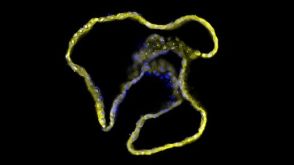 实验方案Drug Screening with Human Pancreatic Organoid Cultures


 沪公网安备31010102008431号