Joseph I et al. (NOV 2010)
Cancer research 70 22 9494--504
The telomerase inhibitor imetelstat depletes cancer stem cells in breast and pancreatic cancer cell lines.
Cancer stem cells (CSC) are rare drug-resistant cancer cell subsets proposed to be responsible for the maintenance and recurrence of cancer and metastasis. Telomerase is constitutively active in both bulk tumor cell and CSC populations but has only limited expression in normal tissues. Thus,inhibition of telomerase has been shown to be a viable approach in controlling cancer growth in nonclinical studies and is currently in phase II clinical trials. In this study,we investigated the effects of imetelstat (GRN163L),a potent telomerase inhibitor,on both the bulk cancer cells and putative CSCs. When breast and pancreatic cancer cell lines were treated with imetelstat in vitro,telomerase activity in the bulk tumor cells and CSC subpopulations were inhibited. Additionally,imetelstat treatment reduced the CSC fractions present in the breast and pancreatic cell lines. In vitro treatment with imetelstat,but not control oligonucleotides,also reduced the proliferation and self-renewal potential of MCF7 mammospheres and resulted in cell death after textless4 weeks of treatment. In vitro treatment of PANC1 cells showed reduced tumor engraftment in nude mice,concomitant with a reduction in the CSC levels. Differences between telomerase activity expression levels or telomere length of CSCs and bulk tumor cells in these cell lines did not correlate with the increased sensitivity of CSCs to imetelstat,suggesting a mechanism of action independent of telomere shortening for the effects of imetelstat on the CSC subpopulations. Our results suggest that imetelstat-mediated depletion of CSCs may offer an alternative mechanism by which telomerase inhibition may be exploited for cancer therapy.
View Publication
产品类型:
产品号#:
01700
01705
01702
产品名:
ALDEFLUOR™ 试剂盒
ALDEFLUOR™ DEAB试剂
ALDEFLUOR™测定缓冲液
Awad O et al. (JAN 2010)
PloS one 5 11 e13943
High ALDH activity identifies chemotherapy-resistant Ewing's sarcoma stem cells that retain sensitivity to EWS-FLI1 inhibition.
BACKGROUND: Cancer stem cells are a chemotherapy-resistant population capable of self-renewal and of regenerating the bulk tumor,thereby causing relapse and patient death. Ewing's sarcoma,the second most common form of bone tumor in adolescents and young adults,follows a clinical pattern consistent with the Cancer Stem Cell model - remission is easily achieved,even for patients with metastatic disease,but relapse remains frequent and is usually fatal. METHODOLOGY/PRINCIPAL FINDINGS: We have isolated a subpopulation of Ewing's sarcoma cells,from both human cell lines and human xenografts grown in immune deficient mice,which express high aldehyde dehydrogenase (ALDH(high)) activity and are enriched for clonogenicity,sphere-formation,and tumor initiation. The ALDH(high) cells are resistant to chemotherapy in vitro,but this can be overcome by the ATP binding cassette transport protein inhibitor,verapamil. Importantly,these cells are not resistant to YK-4-279,a small molecule inhibitor of EWS-FLI1 that is selectively toxic to Ewing's sarcoma cells both in vitro and in vivo. CONCLUSIONS/SIGNIFICANCE: Ewing's sarcoma contains an ALDH(high) stem-like population of chemotherapy-resistant cells that retain sensitivity to EWS-FLI1 inhibition. Inhibiting the EWS-FLI1 oncoprotein may prove to be an effective means of improving patient outcomes by targeting Ewing's sarcoma stem cells that survive standard chemotherapy.
View Publication
产品类型:
产品号#:
01700
01705
01702
产品名:
ALDEFLUOR™ 试剂盒
ALDEFLUOR™ DEAB试剂
ALDEFLUOR™测定缓冲液
Kumar A et al. (JAN 2011)
PloS one 6 6 e20701
Evidence that aberrant expression of tissue transglutaminase promotes stem cell characteristics in mammary epithelial cells.
Cancer stem cells (CSCs) or tumor initiating cells (TICs) make up only a small fraction of total tumor cell population,but recent evidence suggests that they are responsible for tumor initiation and the maintenance of tumor growth. Whether CSCs/TICs originate from normal stem cells or result from the dedifferentiation of terminally differentiated cells remains unknown. Here we provide evidence that sustained expression of the proinflammatory protein tissue transglutaminase (TG2) confers stem cell like properties in non-transformed and transformed mammary epithelial cells. Sustained expression of TG2 was associated with increase in CD44(high)/CD24(low/-) subpopulation,increased ability of cells to form mammospheres,and acquisition of self-renewal ability. Mammospheres derived from TG2-transfected mammary epithelial cells (MCF10A) differentiated into complex secondary structures when grown in Matrigel cultures. Cells in these secondary structures differentiated into Muc1-positive (luminal marker) and integrin α6-positive (basal marker) cells in response to prolactin treatment. Highly aggressive MDA-231 and drug-resistant MCF-7/RT breast cancer cells,which express high basal levels of TG2,shared many traits with TG2-transfected MCF10A stem cells but unlike MCF10A-derived stem cells they failed to form the secondary structures and to differentiate into Muc1-positive luminal cells when grown in Matrigel culture. Downregulation of TG2 attenuated stem cell properties in both non-transformed and transformed mammary epithelial cells. Taken together,these results suggested a new function for TG2 and revealed a novel mechanism responsible for promoting the stem cell characteristics in adult mammary epithelial cells.
View Publication
产品类型:
产品号#:
05620
产品名:
MammoCult™人培养基试剂盒
Kanai R et al. (JAN 2012)
Journal of the National Cancer Institute 104 1 42--55
Oncolytic virus-mediated manipulation of DNA damage responses: synergy with chemotherapy in killing glioblastoma stem cells.
BACKGROUND: Although both the alkylating agent temozolomide (TMZ) and oncolytic viruses hold promise for treating glioblastoma,which remains uniformly lethal,the effectiveness of combining the two treatments and the mechanism of their interaction on cancer stem cells are unknown. METHODS: We investigated the efficacy of combining TMZ and the oncolytic herpes simplex virus (oHSV) G47Δ in killing glioblastoma stem cells (GSCs),using Chou-Talalay combination index analysis,immunocytochemistry and fluorescence microscopy,and neutral comet assay. The role of treatment-induced DNA double-strand breaks,activation of DNA damage responses,and virus replication in the cytotoxic interaction between G47Δ and TMZ was examined with a panel of pharmacological inhibitors and short-hairpin RNA (shRNA)-mediated knockdown of DNA repair pathways. Comparisons of cell survival and virus replication were performed using a two-sided t test (unpaired). The survival of athymic mice (n = 6-8 mice per group) bearing GSC-derived glioblastoma tumors treated with the combination of G47Δ and TMZ was analyzed by the Kaplan-Meier method and evaluated with a two-sided log-rank test. RESULTS: The combination of G47Δ and TMZ acted synergistically in killing GSCs but not neurons,with associated robust induction of DNA damage. Pharmacological and shRNA-mediated knockdown studies suggested that activated ataxia telangiectasia mutated (ATM) is a crucial mediator of synergy. Activated ATM relocalized to HSV DNA replication compartments where it likely enhanced oHSV replication and could not participate in repairing TMZ-induced DNA damage. Sensitivity to TMZ and synergy with G47Δ decreased with O(6)-methylguanine-DNA-methyltransferase (MGMT) expression and MSH6 knockdown. Combined G47Δ and TMZ treatment extended survival of mice bearing GSC-derived intracranial tumors,achieving long-term remission in four of eight mice (median survival = 228 days; G47Δ alone vs G47Δ + TMZ,hazard ratio of survival = 7.1,95% confidence interval = 1.9 to 26.1,P = .003) at TMZ doses attainable in patients. CONCLUSIONS: The combination of G47Δ and TMZ acts synergistically in killing GSCs through oHSV-mediated manipulation of DNA damage responses. This strategy is highly efficacious in representative preclinical models and warrants clinical translation.
View Publication
产品类型:
产品号#:
05707
05751
产品名:
NeuroCult™化学解离试剂盒(小鼠)
NeuroCult™ NS-A 扩增试剂盒(人)
Gazi E et al. (AUG 2007)
Journal of lipid research 48 8 1846--56
Direct evidence of lipid translocation between adipocytes and prostate cancer cells with imaging FTIR microspectroscopy.
Various epidemiological studies show a positive correlation between high intake of dietary FAs and metastatic prostate cancer (CaP). Moreover,CaP metastasizes to the bone marrow,which harbors a rich source of lipids stored within adipocytes. Here,we use Fourier transform infrared (FTIR) microspectroscopy to study adipocyte biochemistry and to demonstrate that PC-3 cells uptake isotopically labeled FA [deuterated palmitic acid (D(31)-PA)] from an adipocyte. Using this vibrational spectroscopic technique,we detected subcellular locations in a single adipocyte enriched with D(31)-PA using the upsilon(as+s)(C-D)(2+3) (D(31)-PA): upsilon(as+s)(C-H)(2+3) (lipid hydrocarbon) signal. In addition,larger adipocytes were found to consist of a higher percentage of D(31)-PA of the total lipid found within the adipocyte. Following background subtraction,the upsilon(as)(C-D)(2+3) signal illuminated starved PC-3 cells cocultured with D(31)-PA-loaded adipocytes,indicating translocation of the labeled FA. This study demonstrates lipid-specific translocation between adipocytes and tumor cells and the use of FTIR microspectroscopy to characterize various biomolecular features of a single adipocyte without the requirement for cell isolation and lipid extraction.
View Publication
产品类型:
产品号#:
15128
15168
产品名:
RosetteSep™人间充质干细胞富集抗体混合物
RosetteSep™人间充质干细胞富集抗体混合物
D'Alise AM et al. (MAY 2008)
Molecular cancer therapeutics 7 5 1140--9
Reversine, a novel Aurora kinases inhibitor, inhibits colony formation of human acute myeloid leukemia cells.
The demonstration that the small synthetic molecule reversine [2-(4-morpholinoanilino)-N6-cyclohexyladenine] promotes the dedifferentiation of committed cells into multipotent progenitor-type cells has raised hopes on the exploitation of this small chemical tool for the generation of stem cells. Here,we show that reversine causes a failure in cytokinesis and induces polyploidization. These effects of reversine are due to the inhibition of Aurora A and B,two related kinases that are implicated in several aspects of mitosis and that are frequently amplified and overexpressed in human tumors. Reversine inhibits the phosphorylation of histone H3,a direct downstream target of Aurora kinases. Similarly to the Aurora kinase inhibitor VX-680,which has recently entered phase II clinical trials for cancer treatment,reversine inhibited colony formation of leukemic cells from patients with acute myeloid leukemia but was significantly less toxic than VX-680 on cells from healthy donors. The crystal structure of the reversine-Aurora B kinase complex shows that reversine is a novel class of ATP-competitive Aurora kinase inhibitors. Thus,although our studies raise serious doubts on the application of reversine in regenerative medicine,they support the paradigm that reversine might be a useful agent in cancer chemotherapy.
View Publication
产品类型:
产品号#:
72612
72614
产品名:
Reversine
逆转素(Reversine)
Galavotti S et al. (FEB 2013)
Oncogene 32 6 699--712
The autophagy-associated factors DRAM1 and p62 regulate cell migration and invasion in glioblastoma stem cells.
The aggressiveness of glioblastoma multiforme (GBM) is defined by local invasion and resistance to therapy. Within established GBM,a subpopulation of tumor-initiating cells with stem-like properties (GBM stem cells,GSCs) is believed to underlie resistance to therapy. The metabolic pathway autophagy has been implicated in the regulation of survival in GBM. However,the status of autophagy in GBM and its role in the cancer stem cell fraction is currently unclear. We found that a number of autophagy regulators are highly expressed in GBM tumors carrying a mesenchymal signature,which defines aggressiveness and invasion,and are associated with components of the MAPK pathway. This autophagy signature included the autophagy-associated genes DRAM1 and SQSTM1,which encode a key regulator of selective autophagy,p62. High levels of DRAM1 were associated with shorter overall survival in GBM patients. In GSCs,DRAM1 and SQSTM1 expression correlated with activation of MAPK and expression of the mesenchymal marker c-MET. DRAM1 knockdown decreased p62 localization to autophagosomes and its autophagy-mediated degradation,thus suggesting a role for DRAM1 in p62-mediated autophagy. In contrast,autophagy induced by starvation or inhibition of mTOR/PI-3K was not affected by either DRAM1 or p62 downregulation. Functionally,DRAM1 and p62 regulate cell motility and invasion in GSCs. This was associated with alterations of energy metabolism,in particular reduced ATP and lactate levels. Taken together,these findings shed new light on the role of autophagy in GBM and reveal a novel function of the autophagy regulators DRAM1 and p62 in control of migration/invasion in cancer stem cells.
View Publication
产品类型:
产品号#:
05751
产品名:
NeuroCult™ NS-A 扩增试剂盒(人)
Rega A et al. (MAR 2013)
Journal of immunology (Baltimore,Md. : 1950) 190 5 2391--402
Plasmacytoid dendritic cells play a key role in tumor progression in lipopolysaccharide-stimulated lung tumor-bearing mice.
The antitumor activity of LPS was first described by Dr. William Coley. However,its role in lung cancer remains unclear. The aim of our study was to elucidate the dose-dependent effects of LPS (0.1-10 μg/mouse) in a mouse model of B16-F10-induced metastatic lung cancer. Lung tumor growth increased at 3 and 7 d after the administration of low-dose LPS (0.1 μg/mouse) compared with control mice. This was associated with an influx of plasmacytoid dendritic cells (pDCs),regulatory T cells,myeloid-derived suppressor cells,and CD8(+) regulatory T cells. In contrast,high-dose LPS (10 μg/mouse) reduced lung tumor burden and was associated with a greater influx of pDCs,as well as a stronger Th1 and Th17 polarization. Depletion of pDCs during low-dose LPS administration resulted in a decreased lung tumor burden. Depletion of pDCs during high-dose LPS treatment resulted in an increased tumor burden. The dichotomy in LPS effects was due to the phenotype of pDCs,which were immunosuppressive after the low-dose LPS,and Th1- and T cytotoxic-polarizing cells after the high-dose LPS. Adoptive transfer of T cells into nude mice demonstrated that CD8(+) T cells were responsible for pDC recruitment following low-dose LPS administration,whereas CD4(+) T cells were required for pDC influx after the high-dose LPS. In conclusion,our data suggest differential effects of low-dose versus high-dose LPS on pDC phenotype and tumor progression or regression in the lungs of mice.
View Publication
产品类型:
产品号#:
19764
19764RF
产品名:
EasySep™小鼠浆细胞样DC分选试剂盒
RoboSep™ 小鼠浆细胞样DC分选试剂盒
Golay J et al. (MAR 2006)
Haematologica 91 3 322--30
The sensitivity of acute lymphoblastic leukemia cells carrying the t(12;21) translocation to campath-1H-mediated cell lysis.
BACKGROUND AND OBJECTIVES: Campath-1H is used in conditioning regimens and more recently as an anti-leukemic therapy in acute lymphoblastic leukemias (ALL). We therefore investigated CD52 expression and campath-1H-mediated lysis of ALL cells in vitro. DESIGN AND METHODS: Complement-mediated cytotoxicity assays were performed on freshly isolated neoplastic cells and cell lines using human serum. Antibody-dependent cellular cytotoxicity (ADCC) was performed by calcein-AM release assays. RESULTS: CD52 was expressed in four out of eight ALL cell lines studied. Among 61 freshly isolated ALL samples CD52 was expressed at varying levels in 87% of cases. Whereas ADCC was equivalent in different CD52+ lines,complement-dependent cytotoxicity (CDC) was variable. The REH cell line bearing the t(12;21) translocation showed 47-60% lysis when treated with 10 microg/mL campath-1H compared to 0-6% for the other cell lines expressing equivalent amounts of CD52. Furthermore all nine ALL samples with t(12;21) showed very high CDC (mean 97%) compared to the other 24 CD52+cases (mean 24%)(ptextless0.0001). In t(12;21) samples,efficient CDC was obtained with as little as 1 microg/mL campath-1H. CDC correlated in part with CD52 levels,suggesting that CD52 expression and other yet undefined factors contribute to the particular sensitivity of t(12;21) cells. The resistance of non t(12;21) ALL cases could be overcome to a limited extent by increasing the concentration of campath-1H,blocking the CD55 and CD59 complement inhibitors,and more effectively by combining campath-1H with fludarabine. INTERPRETATION AND CONCLUSIONS: We conclude that most ALL samples express CD52 to a variable level and that campath-1H has cytotoxic activity against CD52+ALL,alone or in combination with cytotoxic drugs.
View Publication
产品类型:
产品号#:
09600
09650
产品名:
StemSpan™ SFEM
StemSpan™ SFEM
Maenhaut C et al. (FEB 2010)
Carcinogenesis 31 2 149--58
Cancer stem cells: a reality, a myth, a fuzzy concept or a misnomer? An analysis.
The concept of cancer stem cells (CSC) embodies two aspects: the stem cell as the initial target of the oncogenic process and the existence of two populations of cells in cancers: the CSC and derived cells. The second is discussed in this review. CSC are defined as cells having three properties: a selectively endowed tumorigenic capacity,an ability to recreate the full repertoire of cancer cells of the parent tumor and the expression of a distinctive repertoire of surface biomarkers. In operational terms,the CSC are among all cancer cells those able to initiate a xenotransplant. Other explicit or implicit assumptions exist,including the concept of CSC as a single unique infrequent population of cells. To avoid such assumptions,we propose to use the operational term tumor-propagating cells (TPC); indeed,the cells that initiate transplants did not initiate the cancer. The experimental evidence supporting the explicit definition is analyzed. Cancers indeed contain a fraction of cells mainly responsible for the tumor development. However,there is evidence that these cells do not represent one homogenous population. Moreover,there is no evidence that the derived cells result from an asymmetric,qualitative and irreversible process. A more general model is proposed of which the CSC model could be one extreme case. We propose that the TPC are multiple evolutionary selected cancer cells with the most competitive properties [maintained by (epi-)genetic mechanisms],at least partially reversible,quantitative rather than qualitative and resulting from a stochastic rather than deterministic process.
View Publication
Thanopoulou E et al. (JUN 2004)
Blood 103 11 4285--93
Engraftment of NOD/SCID-beta2 microglobulin null mice with multilineage neoplastic cells from patients with myelodysplastic syndrome.
The development of immunodeficient mouse xenograft models has greatly facilitated the investigation of some human hematopoietic malignancies,but application of this approach to the myelodysplastic syndromes (MDSs) has proven difficult. We now show that cells from most MDS patients (including all subtypes) repopulate nonobese diabetic-severe combined immunodeficient (scid)/scid-beta2 microglobulin null (NOD/SCID-beta2m(-/-)) mice at least transiently and produce abnormal differentiation patterns in this model. Normal marrow transplants initially produce predominantly erythroid cells and later predominantly B-lymphoid cells in these mice,whereas most MDS samples produced predominantly granulopoietic cells. In 4 of 4 MDS cases,the regenerated cells showed the same clonal markers (trisomy 8,n = 3; and 5q-,n = 1) as the original sample and,in one instance,regenerated trisomy 8(+) B-lymphoid as well as myeloid cells were identified. Interestingly,the enhanced growth of normal marrow obtained in NOD/SCID-beta2m(-/-) mice engineered to produce human interleukin-3,granulocyte-macrophage colony-stimulating factor,and Steel factor was seen only with 1 of 7 MDS samples. These findings support the concept that human MDS originates in a transplantable multilineage hematopoietic stem cell whose genetic alteration may affect patterns of differentiation and responsiveness to hematopoietic growth factors. They also demonstrate the potential of this new murine xenotransplant model for future investigations of MDS.
View Publication


 EasySep™小鼠TIL(CD45)正选试剂盒




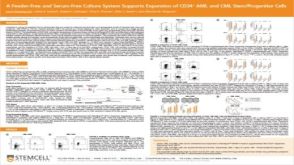 科学海报A Feeder-Free and Serum-Free Culture System Supports Expansion of CD34+ AML and CML Stem/Progenitor Cells
 沪公网安备31010102008431号