Prenatal and postnatal myeloid cells demonstrate stepwise progression in the pathogenesis of MLL fusion gene leukemia.
The steps to leukemia following an in utero fusion of MLL (HRX,ALL-1) to a partner gene in humans are not known. Introduction of the Mll-AF9 fusion gene into embryonic stem cells results in leukemia in mice with cell-type specificity similar to humans. In this study we used myeloid colony assays,immunophenotyping,and transplantation to evaluate myelopoiesis in Mll-AF9 mice. Colony assays demonstrated that both prenatal and postnatal Mll-AF9 tissues have significantly increased numbers of CD11b(+)/CD117(+)/Gr-1(+/-) myeloid cells,often in compact clusters. The self-renewal capacity of prenatal myeloid progenitors was found to decrease following serial replating of colony-forming cells. In contrast,early postnatal myeloid progenitors increased following replating; however,the enhanced self-renewal of early postnatal myeloid progenitor cells was limited and did not result in long-term cell lines or leukemia in vivo. Unlimited replating,long-term CD11b/Gr-1(+) myeloid cell lines,and the ability to produce early leukemia in vivo in transplantation experiments,were found only in mice with overt leukemia. Prenatal Mll-AF9 tissues had reduced total (mature and progenitor) CD11b/Gr-1(+) cells compared with wild-type tissues. Colony replating,immunophenotyping,and cytochemistry suggest that any perturbation of cellular differentiation from the prenatal stage onward is partial and largely reversible. We describe a novel informative in vitro and in vivo model system that permits study of the stages in the pathogenesis of Mll fusion gene leukemia,beginning in prenatal myeloid cells,progressing to a second stage in the postnatal period and,finally,resulting in overt leukemia in adult animals.
View Publication
Noninvasive MR imaging of magnetically labeled stem cells to directly identify neovasculature in a glioma model.
Bone marrow-derived endothelial precursor cells incorporate into neovasculature and have been successfully used as vehicles for gene delivery to brain tumors. To determine whether systemically administered Sca1+ bone marrow cells labeled with superparamagnetic iron oxide nanoparticles can be detected by in vivo magnetic resonance imaging in a mouse brain tumor model,mouse Sca1+ cells were labeled in vitro with ferumoxides-poly-L-lysine complexes. Labeled or control cells were administered intravenously to glioma-bearing severe combined immunodeficient (SCID) mice. Magnetic resonance imaging (MRI) was performed during tumor growth. Mice that received labeled cells demonstrated hypointense regions within the tumor that evolved over time and developed a continuous dark hypointense ring at a consistent time point. This effect was not cleared by administration of a gadolinium contrast agent. Histology showed iron-labeled cells around the tumor rim in labeled mice,which expressed CD31 and von Willebrand factor,indicating the transplanted cells detected in the tumor have differentiated into endothelial-like cells. These results demonstrate that MRI can detect the incorporation of magnetically labeled bone marrow-derived precursor cells into tumor vasculature as part of ongoing angiogenesis and neovascularization. This technique can be used to directly identify neovasculature in vivo and to facilitate gene therapy by noninvasively monitoring these cells as gene delivery vectors.
View Publication
产品类型:
产品号#:
09600
09650
产品名:
StemSpan™ SFEM
StemSpan™ SFEM
Pelicano H et al. (DEC 2006)
The Journal of cell biology 175 6 913--23
Mitochondrial respiration defects in cancer cells cause activation of Akt survival pathway through a redox-mediated mechanism.
Cancer cells exhibit increased glycolysis for ATP production due,in part,to respiration injury (the Warburg effect). Because ATP generation through glycolysis is less efficient than through mitochondrial respiration,how cancer cells with this metabolic disadvantage can survive the competition with other cells and eventually develop drug resistance is a long-standing paradox. We report that mitochondrial respiration defects lead to activation of the Akt survival pathway through a novel mechanism mediated by NADH. Respiration-deficient cells (rho(-)) harboring mitochondrial DNA deletion exhibit dependency on glycolysis,increased NADH,and activation of Akt,leading to drug resistance and survival advantage in hypoxia. Similarly,chemical inhibition of mitochondrial respiration and hypoxia also activates Akt. The increase in NADH caused by respiratory deficiency inactivates PTEN through a redox modification mechanism,leading to Akt activation. These findings provide a novel mechanistic insight into the Warburg effect and explain how metabolic alteration in cancer cells may gain a survival advantage and withstand therapeutic agents.
View Publication
产品类型:
产品号#:
04230
产品名:
MethoCult™H4230
Charafe-Jauffret E et al. (JAN 2010)
Clinical cancer research : an official journal of the American Association for Cancer Research 16 1 45--55
Aldehyde dehydrogenase 1-positive cancer stem cells mediate metastasis and poor clinical outcome in inflammatory breast cancer.
PURPOSE: To examine the role of cancer stem cells (CSC) in mediating metastasis in inflammatory breast cancer (IBC) and the association of these cells with patient outcome in this aggressive type of breast cancer. EXPERIMENTAL DESIGN: CSCs were isolated from SUM149 and MARY-X,an IBC cell line and primary xenograft,by virtue of increased aldehyde dehydrogenase (ALDH) activity as assessed by the ALDEFLUOR assay. Invasion and metastasis of CSC populations were assessed by in vitro and mouse xenograft assays. Expression of ALDH1 was determined on a retrospective series of 109 IBC patients and this was correlated with histoclinical data. All statistical tests were two sided. Log-rank tests using Kaplan-Meier analysis were used to determine the correlation of ALDH1 expression with development of metastasis and patient outcome. RESULTS: Both in vitro and xenograft assays showed that invasion and metastasis in IBC are mediated by a cellular component that displays ALDH activity. Furthermore,expression of ALDH1 in IBC was an independent predictive factor for early metastasis and decreased survival in this patient population. CONCLUSIONS: These results suggest that the metastatic,aggressive behavior of IBC may be mediated by a CSC component that displays ALDH enzymatic activity. ALDH1 expression represents the first independent prognostic marker to predict metastasis and poor patient outcome in IBC. The results illustrate how stem cell research can translate into clinical practice in the IBC field.
View Publication
产品类型:
产品号#:
01700
01702
01705
产品名:
ALDEFLUOR™ 试剂盒
ALDEFLUOR™测定缓冲液
ALDEFLUOR™ DEAB试剂
Grudzien P et al. (OCT 2010)
Anticancer research 30 10 3853--67
Inhibition of Notch signaling reduces the stem-like population of breast cancer cells and prevents mammosphere formation.
BACKGROUND: Cancer stem cells (CSCs) are believed to be responsible for breast cancer formation and recurrence; therefore,therapeutic strategies targeting CSCs must be developed. One approach may be targeting signaling pathways,like Notch,that are involved in stem cell self-renewal and survival. MATERIALS AND METHODS: Breast cancer stem-like cells derived from cell lines and patient samples were examined for Notch expression and activation. The effect of Notch inhibition on sphere formation,proliferation,and colony formation was determined. RESULTS: Breast cancer stem-like cells consistently expressed elevated Notch activation compared with bulk tumor cells. Blockade of Notch signaling using pharmacologic and genomic approaches prevented sphere formation,proliferation,and/or colony formation in soft agar. Interestingly,a gamma-secretase inhibitor,MRK003,induced apoptosis in these cells. CONCLUSION: Our findings support a crucial role for Notch signaling in maintenance of breast cancer stem-like cells,and suggest Notch inhibition may have clinical benefits in targeting CSCs.
View Publication
产品类型:
产品号#:
01700
01705
01702
产品名:
ALDEFLUOR™ 试剂盒
ALDEFLUOR™ DEAB试剂
ALDEFLUOR™测定缓冲液
Tsai H-C et al. (MAR 2012)
Cancer cell 21 3 430--46
Transient low doses of DNA-demethylating agents exert durable antitumor effects on hematological and epithelial tumor cells.
Reversal of promoter DNA hypermethylation and associated gene silencing is an attractive cancer therapy approach. The DNA methylation inhibitors decitabine and azacitidine are efficacious for hematological neoplasms at lower,less toxic,doses. Experimentally,high doses induce rapid DNA damage and cytotoxicity,which do not explain the prolonged time to response observed in patients. We show that transient exposure of cultured and primary leukemic and epithelial tumor cells to clinically relevant nanomolar doses,without causing immediate cytotoxicity,produce an antitumor memory" response�
View Publication
产品类型:
产品号#:
01700
01705
05620
01702
产品名:
ALDEFLUOR™ 试剂盒
ALDEFLUOR™ DEAB试剂
MammoCult™人培养基试剂盒
ALDEFLUOR™测定缓冲液
Arlt A et al. ( 2001)
Oncogene 20 7 859--868
Inhibition of NF-κB sensitizes human pancreatic carcinoma cells to apoptosis induced by etoposide (VP16) or doxorubicin
The transcription factor NF-kappaB has anti-apoptotic properties and may confer chemoresistance to cancer cells. Here,we describe human pancreatic carcinoma cell lines that differ in the responsiveness to the topoisomerase-2 inhibitors VP16 (20 microM) and doxorubicin (0.3 microM): Highly sensitive T3M4 [corrected] and PT45-P1 cells,and Capan-1 and A818-4 cells that were almost resistant to both anti cancer drugs. VP16,but not doxorubicin,transiently induced NF-kappaB activity in all cell lines,whereas basal NF-kappaB binding was nearly undetectable in T3M4 [corrected] and PT45-P1 cells,but rather high in Capan-1 and A818-4 cells,as demonstrated by gel-shift and luciferase assays. Treatment with various NF-kappaB inhibitors (Gliotoxin,MG132 and Sulfasalazine),or transfection with the IkappaBalpha super-repressor,strongly enhanced the apoptotic effects of VP16 or doxorubicin on resistant Capan-1 and 818-4 cells. Our results indicate that under certain conditions the resistance of pancreatic carcinoma cells to chemotherapy is due to their constitutive NF-kappaB activity rather than the transient induction of NF-kappaB by some anti-cancer drugs. Blockade of basal NF-kappaB activity by well established drugs efficiently reduces chemoresistance of pancreatic cancer cells and offers the potential for improved therapeutic strategies.
View Publication
产品类型:
产品号#:
73262
73264
产品名:
(S)-MG132
(S) -MG132
Weisberg E et al. (DEC 2008)
Blood 112 13 5161--70
Antileukemic effects of the novel, mutant FLT3 inhibitor NVP-AST487: effects on PKC412-sensitive and -resistant FLT3-expressing cells.
An attractive target for therapeutic intervention is constitutively activated,mutant FLT3,which is expressed in a subpopulation of patients with acute myelocyic leukemia (AML) and is generally a poor prognostic indicator in patients under the age of 65 years. PKC412 is one of several mutant FLT3 inhibitors that is undergoing clinical testing,and which is currently in late-stage clinical trials. However,the discovery of drug-resistant leukemic blast cells in PKC412-treated patients with AML has prompted the search for novel,structurally diverse FLT3 inhibitors that could be alternatively used to override drug resistance. Here,we report the potent and selective antiproliferative effects of the novel mutant FLT3 inhibitor NVP-AST487 on primary patient cells and cell lines expressing FLT3-ITD or FLT3 kinase domain point mutants. NVP-AST487,which selectively targets mutant FLT3 protein kinase activity,is also shown to override PKC412 resistance in vitro,and has significant antileukemic activity in an in vivo model of FLT3-ITD(+) leukemia. Finally,the combination of NVP-AST487 with standard chemotherapeutic agents leads to enhanced inhibition of proliferation of mutant FLT3-expressing cells. Thus,we present a novel class of FLT3 inhibitors that displays high selectivity and potency toward FLT3 as a molecular target,and which could potentially be used to override drug resistance in AML.
View Publication
产品类型:
产品号#:
04434
04444
产品名:
MethoCult™H4434经典
MethoCult™H4434经典
Tripp A et al. (NOV 2003)
Journal of virology 77 22 12152--64
Human T-cell leukemia virus type 1 tax oncoprotein suppression of multilineage hematopoiesis of CD34+ cells in vitro.
Human T-cell leukemia virus type 1 (HTLV-1) and HTLV-2 are highly related viruses that differ in disease manifestation. HTLV-1 is the etiologic agent of adult T-cell leukemia and lymphoma,an aggressive clonal malignancy of human CD4-bearing T lymphocytes. Infection with HTLV-2 has not been conclusively linked to lymphoproliferative disorders. We previously showed that human hematopoietic progenitor (CD34(+)) cells can be infected by HTLV-1 and that proviral sequences were maintained after differentiation of infected CD34(+) cells in vitro and in vivo. To investigate the role of the Tax oncoprotein of HTLV on hematopoiesis,bicistronic lentiviral vectors were constructed encoding the HTLV-1 or HTLV-2 tax genes (Tax1 and Tax2,respectively) and the green fluorescent protein marker gene. Human hematopoietic progenitor (CD34(+)) cells were infected with lentivirus vectors,and transduced cells were cultured in a semisolid medium permissive for the development of erythroid,myeloid,and primitive progenitor colonies. Tax1-transduced CD34(+) cells displayed a two- to fivefold reduction in the total number of hematopoietic clonogenic colonies that arose in vitro,in contrast to Tax2-transduced cells,which showed no perturbation of hematopoiesis. The ratio of colony types that developed from Tax1-transduced CD34(+) cells remained unaffected,suggesting that Tax1 inhibited the maturation of relatively early,uncommitted hematopoietic stem cells. Since previous reports have linked Tax1 expression with initiation of apoptosis,lentiviral vector-mediated transduction of Tax1 or Tax2 was investigated in CEM and Jurkat T-cell lines. Ectopic expression of either Tax1 or Tax2 failed to induce apoptosis in T-cell lines. These data demonstrate that Tax1 expression perturbs development and maturation of pluripotent hematopoietic progenitor cells,an activity that is not displayed by Tax2,and that the suppression of hematopoiesis is not attributable to induction of apoptosis. Since hematopoietic progenitor cells may serve as a latently infected reservoir for HTLV infection in vivo,the different abilities of HTLV-1 and -2 Tax to suppress hematopoiesis may play a role in the respective clinical outcomes after infection with HTLV-1 or -2.
View Publication
产品类型:
产品号#:
02690
产品名:
StemSpan™CC100
Pearce DJ et al. ( )
Stem cells (Dayton,Ohio) 23 6 752--60
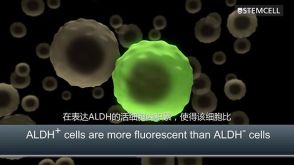
Characterization of cells with a high aldehyde dehydrogenase activity from cord blood and acute myeloid leukemia samples.
Aldehyde dehydrogenase (ALDH) is a cytosolic enzyme that is responsible for the oxidation of intracellular aldehydes. Elevated levels of ALDH have been demonstrated in murine and human progenitor cells compared with other hematopoietic cells,and this is thought to be important in chemoresistance. A method for the assessment of ALDH activity in viable cells recently has been developed and made commercially available in a kit format. In this study,we confirmed the use of the ALDH substrate kit to identify cord blood stem/progenitor cells. Via multicolor flow cytometry of cord blood ALDH+ cells,we have expanded on their phenotypic analysis. We then assessed the incidence,morphology,phenotype,and nonobese diabetic/ severe combined immunodeficiency engraftment ability of ALDH+ cells from acute myeloid leukemia (AML) samples. AML samples had no ALDH+ cells at all,an extremely rare nonmalignant stem/progenitor cell population,or a less rare,leukemic stem cell population. Hence,in addition to identifying nonmalignant stem cells within some AML samples,a high ALDH activity also identifies some patients' CD34+/ CD38- leukemic stem cells. The incidence of normal or leukemic stem cells with an extremely high ALDH activity may have important implications for resistance to chemotherapy. Identification and isolation of leukemic cells on the basis of ALDH activity provides a tool for their isolation and further analysis.
View Publication
产品类型:
产品号#:
01700
01702
01705
产品名:
ALDEFLUOR™ 试剂盒
ALDEFLUOR™测定缓冲液
ALDEFLUOR™ DEAB试剂
Charafe-Jauffret E et al. (FEB 2009)
Cancer research 69 4 1302--13
Breast cancer cell lines contain functional cancer stem cells with metastatic capacity and a distinct molecular signature.
Tumors may be initiated and maintained by a cellular subcomponent that displays stem cell properties. We have used the expression of aldehyde dehydrogenase as assessed by the ALDEFLUOR assay to isolate and characterize cancer stem cell (CSC) populations in 33 cell lines derived from normal and malignant mammary tissue. Twenty-three of the 33 cell lines contained an ALDEFLUOR-positive population that displayed stem cell properties in vitro and in NOD/SCID xenografts. Gene expression profiling identified a 413-gene CSC profile that included genes known to play a role in stem cell function,as well as genes such as CXCR1/IL-8RA not previously known to play such a role. Recombinant interleukin-8 (IL-8) increased mammosphere formation and the ALDEFLUOR-positive population in breast cancer cell lines. Finally,we show that ALDEFLUOR-positive cells are responsible for mediating metastasis. These studies confirm the hierarchical organization of immortalized cell lines,establish techniques that can facilitate the characterization of regulatory pathways of CSCs,and identify potential stem cell markers and therapeutic targets.
View Publication


 EasySep™小鼠TIL(CD45)正选试剂盒





 沪公网安备31010102008431号