ABT-737, an inhibitor of Bcl-2 family proteins, is a potent inducer of apoptosis in multiple myeloma cells.
Disruption of pathways leading to programmed cell death plays a major role in most malignancies,including multiple myeloma (MM). ABT-737 is a BH3 mimetic small-molecule inhibitor that binds with high affinity to Bcl-2 and Bcl-xL,preventing the sequestration of proapoptotic molecules and shifting the cell survival/apoptosis balance toward apoptosis induction. In this study,we show that ABT-737 is cytotoxic to MM cell lines,including those resistant to conventional therapies,and primary tumor cells. Flow cytometric analysis of intracellular levels of Bcl-2 family proteins demonstrates a clear inversion of the Bax/Bcl-2 ratio leading to induction of apoptosis. Activation of the mitochondrial apoptosis pathway was indicated by mitochondrial membrane depolarization and caspase cleavage. Additionally,several signaling pathways known to be important for MM cell survival are disrupted following treatment with ABT-737. The impact of ABT-737 on survival could not be overcome by the addition of interleukin-6,vascular endothelial growth factor or insulin-like growth factor,suggesting that ABT-737 may be effective in preventing the growth and survival signals provided by the microenvironment. These data indicate that therapies targeting apoptotic pathways may be effective in MM treatment and warrant clinical evaluation of ABT-737 and similar drugs alone or in combination with other agents in the setting of MM.
View Publication
产品类型:
产品号#:
18357
18357RF
21000
20119
20155
产品名:
RoboSep™- S
RoboSep™ 吸头组件抛光剂
RoboSep™分选管套装(9个塑料管)
Ló et al. (NOV 2009)
Cancer immunology,immunotherapy : CII 58 11 1853--64
Role of polymorphic Fc gamma receptor IIIa and EGFR expression level in cetuximab mediated, NK cell dependent in vitro cytotoxicity of head and neck squamous cell carcinoma cells.
Immunotherapy with the EGFR-specific mAb cetuximab is clinically effective in 10-20% of patients with squamous cell carcinoma of the head and neck (SCCHN). Little information is available about the mechanism(s) underlying patients' differential clinical response to cetuximab-based immunotherapy,although this information may contribute to optimizing the design of cetuximab-based immunotherapy. Our understanding of these mechanisms would benefit from the characterization of the variables which influence the extent of cell dependent-lysis of SCCHN cells incubated with cetuximab in vitro. Therefore,in this study we have investigated the role of FcgammaR IIIa-158 genotype expressed by effector NK cells,cetuximab concentration,and EGFR expression level by SCCHN cells in the extent of their in vitro lysis and in the degree of NK cell activation. PBMC or purified CD56+ NK cells genotyped at IIIa codon 158 and SCCHN cell lines expressing different levels of EGFR have been used as effectors and targets,respectively,in antibody dependent cellular cytotoxicity (ADCC) assays. Furthermore,supernatants from ADCC assays were analyzed for cytokine and chemokine levels using multiplexed ELISA. We found that the extent of lysis of SCCHN cells was influenced by the EGFR expression level,cetuximab concentration,and FcgammaR polymorphism. Effector cells expressing the FcgammaR IIIa-158 VV allele were significantly (P textless 0.0001) more effective than those expressing FcgammaR IIIa VF and FF [corrected] alleles in mediating lysis of SCCHN cells expressed higher levels of the activation markers CD69 and CD107a,and secreted significantly (P textless 0.05) larger amounts of inflammatory cytokines and chemokines. IL-2 or IL-15 treatment increased cetuximab-mediated ADCC by poor binding FcgammaR IIIa 158 FF expressing NK cells. The importance of the FcgammaR IIIa-158 polymorphism in cytotoxicity of SCCHN cells by NK cells supports a potential role for immune activation and may explain patient variability of cetuximab mediated clinical responses. Cellular and secreted immune profiles and FcgammaR genotypes from patients' lymphocytes may provide clinically useful biomarkers of immune activation in cetuximab treated patients.
View Publication
产品类型:
产品号#:
19055
19055RF
产品名:
EasySep™人NK细胞富集试剂盒
RoboSep™ 人NK细胞富集试剂盒含滤芯吸头
Tomihara K et al. (JUN 2010)
Journal of immunology (Baltimore,Md. : 1950) 184 11 6151--60
Antigen-specific immunity and cross-priming by epithelial ovarian carcinoma-induced CD11b(+)Gr-1(+) cells.
Both innate and adaptive immune systems are considered important for cancer prevention,immunosurveillance,and control of cancer progression. It is known that,although both systems initially eliminate emerging tumor cells efficiently,tumors eventually escape immune attack by a variety of mechanisms,including differentiation and recruitment of immunosuppressive CD11b(+)Gr-1(+) myeloid suppressor cells into the tumor microenvironment. However,we show that CD11b(+)Gr-1(+) cells found in ascites of epithelial ovarian cancer-bearing mice at advanced stages of disease are immunostimulatory rather than being immunosuppressive. These cells consist of a homogenous population of cells that morphologically resemble neutrophils. Moreover,like dendritic cells,immunostimulatory CD11b(+)Gr-1(+) cells can strongly cross-prime,augmenting the proliferation of functional CTLs via signaling through the expression of costimulatory molecule CD80. Adoptive transfer of these immunostimulatory CD11b(+)Gr-1(+) cells from ascites of ovarian cancer-bearing mice results in the significant regression of s.c. tumors even without being pulsed with exogenous tumor Ag prior to adoptive transfer. We now show for the first time that adaptive immune responses against cancer can be augmented by these cancer-induced granulocyte-like immunostimulatory myeloid (CD11b(+)Gr-1(+)) cells,thereby mediating highly effective antitumor immunity in an adoptive transfer model of immunity.
View Publication
Kortylewski M et al. (FEB 2009)
Cancer cell 15 2 114--23
Regulation of the IL-23 and IL-12 balance by Stat3 signaling in the tumor microenvironment.
Interactions between tumor and immune cells either enhance or inhibit cancer progression. We show here that Stat3 signaling within the tumor microenvironment induces a procarcinogenic cytokine,IL-23,while inhibiting a central anticarcinogenic cytokine,IL-12,thereby shifting the balance of tumor immunity toward carcinogenesis. Stat3 induces expression of IL-23,which is mainly produced by tumor-associated macrophages,via direct transcriptional activation of the IL-23/p19 gene. Furthermore,Stat3 inhibits NF-kappaB/c-Rel-dependent IL-12/p35 gene expression in tumor-associated dendritic cells. Tumor-associated regulatory T cells (Tregs) express IL-23 receptor,which activates Stat3 in this cell type,leading to upregulation of the Treg-specific transcription factor Foxp3 and the immunosuppressive cytokine IL-10. These results demonstrate that Stat3 promotes IL-23-mediated procarcinogenic immune responses while inhibiting IL-12-dependent antitumor immunity.
View Publication
产品类型:
产品号#:
18709
18709RF
产品名:
EasySep™小鼠定制正选试剂盒
RoboSep™ 小鼠定制正选试剂盒含滤芯吸头
Dunbar AJ et al. (DEC 2008)
Cancer research 68 24 10349--57
250K single nucleotide polymorphism array karyotyping identifies acquired uniparental disomy and homozygous mutations, including novel missense substitutions of c-Cbl, in myeloid malignancies.
Two types of acquired loss of heterozygosity are possible in cancer: deletions and copy-neutral uniparental disomy (UPD). Conventionally,copy number losses are identified using metaphase cytogenetics,whereas detection of UPD is accomplished by microsatellite and copy number analysis and as such,is not often used clinically. Recently,introduction of single nucleotide polymorphism (SNP) microarrays has allowed for the systematic and sensitive detection of UPD in hematologic malignancies and other cancers. In this study,we have applied 250K SNP array technology to detect previously cryptic chromosomal changes,particularly UPD,in a cohort of 301 patients with myelodysplastic syndromes (MDS),overlap MDS/myeloproliferative disorders (MPD),MPD,and acute myeloid leukemia. We show that UPD is a common chromosomal defect in myeloid malignancies,particularly in chronic myelomonocytic leukemia (CMML; 48%) and MDS/MPD-unclassifiable (38%). Furthermore,we show that mapping minimally overlapping segmental UPD regions can help target the search for both known and unknown pathogenic mutations,including newly identified missense mutations in the proto-oncogene c-Cbl in 7 of 12 patients with UPD11q. Acquired mutations of c-Cbl E3 ubiquitin ligase may explain the pathogenesis of a clonal process in a subset of MDS/MPD,including CMML.
View Publication


 EasySep™小鼠TIL(CD45)正选试剂盒




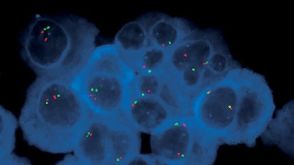
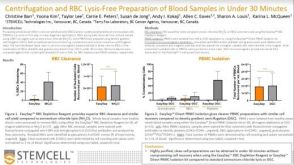 科学海报Centrifugation and RBC Lysis-Free Preparation of Blood Samples in Under 30 Minutes
 技术公告B Cell Isolation for More Sensitive Array-Based CLL Assays
 专家访谈Dr. Theresa Brown Cell Isolation and FISH Testing in a Cytogenetics Lab


 沪公网安备31010102008431号