Nagano M et al. (AUG 2010)
Stem cells and development 19 8 1195--210
Hypoxia responsive mesenchymal stem cells derived from human umbilical cord blood are effective for bone repair.
Mesenchymal stem cells (MSCs) are highly useful in a variety of cell therapies owing to their multipotential differentiation capability. MSCs derived from umbilical cord blood are generally isolated by their plastic adherence without using specific cell surface markers and examined for their osteogenic,adipogenic,and chondrogenic differentiation properties retrospectively. Here,we report 2 subpopulations of MSCs,separated based on aldehyde dehydrogenase (ALDH) activity. MSCs with a high ALDH activity (Alde-High) proliferated more than those with a low ALDH activity (Alde-Low). Alde-High MSCs had a greater ability to differentiate than Alde-Low MSCs in in vitro culture. Transplantation of Alde-High MSCs into fractured mouse femurs enabled early repair of tissues and rapid bone substitution. Alde-High MSCs were also more responsive to hypoxia than Alde-Low MSCs,with the upregulation of Flt-1,CXCR4,and Angiopoietin-2. Thus,MSCs with a high ALDH activity might serve as an effective therapeutic tool for healing fractures within a short period of time.
View Publication
产品类型:
产品号#:
01700
01705
01701
01702
产品名:
ALDEFLUOR™ 试剂盒
ALDEFLUOR™ DEAB试剂, 1.5 mM, 1 mL
ALDEFLUOR™检测缓冲液
Tripp A et al. (NOV 2005)
Journal of virology 79 22 14069--78
Induction of cell cycle arrest by human T-cell lymphotropic virus type 1 Tax in hematopoietic progenitor (CD34+) cells: modulation of p21cip1/waf1 and p27kip1 expression.
Human T-cell lymphotropic virus type 1 (HTLV-1) is the etiologic agent of adult T-cell leukemia,an aggressive CD4(+) malignancy. Although HTLV-2 is highly homologous to HTLV-1,infection with HTLV-2 has not been associated with lymphoproliferative disorders. Lentivirus-mediated transduction of CD34(+) cells with HTLV-1 Tax (Tax1) induced G(0)/G(1) cell cycle arrest and resulted in the concomitant suppression of multilineage hematopoiesis in vitro. Tax1 induced transcriptional upregulation of the cdk inhibitors p21(cip1/waf1) (p21) and p27(kip1) (p27),and marked suppression of hematopoiesis in immature (CD34(+)/CD38(-)) hematopoietic progenitor cells in comparison to CD34(+)/CD38(+) cells. HTLV-1 infection of CD34(+) cells also induced p21 and p27 expression. Tax1 also protected CD34(+) cells from serum withdrawal-mediated apoptosis. In contrast,HTLV-2 Tax (Tax2) did not detectably alter p21 or p27 gene expression,failed to induce cell cycle arrest,failed to suppress hematopoiesis in CD34(+) cells,and did not protect cells from programmed cell death. A Tax2/Tax1 chimera encoding the C-terminal 53 amino acids of Tax1 fused to Tax2 (Tax(221)) displayed a phenotype in CD34(+) cells similar to that of Tax1,suggesting that unique domains encoded within the C terminus of Tax1 may account for the phenotypes displayed in human hematopoietic progenitor cells. These remarkable differences in the activities of Tax1 and Tax2 in CD34(+) hematopoietic progenitor cells may underlie the sharp differences observed in the pathogenesis resulting from infection with HTLV-1 and HTLV-2.
View Publication
Huang EH et al. (APR 2009)
Cancer research 69 8 3382--9
Aldehyde dehydrogenase 1 is a marker for normal and malignant human colonic stem cells (SC) and tracks SC overpopulation during colon tumorigenesis.
Although the concept that cancers originate from stem cells (SC) is becoming scientifically accepted,mechanisms by which SC contribute to tumor initiation and progression are largely unknown. For colorectal cancer (CRC),investigation of this problem has been hindered by a paucity of specific markers for identification and isolation of SC from normal and malignant colon. Accordingly,aldehyde dehydrogenase 1 (ALDH1) was investigated as a possible marker for identifying colonic SC and for tracking them during cancer progression. Immunostaining showed that ALDH1(+) cells are sparse and limited to the normal crypt bottom,where SCs reside. During progression from normal epithelium to mutant (APC) epithelium to adenoma,ALDH1(+) cells increased in number and became distributed farther up the crypt. CD133(+) and CD44(+) cells,which are more numerous and broadly distributed in normal crypts,showed similar changes during tumorigenesis. Flow cytometric isolation of cancer cells based on enzymatic activity of ALDH (Aldefluor assay) and implantation of these cells in nonobese diabetic-severe combined immunodeficient mice (a) generated xenograft tumors (Aldefluor(-) cells did not),(b) generated them after implanting as few as 25 cells,and (c) generated them dose dependently. Further isolation of cancer cells using a second marker (CD44(+) or CD133(+) serially) only modestly increased enrichment based on tumor-initiating ability. Thus,ALDH1 seems to be a specific marker for identifying,isolating,and tracking human colonic SC during CRC development. These findings also support our original hypothesis,derived previously from mathematical modeling of crypt dynamics,that progressive colonic SC overpopulation occurs during colon tumorigenesis and drives CRC development.
View Publication
产品类型:
产品号#:
01700
01705
01702
产品名:
ALDEFLUOR™ 试剂盒
ALDEFLUOR™ DEAB试剂, 1.5 mM, 1 mL
ALDEFLUOR™检测缓冲液
Qué et al. (JUN 2011)
Blood 117 22 5918--30
Smad4 binds Hoxa9 in the cytoplasm and protects primitive hematopoietic cells against nuclear activation by Hoxa9 and leukemia transformation.
We studied leukemic stem cells (LSCs) in a Smad4(-/-) mouse model of acute myelogenous leukemia (AML) induced either by the HOXA9 gene or by the fusion oncogene NUP98-HOXA9. Although Hoxa9-Smad4 complexes accumulate in the cytoplasm of normal hematopoietic stem cells and progenitor cells (HSPCs) transduced with these oncogenes,there is no cytoplasmic stabilization of HOXA9 in Smad4(-/-) HSPCs,and as a consequence increased levels of Hoxa9 is observed in the nucleus leading to increased immortalization in vitro. Loss of Smad4 accelerates the development of leukemia in vivo because of an increase in transformation of HSPCs. Therefore,the cytoplasmic binding of Hoxa9 by Smad4 is a mechanism to protect Hoxa9-induced transformation of normal HSPCs. Because Smad4 is a potent tumor suppressor involved in growth control,we developed a strategy to modify the subcellular distribution of Smad4. We successfully disrupted the interaction between Hoxa9 and Smad4 to activate the TGF-β pathway and apoptosis,leading to a loss of LSCs. Together,these findings reveal a major role for Smad4 in the negative regulation of leukemia initiation and maintenance induced by HOXA9/NUP98-HOXA9 and provide strong evidence that antagonizing Smad4 stabilization by these oncoproteins might be a promising novel therapeutic approach in leukemia.
View Publication
产品类型:
产品号#:
03434
03444
03236
产品名:
MethoCult™ GF M3434
MethoCult™ GF M3434
MethoCult™ SF M3236
Ortiz-Sá et al. (JAN 2009)
Leukemia 23 1 59--70
Enhanced cytotoxicity of an anti-transferrin receptor IgG3-avidin fusion protein in combination with gambogic acid against human malignant hematopoietic cells: functional relevance of iron, the receptor, and reactive oxygen species.
The human transferrin receptor (hTfR) is a target for cancer immunotherapy due to its overexpression on the surface of cancer cells. We previously developed an antibody-avidin fusion protein that targets hTfR (anti-hTfR IgG3-Av) and exhibits intrinsic cytotoxicity against certain malignant cells. Gambogic acid (GA),a drug that also binds hTfR,induces cytotoxicity in several malignant cell lines. We now report that anti-hTfR IgG3-Av and GA induce cytotoxicity in a new broader panel of hematopoietic malignant cell lines. Our results show that the effect of anti-hTfR IgG3-Av is iron-dependent whereas that of GA is iron-independent in all cells tested. In addition,we observed that GA exerts a TfR-independent cytotoxicity. We also found that GA increases the generation of reactive oxygen species that may play a role in the cytotoxicity induced by this drug. Additive cytotoxicity was observed by simultaneous combination treatment with these drugs and synergy by using anti-hTfR IgG3-Av as a chemosensitizing agent. In addition,we found a concentration of GA that is toxic to malignant hematopoietic cells but not to human hematopoietic progenitor cells. Our results suggest that these two compounds may be effective,alone or in combination,for the treatment of human hematopoietic malignancies.
View Publication
产品类型:
产品号#:
04434
04444
产品名:
MethoCult™ H4434 Classic
MethoCult™ H4434 Classic
Kharas MG et al. (JUN 2004)
Blood 103 11 4268--75
Phosphoinositide 3-kinase signaling is essential for ABL oncogene-mediated transformation of B-lineage cells.
BCR-ABL and v-ABL are oncogenic forms of the Abl tyrosine kinase that can cause leukemias in mice and humans. ABL oncogenes trigger multiple signaling pathways whose contribution to transformation varies among cell types. Activation of phosphoinositide 3-kinase (PI3K) is essential for ABL-dependent proliferation and survival in some cell types,and global PI3K inhibitors can enhance the antileukemia effects of the Abl kinase inhibitor imatinib. Although a significant fraction of BCR-ABL-induced human leukemias are of B-cell origin,little is known about PI3K signaling mechanisms in B-lineage cells transformed by ABL oncogenes. Here we show that activation of class I(A) PI3K and downstream inactivation of FOXO transcription factors are essential for survival of murine pro/pre-B cells transformed by v-ABL or BCR-ABL. In addition,analysis of mice lacking individual PI3K genes indicates that products of the Pik3r1 gene contribute to transformation efficiency by BCR-ABL. These findings establish a role for PI3K signaling in B-lineage transformation by ABL oncogenes.
View Publication
产品类型:
产品号#:
03630
产品名:
MethoCult™ M3630
Mortensen M et al. (MAR 2011)
The Journal of experimental medicine 208 3 455--67
The autophagy protein Atg7 is essential for hematopoietic stem cell maintenance.
The role of autophagy,a lysosomal degradation pathway which prevents cellular damage,in the maintenance of adult mouse hematopoietic stem cells (HSCs) remains unknown. Although normal HSCs sustain life-long hematopoiesis,malignant transformation of HSCs leads to leukemia. Therefore,mechanisms protecting HSCs from cellular damage are essential to prevent hematopoietic malignancies. In this study,we crippled autophagy in HSCs by conditionally deleting the essential autophagy gene Atg7 in the hematopoietic system. This resulted in the loss of normal HSC functions,a severe myeloproliferation,and death of the mice within weeks. The hematopoietic stem and progenitor cell compartment displayed an accumulation of mitochondria and reactive oxygen species,as well as increased proliferation and DNA damage. HSCs within the Lin(-)Sca-1(+)c-Kit(+) (LSK) compartment were significantly reduced. Although the overall LSK compartment was expanded,Atg7-deficient LSK cells failed to reconstitute the hematopoietic system of lethally irradiated mice. Consistent with loss of HSC functions,the production of both lymphoid and myeloid progenitors was impaired in the absence of Atg7. Collectively,these data show that Atg7 is an essential regulator of adult HSC maintenance.
View Publication
产品类型:
产品号#:
03434
03444
产品名:
MethoCult™ GF M3434
MethoCult™ GF M3434
Okamoto R et al. (APR 2005)
Blood 105 7 2757--63
Hematopoietic cells regulate the angiogenic switch during tumorigenesis.
Hematopoietic cells (HCs) promote blood vessel formation by producing various proangiogenic cytokines and chemokines and matrix metalloproteinases. We injected mouse colon26 colon cancer cells or human PC3 prostate adenocarcinoma cells into mice and studied the localization of HCs during tumor development. HCs were distributed in the inner tumor mass in all of the tumor tissues examined; however,the localization of HCs in the tumor tissue differed depending on the tumor cell type. In the case of colon26 tumors,as the tumor grew,many mature HCs migrated into the tumor mass before fine capillary formation was observed. On the other hand,although very few HCs migrated into PC3 tumor tissue,c-Kit+ hematopoietic stem/progenitor cells accumulated around the edge of the tumor. Bone marrow suppression induced by injection of anti-c-Kit neutralizing antibody suppressed tumor angiogenesis by different mechanisms according to the tumor cell type: bone marrow suppression inhibited the initiation of sprouting angiogenesis in colon26 tumors,while it suppressed an increase in the caliber of newly developed blood vessels at the tumor edge in PC3 tumors. Our findings suggest that HCs are involved in tumor angiogenesis and regulate the angiogenic switch during tumorigenesis.
View Publication
产品类型:
产品号#:
03434
03444
产品名:
MethoCult™ GF M3434
MethoCult™ GF M3434
Lidonnici MR et al. (MAY 2008)
Blood 111 9 4771--9
Requirement of c-Myb for p210(BCR/ABL)-dependent transformation of hematopoietic progenitors and leukemogenesis.
The c-Myb gene encodes a transcription factor required for proliferation and survival of normal myeloid progenitors and leukemic blast cells. Targeting of c-Myb by antisense oligodeoxynucleotides has suggested that myeloid leukemia blasts (including chronic myelogenous leukemia [CML]-blast crisis cells) rely on c-Myb expression more than normal progenitors,but a genetic approach to assess the requirement of c-Myb by p210(BCR/ABL)-transformed hematopoietic progenitors has not been taken. We show here that loss of a c-Myb allele had modest effects (20%-28% decrease) on colony formation of nontransduced progenitors,while the effect on p210(BCR/ABL)-expressing Lin(-) Sca-1(+) and Lin(-) Sca-1(+)Kit(+) cells was more pronounced (50%-80% decrease). Using a model of CML-blast crisis,mice (n = 14) injected with p210(BCR/ABL)-transduced p53(-/-)c-Myb(w/w) marrow cells developed leukemia rapidly and had a median survival of 26 days,while only 67% of mice (n = 12) injected with p210(BCR/ABL)-transduced p53(-/-)c-Myb(w/d) marrow cells died of leukemia with a median survival of 96 days. p210(BCR/ABL)-transduced c-Myb(w/w) and c-Myb(w/d) marrow progenitors expressed similar levels of the c-Myb-regulated genes c-Myc and cyclin B1,while those of Bcl-2 were reduced. However,ectopic Bcl-2 expression did not enhance colony formation of p210(BCR/ABL)-transduced c-Myb(w/d) Lin(-)Sca-1(+)Kit(+) cells. Together,these studies support the requirement of c-Myb for p210(BCR/ABL)-dependent leukemogenesis.
View Publication


 EasySep™小鼠TIL(CD45)正选试剂盒




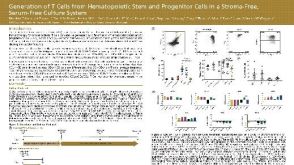 科学海报Generation of T Cells from Hematopoietic Stem and Progenitor Cells in a Stroma-Free, Serum-Free Culture System


 沪公网安备31010102008431号