Detection, isolation, and stimulation of quiescent primitive leukemic progenitor cells from patients with acute myeloid leukemia (AML).
Although many acute myeloid leukemia (AML) colony-forming cells (CFCs) and long-term culture-initiating cells (LTC-ICs) directly isolated from patients are actively cycling,quiescent progenitors are present in most samples. In the current study,(3)H-thymidine ((3)H-Tdr) suicide assays demonstrated that most NOD/SCID mouse leukemia-initiating cells (NOD/SL-ICs) are quiescent in 6 of 7 AML samples. AML cells in G(0),G(1),and S/G(2)+M were isolated from 4 of these samples using Hoechst 33342/pyroninY staining and cell sorting. The progenitor content of each subpopulation was consistent with the (3)H-Tdr suicide results,with NOD/SL-ICs found almost exclusively among G(0) cells while the cycling status of AML CFCs and LTC-ICs was more heterogeneous. Interestingly,after 72 hours in serum-free culture with or without Steel factor (SF),Flt-3 ligand (FL),and interleukin-3 (IL-3),most G(0) AML cells entered active cell cycle (percentage of AML cells remaining in G(0) at 72 hours,1.2% to 37%,and 0% to 7.6% in cultures without and with growth factors [GFs],respectively) while G(0) cells from normal lineage-depleted bone marrow remained quiescent in the absence of GF. All 4 AML samples showed evidence of autocrine production of 2 or more of SF,FL,IL-3,and granulocyte-macrophage colony-stimulating factor (GM-CSF). In addition,3 of 4 samples contained an internal tandem duplication of the FLT3 gene. In summary,quiescent leukemic cells,including NOD/SL-ICs,are present in most AML patients. Their spontaneous entry into active cell cycle in short-term culture might be explained by the deregulated GF signaling present in many AMLs.
View Publication
产品类型:
产品号#:
05150
09500
09600
09650
产品名:
MyeloCult™ H5100
BIT 9500血清替代物
StemSpan™ SFEM
StemSpan™ SFEM
Magnifico A et al. (MAR 2009)
Clinical cancer research : an official journal of the American Association for Cancer Research 15 6 2010--21
Tumor-initiating cells of HER2-positive carcinoma cell lines express the highest oncoprotein levels and are sensitive to trastuzumab.
PURPOSE: The existence of tumor-initiating cells in breast cancer has profound implications for cancer therapy. In this study,we investigated the sensitivity of tumor-initiating cells isolated from human epidermal growth factor receptor type 2 (HER2)-overexpressing carcinoma cell lines to trastuzumab,a compound used for the targeted therapy of breast cancer. EXPERIMENTAL DESIGN: Spheres were analyzed by indirect immunofluorescence for HER2 cell surface expression and by real-time PCR for HER2 mRNA expression in the presence or absence of the Notch1 signaling inhibitor (GSI) or Notch1 small interfering RNA. Xenografts of HER2-overexpressing breast tumor cells were treated with trastuzumab or doxorubicin. The sphere-forming efficiency (SFE) and serial transplantability of tumors were assessed. RESULTS: In HER2-overexpressing carcinoma cell lines,cells with tumor-initiating cell properties presented increased HER2 levels compared with the bulk cell population without modification in HER2 gene amplification. HER2 levels were controlled by Notch1 signaling,as shown by the reduction of HER2 cell surface expression and lower SFE following gamma-secretase inhibition or Notch1 specific silencing. We also show that trastuzumab was able to effectively target tumor-initiating cells of HER2-positive carcinoma cell lines,as indicated by the significant decrease in SFE and the loss of serial transplantability,following treatment of HER2-overexpressing xenotransplants. CONCLUSIONS: Here,we provide evidence for the therapeutic efficacy of trastuzumab in debulking and in targeting tumor-initiating cells of HER2-overexpressing tumors. We also propose that Notch signaling regulates HER2 expression,thereby representing a critical survival pathway of tumor-initiating cells.
View Publication
Noninvasive MR imaging of magnetically labeled stem cells to directly identify neovasculature in a glioma model.
Bone marrow-derived endothelial precursor cells incorporate into neovasculature and have been successfully used as vehicles for gene delivery to brain tumors. To determine whether systemically administered Sca1+ bone marrow cells labeled with superparamagnetic iron oxide nanoparticles can be detected by in vivo magnetic resonance imaging in a mouse brain tumor model,mouse Sca1+ cells were labeled in vitro with ferumoxides-poly-L-lysine complexes. Labeled or control cells were administered intravenously to glioma-bearing severe combined immunodeficient (SCID) mice. Magnetic resonance imaging (MRI) was performed during tumor growth. Mice that received labeled cells demonstrated hypointense regions within the tumor that evolved over time and developed a continuous dark hypointense ring at a consistent time point. This effect was not cleared by administration of a gadolinium contrast agent. Histology showed iron-labeled cells around the tumor rim in labeled mice,which expressed CD31 and von Willebrand factor,indicating the transplanted cells detected in the tumor have differentiated into endothelial-like cells. These results demonstrate that MRI can detect the incorporation of magnetically labeled bone marrow-derived precursor cells into tumor vasculature as part of ongoing angiogenesis and neovascularization. This technique can be used to directly identify neovasculature in vivo and to facilitate gene therapy by noninvasively monitoring these cells as gene delivery vectors.
View Publication
产品类型:
产品号#:
09600
09650
09850
产品名:
StemSpan™ SFEM
StemSpan™ SFEM
Risueñ et al. (JUN 2011)
Blood 117 26 7112--20
Identification of T-lymphocytic leukemia-initiating stem cells residing in a small subset of patients with acute myeloid leukemic disease.
Xenotransplantation of acute myeloid leukemia (AML) into immunodeficient mice has been critical for understanding leukemogenesis in vivo and defining self-renewing leukemia-initiating cell subfractions (LICs). Although AML-engraftment capacity is considered an inherent property of LICs,substrains of NOD/SCID mice that possess additional deletions such as the IL2Rγc(null) (NSG) have been described as a more sensitive recipient to assay human LIC function. Using 23 AML-patient samples,39% demonstrated no detectable engraftment in NOD/SCID and were categorized as AMLs devoid of LICs. However,33% of AML patients lacking AML-LICs were capable of engrafting NSG recipients,but produced a monoclonal T-cell proliferative disorder similar to T-ALL. These grafts demonstrated self-renewal capacity as measured by in vivo serial passage and were restricted to CD34-positive fraction,and were defined as LICs. Molecular analysis for translocations in MLL genes indicated that these AML patient-derived LICs all expressed the MLL-AFX1 fusion product. Our results reveal that the in vivo human versus xenograft host microenvironment dictates the developmental capacity of human LICs residing in a small subset of patients diagnosed with AML harboring MLL mutations. These findings have implications both for the basic biology of CSC function,and for the use of in vivo models of the leukemogenic process in preclinical or diagnostic studies.
View Publication
产品类型:
产品号#:
84434
84444
产品名:
Luo M et al. (JAN 2009)
Cancer research 69 2 466--74
Mammary epithelial-specific ablation of the focal adhesion kinase suppresses mammary tumorigenesis by affecting mammary cancer stem/progenitor cells.
Focal adhesion kinase (FAK) has been implicated in the development of cancers,including those of the breast. Nevertheless,the molecular and cellular mechanisms by which FAK promotes mammary tumorigenesis in vivo are not well understood. Here,we show that targeted deletion of FAK in mouse mammary epithelium significantly suppresses mammary tumorigenesis in a well-characterized breast cancer model. Ablation of FAK leads to the depletion of a subset of bipotent cells in the tumor that express both luminal marker keratin 8/18 and basal marker keratin 5. Using mammary stem/progenitor markers,including aldehyde dehydrogenase,CD24,CD29,and CD61,we further revealed that ablation of FAK reduced the pool of cancer stem/progenitor cells in primary tumors of FAK-targeted mice and impaired their self-renewal and migration in vitro. Finally,through transplantation in NOD-SCID mice,we found that cancer stem/progenitor cells isolated from FAK-targeted mice have compromised tumorigenicity and impaired maintenance in vivo. Together,these results show a novel function of FAK in maintaining the mammary cancer stem/progenitor cell population and provide a novel mechanism by which FAK may promote breast cancer development and progression.
View Publication
产品类型:
产品号#:
18556
18556RF
产品名:
Charafe-Jauffret E et al. (FEB 2009)
Cancer research 69 4 1302--13
Breast cancer cell lines contain functional cancer stem cells with metastatic capacity and a distinct molecular signature.
Tumors may be initiated and maintained by a cellular subcomponent that displays stem cell properties. We have used the expression of aldehyde dehydrogenase as assessed by the ALDEFLUOR assay to isolate and characterize cancer stem cell (CSC) populations in 33 cell lines derived from normal and malignant mammary tissue. Twenty-three of the 33 cell lines contained an ALDEFLUOR-positive population that displayed stem cell properties in vitro and in NOD/SCID xenografts. Gene expression profiling identified a 413-gene CSC profile that included genes known to play a role in stem cell function,as well as genes such as CXCR1/IL-8RA not previously known to play such a role. Recombinant interleukin-8 (IL-8) increased mammosphere formation and the ALDEFLUOR-positive population in breast cancer cell lines. Finally,we show that ALDEFLUOR-positive cells are responsible for mediating metastasis. These studies confirm the hierarchical organization of immortalized cell lines,establish techniques that can facilitate the characterization of regulatory pathways of CSCs,and identify potential stem cell markers and therapeutic targets.
View Publication
产品类型:
产品号#:
01700
01705
01702
产品名:
ALDEFLUOR™ 试剂盒
ALDEFLUOR™ DEAB试剂, 1.5 mM, 1 mL
ALDEFLUOR™检测缓冲液
Zetterblad J et al. (JAN 2010)
BMC genomics 11 108
Genomics based analysis of interactions between developing B-lymphocytes and stromal cells reveal complex interactions and two-way communication.
BACKGROUND: The use of functional genomics has largely increased our understanding of cell biology and promises to help the development of systems biology needed to understand the complex order of events that regulates cellular differentiation in vivo. One model system clearly dependent on the integration of extra and intra cellular signals is the development of B-lymphocytes from hematopoietic stem cells in the bone marrow. This developmental pathway involves several defined differentiation stages associated with specific expression of genes including surface markers that can be used for the prospective isolation of the progenitor cells directly from the bone marrow to allow for ex vivo gene expression analysis. The developmental process can be simulated in vitro making it possible to dissect information about cell/cell communication as well as to address the relevance of communication pathways in a rather direct manner. Thus we believe that B-lymphocyte development represents a useful model system to take the first steps towards systems biology investigations in the bone marrow. RESULTS: In order to identify extra cellular signals that promote B lymphocyte development we created a database with approximately 400 receptor ligand pairs and software matching gene expression data from two cell populations to obtain information about possible communication pathways. Using this database and gene expression data from NIH3T3 cells (unable to support B cell development),OP-9 cells (strongly supportive of B cell development),pro-B and pre-B cells as well as mature peripheral B-lineage cells,we were able to identify a set of potential stage and stromal cell restricted communication pathways. Functional analysis of some of these potential ways of communication allowed us to identify BMP-4 as a potent stimulator of B-cell development in vitro. Further,the analysis suggested that there existed possibilities for progenitor B cells to send signals to the stroma. The functional consequences of this were investigated by co-culture experiments revealing that the co-incubation of stromal cells with B cell progenitors altered both the morphology and the gene expression pattern in the stromal cells. CONCLUSIONS: We believe that this gene expression data analysis method allows for the identification of functionally relevant interactions and therefore could be applied to other data sets to unravel novel communication pathways.
View Publication
产品类型:
产品号#:
产品名:
Yang X et al. (NOV 2010)
Cancer research 70 22 9463--72
Double-negative feedback loop between reprogramming factor LIN28 and microRNA let-7 regulates aldehyde dehydrogenase 1-positive cancer stem cells.
A relatively rare aldehyde dehydrogenase 1 (ALDH1)-positive stem cell-like" subpopulation of tumor cells has the unique ability to initiate and perpetuate tumor growth; moreover�
View Publication
产品类型:
产品号#:
01700
01705
01702
产品名:
ALDEFLUOR™ 试剂盒
ALDEFLUOR™ DEAB试剂, 1.5 mM, 1 mL
ALDEFLUOR™检测缓冲液
Chen Y-W et al. (NOV 2010)
Molecular cancer therapeutics 9 11 2879--92
Cucurbitacin I suppressed stem-like property and enhanced radiation-induced apoptosis in head and neck squamous carcinoma--derived CD44(+)ALDH1(+) cells.
Head and neck squamous cell carcinoma (HNSCC) is a prevalent cancer worldwide. Signal transducers and activators of transcription 3 (STAT3) signaling is reported to promote tumor malignancy and recurrence in HNSCC. Cucurbitacins,triterpenoid derivatives,are strong STAT3 inhibitors with anticancer properties. Recent studies have shown aldehyde dehydrogenase 1 (ALDH1) to be a marker of cancer stem cells (CSC) in HNSCC. The aim of this study was to investigate the therapeutic effect of cucurbitacin I in HNSCC-derived CSCs. Using immunohistochemical analysis,we firstly showed that CD44,ALDH1,and phosphorylated STAT3 (p-STAT3) were higher in high-grade HNSCCs,and that triple positivity for CD44/ALDH1/p-STAT3 indicated a worse prognosis for HNSCC patients. Secondly,CD44(+)ALDH1(+) cells isolated from seven HNSCC patients showed greater tumorigenicity,radioresistance,and high expression of stemness (Bmi-1/Oct-4/Nanog) and epithelial-mesenchymal-transitional (Snail/Twist) genes as p-STAT3 level increased. Furthermore,we found that cucurbitacin I (JSI-124) can effectively inhibit the expression of p-STAT3 and capacities for tumorigenicity,sphere formation,and radioresistance in HNSCC-CD44(+)ALDH1(+). Notably,150 nmol/L cucurbitacin I effectively blocked STAT3 signaling and downstream survivin and Bcl-2 expression,and it induced apoptosis in HNSCC-CD44(+)ALDH1(+). Moreover,microarray data indicated that 100 nmol/L cucurbitacin I facilitated CD44(+)ALDH1(+) cells to differentiate into CD44�?�ALDH1�?� and enhanced the radiosensitivity of HNSCC-CD44(+)ALDH1(+). Xenotransplant experiments revealed that cucurbitacin I combined with radiotherapy significantly suppressed tumorigenesis and lung metastasis and further improved the survival rate in HNSCC-CD44(+)ALDH1(+)-transplanted immunocompromised mice. Taken together,our data show that cucurbitacin I,STAT3 inhibitor,reduces radioresistant,distant-metastatic,and CSC-like properties of HNSCC-CD44(+)ALDH1(+) cells. The potential of cucurbitacin I as a radiosensitizer should be verified in future anti-CSC therapy.
View Publication
产品类型:
产品号#:
01700
01705
01702
产品名:
ALDEFLUOR™ 试剂盒
ALDEFLUOR™ DEAB试剂, 1.5 mM, 1 mL
ALDEFLUOR™检测缓冲液
Mandal M et al. ( 2005)
British Journal of Cancer 92 10 1899--1905
The Akt inhibitor KP372-1 suppresses Akt activity and cell proliferation and induces apoptosis in thyroid cancer cells
The phosphatidylinositol 3' kinase (PI3K)/phosphatase and tensin homologue deleted on chromosome ten/Akt pathway,which is a critical regulator of cell proliferation and survival,is mutated or activated in a wide variety of cancers. Akt appears to be a key central node in this pathway and thus is an attractive target for targeted molecular therapy. We demonstrated that Akt is highly phosphorylated in thyroid cancer cell lines and human thyroid cancer specimens,and hypothesised that KP372-1,an Akt inhibitor,would block signalling through the PI3K pathway and inhibit cell proliferation while inducing apoptosis of thyroid cancer cells. KP372-1 blocked signalling downstream of Akt in thyroid tumour cells,leading to inhibition of cell proliferation and increased apoptosis. As thyroid cancer consistently expresses phosphorylated Akt and KP372-1 effectively blocks Akt signalling,further preclinical evaluation of this compound for treatment of thyroid cancer is warranted.
View Publication
产品类型:
产品号#:
73222
产品名:
Pearce DJ et al. ( )
Stem cells (Dayton,Ohio) 23 6 752--60
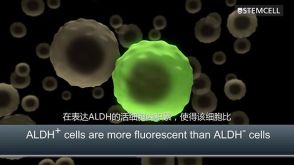
Characterization of cells with a high aldehyde dehydrogenase activity from cord blood and acute myeloid leukemia samples.
Aldehyde dehydrogenase (ALDH) is a cytosolic enzyme that is responsible for the oxidation of intracellular aldehydes. Elevated levels of ALDH have been demonstrated in murine and human progenitor cells compared with other hematopoietic cells,and this is thought to be important in chemoresistance. A method for the assessment of ALDH activity in viable cells recently has been developed and made commercially available in a kit format. In this study,we confirmed the use of the ALDH substrate kit to identify cord blood stem/progenitor cells. Via multicolor flow cytometry of cord blood ALDH+ cells,we have expanded on their phenotypic analysis. We then assessed the incidence,morphology,phenotype,and nonobese diabetic/ severe combined immunodeficiency engraftment ability of ALDH+ cells from acute myeloid leukemia (AML) samples. AML samples had no ALDH+ cells at all,an extremely rare nonmalignant stem/progenitor cell population,or a less rare,leukemic stem cell population. Hence,in addition to identifying nonmalignant stem cells within some AML samples,a high ALDH activity also identifies some patients' CD34+/ CD38- leukemic stem cells. The incidence of normal or leukemic stem cells with an extremely high ALDH activity may have important implications for resistance to chemotherapy. Identification and isolation of leukemic cells on the basis of ALDH activity provides a tool for their isolation and further analysis.
View Publication


 EasySep™小鼠TIL(CD45)正选试剂盒





 沪公网安备31010102008431号