Specificity for the tumor-associated self-antigen WT1 drives the development of fully functional memory T cells in the absence of vaccination.
Recently,vaccines against the Wilms Tumor antigen 1 (WT1) have been tested in cancer patients. However,it is currently not known whether physiologic levels of WT1 expression in stem and progenitor cells of normal tissue result in the deletion or tolerance induction of WT1-specific T cells. Here,we used an human leukocyte antigen-transgenic murine model to study the fate of human leukocyte antigen class-I restricted,WT1-specific T cells in the thymus and in the periphery. Thymocytes expressing a WT1-specific T-cell receptor derived from high avidity human CD8 T cells were positively selected into the single-positive CD8 population. In the periphery,T cells specific for the WT1 antigen differentiated into CD44-high memory phenotype cells,whereas T cells specific for a non-self-viral antigen retained a CD44(low) naive phenotype. Only the WT1-specific T cells,but not the virus-specific T cells,displayed rapid antigen-specific effector function without prior vaccination. Despite long-term persistence of WT1-specific memory T cells,the animals did not develop autoimmunity,and the function of hematopoietic stem and progenitor cells was unimpaired. This is the first demonstration that specificity for a tumor-associated self-antigen may drive differentiation of functionally competent memory T cells.
View Publication
产品类型:
产品号#:
09600
09650
19756
19756RF
产品名:
StemSpan™ SFEM
StemSpan™ SFEM
Ortiz-Sá et al. (JAN 2009)
Leukemia 23 1 59--70
Enhanced cytotoxicity of an anti-transferrin receptor IgG3-avidin fusion protein in combination with gambogic acid against human malignant hematopoietic cells: functional relevance of iron, the receptor, and reactive oxygen species.
The human transferrin receptor (hTfR) is a target for cancer immunotherapy due to its overexpression on the surface of cancer cells. We previously developed an antibody-avidin fusion protein that targets hTfR (anti-hTfR IgG3-Av) and exhibits intrinsic cytotoxicity against certain malignant cells. Gambogic acid (GA),a drug that also binds hTfR,induces cytotoxicity in several malignant cell lines. We now report that anti-hTfR IgG3-Av and GA induce cytotoxicity in a new broader panel of hematopoietic malignant cell lines. Our results show that the effect of anti-hTfR IgG3-Av is iron-dependent whereas that of GA is iron-independent in all cells tested. In addition,we observed that GA exerts a TfR-independent cytotoxicity. We also found that GA increases the generation of reactive oxygen species that may play a role in the cytotoxicity induced by this drug. Additive cytotoxicity was observed by simultaneous combination treatment with these drugs and synergy by using anti-hTfR IgG3-Av as a chemosensitizing agent. In addition,we found a concentration of GA that is toxic to malignant hematopoietic cells but not to human hematopoietic progenitor cells. Our results suggest that these two compounds may be effective,alone or in combination,for the treatment of human hematopoietic malignancies.
View Publication
产品类型:
产品号#:
04434
04444
产品名:
MethoCult™H4434经典
MethoCult™H4434经典
Croker AK et al. (AUG 2009)
Journal of cellular and molecular medicine 13 8B 2236--52
High aldehyde dehydrogenase and expression of cancer stem cell markers selects for breast cancer cells with enhanced malignant and metastatic ability.
Cancer stem cells (CSCs) have recently been identified in leukaemia and solid tumours; however,the role of CSCs in metastasis remains poorly understood. This dearth of knowledge about CSCs and metastasis is due largely to technical challenges associated with the use of primary human cancer cells in pre-clinical models of metastasis. Therefore,the objective of this study was to develop suitable pre-clinical model systems for studying stem-like cells in breast cancer metastasis,and to test the hypothesis that stem-like cells play a key role in metastatic behaviour. We assessed four different human breast cancer cell lines (MDA-MB-435,MDA-MB-231,MDA-MB-468,MCF-7) for expression of prospective CSC markers CD44/CD24 and CD133,and for functional activity of aldehyde dehydrogenase (ALDH),an enzyme involved in stem cell self-protection. We then used fluorescence-activated cell sorting and functional assays to characterize differences in malignant/metastatic behaviour in vitro (proliferation,colony-forming ability,adhesion,migration,invasion) and in vivo (tumorigenicity and metastasis). Sub-populations of cells demonstrating stem-cell-like characteristics (high expression of CSC markers and/or high ALDH) were identified in all cell lines except MCF-7. When isolated and compared to ALDH(low)CD44(low/-) cells,ALDH(hi)CD44(+)CD24(-) (MDA-MB-231) and ALDH(hi)CD44(+)CD133(+) (MDA-MB-468) cells demonstrated increased growth (P textless 0.05),colony formation (P textless 0.05),adhesion (P textless 0.001),migration (P textless 0.001) and invasion (P textless 0.001). Furthermore,following tail vein or mammary fat pad injection of NOD/SCID/IL2gamma receptor null mice,ALDH(hi)CD44(+)CD24(-) and ALDH(hi)CD44(+)CD133(+) cells showed enhanced tumorigenicity and metastasis relative to ALDH(low)CD44(low/-) cells (P textless 0.05). These novel results suggest that stem-like ALDH(hi)CD44(+)CD24(-) and ALDH(hi)CD44(+)CD133(+) cells may be important mediators of breast cancer metastasis.
View Publication
产品类型:
产品号#:
01700
01705
01702
产品名:
ALDEFLUOR™ 试剂盒
ALDEFLUOR™ DEAB试剂
ALDEFLUOR™测定缓冲液
Kumar A et al. (JAN 2012)
Breast cancer research : BCR 14 1 R4
Evidence that GTP-binding domain but not catalytic domain of transglutaminase 2 is essential for epithelial-to-mesenchymal transition in mammary epithelial cells.
INTRODUCTION: The expression of proinflammatory protein tissue transglutaminase 2 (TG2) is frequently upregulated in multiple cancer cell types. However,the exact role of TG2 in cancer cells is not well-understood. We recently initiated studies to determine the significance of TG2 in cancer cells and observed that sustained expression of TG2 resulted in epithelial-to-mesenchymal transition (EMT) and promoted cancer stem cell (CSC) traits in mammary epithelial cells. These results suggested that TG2 could serve as a promising therapeutic target for overcoming chemoresistance and inhibiting metastatic spread of cancer cells. METHODS: Using various mutant constructs,we analyzed the activity of TG2 that is essential for promoting the EMT-CSC phenotype. RESULTS: Our results suggest that catalytically inactive TG2 (TG2-C277S) is as effective as wild-type TG2 (TG2-WT) in inducing the EMT-CSC in mammary epithelial cells. In contrast,overexpression of a GTP-binding-deficient mutant (TG2-R580A) was completely incompetent in this regard. Moreover,TG2-dependent activation of the proinflammatory transcription factor NF-κB is deemed essential for promoting the EMT-CSC phenotype in mammary epithelial cells. CONCLUSIONS: Our results suggest that the transamidation activity of TG2 is not essential for promoting its oncogenic functions and provide a strong rationale for developing small-molecule inhibitors to block GTP-binding pockets of TG2. Such inhibitors may have great potential for inhibiting the TG2-regulated pathways,reversing drug resistance and inhibiting the metastasis of cancer cells.
View Publication
产品类型:
产品号#:
05620
产品名:
MammoCult™人培养基试剂盒
Nguyen AT et al. (JUN 2011)
Blood 117 25 6912--22
DOT1L, the H3K79 methyltransferase, is required for MLL-AF9-mediated leukemogenesis.
Chromosomal translocations of the mixed lineage leukemia (MLL) gene are a common cause of acute leukemias. The oncogenic function of MLL fusion proteins is,in part,mediated through aberrant activation of Hoxa genes and Meis1,among others. Here we demonstrate using a tamoxifen-inducible Cre-mediated loss of function mouse model that DOT1L,an H3K79 methyltransferase,is required for both initiation and maintenance of MLL-AF9-induced leukemogenesis in vitro and in vivo. Through gene expression and chromatin immunoprecipitation analysis we demonstrate that mistargeting of DOT1L,subsequent H3K79 methylation,and up-regulation of Hoxa and Meis1 genes underlie the molecular mechanism of how DOT1L contributes to MLL-AF9-mediated leukemogenesis. Our study not only provides the first in vivo evidence for the function of DOT1L in leukemia,but also reveals the molecular mechanism for DOT1L in MLL-AF9 mediated leukemia. Thus,DOT1L may serve as a potential therapeutic target for the treatment of leukemia caused by MLL translocations.
View Publication
产品类型:
产品号#:
03534
产品名:
MethoCult™GF M3534
Rawat VPS et al. (JAN 2004)
Proceedings of the National Academy of Sciences of the United States of America 101 3 817--22
Ectopic expression of the homeobox gene Cdx2 is the transforming event in a mouse model of t(12;13)(p13;q12) acute myeloid leukemia.
Creation of fusion genes by balanced chromosomal translocations is one of the hallmarks of acute myeloid leukemia (AML) and is considered one of the key leukemogenic events in this disease. In t(12;13)(p13;q12) AML,ectopic expression of the homeobox gene CDX2 was detected in addition to expression of the ETV6-CDX2 fusion gene,generated by the chromosomal translocation. Here we show in a murine model of t(12;13)(p13;q12) AML that myeloid leukemogenesis is induced by the ectopic expression of CDX2 and not by the ETV6-CDX2 chimeric gene. Mice transplanted with bone marrow cells retrovirally engineered to express Cdx2 rapidly succumbed to fatal and transplantable AML. The transforming capacity of Cdx2 depended on an intact homeodomain and the N-terminal transactivation domain. Transplantation of bone marrow cells expressing ETV6-CDX2 failed to induce leukemia. Furthermore,coexpression of ETV6-CDX2 and Cdx2 in bone marrow cells did not accelerate the course of disease in transplanted mice compared to Cdx2 alone. These data demonstrate that activation of a protooncogene by a balanced chromosomal translocation can be the pivotal leukemogenic event in AML,characterized by the expression of a leukemia-specific fusion gene. Furthermore,these findings link protooncogene activation to myeloid leukemogenesis,an oncogenic mechanism so far associated mainly with lymphoid leukemias and lymphomas.
View Publication
产品类型:
产品号#:
03434
03444
产品名:
MethoCult™GF M3434
MethoCult™GF M3434
Huang EH et al. (APR 2009)
Cancer research 69 8 3382--9
Aldehyde dehydrogenase 1 is a marker for normal and malignant human colonic stem cells (SC) and tracks SC overpopulation during colon tumorigenesis.
Although the concept that cancers originate from stem cells (SC) is becoming scientifically accepted,mechanisms by which SC contribute to tumor initiation and progression are largely unknown. For colorectal cancer (CRC),investigation of this problem has been hindered by a paucity of specific markers for identification and isolation of SC from normal and malignant colon. Accordingly,aldehyde dehydrogenase 1 (ALDH1) was investigated as a possible marker for identifying colonic SC and for tracking them during cancer progression. Immunostaining showed that ALDH1(+) cells are sparse and limited to the normal crypt bottom,where SCs reside. During progression from normal epithelium to mutant (APC) epithelium to adenoma,ALDH1(+) cells increased in number and became distributed farther up the crypt. CD133(+) and CD44(+) cells,which are more numerous and broadly distributed in normal crypts,showed similar changes during tumorigenesis. Flow cytometric isolation of cancer cells based on enzymatic activity of ALDH (Aldefluor assay) and implantation of these cells in nonobese diabetic-severe combined immunodeficient mice (a) generated xenograft tumors (Aldefluor(-) cells did not),(b) generated them after implanting as few as 25 cells,and (c) generated them dose dependently. Further isolation of cancer cells using a second marker (CD44(+) or CD133(+) serially) only modestly increased enrichment based on tumor-initiating ability. Thus,ALDH1 seems to be a specific marker for identifying,isolating,and tracking human colonic SC during CRC development. These findings also support our original hypothesis,derived previously from mathematical modeling of crypt dynamics,that progressive colonic SC overpopulation occurs during colon tumorigenesis and drives CRC development.
View Publication
产品类型:
产品号#:
01700
01705
01702
产品名:
ALDEFLUOR™ 试剂盒
ALDEFLUOR™ DEAB试剂
ALDEFLUOR™测定缓冲液
Hu K et al. ( 2012)
Breast cancer research : BCR 14 1 R22
Small interfering RNA library screen identified polo-like kinase-1 (PLK1) as a potential therapeutic target for breast cancer that uniquely eliminates tumor-initiating cells.
INTRODUCTION Triple-negative breast cancer (TNBC) high rate of relapse is thought to be due to the presence of tumor-initiating cells (TICs),molecularly defined as being CD44high/CD24-/low. TICs are resilient to chemotherapy and radiation. However,no currently accepted molecular target exists against TNBC and,moreover,TICs. Therefore,we sought the identification of kinase targets that inhibit TNBC growth and eliminate TICs. METHODS A genome-wide human kinase small interfering RNA (siRNA) library (691 kinases) was screened against the TNBC cell line SUM149 for growth inhibition. Selected siRNAs were then tested on four different breast cancer cell lines to confirm the spectrum of activity. Their effect on the CD44high subpopulation and sorted CD44high/CD24-/low cells of SUM149 also was studied. Further studies were focused on polo-like kinase 1 (PLK1),including its expression in breast cancer cell lines,effect on the CD44high/CD24-/low TIC subpopulation,growth inhibition,mammosphere formation,and apoptosis,as well as the activity of the PLK1 inhibitor,BI 2536. RESULTS Of the 85 kinases identified in the screen,28 of them were further silenced by siRNAs on MDA-MB-231 (TNBC),BT474-M1 (ER+/HER2+,a metastatic variant),and HR5 (ER+/HER2+,a trastuzumab-resistant model) cells and showed a broad spectrum of growth inhibition. Importantly,12 of 28 kinases also reduced the CD44high subpopulation compared with control in SUM149. Further tests of these 12 kinases directly on a sorted CD44high/CD24-/low TIC subpopulation of SUM149 cells confirmed their effect. Blocking PLK1 had the greatest growth inhibition on breast cancer cells and TICs by about 80% to 90% after 72 hours. PLK1 was universally expressed in breast cancer cell lines,representing all of the breast cancer subtypes,and was positively correlated to CD44. The PLK1 inhibitor BI 2536 showed similar effects on growth,mammosphere formation,and apoptosis as did PLK1 siRNAs. Finally,whereas paclitaxel,doxorubicin,and 5-fluorouracil enriched the CD44high/CD24-/low population compared with control in SUM149,subsequent treatment with BI 2536 killed the emergent population,suggesting that it could potentially be used to prevent relapse. CONCLUSION Inhibiting PLK1 with siRNA or BI 2536 blocked growth of TNBCs including the CD44high/CD24-/low TIC subpopulation and mammosphere formation. Thus,PLK1 could be a potential therapeutic target for the treatment of TNBC as well as other subtypes of breast cancer.
View Publication
AZD1152, a novel and selective aurora B kinase inhibitor, induces growth arrest, apoptosis, and sensitization for tubulin depolymerizing agent or topoisomerase II inhibitor in human acute leukemia cells in vitro and in vivo.
Aurora kinases play an important role in chromosome alignment,segregation,and cytokinesis during mitosis. We have recently shown that hematopoietic malignant cells including those from acute myeloid leukemia (AML) and acute lymphoblastic leukemia (ALL) aberrantly expressed Aurora A and B kinases,and ZM447439,a potent inhibitor of Aurora kinases,effectively induced growth arrest and apoptosis of a variety of leukemia cells. The present study explored the effect of AZD1152,a highly selective inhibitor of Aurora B kinase,on various types of human leukemia cells. AZD1152 inhibited the proliferation of AML lines (HL-60,NB4,MOLM13),ALL line (PALL-2),biphenotypic leukemia (MV4-11),acute eosinophilic leukemia (EOL-1),and the blast crisis of chronic myeloid leukemia K562 cells with an IC50 ranging from 3 nM to 40 nM,as measured by thymidine uptake on day 2 of culture. These cells had 4N/8N DNA content followed by apoptosis,as measured by cell-cycle analysis and annexin V staining,respectively. Of note,AZD1152 synergistically enhanced the antiproliferative activity of vincristine,a tubulin depolymerizing agent,and daunorubicin,a topoisomerase II inhibitor,against the MOLM13 and PALL-2 cells in vitro. Furthermore,AZD1152 potentiated the action of vincristine and daunorubicin in a MOLM13 murine xenograft model. Taken together,AZD1152 is a promising new agent for treatment of individuals with leukemia. The combined administration of AZD1152 and conventional chemotherapeutic agent to patients with leukemia warrants further investigation.
View Publication
产品类型:
产品号#:
04564
04534
04544
产品名:
入门套件MethoCult™H4534经典无EPO
MethoCult™H4534经典无EPO
MethoCult™H4534经典无EPO
Coletta PL et al. (FEB 2004)
Blood 103 3 1050--8
Lymphodepletion in the ApcMin/+ mouse model of intestinal tumorigenesis.
Germ line mutations in the Adenomatous polyposis coli tumor suppressor gene cause a hereditary form of intestinal tumorigenesis in both mice and man. Here we show that in Apc(Min/+) mice,which carry a heterozygous germ line mutation at codon 850 of Apc,there is progressive loss of immature and mature thymocytes from approximately 80 days of age with complete regression of the thymus by 120 days. In addition,Apc(Min/+) mice show parallel depletion of splenic natural killer (NK) cells,immature B cells,and B progenitor cells in bone marrow due to complete loss of interleukin 7 (IL-7)-dependent B-cell progenitors. Using bone marrow transplantation experiments into wild-type recipients,we have shown that the capacity of transplanted Apc(Min/+) bone marrow cells for T- and B-cell development appears normal. In contrast,although the Apc(Min/+) bone marrow microenvironment supported short-term reconstitution with wild-type bone marrow,Apc(Min/+) animals that received transplants subsequently underwent lymphodepletion. Fibroblast colony-forming unit (CFU-F) colony assays revealed a significant reduction in colony-forming mesenchymal progenitor cells in the bone marrow of Apc(Min/+) mice compared with wild-type animals prior to the onset of lymphodepletion. This suggests that an altered bone marrow microenvironment may account for the selective lymphocyte depletion observed in this model of familial adenomatous polyposis.
View Publication


 EasySep™小鼠TIL(CD45)正选试剂盒





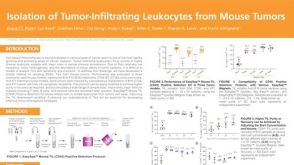 科学海报Isolation of Tumor-Infiltrating Leukocytes from Mouse Tumors
 沪公网安备31010102008431号