The ETS factor TEL2 is a hematopoietic oncoprotein.
TEL2/ETV7 is highly homologous to the ETS transcription factor TEL/ETV6,a frequent target of chromosome translocation in human leukemia. Although both proteins are transcriptional inhibitors binding similar DNA recognition sequences,they have opposite biologic effects: TEL inhibits proliferation while TEL2 promotes it. In addition,forced expression of TEL2 but not TEL blocks vitamin D3-induced differentiation of U937 and HL60 myeloid cells. TEL2 is expressed in the hematopoietic system,and its expression is up-regulated in bone marrow samples of some patients with leukemia,suggesting a role in oncogenesis. Recently we also showed that TEL2 cooperates with Myc in B lymphomagenesis in mice. Here we show that forced expression of TEL2 alone in mouse bone marrow causes a myeloproliferative disease with a long latency period but with high penetrance. This suggested that secondary mutations are necessary for disease development. Treating mice receiving transplants with TEL2-expressing bone marrow with the chemical carcinogen N-ethyl-N-nitrosourea (ENU) resulted in significantly accelerated disease onset. Although the mice developed a GFP-positive myeloid disease with 30% of the mice showing elevated white blood counts,they all died of T-cell lymphoma,which was GFP negative. Together our data identify TEL2 as a bona fide oncogene,but leukemic transformation is dependent on secondary mutations.
View Publication
产品类型:
产品号#:
03434
03444
05350
产品名:
MethoCult™GF M3434
MethoCult™GF M3434
Kharas MG et al. (JAN 2007)
Blood 109 2 747--55
KLF4 suppresses transformation of pre-B cells by ABL oncogenes.
Genes that are strongly repressed after B-cell activation are candidates for being inactivated,mutated,or repressed in B-cell malignancies. Krüppel-like factor 4 (Klf4),a gene down-regulated in activated murine B cells,is expressed at low levels in several types of human B-cell lineage lymphomas and leukemias. The human KLF4 gene has been identified as a tumor suppressor gene in colon and gastric cancer; in concordance with this,overexpression of KLF4 can suppress proliferation in several epithelial cell types. Here we investigate the effects of KLF4 on pro/pre-B-cell transformation by v-Abl and BCR-ABL,oncogenes that cause leukemia in mice and humans. We show that overexpression of KLF4 induces arrest and apoptosis in the G1 phase of the cell cycle. KLF4-mediated death,but not cell-cycle arrest,can be rescued by Bcl-XL overexpression. Transformed pro/pre-B cells expressing KLF4 display increased expression of p21CIP and decreased expression of c-Myc and cyclin D2. Tetracycline-inducible expression of KLF4 in B-cell progenitors of transgenic mice blocks transformation by BCR-ABL and depletes leukemic pre-B cells in vivo. Collectively,our work identifies KLF4 as a putative tumor suppressor in B-cell malignancies.
View Publication
产品类型:
产品号#:
03630
产品名:
MethoCult™M3630
Wray J et al. (AUG 2009)
Blood 114 9 1852--8
Metnase mediates chromosome decatenation in acute leukemia cells.
After DNA replication,sister chromatids must be untangled,or decatenated,before mitosis so that chromatids do not tear during anaphase. Topoisomerase IIalpha (Topo IIalpha) is the major decatenating enzyme. Topo IIalpha inhibitors prevent decatenation,causing cells to arrest during mitosis. Here we report that acute myeloid leukemia cells fail to arrest at the mitotic decatenation checkpoint,and their progression through this checkpoint is regulated by the DNA repair component Metnase (also termed SETMAR). Metnase contains a SET histone methylase and transposase nuclease domain,and is a component of the nonhomologous end-joining DNA double-strand break repair pathway. Metnase interacts with Topo IIalpha and enhances its decatenation activity. Here we show that multiple types of acute leukemia cells have an attenuated mitotic arrest when decatenation is inhibited and that in an acute myeloid leukemia (AML) cell line this is mediated by Metnase. Of further importance,Metnase permits continued proliferation of these AML cells even in the presence of the clinical Topo IIalpha inhibitor VP-16. In vitro,purified Metnase prevents VP-16 inhibition of Topo IIalpha decatenation of tangled DNA. Thus,Metnase expression levels may predict AML resistance to Topo IIalpha inhibitors,and Metnase is a potential therapeutic target for small molecule interference.
View Publication
产品类型:
产品号#:
02690
09850
产品名:
StemSpan™CC100
Kallifatidis G et al. (JUL 2009)
Gut 58 7 949--63
Sulforaphane targets pancreatic tumour-initiating cells by NF-kappaB-induced antiapoptotic signalling.
BACKGROUND AND AIMS: Emerging evidence suggests that highly treatment-resistant tumour-initiating cells (TICs) play a central role in the pathogenesis of pancreatic cancer. Tumour necrosis factor-related apoptosis-inducing ligand (TRAIL) is considered to be a novel anticancer agent; however,recent studies have shown that many pancreatic cancer cells are resistant to apoptosis induction by TRAIL due to TRAIL-activated nuclear factor-kappaB (NF-kappaB) signalling. Several chemopreventive agents are able to inhibit NF-kappaB,and favourable results have been obtained--for example,for the broccoli compound sulforaphane-in preventing metastasis in clinical studies. The aim of the study was to identify TICs in pancreatic carcinoma for analysis of resistance mechanisms and for definition of sensitising agents. METHODS: TICs were defined by expression patterns of a CD44(+)/CD24(-),CD44(+)/CD24(+) or CD44(+)/CD133(+) phenotype and correlation to growth in immunodeficient mice,differentiation grade,clonogenic growth,sphere formation,aldehyde dehydrogenase (ALDH) activity and therapy resistance. RESULTS: Mechanistically,specific binding of transcriptionally active cRel-containing NF-kappaB complexes in TICs was observed. Sulforaphane prevented NF-kappaB binding,downregulated apoptosis inhibitors and induced apoptosis,together with prevention of clonogenicity. Gemcitabine,the chemopreventive agents resveratrol and wogonin,and the death ligand TRAIL were less effective. In a xenograft model,sulforaphane strongly blocked tumour growth and angiogenesis,while combination with TRAIL had an additive effect without obvious cytotoxicity in normal cells. Freshly isolated patient tumour cells expressing markers for TICs could be sensitised by sulforaphane for TRAIL-induced cytotoxicity. CONCLUSION: The data provide new insights into resistance mechanisms of TICs and suggest the combination of sulforaphane with TRAIL as a promising strategy for targeting of pancreatic TICs.
View Publication
产品类型:
产品号#:
01700
01705
05751
01702
产品名:
ALDEFLUOR™ 试剂盒
ALDEFLUOR™ DEAB试剂
NeuroCult™ NS-A 扩增试剂盒(人)
ALDEFLUOR™测定缓冲液
Wang W et al. (MAY 2016)
Cell 165 5 1092--105
Effector T Cells Abrogate Stroma-Mediated Chemoresistance in Ovarian Cancer.
Effector T cells and fibroblasts are major components in the tumor microenvironment. The means through which these cellular interactions affect chemoresistance is unclear. Here,we show that fibroblasts diminish nuclear accumulation of platinum in ovarian cancer cells,resulting in resistance to platinum-based chemotherapy. We demonstrate that glutathione and cysteine released by fibroblasts contribute to this resistance. CD8(+) T cells abolish the resistance by altering glutathione and cystine metabolism in fibroblasts. CD8(+) T-cell-derived interferon (IFN)γ controls fibroblast glutathione and cysteine through upregulation of gamma-glutamyltransferases and transcriptional repression of system xc(-) cystine and glutamate antiporter via the JAK/STAT1 pathway. The presence of stromal fibroblasts and CD8(+) T cells is negatively and positively associated with ovarian cancer patient survival,respectively. Thus,our work uncovers a mode of action for effector T cells: they abrogate stromal-mediated chemoresistance. Capitalizing upon the interplay between chemotherapy and immunotherapy holds high potential for cancer treatment.
View Publication
产品类型:
产品号#:
17953
17953RF
15022
15062
100-0710
产品名:
EasySep™人CD8+ T细胞分选试剂盒
RoboSep™ 人CD8+ T细胞分选试剂盒
RosetteSep™人CD4+ T细胞富集抗体混合物
RosetteSep™人CD4+ T细胞富集抗体混合物
EasySep™人CD8+ T细胞分选试剂盒
Bar EE et al. (OCT 2007)
Stem cells (Dayton,Ohio) 25 10 2524--33
Cyclopamine-mediated hedgehog pathway inhibition depletes stem-like cancer cells in glioblastoma.
Brain tumors can arise following deregulation of signaling pathways normally activated during brain development and may derive from neural stem cells. Given the requirement for Hedgehog in non-neoplastic stem cells,we investigated whether Hedgehog blockade could target the stem-like population in glioblastoma multiforme (GBM). We found that Gli1,a key Hedgehog pathway target,was highly expressed in 5 of 19 primary GBM and in 4 of 7 GBM cell lines. Shh ligand was expressed in some primary tumors,and in GBM-derived neurospheres,suggesting a potential mechanism for pathway activation. Hedgehog pathway blockade by cyclopamine caused a 40%-60% reduction in growth of adherent glioma lines highly expressing Gli1 but not in those lacking evidence of pathway activity. When GBM-derived neurospheres were treated with cyclopamine and then dissociated and seeded in media lacking the inhibitor,no new neurospheres formed,suggesting that the clonogenic cancer stem cells had been depleted. Consistent with this hypothesis,the stem-like fraction in gliomas marked by both aldehyde dehydrogenase activity and Hoechst dye excretion (side population) was significantly reduced or eliminated by cyclopamine. In contrast,we found that radiation treatment of our GBM neurospheres increased the percentage of these stem-like cells,suggesting that this standard therapy preferentially targets better-differentiated neoplastic cells. Most importantly,viable GBM cells injected intracranially following Hedgehog blockade were no longer able to form tumors in athymic mice,indicating that a cancer stem cell population critical for ongoing growth had been removed. Disclosure of potential conflicts of interest is found at the end of this article.
View Publication
Li Y et al. (MAY 2010)
Clinical cancer research : an official journal of the American Association for Cancer Research 16 9 2580--90
Sulforaphane, a dietary component of broccoli/broccoli sprouts, inhibits breast cancer stem cells.
PURPOSE: The existence of cancer stem cells (CSCs) in breast cancer has profound implications for cancer prevention. In this study,we evaluated sulforaphane,a natural compound derived from broccoli/broccoli sprouts,for its efficacy to inhibit breast CSCs and its potential mechanism. EXPERIMENTAL DESIGN: Aldefluor assay and mammosphere formation assay were used to evaluate the effect of sulforaphane on breast CSCs in vitro. A nonobese diabetic/severe combined immunodeficient xenograft model was used to determine whether sulforaphane could target breast CSCs in vivo,as assessed by Aldefluor assay,and tumor growth upon cell reimplantation in secondary mice. The potential mechanism was investigated using Western blotting analysis and beta-catenin reporter assay. RESULTS: Sulforaphane (1-5 micromol/L) decreased aldehyde dehydrogenase-positive cell population by 65% to 80% in human breast cancer cells (P textless 0.01) and reduced the size and number of primary mammospheres by 8- to 125-fold and 45% to 75% (P textless 0.01),respectively. Daily injection with 50 mg/kg sulforaphane for 2 weeks reduced aldehyde dehydrogenase-positive cells by textgreater50% in nonobese diabetic/severe combined immunodeficient xenograft tumors (P = 0.003). Sulforaphane eliminated breast CSCs in vivo,thereby abrogating tumor growth after the reimplantation of primary tumor cells into the secondary mice (P textless 0.01). Western blotting analysis and beta-catenin reporter assay showed that sulforaphane downregulated the Wnt/beta-catenin self-renewal pathway. CONCLUSIONS: Sulforaphane inhibits breast CSCs and downregulates the Wnt/beta-catenin self-renewal pathway. These findings support the use of sulforaphane for the chemoprevention of breast cancer stem cells and warrant further clinical evaluation.
View Publication
The longevity of organisms is maintained by stem cells. If an organism loses the ability to maintain a balance between quiescence and differentiation in the stem/progenitor cell compartment due to aging and/or stress,this may result in death or age-associated diseases,including cancer. Ewing sarcoma is the most lethal bone tumor in young patients and arises from primitive stem cells. Here,we demonstrated that endogenous Ewing sarcoma gene (Ews) is indispensable for stem cell quiescence,and that the ablation of Ews promotes the early onset of senescence in hematopoietic stem progenitor cells. The phenotypic and functional changes in Ews-deficient stem cells were accompanied by an increase in senescence-associated β-galactosidase staining and a marked induction of p16(INK4a) compared with wild-type counterparts. With its relevance to cancer and possibly aging,EWS is likely to play a significant role in maintaining the functional capacity of stem cells and may provide further insight into the complexity of Ewing sarcoma in the context of stem cells.
View Publication
产品类型:
产品号#:
03434
03444
产品名:
MethoCult™GF M3434
MethoCult™GF M3434
Cremona CA and Lloyd AC (SEP 2009)
Journal of cell science 122 Pt 18 3272--81
Loss of anchorage in checkpoint-deficient cells increases genomic instability and promotes oncogenic transformation.
Mammalian cells generally require both mitogens and anchorage signals in order to proliferate. An important characteristic of many tumour cells is that they have lost this anchorage-dependent cell-cycle checkpoint,allowing them to proliferate without signals provided by their normal microenvironment. In the absence of anchorage signals from the extracellular matrix,many cell types arrest cell-cycle progression in G1 phase as a result of Rb-dependent checkpoints. However,despite inactivation of p53 and Rb proteins,SV40LT-expressing cells retain anchorage dependency,suggesting the presence of an uncharacterised cell-cycle checkpoint,which can be overridden by coexpression of oncogenic Ras. We report here that,although cyclin-CDK complexes persisted in suspension,proliferation was inhibited in LT-expressing cells by the CDK inhibitor p27(Kip1) (p27). Interestingly,this did not induce a stable arrest,but aberrant cell-cycle progression associated with stalled DNA replication,rereplication and chromosomal instability,which was sufficient to increase the frequency of oncogenic transformation. These results firstly indicate loss of anchorage in Rb- and p53-deficient cells as a novel mechanism for promotion of genomic instability; secondly suggest that anchorage checkpoints that protect normal cells from inappropriate proliferation act deleteriously in Rb- and p53-deficient cells to promote tumourigenesis; and thirdly indicate caution in the use of CDK inhibitors for cancer treatment.
View Publication
产品类型:
产品号#:
05401
05402
05411
产品名:
MesenCult™ MSC基础培养基 (人)
MesenCult™ MSC 刺激补充剂(人)
MesenCult™ 增殖试剂盒(人)
Lo J-F et al. (MAR 2011)
Cancer research 71 5 1912--23
The epithelial-mesenchymal transition mediator S100A4 maintains cancer-initiating cells in head and neck cancers.
Cancer-initiating cells (CIC) comprise a rare subpopulation of cells in tumors that are proposed to be responsible for tumor growth. Starting from CICs identified in head and neck squamous cell carcinomas (HNSCC),termed head and neck cancer-initiating cells (HN-CIC),we determined as a candidate stemness-maintaining molecule for HN-CICs the proinflammatory mediator S100A4,which is also known to be an inducer of epithelial-mesenchymal transition. S100A4 knockdown in HN-CICs reduced their self-renewal capability and their stemness and tumorigenic properties,both in vitro and in vivo. Conversely,S100A4 overexpression in HNSCC cells enhanced their stem cell properties. Mechanistic investigations indicated that attenuation of endogenous S100A4 levels in HNSCC cells caused downregulation of Notch2 and PI3K (phosphoinositide 3-kinase)/pAKT along with upregulation of PTEN,consistent with biological findings. Immunohistochemical analysis of HNSCC clinical specimens showed that S100A4 expression was positively correlated with clinical grading,stemness markers,and poorer patient survival. Together,our findings reveal a crucial role for S100A4 signaling pathways in maintaining the stemness properties and tumorigenicity of HN-CICs. Furthermore,our findings suggest that targeting S100A4 signaling may offer a new targeted strategy for HNSCC treatment by eliminating HN-CICs.
View Publication


 EasySep™小鼠TIL(CD45)正选试剂盒




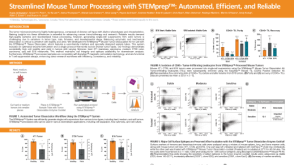 科学海报Streamlined Mouse Tumor Processing with STEMprep™: Automated, Efficient, and Reliable
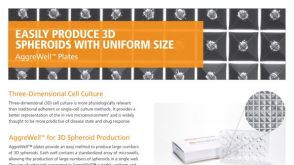 产品手册AggreWell™ for Spheroids
 沪公网安备31010102008431号