Eden JA (JUL 2010)
Menopause (New York,N.Y.) 17 4 801--10
Human breast cancer stem cells and sex hormones--a narrative review.
OBJECTIVE: The aim of this narrative review was to evaluate the role of cancer stem cells (CSCs) and sex steroids in the pathophysiology of human breast cancer. METHODS: A key-word search was performed using the Scopus database. Preference was given to studies using human cells and tissues. RESULTS: Long-term estrogen-progestin hormone therapy is known to increase breast cancer risk,although the mechanisms are poorly understood. In the last few years,it has become clear that many human breast cancers contain CSCs,which may be responsible for much of the tumor's malignant behavior. Very recently,the impact of estrogen,progesterone,and progestins on breast CSCs and their progeny has been studied and clarified. Most breast CSCs are estrogen receptor negative and progesterone receptor negative,although some intermediary progenitor forms have hormone receptors,especially progesterone receptor. Most mature human breast cancer cellsare estrogen receptor positive and can thus be stimulated by estrogen. Breast CSCs usually elaborate CD44+,CD24j/low and/or ALDEFLUOR+ cell markers and are lineage markers negative. One of the main roles of progesterone and progestin seems to be on certain breast cancer stem intermediate forms,inducing them to revert back to a more primitive breast CSC form. CONCLUSIONS: As the pathophysiology of human breast CSC is clarified,it is probable that this will lead to novel,effective breast cancer treatments and,perhaps,new breast cancer preventive agents. This research may also lead to safer hormone therapy regimens.
View Publication
产品类型:
产品号#:
01700
01705
01702
产品名:
ALDEFLUOR™ 试剂盒
ALDEFLUOR™ DEAB试剂, 1.5 mM, 1 mL
ALDEFLUOR™检测缓冲液
Todaro M et al. (NOV 2010)
Cancer research 70 21 8874--85
Tumorigenic and metastatic activity of human thyroid cancer stem cells.
Thyroid carcinoma is the most common endocrine malignancy and the first cause of death among endocrine cancers. We show that the tumorigenic capacity in thyroid cancer is confined in a small subpopulation of stem-like cells with high aldehyde dehydrogenase (ALDH(high)) activity and unlimited replication potential. ALDH(high) cells can be expanded indefinitely in vitro as tumor spheres,which retain the tumorigenic potential upon delivery in immunocompromised mice. Orthotopic injection of minute numbers of thyroid cancer stem cells recapitulates the behavior of the parental tumor,including the aggressive metastatic features of undifferentiated thyroid carcinomas,which are sustained by constitutive activation of cMet and Akt in thyroid cancer stem cells. The identification of tumorigenic and metastagenic thyroid cancer cells may provide unprecedented preclinical tools for development and preclinical validation of novel targeted therapies.
View Publication
产品类型:
产品号#:
01700
01705
01702
产品名:
ALDEFLUOR™ 试剂盒
ALDEFLUOR™ DEAB试剂, 1.5 mM, 1 mL
ALDEFLUOR™检测缓冲液
Fang B et al. (APR 2005)
Blood 105 7 2733--40
Identification of human chronic myelogenous leukemia progenitor cells with hemangioblastic characteristics.
Overwhelming evidence from leukemia research has shown that the clonal population of neoplastic cells exhibits marked heterogeneity with respect to proliferation and differentiation. There are rare stem cells within the leukemic population that possess extensive proliferation and self-renewal capacity not found in the majority of the leukemic cells. These leukemic stem cells are necessary and sufficient to maintain the leukemia. Interestingly,the BCR/ABL fusion gene,which is present in chronic myelogenous leukemia (CML),was also detected in the endothelial cells of patients with CML,suggesting that CML might originate from hemangioblastic progenitor cells that can give rise to both blood cells and endothelial cells. Here we isolated fetal liver kinase-1-positive (Flk1+) cells carrying the BCR/ABL fusion gene from the bone marrow of 17 Philadelphia chromosome-positive (Ph+) patients with CML and found that these cells could differentiate into malignant blood cells and phenotypically defined endothelial cells at the single-cell level. These findings provide direct evidence for the first time that rearrangement of the BCR/ABL gene might happen at or even before the level of hemangioblastic progenitor cells,thus resulting in detection of the BCR/ABL fusion gene in both blood and endothelial cells.
View Publication
Altered B-cell receptor signaling kinetics distinguish human follicular lymphoma B cells from tumor-infiltrating nonmalignant B cells.
The B-cell receptor (BCR) transmits life and death signals throughout B-cell development,and altered BCR signaling may be required for survival of B-lymphoma cells. We used single-cell signaling profiles to compare follicular lymphoma (FL) B cells and nonmalignant host B cells within individual patient biopsies and identified BCR-mediated signaling events specific to lymphoma B cells. Expression of CD20,Bcl-2,and BCR light chain isotype (kappa or lambda) distinguished FL tumor B-cell and nontumor host B-cell subsets within FL patient biopsies. BCR-mediated signaling via phosphorylation of Btk,Syk,Erk1/2,and p38 occurred more rapidly in tumor B cells from FL samples than in infiltrating nontumor B cells,achieved greater levels of per-cell signaling,and sustained this level of signaling for hours longer than nontumor B cells. The timing and magnitude of BCR-mediated signaling in nontumor B cells within an FL sample instead resembled that observed in mature B cells from the peripheral blood of healthy subjects. BCR signaling pathways that are potentiated specifically in lymphoma cells should provide new targets for therapeutic attention.
View Publication
产品类型:
产品号#:
09850
产品名:
Daniels TR et al. (NOV 2007)
Molecular cancer therapeutics 6 11 2995--3008
Conjugation of an anti transferrin receptor IgG3-avidin fusion protein with biotinylated saporin results in significant enhancement of its cytotoxicity against malignant hematopoietic cells.
We have previously developed an antibody fusion protein composed of a mouse/human chimeric IgG3 specific for the human transferrin receptor genetically fused to avidin (anti-hTfR IgG3-Av) as a universal delivery system for cancer therapy. This fusion protein efficiently delivers biotinylated FITC into cancer cells via TfR-mediated endocytosis. In addition,anti-hTfR IgG3-Av alone exhibits intrinsic cytotoxic activity and interferes with hTfR recycling,leading to the rapid degradation of the TfR and lethal iron deprivation in certain malignant B-cell lines. We now report on the cytotoxic effects of a conjugate composed of anti-hTfR IgG3-Av and biotinylated saporin 6 (b-SO6),a toxin derived from the plant Saponaria officinalis that inhibits protein synthesis. Conjugation of anti-hTfR IgG3-Av with b-SO6 enhances the cytotoxic effect of the fusion protein in sensitive cells and also overcomes the resistance of malignant cells that show low sensitivity to the fusion protein alone. Our results show for the first time that loading anti-hTfR IgG3-Av with a biotinylated toxin enhances the cytotoxicity of the fusion protein alone. These results suggest that anti-hTfR IgG3-Av has great potential as a therapeutic agent for a wide range of applications due to its intrinsic cytotoxic activity plus its ability to deliver biotinylated molecules into cancer cells.
View Publication
产品类型:
产品号#:
18357
18357RF
产品名:
Zhu X et al. (JUL 2010)
Molecular cancer therapeutics 9 7 2131--41
Identification of internalizing human single-chain antibodies targeting brain tumor sphere cells.
Glioblastoma multiforme (GBM) is the most common and aggressive form of primary brain tumor for which there is no curative treatment to date. Resistance to conventional therapies and tumor recurrence pose major challenges to treatment and management of this disease,and therefore new therapeutic strategies need to be developed. Previous studies by other investigators have shown that a subpopulation of GBM cells can grow as neurosphere-like cells when cultured in restrictive medium and exhibits enhanced tumor-initiating ability and resistance to therapy. We report here the identification of internalizing human single-chain antibodies (scFv) targeting GBM tumor sphere cells. We selected a large naive phage antibody display library on the glycosylation-dependent CD133 epitope-positive subpopulation of GBM cells grown as tumor spheres and identified internalizing scFvs that target tumor sphere cells broadly,as well as scFvs that target the CD133-positive subpopulation. These scFvs were found to be efficiently internalized by GBM tumor sphere cells. One scFv GC4 inhibited self-renewal of GBM tumor sphere cells in vitro. We have further developed a full-length human IgG1 based on this scFv,and found that it potently inhibits proliferation of GBM tumor sphere cells and GBM cells grown in regular nonselective medium. Taken together,these results show that internalizing human scFvs targeting brain tumor sphere cells can be readily identified from a phage antibody display library,which could be useful for further development of novel therapies that target subpopulations of GBM cells to combat recurrence and resistance to treatment.
View Publication
产品类型:
产品号#:
05751
产品名:
NeuroCult™ NS-A 扩增试剂盒(人)
Pei S et al. (NOV 2013)
The Journal of biological chemistry 288 47 33542--58
Targeting aberrant glutathione metabolism to eradicate human acute myelogenous leukemia cells.
The development of strategies to eradicate primary human acute myelogenous leukemia (AML) cells is a major challenge to the leukemia research field. In particular,primitive leukemia cells,often termed leukemia stem cells,are typically refractory to many forms of therapy. To investigate improved strategies for targeting of human AML cells we compared the molecular mechanisms regulating oxidative state in primitive (CD34(+)) leukemic versus normal specimens. Our data indicate that CD34(+) AML cells have elevated expression of multiple glutathione pathway regulatory proteins,presumably as a mechanism to compensate for increased oxidative stress in leukemic cells. Consistent with this observation,CD34(+) AML cells have lower levels of reduced glutathione and increased levels of oxidized glutathione compared with normal CD34(+) cells. These findings led us to hypothesize that AML cells will be hypersensitive to inhibition of glutathione metabolism. To test this premise,we identified compounds such as parthenolide (PTL) or piperlongumine that induce almost complete glutathione depletion and severe cell death in CD34(+) AML cells. Importantly,these compounds only induce limited and transient glutathione depletion as well as significantly less toxicity in normal CD34(+) cells. We further determined that PTL perturbs glutathione homeostasis by a multifactorial mechanism,which includes inhibiting key glutathione metabolic enzymes (GCLC and GPX1),as well as direct depletion of glutathione. These findings demonstrate that primitive leukemia cells are uniquely sensitive to agents that target aberrant glutathione metabolism,an intrinsic property of primary human AML cells.
View Publication
产品类型:
产品号#:
07930
07931
07940
07955
07956
07959
07954
100-1061
07952
产品名:
CryoStor® CS10
CryoStor® CS10
CryoStor® CS10
CryoStor® CS10
CryoStor® CS10
CryoStor® CS10
CryoStor® CS10
Ortega V et al. (MAR 2016)
Cancer genetics 209 3 82--6
Optimal strategy for obtaining routine chromosome analysis by using negative fractions of CD138 enriched plasma cells.
Fluorescence in situ hybridization (FISH) is superior to routine chromosome analysis (RCA) in detecting important prognostic genetic abnormalities in plasma cell dyscrasia (PCD); however,its sensitivity is hampered due to paucity of plasma cells (PC) in whole bone marrow (BM). Studies showed that the abnormality detection rate in enriched plasma cells (EPC) is greater than unselected plasma cells (UPC),but purification techniques are limiting to only FISH when sample volumes are inadequate. Not performing RCA may compromise patient care since RCA is equally important for detecting non-PC related abnormalities when the diagnosis is undefined. To resolve this critical issue,we designed a study where an immuno-magnetic CD138 enriched positive selection was used for FISH while the negative fraction (NF) was used to retrieve other myeloid elements for RCA. Parallel FISH studies were performed using UPC and CD138 EPC,while karyotyping was achieved using whole BM and discarded myeloid elements from the NF. Results showed that the abnormality rate of EPC was doubled compared to UPC for FISH,and CA displayed 100% success rate using the NF. PCD related chromosome abnormalities were confined to whole BM while non-PCD related abnormalities were found in both whole BM and NF. Our results demonstrate the feasibility of using the NF for RCA.
View Publication
产品类型:
产品号#:
21000
20119
20155
18387
18387RF
产品名:
RoboSep™- S
RoboSep™ 吸头组件抛光剂
RoboSep™分选管套装(9个塑料管)
Levina V et al. (JAN 2008)
PloS one 3 8 e3077
Drug-selected human lung cancer stem cells: cytokine network, tumorigenic and metastatic properties.
BACKGROUND: Cancer stem cells (CSCs) are thought to be responsible for tumor regeneration after chemotherapy,although direct confirmation of this remains forthcoming. We therefore investigated whether drug treatment could enrich and maintain CSCs and whether the high tumorogenic and metastatic abilities of CSCs were based on their marked ability to produce growth and angiogenic factors and express their cognate receptors to stimulate tumor cell proliferation and stroma formation. METHODOLOGY/FINDINGS: Treatment of lung tumor cells with doxorubicin,cisplatin,or etoposide resulted in the selection of drug surviving cells (DSCs). These cells expressed CD133,CD117,SSEA-3,TRA1-81,Oct-4,and nuclear beta-catenin and lost expression of the differentiation markers cytokeratins 8/18 (CK 8/18). DSCs were able to grow as tumor spheres,maintain self-renewal capacity,and differentiate. Differentiated progenitors lost expression of CD133,gained CK 8/18 and acquired drug sensitivity. In the presence of drugs,differentiation of DSCs was abrogated allowing propagation of cells with CSC-like characteristics. Lung DSCs demonstrated high tumorogenic and metastatic potential following inoculation into SCID mice,which supported their classification as CSCs. Luminex analysis of human and murine cytokines in sonicated lysates of parental- and CSC-derived tumors revealed that CSC-derived tumors contained two- to three-fold higher levels of human angiogenic and growth factors (VEGF,bFGF,IL-6,IL-8,HGF,PDGF-BB,G-CSF,and SCGF-beta). CSCs also showed elevated levels of expression of human VEGFR2,FGFR2,CXCR1,2 and 4 receptors. Moreover,human CSCs growing in SCID mice stimulated murine stroma to produce elevated levels of angiogenic and growth factors. CONCLUSIONS/SIGNIFICANCE: These findings suggest that chemotherapy can lead to propagation of CSCs and prevention of their differentiation. The high tumorigenic and metastatic potentials of CSCs are associated with efficient cytokine network production that may represent a target for increased efficacy of cancer therapy.
View Publication
产品类型:
产品号#:
04236
产品名:
MethoCult™ SF H4236
Quintarelli C et al. (MAR 2011)
Blood 117 12 3353--62
High-avidity cytotoxic T lymphocytes specific for a new PRAME-derived peptide can target leukemic and leukemic-precursor cells.
The cancer testis antigen (CTA) preferentially expressed antigen of melanoma (PRAME) is overexpressed by many hematologic malignancies,but is absent on normal tissues,including hematopoietic progenitor cells,and may therefore be an appropriate candidate for T cell-mediated immunotherapy. Because it is likely that an effective antitumor response will require high-avidity,PRAME-specific cytotoxic T lymphocytes (CTLs),we attempted to generate such CTLs using professional and artificial antigen-presenting cells loaded with a peptide library spanning the entire PRAME protein and consisting of 125 synthetic pentadecapeptides overlapping by 11 amino acids. We successfully generated polyclonal,PRAME-specific CTL lines and elicited high-avidity CTLs,with a high proportion of cells recognizing a previously uninvestigated HLA-A*02-restricted epitope,P435-9mer (NLTHVLYPV). These PRAME-CTLs could be generated both from normal donors and from subjects with PRAME(+) hematologic malignancies. The cytotoxic activity of our PRAME-specific CTLs was directed not only against leukemic blasts,but also against leukemic progenitor cells as assessed by colony-forming-inhibition assays,which have been implicated in leukemia relapse. These PRAME-directed CTLs did not affect normal hematopoietic progenitors,indicating that this approach may be of value for immunotherapy of PRAME(+) hematologic malignancies.
View Publication
产品类型:
产品号#:
产品名:
Zhao X et al. (AUG 2010)
Proceedings of the National Academy of Sciences of the United States of America 107 32 14146--51
Telomerase-immortalized human mammary stem/progenitor cells with ability to self-renew and differentiate.
There is increasing evidence that breast and other cancers originate from and are maintained by a small fraction of stem/progenitor cells with self-renewal properties. Whether such cancer stem/progenitor cells originate from normal stem cells based on initiation of a de novo stem cell program,by reprogramming of a more differentiated cell type by oncogenic insults,or both remains unresolved. A major hurdle in addressing these issues is lack of immortal human stem/progenitor cells that can be deliberately manipulated in vitro. We present evidence that normal and human telomerase reverse transcriptase (hTERT)-immortalized human mammary epithelial cells (hMECs) isolated and maintained in Dana-Farber Cancer Institute 1 (DFCI-1) medium retain a fraction with progenitor cell properties. These cells coexpress basal (K5,K14,and vimentin),luminal (E-cadherin,K8,K18,or K19),and stem/progenitor (CD49f,CD29,CD44,and p63) cell markers. Clonal derivatives of progenitors coexpressing these markers fall into two distinct types--a K5(+)/K19(-) type and a K5(+)/K19(+) type. We show that both types of progenitor cells have self-renewal and differentiation ability. Microarray analyses confirmed the differential expression of components of stem/progenitor-associated pathways,such as Notch,Wnt,Hedgehog,and LIF,in progenitor cells compared with differentiated cells. Given the emerging evidence that stem/progenitor cells serve as precursors for cancers,these cellular reagents represent a timely and invaluable resource to explore unresolved questions related to stem/progenitor origin of breast cancer.
View Publication


 EasySep™小鼠TIL(CD45)正选试剂盒




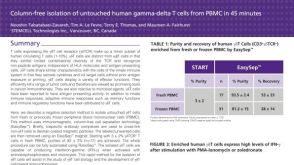 科学海报Immunomagnetic Cell Isolation of Human Gamma-Delta T Cells from PBMC
 沪公网安备31010102008431号