Zeng F-Y et al. ( 2010)
Biochemical and biophysical research communications 391 1 1049--1055
Glycogen synthase kinase 3 regulates PAX3-FKHR-mediated cell proliferation in human alveolar rhabdomyosarcoma cells.
Patients with alveolar rhabdomyosarcoma (ARMS) have poorer response to conventional chemotherapy and lower survival rates than those with embryonal RMS (ERMS). To identify compounds that preferentially block the growth of ARMS,we conducted a small-scale screen of 160 kinase inhibitors against the ARMS cell line Rh30 and ERMS cell line RD and identified inhibitors of glycogen synthase kinase 3 (GSK3),including TWS119 as ARMS-selective inhibitors. GSK3 inhibitors inhibited cell proliferation and induced apoptosis more effectively in Rh30 than RD cells. Ectopic expression of fusion protein PAX3-FKHR in RD cells significantly increased their sensitivity to TWS119. Down-regulation of GSK3 by GSK3 inhibitors or siRNA significantly reduced the transcriptional activity of PAX3-FKHR. These results suggest that GSK3 is directly involved in regulating the transcriptional activity of PAX3-FKHR. Also,GSK3 phosphorylated PAX3-FKHR in vitro,suggesting that GSK3 might regulate PAX3-FKHR activity via phosphorylation. These findings support a novel mechanism of PAX3-FKHR regulation by GSK3 and provide a novel strategy to develop GSK inhibitors as anti-ARMS therapies.
View Publication
产品类型:
产品号#:
73512
73514
产品名:
TWS119
TWS119
Azari H et al. (JAN 2011)
Journal of visualized experiments : JoVE 56 e3633
Isolation and expansion of human glioblastoma multiforme tumor cells using the neurosphere assay.
Stem-like cells have been isolated in tumors such as breast,lung,colon,prostate and brain. A critical issue in all these tumors,especially in glioblastoma mutliforme (GBM),is to identify and isolate tumor initiating cell population(s) to investigate their role in tumor formation,progression,and recurrence. Understanding tumor initiating cell populations will provide clues to finding effective therapeutic approaches for these tumors. The neurosphere assay (NSA) due to its simplicity and reproducibility has been used as the method of choice for isolation and propagation of many of this tumor cells. This protocol demonstrates the neurosphere culture method to isolate and expand stem-like cells in surgically resected human GBM tumor tissue. The procedures include an initial chemical digestion and mechanical dissociation of tumor tissue,and subsequently plating the resulting single cell suspension in NSA culture. After 7-10 days,primary neurospheres of 150-200 μm in diameter can be observed and are ready for further passaging and expansion.
View Publication
产品类型:
产品号#:
05751
05752
产品名:
NeuroCult™ NS-A 扩增试剂盒(人)
NeuroCult™ NS-A 分化试剂盒 (人)
Lelaidier M et al. (OCT 2015)
Oncotarget 6 30 29440--55
TRAIL-mediated killing of acute lymphoblastic leukemia by plasmacytoid dendritic cell-activated natural killer cells.
Acute lymphoblastic leukemia (ALL) still frequently recurs after hematopoietic stem cell transplantation (HSCT),underscoring the need to improve the graft-versus-leukemia (GvL) effect. Natural killer (NK) cells reconstitute in the first months following HSCT when leukemia burden is at its lowest,but ALL cells have been shown to be resistant to NK cell-mediated killing. We show here that this resistance is overcome by NK cell stimulation with TLR-9-activated plasmacytoid dendritic cells (pDCs). NK cell priming with activated pDCs resulted in TRAIL and CD69 up-regulation on NK cells and IFN-γ production. NK cell activation was dependent on IFN-α produced by pDCs,but was not reproduced by IFN-α alone. ALL killing was further enhanced by inhibition of KIR engagement. We showed that ALL lysis was mainly mediated by TRAIL engagement,while the release of cytolytic granules was involved when ALL expressed NK cell activating receptor ligands. Finally,adoptive transfers of activated-pDCs in ALL-bearing humanized mice delayed the leukemia onset and cure 30% of mice. Our data therefore demonstrate that TLR-9 activated pDCs are a powerful tool to overcome ALL resistance to NK cell-mediated killing and to reinforce the GvL effect of HSCT. These results open new therapeutic avenues to prevent relapse in children with ALL.
View Publication
TEL-AML1 promotes development of specific hematopoietic lineages consistent with preleukemic activity.
The t(12;21)(p13;q22) translocation is the most common chromosomal abnormality yet identified in any pediatric leukemia and gives rise to the TEL-AML1 fusion product. To investigate the effects of TEL-AML1 on hematopoiesis,fetal liver hematopoietic progenitor cells (HPCs) were transduced with retroviral vectors expressing this fusion protein. We show that TEL-AML1 dramatically alters differentiation of HPCs in vitro,preferentially promoting B-lymphocyte development,enhancing self-renewal of B-cell precursors,and leading to the establishment of long-term growth factor-dependent pre-B-cell lines. However,it had no effect on myeloid development in vitro. Further experiments were performed to determine whether TEL-AML1 also demonstrates lineage-specific activity in vivo. TEL-AML1-expressing HPCs displayed a competitive advantage in reconstituting both B-cell and myeloid lineages in vivo but had no effect on reconstitution of the T-cell lineage. Despite promoting these alterations in hematopoiesis,TEL-AML1 did not induce leukemia in transplanted mice. Our study provides a unique insight into the role of TEL-AML1 in leukemia predisposition and a potential model to study the mechanism of leukemogenesis associated with this fusion.
View Publication
产品类型:
产品号#:
03534
03231
产品名:
MethoCult™GF M3534
MethoCult™M3231
Hess DA et al. (MAR 2008)
Stem cells (Dayton,Ohio) 26 3 611--20
Widespread nonhematopoietic tissue distribution by transplanted human progenitor cells with high aldehyde dehydrogenase activity.
Transplanted adult progenitor cells distribute to peripheral organs and can promote endogenous cellular repair in damaged tissues. However,development of cell-based regenerative therapies has been hindered by the lack of preclinical models to efficiently assess multiple organ distribution and difficulty defining human cells with regenerative function. After transplantation into beta-glucuronidase (GUSB)-deficient NOD/SCID/mucopolysaccharidosis type VII mice,we characterized the distribution of lineage-depleted human umbilical cord blood-derived cells purified by selection using high aldehyde dehydrogenase (ALDH) activity with CD133 coexpression. ALDH(hi) or ALDH(hi)CD133+ cells produced robust hematopoietic reconstitution and variable levels of tissue distribution in multiple organs. GUSB+ donor cells that coexpressed human leukocyte antigen (HLA-A,B,C) and hematopoietic (CD45+) cell surface markers were the primary cell phenotype found adjacent to the vascular beds of several tissues,including islet and ductal regions of mouse pancreata. In contrast,variable phenotypes were detected in the chimeric liver,with HLA+/CD45+ cells demonstrating robust GUSB expression adjacent to blood vessels and CD45-/HLA- cells with diluted GUSB expression predominant in the liver parenchyma. However,true nonhematopoietic human (HLA+/CD45-) cells were rarely detected in other peripheral tissues,suggesting that these GUSB+/HLA-/CD45- cells in the liver were a result of downregulated human surface marker expression in vivo,not widespread seeding of nonhematopoietic cells. However,relying solely on continued expression of cell surface markers,as used in traditional xenotransplantation models,may underestimate true tissue distribution. ALDH-expressing progenitor cells demonstrated widespread and tissue-specific distribution of variable cellular phenotypes,indicating that these adult progenitor cells should be explored in transplantation models of tissue damage.
View Publication
产品类型:
产品号#:
01700
01705
01702
产品名:
ALDEFLUOR™ 试剂盒
ALDEFLUOR™ DEAB试剂
ALDEFLUOR™测定缓冲液
D'Alise AM et al. (MAY 2008)
Molecular cancer therapeutics 7 5 1140--9
Reversine, a novel Aurora kinases inhibitor, inhibits colony formation of human acute myeloid leukemia cells.
The demonstration that the small synthetic molecule reversine [2-(4-morpholinoanilino)-N6-cyclohexyladenine] promotes the dedifferentiation of committed cells into multipotent progenitor-type cells has raised hopes on the exploitation of this small chemical tool for the generation of stem cells. Here,we show that reversine causes a failure in cytokinesis and induces polyploidization. These effects of reversine are due to the inhibition of Aurora A and B,two related kinases that are implicated in several aspects of mitosis and that are frequently amplified and overexpressed in human tumors. Reversine inhibits the phosphorylation of histone H3,a direct downstream target of Aurora kinases. Similarly to the Aurora kinase inhibitor VX-680,which has recently entered phase II clinical trials for cancer treatment,reversine inhibited colony formation of leukemic cells from patients with acute myeloid leukemia but was significantly less toxic than VX-680 on cells from healthy donors. The crystal structure of the reversine-Aurora B kinase complex shows that reversine is a novel class of ATP-competitive Aurora kinase inhibitors. Thus,although our studies raise serious doubts on the application of reversine in regenerative medicine,they support the paradigm that reversine might be a useful agent in cancer chemotherapy.
View Publication
产品类型:
产品号#:
72612
72614
产品名:
Reversine
逆转素(Reversine)
Pelicano H et al. (DEC 2006)
The Journal of cell biology 175 6 913--23
Mitochondrial respiration defects in cancer cells cause activation of Akt survival pathway through a redox-mediated mechanism.
Cancer cells exhibit increased glycolysis for ATP production due,in part,to respiration injury (the Warburg effect). Because ATP generation through glycolysis is less efficient than through mitochondrial respiration,how cancer cells with this metabolic disadvantage can survive the competition with other cells and eventually develop drug resistance is a long-standing paradox. We report that mitochondrial respiration defects lead to activation of the Akt survival pathway through a novel mechanism mediated by NADH. Respiration-deficient cells (rho(-)) harboring mitochondrial DNA deletion exhibit dependency on glycolysis,increased NADH,and activation of Akt,leading to drug resistance and survival advantage in hypoxia. Similarly,chemical inhibition of mitochondrial respiration and hypoxia also activates Akt. The increase in NADH caused by respiratory deficiency inactivates PTEN through a redox modification mechanism,leading to Akt activation. These findings provide a novel mechanistic insight into the Warburg effect and explain how metabolic alteration in cancer cells may gain a survival advantage and withstand therapeutic agents.
View Publication
Sloand EM et al. (SEP 2006)
Proceedings of the National Academy of Sciences of the United States of America 103 39 14483--8
Granulocyte colony-stimulating factor preferentially stimulates proliferation of monosomy 7 cells bearing the isoform IV receptor.
Granulocyte colony-stimulating factor (GCSF) administration has been linked to the development of monosomy 7 in severe congenital neutropenia and aplastic anemia. We assessed the effect of pharmacologic doses of GCSF on monosomy 7 cells to determine whether this chromosomal abnormality developed de novo or arose as a result of favored expansion of a preexisting clone. Fluorescence in situ hybridization (FISH) of chromosome 7 was used to identify small populations of aneuploid cells. When bone marrow mononuclear cells from patients with monosomy 7 were cultured with 400 ng/ml GCSF,all samples showed significant increases in the proportion of monosomy 7 cells. In contrast,bone marrow from karyotypically normal aplastic anemia,myelodysplastic syndrome,or healthy individuals did not show an increase in monosomy 7 cells in culture. In bone marrow CD34 cells of patients with myelodysplastic syndrome and monosomy 7,GCSF receptor (GCSFR) protein was increased. Although no mutation was found in genomic GCSFR DNA,CD34 cells showed increased expression of the GCSFR class IV mRNA isoform,which is defective in signaling cellular differentiation. GCSFR signal transduction via the Jak/Stat system was abnormal in monosomy 7 CD34 cells,with increased phosphorylated signal transducer and activation of transcription protein,STAT1-P,and increased STAT5-P relative to STAT3-P. Our results suggest that pharmacologic doses of GCSF increase the proportion of preexisting monosomy 7 cells. The abnormal response of monosomy 7 cells to GCSF would be explained by the expansion of undifferentiated monosomy 7 clones expressing the class IV GCSFR,which is defective in signaling cell maturation.
View Publication
产品类型:
产品号#:
05150
产品名:
MyeloCult™H5100
Kanai R et al. (JAN 2012)
Journal of the National Cancer Institute 104 1 42--55
Oncolytic virus-mediated manipulation of DNA damage responses: synergy with chemotherapy in killing glioblastoma stem cells.
BACKGROUND: Although both the alkylating agent temozolomide (TMZ) and oncolytic viruses hold promise for treating glioblastoma,which remains uniformly lethal,the effectiveness of combining the two treatments and the mechanism of their interaction on cancer stem cells are unknown. METHODS: We investigated the efficacy of combining TMZ and the oncolytic herpes simplex virus (oHSV) G47Δ in killing glioblastoma stem cells (GSCs),using Chou-Talalay combination index analysis,immunocytochemistry and fluorescence microscopy,and neutral comet assay. The role of treatment-induced DNA double-strand breaks,activation of DNA damage responses,and virus replication in the cytotoxic interaction between G47Δ and TMZ was examined with a panel of pharmacological inhibitors and short-hairpin RNA (shRNA)-mediated knockdown of DNA repair pathways. Comparisons of cell survival and virus replication were performed using a two-sided t test (unpaired). The survival of athymic mice (n = 6-8 mice per group) bearing GSC-derived glioblastoma tumors treated with the combination of G47Δ and TMZ was analyzed by the Kaplan-Meier method and evaluated with a two-sided log-rank test. RESULTS: The combination of G47Δ and TMZ acted synergistically in killing GSCs but not neurons,with associated robust induction of DNA damage. Pharmacological and shRNA-mediated knockdown studies suggested that activated ataxia telangiectasia mutated (ATM) is a crucial mediator of synergy. Activated ATM relocalized to HSV DNA replication compartments where it likely enhanced oHSV replication and could not participate in repairing TMZ-induced DNA damage. Sensitivity to TMZ and synergy with G47Δ decreased with O(6)-methylguanine-DNA-methyltransferase (MGMT) expression and MSH6 knockdown. Combined G47Δ and TMZ treatment extended survival of mice bearing GSC-derived intracranial tumors,achieving long-term remission in four of eight mice (median survival = 228 days; G47Δ alone vs G47Δ + TMZ,hazard ratio of survival = 7.1,95% confidence interval = 1.9 to 26.1,P = .003) at TMZ doses attainable in patients. CONCLUSIONS: The combination of G47Δ and TMZ acts synergistically in killing GSCs through oHSV-mediated manipulation of DNA damage responses. This strategy is highly efficacious in representative preclinical models and warrants clinical translation.
View Publication
产品类型:
产品号#:
05707
05751
产品名:
NeuroCult™化学解离试剂盒(小鼠)
NeuroCult™ NS-A 扩增试剂盒(人)
Golay J et al. (MAR 2006)
Haematologica 91 3 322--30
The sensitivity of acute lymphoblastic leukemia cells carrying the t(12;21) translocation to campath-1H-mediated cell lysis.
BACKGROUND AND OBJECTIVES: Campath-1H is used in conditioning regimens and more recently as an anti-leukemic therapy in acute lymphoblastic leukemias (ALL). We therefore investigated CD52 expression and campath-1H-mediated lysis of ALL cells in vitro. DESIGN AND METHODS: Complement-mediated cytotoxicity assays were performed on freshly isolated neoplastic cells and cell lines using human serum. Antibody-dependent cellular cytotoxicity (ADCC) was performed by calcein-AM release assays. RESULTS: CD52 was expressed in four out of eight ALL cell lines studied. Among 61 freshly isolated ALL samples CD52 was expressed at varying levels in 87% of cases. Whereas ADCC was equivalent in different CD52+ lines,complement-dependent cytotoxicity (CDC) was variable. The REH cell line bearing the t(12;21) translocation showed 47-60% lysis when treated with 10 microg/mL campath-1H compared to 0-6% for the other cell lines expressing equivalent amounts of CD52. Furthermore all nine ALL samples with t(12;21) showed very high CDC (mean 97%) compared to the other 24 CD52+cases (mean 24%)(ptextless0.0001). In t(12;21) samples,efficient CDC was obtained with as little as 1 microg/mL campath-1H. CDC correlated in part with CD52 levels,suggesting that CD52 expression and other yet undefined factors contribute to the particular sensitivity of t(12;21) cells. The resistance of non t(12;21) ALL cases could be overcome to a limited extent by increasing the concentration of campath-1H,blocking the CD55 and CD59 complement inhibitors,and more effectively by combining campath-1H with fludarabine. INTERPRETATION AND CONCLUSIONS: We conclude that most ALL samples express CD52 to a variable level and that campath-1H has cytotoxic activity against CD52+ALL,alone or in combination with cytotoxic drugs.
View Publication


 EasySep™小鼠TIL(CD45)正选试剂盒




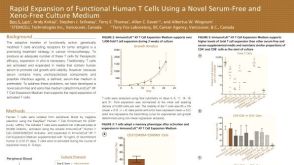 科学海报Rapid Expansion of Functional Human T Cells Using a Novel Serum-Free and Xeno-Free Culture Medium

 沪公网安备31010102008431号