Tomihara K et al. (JUN 2010)
Journal of immunology (Baltimore,Md. : 1950) 184 11 6151--60
Antigen-specific immunity and cross-priming by epithelial ovarian carcinoma-induced CD11b(+)Gr-1(+) cells.
Both innate and adaptive immune systems are considered important for cancer prevention,immunosurveillance,and control of cancer progression. It is known that,although both systems initially eliminate emerging tumor cells efficiently,tumors eventually escape immune attack by a variety of mechanisms,including differentiation and recruitment of immunosuppressive CD11b(+)Gr-1(+) myeloid suppressor cells into the tumor microenvironment. However,we show that CD11b(+)Gr-1(+) cells found in ascites of epithelial ovarian cancer-bearing mice at advanced stages of disease are immunostimulatory rather than being immunosuppressive. These cells consist of a homogenous population of cells that morphologically resemble neutrophils. Moreover,like dendritic cells,immunostimulatory CD11b(+)Gr-1(+) cells can strongly cross-prime,augmenting the proliferation of functional CTLs via signaling through the expression of costimulatory molecule CD80. Adoptive transfer of these immunostimulatory CD11b(+)Gr-1(+) cells from ascites of ovarian cancer-bearing mice results in the significant regression of s.c. tumors even without being pulsed with exogenous tumor Ag prior to adoptive transfer. We now show for the first time that adaptive immune responses against cancer can be augmented by these cancer-induced granulocyte-like immunostimulatory myeloid (CD11b(+)Gr-1(+)) cells,thereby mediating highly effective antitumor immunity in an adoptive transfer model of immunity.
View Publication
Tang MLF et al. ( 2014)
The European Journal of Immunology 44 4 1108--1118
The DNA damage response induces antigen presenting cell-like functions in fibroblasts
The DNA damage response (DDR) alerts the immune system to the danger posed by DNA damage through the induction of damage-associated molecular pattern molecules,chemokines,and ligands for activating immune receptors such as lymphocyte function-associated antigen 1 (LFA-1),NKG2D,and DNAX accessory molecule 1 (DNAM-1). Here we provide evidence that OVA(257-264) -pulsed fibroblasts gain the ability to activate naïve OT-I CD8(+) T cells in response to DNA damage. The ability of fibroblasts to activate OT-I CD8(+) T cells depended on the upregulation of ICAM-1 on fibroblasts and DNAM-1 expression of CD8(+) T cells. OVA(257-264) -pulsed fibroblasts were able to induce a protective T-cell response against B16-OVA cells in a DDR-dependent manner. Hence,the DDR may alert the immune system to the presence of potentially dangerous cells by upregulating the expression of ligands that can induce the activation of innate and adaptive immune cells.
View Publication
产品类型:
产品号#:
19853
19853RF
产品名:
EasySep™小鼠CD8+ T细胞分选试剂盒
RoboSep™ 小鼠CD8+ T细胞分选试剂盒
Fusi A et al. (AUG 2010)
Annals of oncology : official journal of the European Society for Medical Oncology / ESMO 21 8 1734--5
Monitoring of circulating tumor cells in a patient with synchronous metastatic melanoma and colon carcinoma.
The PD-1/PD-L1 axis modulates the natural killer cell versus multiple myeloma effect: a therapeutic target for CT-011, a novel monoclonal anti-PD-1 antibody.
T-cell expression of programmed death receptor-1 (PD-1) down-regulates the immune response against malignancy by interacting with cognate ligands (eg,PD-L1) on tumor cells; however,little is known regarding PD-1 and natural killer (NK) cells. NK cells exert cytotoxicity against multiple myeloma (MM),an effect enhanced through novel therapies. We show that NK cells from MM patients express PD-1 whereas normal NK cells do not and confirm PD-L1 on primary MM cells. Engagement of PD-1 with PD-L1 should down-modulate the NK-cell versus MM effect. We demonstrate that CT-011,a novel anti-PD-1 antibody,enhances human NK-cell function against autologous,primary MM cells,seemingly through effects on NK-cell trafficking,immune complex formation with MM cells,and cytotoxicity specifically toward PD-L1(+) MM tumor cells but not normal cells. We show that lenalidomide down-regulates PD-L1 on primary MM cells and may augment CT-011's enhancement of NK-cell function against MM. We demonstrate a role for the PD-1/PD-L1 signaling axis in the NK-cell immune response against MM and a role for CT-011 in enhancing the NK-cell versus MM effect. A phase 2 clinical trial of CT-011 in combination with lenalidomide for patients with MM should be considered.
View Publication
产品类型:
产品号#:
18387
18387RF
产品名:
Ló et al. (NOV 2009)
Cancer immunology,immunotherapy : CII 58 11 1853--64
Role of polymorphic Fc gamma receptor IIIa and EGFR expression level in cetuximab mediated, NK cell dependent in vitro cytotoxicity of head and neck squamous cell carcinoma cells.
Immunotherapy with the EGFR-specific mAb cetuximab is clinically effective in 10-20% of patients with squamous cell carcinoma of the head and neck (SCCHN). Little information is available about the mechanism(s) underlying patients' differential clinical response to cetuximab-based immunotherapy,although this information may contribute to optimizing the design of cetuximab-based immunotherapy. Our understanding of these mechanisms would benefit from the characterization of the variables which influence the extent of cell dependent-lysis of SCCHN cells incubated with cetuximab in vitro. Therefore,in this study we have investigated the role of FcgammaR IIIa-158 genotype expressed by effector NK cells,cetuximab concentration,and EGFR expression level by SCCHN cells in the extent of their in vitro lysis and in the degree of NK cell activation. PBMC or purified CD56+ NK cells genotyped at IIIa codon 158 and SCCHN cell lines expressing different levels of EGFR have been used as effectors and targets,respectively,in antibody dependent cellular cytotoxicity (ADCC) assays. Furthermore,supernatants from ADCC assays were analyzed for cytokine and chemokine levels using multiplexed ELISA. We found that the extent of lysis of SCCHN cells was influenced by the EGFR expression level,cetuximab concentration,and FcgammaR polymorphism. Effector cells expressing the FcgammaR IIIa-158 VV allele were significantly (P textless 0.0001) more effective than those expressing FcgammaR IIIa VF and FF [corrected] alleles in mediating lysis of SCCHN cells expressed higher levels of the activation markers CD69 and CD107a,and secreted significantly (P textless 0.05) larger amounts of inflammatory cytokines and chemokines. IL-2 or IL-15 treatment increased cetuximab-mediated ADCC by poor binding FcgammaR IIIa 158 FF expressing NK cells. The importance of the FcgammaR IIIa-158 polymorphism in cytotoxicity of SCCHN cells by NK cells supports a potential role for immune activation and may explain patient variability of cetuximab mediated clinical responses. Cellular and secreted immune profiles and FcgammaR genotypes from patients' lymphocytes may provide clinically useful biomarkers of immune activation in cetuximab treated patients.
View Publication


 EasySep™小鼠TIL(CD45)正选试剂盒




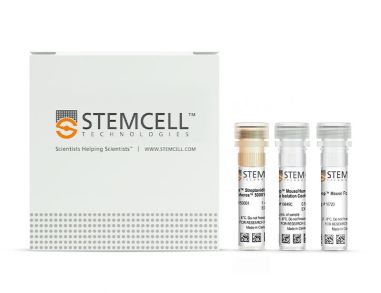 EasySep™小鼠/人嵌合体分选试剂盒
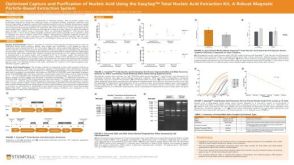
 技术公告Achieve Scalable, High-Quality Nucleic Acid Extractions with the EasySep™ Total Nucleic Acid Extraction Kit



 沪公网安备31010102008431号