Sequential treatment of CD34+ cells from patients with primary myelofibrosis with chromatin-modifying agents eliminate JAK2V617F-positive NOD/SCID marrow repopulating cells.
Because primary myelofibrosis (PMF) originates at the level of the pluripotent hematopoietic stem cell (HSC),we examined the effects of various therapeutic agents on the in vitro and in vivo behavior of PMF CD34(+) cells. Treatment of PMF CD34(+) cells with chromatin-modifying agents (CMAs) but not hydroxyurea,Janus kinase 2 (JAK2) inhibitors,or low doses of interferon-α led to the generation of greater numbers of CD34(+) chemokine (C-X-C motif) receptor (CXCR)4(+) cells,which were capable of migrating in response to chemokine (C-X-C motif) ligand (CXCL)12 and resulted in a reduction in the proportion of hematopoietic progenitor cells (HPCs) that were JAK2V617F(+). Furthermore,sequential treatment of PMF CD34(+) cells but not normal CD34(+) cells with decitabine (5-aza-2'-deoxycytidine [5azaD]),followed by suberoylanilide hydroxamic acid (SAHA; 5azaD/SAHA),or trichostatin A (5azaD/TSA) resulted in a higher degree of apoptosis. Two to 6 months after the transplantation of CMAs treated JAK2V617F(+) PMF CD34(+) cells into nonobese diabetic/severe combined immunodeficient (SCID)/IL-2Rγ(null) mice,the percentage of JAK2V617F/JAK2(total) in human CD45(+) marrow cells was dramatically reduced. These findings suggest that both PMF HPCs,short-term and long-term SCID repopulating cells (SRCs),are JAK2V617F(+) and that JAK2V617F(+) HPCs and SRCs can be eliminated by sequential treatment with CMAs. Sequential treatment with CMAs,therefore,represents a possible effective means of treating PMF at the level of the malignant SRC.
View Publication
Kawatsu K et al. (APR 2008)
Journal of clinical microbiology 46 4 1226--31
Development and evaluation of immunochromatographic assay for simple and rapid detection of Campylobacter jejuni and Campylobacter coli in human stool specimens.
An immunochromatographic assay (Campy-ICA) using a newly generated single monoclonal antibody against a 15-kDa cell surface protein of Campylobacter jejuni was developed. When cell suspensions of 86 C. jejuni strains and 27 Campylobacter coli strains were treated with a commercially available bacterial protein extraction reagent and the resulting extracts were tested with the Campy-ICA,they all yielded positive results. The minimum detectable limits for the C. jejuni strains ranged from 1.8 x 10(4) to 8.2 x 10(5) CFU/ml of cell suspension,and those for the C. coli strains ranged from 1.4 x 10(5) to 4.6 x 10(6) CFU/ml of cell suspension. All 26 non-Campylobacter species tested yielded negative results with the Campy-ICA. To evaluate the ability of the Campy-ICA to detect C. jejuni and C. coli in human stool specimens,suspensions of 222 stool specimens from patients with acute gastroenteritis were treated with the bacterial protein extraction reagent,and the resulting extracts were tested with the Campy-ICA. The Campy-ICA results showed a sensitivity of 84.8% (28 of 33 specimens) and a specificity of 100% (189 of 189 specimens) compared to the results of isolation of C. jejuni and C. coli from the stool specimens by a bacterial culture test. The Campy-ICA was simple to perform and was able to detect Campylobacter antigen in a fecal extract within 15 min. These results suggest that Campy-ICA testing of fecal extracts may be useful as a simple and rapid adjunct to stool culture for detecting C. jejuni and C. coli in human stool specimens.
View Publication
产品类型:
产品号#:
03800
03801
03802
03803
03804
03805
03806
产品名:
ClonaCell™-HY 杂交瘤试剂盒
ClonaCell™-HY Medium
ClonaCell™-HY Medium
ClonaCell™-HY Medium
ClonaCell™-HY Medium
ClonaCell™-HY Medium
ClonaCell™-HY PEG (融合)
Kallifatidis G et al. (JUL 2009)
Gut 58 7 949--63
Sulforaphane targets pancreatic tumour-initiating cells by NF-kappaB-induced antiapoptotic signalling.
BACKGROUND AND AIMS: Emerging evidence suggests that highly treatment-resistant tumour-initiating cells (TICs) play a central role in the pathogenesis of pancreatic cancer. Tumour necrosis factor-related apoptosis-inducing ligand (TRAIL) is considered to be a novel anticancer agent; however,recent studies have shown that many pancreatic cancer cells are resistant to apoptosis induction by TRAIL due to TRAIL-activated nuclear factor-kappaB (NF-kappaB) signalling. Several chemopreventive agents are able to inhibit NF-kappaB,and favourable results have been obtained--for example,for the broccoli compound sulforaphane-in preventing metastasis in clinical studies. The aim of the study was to identify TICs in pancreatic carcinoma for analysis of resistance mechanisms and for definition of sensitising agents. METHODS: TICs were defined by expression patterns of a CD44(+)/CD24(-),CD44(+)/CD24(+) or CD44(+)/CD133(+) phenotype and correlation to growth in immunodeficient mice,differentiation grade,clonogenic growth,sphere formation,aldehyde dehydrogenase (ALDH) activity and therapy resistance. RESULTS: Mechanistically,specific binding of transcriptionally active cRel-containing NF-kappaB complexes in TICs was observed. Sulforaphane prevented NF-kappaB binding,downregulated apoptosis inhibitors and induced apoptosis,together with prevention of clonogenicity. Gemcitabine,the chemopreventive agents resveratrol and wogonin,and the death ligand TRAIL were less effective. In a xenograft model,sulforaphane strongly blocked tumour growth and angiogenesis,while combination with TRAIL had an additive effect without obvious cytotoxicity in normal cells. Freshly isolated patient tumour cells expressing markers for TICs could be sensitised by sulforaphane for TRAIL-induced cytotoxicity. CONCLUSION: The data provide new insights into resistance mechanisms of TICs and suggest the combination of sulforaphane with TRAIL as a promising strategy for targeting of pancreatic TICs.
View Publication
Coffman KT et al. (NOV 2003)
Cancer Research 63 22 7907--12
Differential EphA2 epitope display on normal versus malignant cells.
The EphA2 receptor tyrosine kinase is overexpressed in many different types of human cancers where it functions as a powerful oncoprotein. Dramatic changes in the subcellular localization and function of EphA2 have also been linked with cancer,and in particular,unstable cancer cell-cell contacts prevent EphA2 from stably binding its ligand on the surface of adjoining cells. This change is important in light of evidence that ligand binding causes EphA2 to transmit signals that negatively regulate tumor cell growth and invasiveness and also induce EphA2 degradation. On the basis of these properties,we have begun to target EphA2 on tumor cells using agonistic antibodies,which mimic the consequences of ligand binding. In our present study,we show that a subset of agonistic EphA2 antibodies selectively bind epitopes on malignant cells,which are not available on nontransformed epithelial cells. We also show that such epitopes arise from differential cell-cell adhesions and that the stable intercellular junctions of nontransformed epithelial cells occlude the binding site for ligand,as well as this subset of EphA2 antibodies. Finally,we demonstrate that antibody targeting of EphA2 decreases tumor cell growth as measured using xenograft tumor models and found that the mechanism of antibody action relates to EphA2 protein degradation in vivo. Taken together,these results suggest new opportunities for therapeutic targeting of the large number of different cancers that express EphA2 in a manner that could minimize potential toxicities to normal cells.
View Publication
产品类型:
产品号#:
03800
03801
03802
03803
03804
03805
03806
产品名:
ClonaCell™-HY 杂交瘤试剂盒
ClonaCell™-HY Medium
ClonaCell™-HY Medium
ClonaCell™-HY Medium
ClonaCell™-HY Medium
ClonaCell™-HY Medium
ClonaCell™-HY PEG (融合)
Jones DT et al. (MAR 2004)
Blood 103 5 1855--61
Geldanamycin and herbimycin A induce apoptotic killing of B chronic lymphocytic leukemia cells and augment the cells' sensitivity to cytotoxic drugs.
We studied the actions of geldanamycin (GA) and herbimycin A (HMA),inhibitors of the chaperone proteins Hsp90 and GRP94,on B chronic lymphocytic leukemia (CLL) cells in vitro. Both drugs induced apoptosis of the majority of CLL isolates studied. Whereas exposure to 4-hour pulses of 30 to 100 nM GA killed normal B lymphocytes and CLL cells with similar dose responses,T lymphocytes from healthy donors as well as those present in the CLL isolates were relatively resistant. GA,but not HMA,showed a modest cytoprotective effect toward CD34+ hematopoietic progenitors from normal bone marrow. The ability of bone marrow progenitors to form hematopoietic colonies was unaffected by pulse exposures to GA. Both GA and HMA synergized with chlorambucil and fludarabine in killing a subset of CLL isolates. GA- and HMA-induced apoptosis was preceded by the up-regulation of the stress-responsive chaperones Hsp70 and BiP. Both ansamycins also resulted in down-regulation of Akt protein kinase,a modulator of cell survival. The relative resistance of T lymphocytes and of CD34+ bone marrow progenitors to GA coupled with its ability to induce apoptosis following brief exposures and to synergize with cytotoxic drugs warrant further investigation of ansamycins as potential therapeutic agents in CLL.
View Publication


 EasySep™小鼠TIL(CD45)正选试剂盒




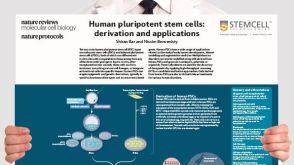 挂图Derivation and Applications of Human Pluripotent Stem Cells Overview of the derivation of human embryonic stem cells (hESCs) and induced pluripotent stem cells (iPSCs)
 产品手册Derive, Expand, and Differentiate Human Skeletal Muscle Progenitor Cells


 沪公网安备31010102008431号