Lee et al. (Feb 2025)
Stem Cell Research & Therapy 16 1
Autologous iPSC- and MSC-derived chondrocyte implants for cartilage repair in a miniature pig model
Induced pluripotent stem cell (iPSC)-derived mesenchymal stem cells (iMSCs) have greater potential for generating chondrocytes without hypertrophic and fibrotic phenotypes compared to bone marrow-derived mesenchymal stem/stromal cells (BMSCs). However,there is a lack of research demonstrating the use of autologous iMSCs for repairing articular chondral lesions in large animal models. In this study,we aimed to evaluate the effectiveness of autologous miniature pig (minipig) iMSC-chondrocyte (iMSC-Ch)-laden implants in comparison to autologous BMSC-chondrocyte (BMSC-Ch)-laden implants for cartilage repair in porcine femoral condyles. iMSCs and BMSCs were seeded into fibrin glue/nanofiber constructs and cultured with chondrogenic induction media for 7 days before implantation. To assess the regenerative capacity of the cells,19 skeletally mature Yucatan minipigs were randomly divided into microfracture control,acellular scaffold,iMSC,and BMSC subgroups. A cylindrical defect measuring 7 mm in diameter and 0.6 mm in depth was created on the articular cartilage surface without violating the subchondral bone. The defects were then left untreated or treated with acellular or cellular implants. Both cellular implant-treated groups exhibited enhanced joint repair compared to the microfracture and acellular control groups. Immunofluorescence analysis yielded significant findings,showing that cartilage treated with iMSC-Ch implants exhibited higher expression of COL2A1 and minimal to no expression of COL1A1 and COL10A1,in contrast to the BMSC-Ch-treated group. This indicates that the iMSC-Ch implants generated more hyaline cartilage-like tissue compared to the BMSC-Ch implants. Our findings contribute to filling the knowledge gap regarding the use of autologous iPSC derivatives for cartilage repair in a translational animal model. Moreover,these results highlight their potential as a safe and effective therapeutic strategy. The online version contains supplementary material available at 10.1186/s13287-025-04215-7.
View Publication
产品类型:
产品号#:
05230
05240
05445
产品名:
STEMdiff™ 三谱系分化试剂盒
STEMdiff™ 间充质祖细胞试剂盒
MesenCult™-ACF Plus培养基
(Jun 2024)
Nature Communications 15
The hexosamine biosynthetic pathway rescues lysosomal dysfunction in Parkinson’s disease patient iPSC derived midbrain neurons
Disrupted glucose metabolism and protein misfolding are key characteristics of age-related neurodegenerative disorders including Parkinson’s disease,however their mechanistic linkage is largely unexplored. The hexosamine biosynthetic pathway utilizes glucose and uridine-5’-triphosphate to generate N-linked glycans required for protein folding in the endoplasmic reticulum. Here we find that Parkinson’s patient midbrain cultures accumulate glucose and uridine-5’-triphosphate,while N-glycan synthesis rates are reduced. Impaired glucose flux occurred by selective reduction of the rate-limiting enzyme,GFPT2,through disrupted signaling between the unfolded protein response and the hexosamine pathway. Failure of the unfolded protein response and reduced N-glycosylation caused immature lysosomal hydrolases to misfold and accumulate,while accelerating glucose flux through the hexosamine pathway rescued hydrolase function and reduced pathological ?-synuclein. Our data indicate that the hexosamine pathway integrates glucose metabolism with lysosomal activity,and its failure in Parkinson’s disease occurs by uncoupling of the unfolded protein response-hexosamine pathway axis. These findings offer new methods to restore proteostasis by hexosamine pathway enhancement. Reduced glucose flux via the hexosamine pathway contributes to lysosomal dysfunction and protein accumulation in Parkinson patient iPSC-neurons. Enhancing the hexosamine pathway rescues lysosome activity and restores proteostasis.
View Publication
产品类型:
产品号#:
85850
85857
产品名:
mTeSR™1
mTeSR™1
Tidball AM et al. (JUL 2017)
Stem cell reports
Rapid Generation of Human Genetic Loss-of-Function iPSC Lines by Simultaneous Reprogramming and Gene Editing.
Specifically ablating genes in human induced pluripotent stem cells (iPSCs) allows for studies of gene function as well as disease mechanisms in disorders caused by loss-of-function (LOF) mutations. While techniques exist for engineering such lines,we have developed and rigorously validated a method of simultaneous iPSC reprogramming while generating CRISPR/Cas9-dependent insertions/deletions (indels). This approach allows for the efficient and rapid formation of genetic LOF human disease cell models with isogenic controls. The rate of mutagenized lines was strikingly consistent across experiments targeting four different human epileptic encephalopathy genes and a metabolic enzyme-encoding gene,and was more efficient and consistent than using CRISPR gene editing of established iPSC lines. The ability of our streamlined method to reproducibly generate heterozygous and homozygous LOF iPSC lines with passage-matched isogenic controls in a single step provides for the rapid development of LOF disease models with ideal control lines,even in the absence of patient tissue.
View Publication
产品类型:
产品号#:
05850
05857
05870
05875
05910
85850
85857
85870
85875
产品名:
mTeSR™1
mTeSR™1
A. Galiakberova et al. (Oct 2025)
Frontiers in Molecular Neuroscience 18
Transcriptomic profiling of neural cultures from the KYOU iPSC line via alternative differentiation protocols
The differentiation of pluripotent stem cells into neurons is an essential area of biomedical research,with significant implications for understanding neural development and treating neurological diseases. This study compares neural cultures derived from a common induced pluripotent stem cell line (KYOU-DXR0109B) generated by two widely adopted methods: DUAL SMAD inhibition and exogenous NGN2 overexpression. The DUAL SMAD inhibition method,which differentiates through the neural stem cell stage,produces heterogeneous cultures containing a mix of neurons,neural precursors,and glial cells. Conversely,NGN2 overexpression generates more homogeneous cultures composed predominantly of mature neurons. Transcriptomic analysis revealed significant differences in neural gene markers expression profiles,with cultures from the DUAL SMAD inhibition method enriched in neural stem cell and glial markers,while NGN2 overexpression cultures showed elevated markers for cholinergic and peripheral sensory neurons. This study underscores the importance of choosing appropriate differentiation protocols based on the desired cell types,as each method yields neural cultures with distinct cellular compositions. Understanding these differences can help optimize protocols for specific research and therapeutic applications.
View Publication
产品类型:
产品号#:
85850
85857
产品名:
mTeSR™1
mTeSR™1
Pei Y et al. (MAR 2015)
Scientific reports 5 9205
A platform for rapid generation of single and multiplexed reporters in human iPSC lines.
Induced pluripotent stem cells (iPSC) are important tools for drug discovery assays and toxicology screens. In this manuscript,we design high efficiency TALEN and ZFN to target two safe harbor sites on chromosome 13 and 19 in a widely available and well-characterized integration-free iPSC line. We show that these sites can be targeted in multiple iPSC lines to generate reporter systems while retaining pluripotent characteristics. We extend this concept to making lineage reporters using a C-terminal targeting strategy to endogenous genes that express in a lineage-specific fashion. Furthermore,we demonstrate that we can develop a master cell line strategy and then use a Cre-recombinase induced cassette exchange strategy to rapidly exchange reporter cassettes to develop new reporter lines in the same isogenic background at high efficiency. Equally important we show that this recombination strategy allows targeting at progenitor cell stages,further increasing the utility of the platform system. The results in concert provide a novel platform for rapidly developing custom single or dual reporter systems for screening assays.
View Publication
产品类型:
产品号#:
05850
05857
05870
05875
85850
85857
85870
85875
产品名:
mTeSR™1
mTeSR™1
D. R. Wakeman et al. ( 2017)
Stem cell reports 9 1 149--161
Cryopreservation Maintains Functionality of Human iPSC Dopamine Neurons and Rescues Parkinsonian Phenotypes In Vivo.
A major challenge for clinical application of pluripotent stem cell therapy for Parkinson's disease (PD) is large-scale manufacturing and cryopreservation of neurons that can be efficiently prepared with minimal manipulation. To address this obstacle,midbrain dopamine neurons were derived from human induced pluripotent stem cells (iPSC-mDA) and cryopreserved in large production lots for biochemical and transplantation studies. Cryopreserved,post-mitotic iPSC-mDA neurons retained high viability with gene,protein,and electrophysiological signatures consistent with midbrain floor-plate lineage. To test therapeutic efficacy,cryopreserved iPSC-mDA neurons were transplanted without subculturing into the 6-OHDA-lesioned rat and MPTP-lesioned non-human-primate models of PD. Grafted neurons retained midbrain lineage with extensive fiber innervation in both rodents and monkeys. Behavioral assessment in 6-OHDA-lesioned rats demonstrated significant reversal in functional deficits up to 6 months post transplantation with reinnervation of the host striatum and no aberrant growth,supporting the translational development of pluripotent cell-based therapies in PD.
View Publication
产品类型:
产品号#:
R1088
R1032
R1108
产品名:
Phetfong J et al. (JUL 2016)
Cell and Tissue Research 365 1 101--112
Cell type of origin influences iPSC generation and differentiation to cells of the hematoendothelial lineage
The use of induced pluripotent stem cells (iPSCs) as a source of cells for cell-based therapy in regenerative medicine is hampered by the limited efficiency and safety of the reprogramming procedure and the low efficiency of iPSC differentiation to specialized cell types. Evidence suggests that iPSCs retain an epigenetic memory of their parental cells with a possible influence on their differentiation capacity in vitro. We reprogramme three cell types,namely human umbilical cord vein endothelial cells (HUVECs),endothelial progenitor cells (EPCs) and human dermal fibroblasts (HDFs),to iPSCs and compare their hematoendothelial differentiation capacity. HUVECs and EPCs were at least two-fold more efficient in iPSC reprogramming than HDFs. Both HUVEC- and EPC-derived iPSCs exhibited high potentiality toward endothelial cell differentiation compared with HDF-derived iPSCs. However,only HUVEC-derived iPSCs showed efficient differentiation to hematopoietic stem/progenitor cells. Examination of DNA methylation at promoters of hematopoietic and endothelial genes revealed evidence for the existence of epigenetic memory at the endothelial genes but not the hematopoietic genes in iPSCs derived from HUVECs and EPCs indicating that epigenetic memory involves an endothelial differentiation bias. Our findings suggest that endothelial cells and EPCs are better sources for iPSC derivation regarding their reprogramming efficiency and that the somatic cell type used for iPSC generation toward specific cell lineage differentiation is of importance.
View Publication
Endocannabinoid system upregulates the enrichment and differentiation of human iPSC- derived spermatogonial stem cells via CB2R agonism
BackgroundMale factor infertility (MFI) is responsible for 50% of infertility cases and in 15% of the cases sperm is absent due to germ cell aplasia. Human induced pluripotent stem cell (hiPSC)-derived spermatogonial stem cells (hSSCs) could serve as an autologous germ cell source for MFI in patients with an insufficient sperm yield for assisted reproductive technology (ART). The endocannabinoid system (ECS) has been implicated to play a role in mouse embryonic stem cells (mESCs) and the human testicular environment. However,the contribution of the ECS in hiPSCs and hiPSC-derived hSSCs is currently unknown. Here,we aimed to assess whether hiPSCs and hiPSC-derived hSSCs are regulated by components of the ECS and whether manipulation of the ECS could increase the yield of hiPSC-derived SSCs and serve as an autologous cell-based source for treatment of MFI.MethodsWe reprogrammed human dermal fibroblasts (hDFs) to hiPSCs,induced differentiation of hSSC from hiPSCs and evaluated the presence of ECS ligands (AEA,2-AG) by LC/MS,receptors (CB1R,CB2R,TRPV1,GPR55) by qPCR,flow cytometry and immunofluorescent labeling. We then examined the efficacy of endogenous and synthetic selective ligands (ACPA,CB65,CSP,ML184) on proliferation of hiPSCs using real-time cell analysis (RTCA) and assessed the effects of on CB2R agonism on hiPSC pluripotency and differentiation to hSSCs.ResultshiPSCs from hDFs expressed the pluripotency markers OCT4,SOX2,NANOG,SSEA4 and TRA-1-60; and could be differentiated into ID4+,PLZF?+?hSSCs. hiPSCs and hiPSC-derived hSSCs secreted AEA and 2-AG at 10??10 ??10??9 M levels. Broad expression of all ECS receptors was observed in both hiPSCs and hiPSC-derived hSSCs,with a higher CB2R expression in hSSCs in comparison to hiPSCs. CB2R agonist CB65 promoted proliferation and differentiation of hiPSCs to hiPSC-hSSCs in comparison to AEA,2-AG,ACPA,CSP and ML184. The EC50 of CB65 was determined to be 2.092?×?10??8 M for support of pluripotency and preservation of stemness on hiPSCs from 78 h. CB65 stimulation at EC50 also increased the yield of ID4?+?hSSCs,PLZF?+?SSPCs and SCP3?+?spermatocytes from day 10 to 12.ConclusionsWe demonstrated here for the first time that stimulation of CB2R results in an increased yield of hiPSCs and hiPSC-derived hSSCs. CB65 is a potent CB2R agonist that can be used to increase the yield of hiPSC-derived hSSCs offering an alternative source of autologous male germ cells for patients with MFI. Increasing the male germ/stem cell pool by CB65 supplementation could be part of the ART-associated protocols in MFI patients with complete germ cell aplasia.Supplementary InformationThe online version contains supplementary material available at 10.1186/s40659-025-00596-4.
View Publication
产品类型:
产品号#:
05230
100-0483
100-0484
100-0276
100-1130
产品名:
STEMdiff™ 三谱系分化试剂盒
Hausser Scientificᵀᴹ 明线血球计数板
ReLeSR™
mTeSR™ Plus
mTeSR™ Plus
Srinivasakumar N et al. (DEC 2013)
PeerJ 1 e224
Gammaretroviral vector encoding a fluorescent marker to facilitate detection of reprogrammed human fibroblasts during iPSC generation.
Induced pluripotent stem cells (iPSCs) are becoming mainstream tools to study mechanisms of development and disease. They have a broad range of applications in understanding disease processes,in vitro testing of novel therapies,and potential utility in regenerative medicine. Although the techniques for generating iPSCs are becoming more straightforward,scientists can expend considerable resources and time to establish this technology. A major hurdle is the accurate determination of valid iPSC-like colonies that can be selected for further cloning and characterization. In this study,we describe the use of a gammaretroviral vector encoding a fluorescent marker,mRFP1,to not only monitor the efficiency of initial transduction but also to identify putative iPSC colonies through silencing of mRFP1 gene as a consequence of successful reprogramming.
View Publication
(May 2025)
Clinical and Translational Medicine 15 5
Screening of candidate analgesics using a patient?derived human iPSC model of nociception identifies putative compounds for therapeutic treatment
Background and purpose: In this study,we applied an induced pluripotent stem cell (iPSC)-based model of inherited erythromelalgia (IEM) to screen a library of 281 small molecules,aiming to identify candidate pain-modulating compounds. Experimental approach: Human iPSC-derived sensory neuron-like cells,which exhibit action potentials in response to noxious stimulation,were evaluated using whole-cell patch-clamp and microelectrode array (MEA) techniques. Key results: Sensory neuron-like cells derived from individuals with IEM showed spontaneous electrical activity characteristic of genetic pain disorders. The drug screen identified four compounds (AZ106,AZ129,AZ037 and AZ237) that significantly decreased spontaneous firing with minimal toxicity. The calculated IC50 values indicate the potential efficacy of these compounds. Electrophysiological analysis confirmed the compounds' ability to reduce action potential generation in IEM patient-specific iPSC-derived sensory neuron-like cells. Conclusions and implications: Our screening approach demonstrates the reproducibility and effectiveness of human neuronal disease modelling offering a promising avenue for discovering new analgesics. These findings address a critical gap in current therapeutic strategies for both general and neuropathic pain,warranting further investigation. This study highlights the innovative use of patient-derived iPSC sensory neuronal models in pain research and emphasises the potential for personalised medicine in developing targeted analgesics. Key points: Utilisation of human iPSCs for efficient differentiation into sensory neuron-like cells offers a novel strategy for studying pain mechanisms. IEM sensory neuron-like cells exhibit key biomarkers and generate action potentials in response to noxious stimulation. IEM sensory neuron-like cells display spontaneous electrical activity,providing a relevant nociceptive model. Screening of 281 compounds identified four candidates that significantly reduced spontaneous firing with low cytotoxicity. Electrophysiological profiling of selected compounds revealed promising insights into their mechanisms of action,specifically modulating the NaV 1.7 channel for targeted analgesia.
View Publication


 EasySep™小鼠TIL(CD45)正选试剂盒




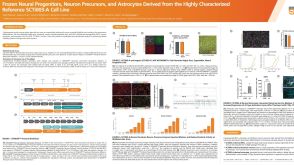 科学海报Frozen Neural Progenitors, Neuron Precursors, and Astrocytes Derived from the Highly Characterized Reference iPSC Line, SCTi003-A

 沪公网安备31010102008431号