Jaramillo M and Banerjee I (MAR 2012)
Journal of visualized experiments : JoVE 61 2--7
Endothelial cell co-culture mediates maturation of human embryonic stem cell to pancreatic insulin producing cells in a directed differentiation approach.
Embryonic stem cells (ESC) have two main characteristics: they can be indefinitely propagated in vitro in an undifferentiated state and they are pluripotent,thus having the potential to differentiate into multiple lineages. Such properties make ESCs extremely attractive for cell based therapy and regenerative treatment applications. However for its full potential to be realized the cells have to be differentiated into mature and functional phenotypes,which is a daunting task. A promising approach in inducing cellular differentiation is to closely mimic the path of organogenesis in the in vitro setting. Pancreatic development is known to occur in specific stages,starting with endoderm,which can develop into several organs,including liver and pancreas. Endoderm induction can be achieved by modulation of the nodal pathway through addition of Activin A in combination with several growth factors. Definitive endoderm cells then undergo pancreatic commitment by inhibition of sonic hedgehog inhibition,which can be achieved in vitro by addition of cyclopamine. Pancreatic maturation is mediated by several parallel events including inhibition of notch signaling; aggregation of pancreatic progenitors into 3-dimentional clusters; induction of vascularization; to name a few. By far the most successful in vitro maturation of ESC derived pancreatic progenitor cells have been achieved through inhibition of notch signaling by DAPT supplementation. Although successful,this results in low yield of the mature phenotype with reduced functionality. A less studied area is the effect of endothelial cell signaling in pancreatic maturation,which is increasingly being appreciated as an important contributing factor in in-vivo pancreatic islet maturation. The current study explores such effect of endothelial cell signaling in maturation of human ESC derived pancreatic progenitor cells into insulin producing islet-like cells. We report a multi-stage directed differentiation protocol where the human ESCs are first induced towards endoderm by Activin A along with inhibition of PI3K pathway. Pancreatic specification of endoderm cells is achieved by inhibition of sonic hedgehog signaling by Cyclopamine along with retinoid induction by addition of Retinoic Acid. The final stage of maturation is induced by endothelial cell signaling achieved by a co-culture configuration. While several endothelial cells have been tested in the co-culture,herein we present our data with rat heart microvascular endothelial Cells (RHMVEC),primarily for the ease of analysis.
View Publication
产品类型:
产品号#:
05850
05857
05870
05875
85850
85857
85870
85875
产品名:
mTeSR™1
mTeSR™1
Tzeng Y-S et al. (JAN 2011)
Blood 117 2 429--39
Loss of Cxcl12/Sdf-1 in adult mice decreases the quiescent state of hematopoietic stem/progenitor cells and alters the pattern of hematopoietic regeneration after myelosuppression.
The C-X-C-type chemokine Cxcl12,also known as stromal cell-derived factor-1,plays a critical role in hematopoiesis during fetal development. However,the functional requirement of Cxcl12 in the adult hematopoietic stem/progenitor cell (HSPC) regulation was still unclear. In this report,we developed a murine Cxcl12 conditional deletion model in which the target gene can be deleted at the adult stage. We found that loss of stroma-secreted Cxcl12 in the adult led to expansion of the HSPC population as well as a reduction in long-term quiescent stem cells. In Cxcl12-deficient bone marrow,HSPCs were absent along the endosteal surface,and blood cell regeneration occurred predominantly in the perisinusoidal space after 5-fluorouracil myelosuppression challenge. Our results indicate that Cxcl12 is required for HSPC homeostasis regulation and is an important factor for osteoblastic niche organization in adult stage bone marrow.
View Publication
产品类型:
产品号#:
03434
03444
产品名:
MethoCult™ GF M3434
MethoCult™ GF M3434
Nakamura Y et al. (SEP 2010)
Blood 116 9 1422--32
Isolation and characterization of endosteal niche cell populations that regulate hematopoietic stem cells.
The endosteal niche is critical for the maintenance of hematopoietic stem cells (HSCs). However,it consists of a heterogeneous population in terms of differentiation stage and function. In this study,we characterized endosteal cell populations and examined their ability to maintain HSCs. Bone marrow endosteal cells were subdivided into immature mesenchymal cell-enriched ALCAM(-)Sca-1(+) cells,osteoblast-enriched ALCAM(+)Sca-1(-),and ALCAM(-)Sca-1(-) cells. We found that all 3 fractions maintained long-term reconstitution (LTR) activity of HSCs in an in vitro culture. In particular,ALCAM(+)Sca-1(-) cells significantly enhanced the LTR activity of HSCs by the up-regulation of homing- and cell adhesion-related genes in HSCs. Microarray analysis showed that ALCAM(-)Sca-1(+) fraction highly expressed cytokine-related genes,whereas the ALCAM(+)Sca-1(-) fraction expressed multiple cell adhesion molecules,such as cadherins,at a greater level than the other fractions,indicating that the interaction between HSCs and osteoblasts via cell adhesion molecules enhanced the LTR activity of HSCs. Furthermore,we found an osteoblastic marker(low/-) subpopulation in ALCAM(+)Sca-1(-) fraction that expressed cytokines,such as Angpt1 and Thpo,and stem cell marker genes. Altogether,these data suggest that multiple subsets of osteoblasts and mesenchymal progenitor cells constitute the endosteal niche and regulate HSCs in adult bone marrow.
View Publication
产品类型:
产品号#:
03434
03444
产品名:
MethoCult™ GF M3434
MethoCult™ GF M3434
Li J et al. (MAR 2006)
Proceedings of the National Academy of Sciences of the United States of America 103 10 3557--62
Human antibodies for immunotherapy development generated via a human B cell hybridoma technology.
Current strategies for the production of therapeutic mAbs include the use of mammalian cell systems to recombinantly produce Abs derived from mice bearing human Ig transgenes,humanization of rodent Abs,or phage libraries. Generation of hybridomas secreting human mAbs has been previously reported; however,this approach has not been fully exploited for immunotherapy development. We previously reported the use of transient regulation of cellular DNA mismatch repair processes to enhance traits (e.g.,affinity and titers) of mAb-producing cell lines,including hybridomas. We reasoned that this process,named morphogenics,could be used to improve suboptimal hybridoma cells generated by means of ex vivo immunization and immortalization of antigen-specific human B cells for therapeutic Ab development. Here we present a platform process that combines hybridoma and morphogenics technologies for the generation of fully human mAbs specific for disease-associated human antigens. We were able to generate hybridoma lines secreting mAbs with high binding specificity and biological activity. One mAb with strong neutralizing activity against human granulocyte-macrophage colony-stimulating factor was identified that is now considered for preclinical development for autoimmune disease indications. Moreover,these hybridoma cells have proven suitable for genetic optimization using the morphogenics process and have shown potential for large-scale manufacturing.
View Publication
产品类型:
产品号#:
18052
18052RF
18054
18054RF
产品名:
Webb CF et al. (MAR 2011)
Molecular and cellular biology 31 5 1041--53
The ARID family transcription factor bright is required for both hematopoietic stem cell and B lineage development.
Bright/Arid3a has been characterized both as an activator of immunoglobulin heavy-chain transcription and as a proto-oncogene. Although Bright expression is highly B lineage stage restricted in adult mice,its expression in the earliest identifiable hematopoietic stem cell (HSC) population suggests that Bright might have additional functions. We showed that textgreater99% of Bright(-/-) embryos die at midgestation from failed hematopoiesis. Bright(-/-) embryonic day 12.5 (E12.5) fetal livers showed an increase in the expression of immature markers. Colony-forming assays indicated that the hematopoietic potential of Bright(-/-) mice is markedly reduced. Rare survivors of lethality,which were not compensated by the closely related paralogue Bright-derived protein (Bdp)/Arid3b,suffered HSC deficits in their bone marrow as well as B lineage-intrinsic developmental and functional deficiencies in their peripheries. These include a reduction in a natural antibody,B-1 responses to phosphocholine,and selective T-dependent impairment of IgG1 class switching. Our results place Bright/Arid3a on a select list of transcriptional regulators required to program both HSC and lineage-specific differentiation.
View Publication
产品类型:
产品号#:
03434
03444
产品名:
MethoCult™ GF M3434
MethoCult™ GF M3434
Goyama S et al. (DEC 2004)
Blood 104 12 3558--64
The transcriptionally active form of AML1 is required for hematopoietic rescue of the AML1-deficient embryonic para-aortic splanchnopleural (P-Sp) region.
Acute myelogenous leukemia 1 (AML1; runt-related transcription factor 1 [Runx1]) is a member of Runx transcription factors and is essential for definitive hematopoiesis. Although AML1 possesses several subdomains of defined biochemical functions,the physiologic relevance of each subdomain to hematopoietic development has been poorly understood. Recently,the consequence of carboxy-terminal truncation in AML1 was analyzed by the hematopoietic rescue assay of AML1-deficient mouse embryonic stem cells using the gene knock-in approach. Nonetheless,a role for specific internal domains,as well as for mutations found in a human disease,of AML1 remains to be elucidated. In this study,we established an experimental system to efficiently evaluate the hematopoietic potential of AML1 using a coculture system of the murine embryonic para-aortic splanchnopleural (P-Sp) region with a stromal cell line,OP9. In this system,the hematopoietic defect of AML1-deficient P-Sp can be rescued by expressing AML1 with retroviral infection. By analysis of AML1 mutants,we demonstrated that the hematopoietic potential of AML1 was closely related to its transcriptional activity. Furthermore,we showed that other Runx transcription factors,Runx2/AML3 or Runx3/AML2,could rescue the hematopoietic defect of AML1-deficient P-Sp. Thus,this experimental system will become a valuable tool to analyze the physiologic function and domain contribution of Runx proteins in hematopoiesis.
View Publication
产品类型:
产品号#:
03434
03444
产品名:
MethoCult™ GF M3434
MethoCult™ GF M3434
Miller TW et al. (APR 2011)
Clinical cancer research : an official journal of the American Association for Cancer Research 17 7 2024--34
A gene expression signature from human breast cancer cells with acquired hormone independence identifies MYC as a mediator of antiestrogen resistance.
PURPOSE: Although most patients with estrogen receptor α (ER)-positive breast cancer initially respond to endocrine therapy,many ultimately develop resistance to antiestrogens. However,mechanisms of antiestrogen resistance and biomarkers predictive of such resistance are underdeveloped. EXPERIMENTAL DESIGN: We adapted four ER(+) human breast cancer cell lines to grow in an estrogen-depleted medium. A gene signature of estrogen independence was developed by comparing expression profiles of long-term estrogen-deprived (LTED) cells to their parental counterparts. We evaluated the ability of the LTED signature to predict tumor response to neoadjuvant therapy with an aromatase inhibitor and disease outcome following adjuvant tamoxifen. We utilized Gene Set Analysis (GSA) of LTED cell gene expression profiles and a loss-of-function approach to identify pathways causally associated with resistance to endocrine therapy. RESULTS: The LTED gene expression signature was predictive of high tumor cell proliferation following neoadjuvant therapy with anastrozole and letrozole,each in different patient cohorts. This signature was also predictive of poor recurrence-free survival in two studies of patients treated with adjuvant tamoxifen. Bioinformatic interrogation of expression profiles in LTED cells revealed a signature of MYC activation. The MYC activation signature and high MYC protein levels were both predictive of poor outcome following tamoxifen therapy. Finally,knockdown of MYC inhibited LTED cell growth. CONCLUSIONS: A gene expression signature derived from ER(+) breast cancer cells with acquired hormone independence predicted tumor response to aromatase inhibitors and associated with clinical markers of resistance to tamoxifen. Activation of the MYC pathway was associated with this resistance.
View Publication
Lin T et al. (NOV 2009)
Nature methods 6 11 805--8
A chemical platform for improved induction of human iPSCs.
The slow kinetics and low efficiency of reprogramming methods to generate human induced pluripotent stem cells (iPSCs) impose major limitations on their utility in biomedical applications. Here we describe a chemical approach that dramatically improves (200-fold) the efficiency of iPSC generation from human fibroblasts,within seven days of treatment. This will provide a basis for developing safer,more efficient,nonviral methods for reprogramming human somatic cells.
View Publication
Maeda M et al. (JAN 2006)
The Journal of biological chemistry 281 1 59--68
Src activation is not necessary for transforming growth factor (TGF)-beta-mediated epithelial to mesenchymal transitions (EMT) in mammary epithelial cells. PP1 directly inhibits TGF-beta receptors I and II.
Epithelial to mesenchymal transitions (EMTs) are key events during embryonic development and cancer progression. It has been proposed that Src plays a major role in some EMT models,as shown by the overexpression of viral Src (v-Src) in epithelial cells. It is clear that Src family kinases can regulate the integrity of both adherens junctions and focal adhesions; however,their significance in EMT,especially in the physiological context,remains to be elucidated. Here we showed that Src is activated in transforming growth factor-beta1 (TGF-beta1)-mediated EMT in mammary epithelial cells and that the Src family kinase inhibitor,PP1,prevents EMT. However,neither a more specific Src family kinase inhibitor,SU6656,nor a dominant-negative Src inhibited TGF-beta1-mediated EMT,leading us to speculate that Src activation is not an essential component of TGF-beta1-mediated EMT. Unexpectedly,PP1 prevented Smad2/3 activation by TGF-beta1,whereas SU6656 did not. Most interestingly,an in vitro kinase assay showed that PP1 strongly inhibited the TGF-beta receptor type I,and to a lesser extent,the TGF-beta receptor type II. Taken together,our data indicated that PP1 interferes with TGF-beta1-mediated EMT not by inhibiting Src family kinases but by inhibiting the Smad pathway via a direct inhibition of TGF-beta receptor kinase activity.
View Publication
产品类型:
产品号#:
73112
73114
产品名:
PP1
PP1
Ludwig T et al. (SEP 2007)
Current protocols in stem cell biology Chapter 1 September Unit 1C.2
Defined, Feeder-Independent Medium for Human Embryonic Stem Cell Culture
The developmental potential of human ES cells makes them an important tool in developmental,pharmacological,and clinical research. For human ES cell technology to be fully exploited,however,culture efficiency must be improved,large-scale culture enabled,and safety ensured. Traditional human ES cell culture systems have relied on serum products and mouse feeder layers,which limit the scale,present biological variability,and expose the cells to potential contaminants. Defined,feeder-independent culture systems improve the safety and efficiency of ES cell technology,enabling translational research. The protocols herein are designed with the standard research laboratory in mind. They contain recipes for the formulation of mTeSR (a defined medium for human ES cell culture) and detailed protocols for the culture,transfer,and passage of cells grown in these feeder-independent conditions. They provide a basis for routine feeder-independent culture,and a starting point for additional optimization of culture conditions.
View Publication


 EasySep™小鼠TIL(CD45)正选试剂盒




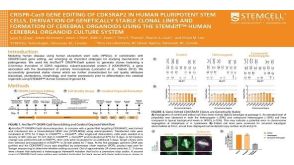 科学海报CRISPR-Cas9 Gene Editing Of CDK5RAP2 In Human Pluripotent Stem Cells, Derivation Of Genetically Stable Clonal Lines And Formation Of Cerebral Organoids

 沪公网安备31010102008431号