Y-L. Chiang et al. (Dec 2025)
International Journal of Molecular Sciences 27 1
Induced Pluripotent Stem Cell-Derived Dendritic Cells Provide a Reliable In Vitro Platform for Functional Screening of Immunoregulatory Probiotics
The immunoregulatory effects of probiotics have been widely studied,particularly in maintaining immune balance. Conventional in vitro functional screening of probiotics relies on fresh donor-derived primary immune cells,which often exhibit significant inter-individual and temporal variability,limiting reproducibility and interpretation. As an alternative,human-induced pluripotent stem cell (iPSC)-derived dendritic cells were co-cultured with five probiotic strains in the current study to evaluate their immunomodulatory interactions. To assess whether cytokines produced by probiotic-stimulated dendritic cells can influence T cell differentiation,human CD4+ T cells were exposed to the conditioned medium derived from co-cultures. Enzyme-linked immunosorbent assay results demonstrated that iPSC-derived dendritic cells secreted cytokines at distinct concentrations in response to different probiotic strains,suggesting that these cells can distinguish between different microbial stimuli,and supporting their use in functional probiotic screening. Among the five strains tested,Lactiplantibacillus plantarum LPA-56,Limosilactobacillus reuteri RU-23,and Lactobacillus fermentum Fem-99 induced cytokine production levels that promoted the differentiation of the human CD4+ T cells into regulatory T cells. These findings demonstrate that iPSC-derived dendritic cells have immunomodulatory potential,are reliable for in vitro screening of probiotics,and offer a promising strategy for selecting potent immunoregulatory probiotic candidates.
View Publication
Kwant-Mitchell A et al. (OCT 2009)
Journal of virology 83 20 10664--76
Mucosal innate and adaptive immune responses against herpes simplex virus type 2 in a humanized mouse model.
Genital herpes,caused by herpes simplex virus type 2 (HSV-2),is one of the most prevalent sexually transmitted diseases worldwide and a risk factor for acquiring human immunodeficiency virus. Although many vaccine candidates have shown promising results in animal models,they have failed to be effective in human trials. In this study,a humanized mouse strain was evaluated as a potential preclinical model for studying human immune responses to HSV-2 infection and vaccination. Immunodeficient mouse strains were examined for their abilities to develop human innate and adaptive immune cells after transplantation of human umbilical cord stem cells. A RAG2(-/-) gammac(-/-) mouse strain with a BALB/c background was chosen as the most appropriate model and was then examined for its ability to mount innate and adaptive immune responses to intravaginal HSV-2 infection and immunization. After primary infection,human cells in the lymph nodes were able to generate a protective innate immune response and produce gamma interferon (IFN-gamma). After intravaginal immunization and infection,human T cells and NK cells were found in the genital tract and iliac lymph nodes. In addition,human T cells in the spleen,lymph nodes,and vaginal tract were able to respond to stimulation with HSV-2 antigens by replicating and producing IFN-gamma. Human B cells were also able to produce HSV-2-specific immunoglobulin G. These adaptive responses were also shown to be protective and reduce local viral replication in the genital tract. This approach provides a means for studying human immune responses in vivo using a small-animal model and may become an important preclinical tool.
View Publication
产品类型:
产品号#:
07806
07906
产品名:
HetaSep™
HetaSep™
Chen X et al. (JUL 2006)
Proceedings of the National Academy of Sciences of the United States of America 103 27 10346--51
CD28-stimulated ERK2 phosphorylation is required for polarization of the microtubule organizing center and granules in YTS NK cells.
Activation of natural killer (NK) cell cytotoxicity requires adhesion and formation of a conjugate with a susceptible target cell,followed by actin polymerization,and polarization of the microtubule organizing center (MTOC) and cytolytic granules to the NK cell immune synapse. Here,by using the YTS NK cell line as a model,CD28 is shown to be an activating receptor. It signals cytotoxicity in a process dependent on phosphoinositide-3 kinase activation,leading to sustained extracellular signal-regulated kinase 2 (ERK2) phosphorylation. ERK and phospho-ERK localize to microtubule filaments. Neither conjugation with targets nor actin polymerization is affected by blocking ERK2 activation. However,both polarization of the MTOC and cytolytic granules to the synaptic region and NK cell cytotoxicity are strongly reduced by blocking ERK2 activation. A role for the CD28/CD80 interaction in cytotoxicity of human peripheral NK cells also was established. By contrast,lymphocyte function-associated antigen 1 (LFA-1) ligation transduces only a transient ERK2 activation and fails to induce killing in YTS cells. Thus,in YTS cells,a CD28 signal is used to polarize the MTOC and cytolytic granules to the NK cell immune synapse by stimulating sustained ERK2 activation.
View Publication
产品类型:
产品号#:
05150
15025
15065
产品名:
MyeloCult™H5100
RosetteSep™人NK细胞富集抗体混合物
RosetteSep™人NK细胞富集抗体混合物
Zhu Y et al. (JAN 2013)
PLoS ONE 8 1 e54552
Three-Dimensional Neuroepithelial Culture from Human Embryonic Stem Cells and Its Use for Quantitative Conversion to Retinal Pigment Epithelium
A goal in human embryonic stem cell (hESC) research is the faithful differentiation to given cell types such as neural lineages. During embryonic development,a basement membrane surrounds the neural plate that forms a tight,apico-basolaterally polarized epithelium before closing to form a neural tube with a single lumen. Here we show that the three-dimensional epithelial cyst culture of hESCs in Matrigel combined with neural induction results in a quantitative conversion into neuroepithelial cysts containing a single lumen. Cells attain a defined neuroepithelial identity by 5 days. The neuroepithelial cysts naturally generate retinal epithelium,in part due to IGF-1/insulin signaling. We demonstrate the utility of this epithelial culture approach by achieving a quantitative production of retinal pigment epithelial (RPE) cells from hESCs within 30 days. Direct transplantation of this RPE into a rat model of retinal degeneration without any selection or expansion of the cells results in the formation of a donor-derived RPE monolayer that rescues photoreceptor cells. The cyst method for neuroepithelial differentiation of pluripotent stem cells is not only of importance for RPE generation but will also be relevant to the production of other neuronal cell types and for reconstituting complex patterning events from three-dimensional neuroepithelia.
View Publication
Porayette P et al. (DEC 2007)
Biochemical and biophysical research communications 364 3 522--527
Amyloid-?? precursor protein expression and modulation in human embryonic stem cells: A novel role for human chorionic gonadotropin
The amyloid-beta precursor protein (AbetaPP) is a ubiquitously expressed adhesion and neuritogenic protein whose processing has previously been shown to be regulated by reproductive hormones including the gonadotropin luteinizing hormone (LH) in human neuroblastoma cells. We report for the first time the expression of AbetaPP in human embryonic stem (hES) cells at the mRNA and protein levels. Using N- and C-terminal antibodies against AbetaPP,we detected both the mature and immature forms of AbetaPP as well as truncated variants ( approximately 53kDa,47kDa,and 29kDa) by immunoblot analyses. Expression of AbetaPP is regulated by both the stemness of the cells and pregnancy-associated hormones. Addition of human chorionic gonadotropin,the fetal equivalent of LH that is dramatically elevated during pregnancy,markedly increased the expression of all AbetaPP forms. These results indicate a critical molecular signaling link between the hormonal environment of pregnancy and the expression of AbetaPP in hES cells that is suggestive of an important function for this protein during early human embryogenesis prior to the formation of neural precursor cells.
View Publication
产品类型:
产品号#:
85850
85857
产品名:
mTeSR™1
mTeSR™1
Ahmad S et al. (JUN 2008)
Stem cells (Dayton,Ohio) 26 6 1609--19
A putative role for RHAMM/HMMR as a negative marker of stem cell-containing population of human limbal epithelial cells.
The corneal epithelium is maintained by stem cells located at the periphery of the cornea in a region known as the limbus. Depletion of limbal stem cells (LSCs) results in limbal stem cell deficiency. Treatments for this disease are based on limbal replacement or transplantation of ex vivo expanded LSCs. It is,therefore,crucial to identify cell surface markers for LSCs that can be used for their enrichment and characterization. Aldehyde dehydrogenases (ALDHs) are enzymes which protect cells from the toxic effects of peroxidic aldehydes. In this manuscript,we show for the first time that ALDH1 is absent from the basal cells of the limbal and corneal epithelium. We separated limbal epithelial cells on the basis of ALDH activity and showed that ALDH(dim) cells expressed significantly higher levels of DeltaNp63 and ABCG2 as well as having a greater colony forming efficiency (CFE) when compared to ALDH(bright) cells. Large scale transcriptional analysis of these two populations led to identification of a new cell surface marker,RHAMM/HMMR,which is located in all layers of corneal epithelium and in the suprabasal layers of the limbal epithelium but is completely absent from the basal layer of the limbus. Our studies indicate that absence of RHAMM/HMMR expression is correlated with properties associated with LSCs. RHAMM/HMMR- limbal epithelial cells are smaller in size,express negligible CK3,have higher levels of DeltaNp63 and have a higher CFE compared to RHAMM/HMMR+ cells. Taken together these results suggest a putative role for RHAMM/ HMMR as a negative marker of stem cell containing limbal epithelial cells. Cell selection based on Hoechst exclusion and lack of cell surface RHAMM/HMMR expression resulted in increased colony forming efficiency compared to negative selection using RHAMM/HMMR alone or positive selection using Hoechst on its own. Combination of these two cell selection methods presents a novel method for LSC enrichment and characterization. Disclosure of potential conflicts of interest is found at the end of this article.
View Publication
产品类型:
产品号#:
01700
01705
01702
产品名:
ALDEFLUOR™ 试剂盒
ALDEFLUOR™ DEAB试剂
ALDEFLUOR™测定缓冲液
Q. Haas et al. ( 2022)
Frontiers in immunology 13 996746
Siglec-7 represents a glyco-immune checkpoint for non-exhausted effector memory CD8+ T cells with high functional and metabolic capacities.
While inhibitory Siglec receptors are known to regulate myeloid cells,less is known about their expression and function in lymphocytes subsets. Here we identified Siglec-7 as a glyco-immune checkpoint expressed on non-exhausted effector memory CD8+ T cells that exhibit high functional and metabolic capacities. Seahorse analysis revealed higher basal respiration and glycolysis levels of Siglec-7+ CD8+ T cells in steady state,and particularly upon activation. Siglec-7 polarization into the T cell immune synapse was dependent on sialoglycan interactions in trans and prevented actin polarization and effective T cell responses. Siglec-7 ligands were found to be expressed on both leukemic stem cells and acute myeloid leukemia (AML) cells suggesting the occurrence of glyco-immune checkpoints for Siglec-7+ CD8+ T cells,which were found in patients' peripheral blood and bone marrow. Our findings project Siglec-7 as a glyco-immune checkpoint and therapeutic target for T cell-driven disorders and cancer.
View Publication
产品类型:
产品号#:
17953
17953RF
100-0710
产品名:
EasySep™人CD8+ T细胞分选试剂盒
RoboSep™ 人CD8+ T细胞分选试剂盒
EasySep™人CD8+ T细胞分选试剂盒
Murphy SV et al. (JAN 2013)
Journal of biomedical materials research. Part A 101 1 272--84
Evaluation of hydrogels for bio-printing applications.
In the United States alone,there are approximately 500,000 burn injuries that require medical treatment every year. Limitations of current treatments necessitate the development of new methods that can be applied quicker,result in faster wound regeneration,and yield skin that is cosmetically similar to undamaged skin. The development of new hydrogel biomaterials and bioprinting deposition technologies has provided a platform to address this need. Herein we evaluated characteristics of twelve hydrogels to determine their suitability for bioprinting applications. We chose hydrogels that are either commercially available,or are commonly used for research purposes. We evaluated specific hydrogel properties relevant to bioprinting applications,specifically; gelation time,swelling or contraction,stability,biocompatibility and printability. Further,we described regulatory,commercial and financial aspects of each of the hydrogels. While many of the hydrogels screened may exhibit characteristics suitable for other applications,UV-crosslinked Extracel,a hyaluronic acid-based hydrogel,had many of the desired properties for our bioprinting application. Taken together with commercial availability,shelf life,potential for regulatory approval and ease of use,these materials hold the potential to be further developed into fast and effective wound healing treatments.
View Publication


 EasySep™小鼠TIL(CD45)正选试剂盒




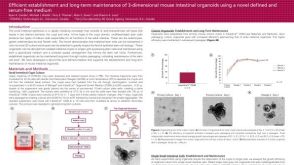 科学海报Efficient Establishment and Long-Term Maintenance of 3-Dimensional Mouse Intestinal Organoids Using a Novel Defined and Serum-Free Medium
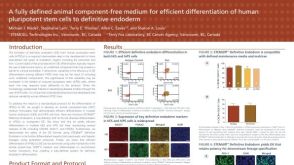 科学海报A Fully Defined Animal Component Free Medium for Efficient Differentiation of Human Pluripotent Stem Cells to Definitive Endoderm

 沪公网安备31010102008431号