Antisense oligonucleotide therapeutic approach for Timothy syndrome
Timothy syndrome (TS) is a severe,multisystem disorder characterized by autism,epilepsy,long-QT syndrome and other neuropsychiatric conditions 1 . TS type 1 (TS1) is caused by a gain-of-function variant in the alternatively spliced and developmentally enriched CACNA1C exon 8A,as opposed to its counterpart exon 8. We previously uncovered several phenotypes in neurons derived from patients with TS1,including delayed channel inactivation,prolonged depolarization-induced calcium rise,impaired interneuron migration,activity-dependent dendrite retraction and an unanticipated persistent expression of exon 8A 2 – 6 . We reasoned that switching CACNA1C exon utilization from 8A to 8 would represent a potential therapeutic strategy. Here we developed antisense oligonucleotides (ASOs) to effectively decrease the inclusion of exon 8A in human cells both in vitro and,following transplantation,in vivo. We discovered that the ASO-mediated switch from exon 8A to 8 robustly rescued defects in patient-derived cortical organoids and migration in forebrain assembloids. Leveraging a transplantation platform previously developed 7,we found that a single intrathecal ASO administration rescued calcium changes and in vivo dendrite retraction of patient neurons,suggesting that suppression of CACNA1C exon 8A expression is a potential treatment for TS1. Broadly,these experiments illustrate how a multilevel,in vivo and in vitro stem cell model-based approach can identify strategies to reverse disease-relevant neural pathophysiology. Subject terms: Autism spectrum disorders,Development of the nervous system
View Publication
Casazza A et al. (APR 2011)
Arteriosclerosis,thrombosis,and vascular biology 31 4 741--9
Systemic and targeted delivery of semaphorin 3A inhibits tumor angiogenesis and progression in mouse tumor models.
OBJECTIVE: The role of semaphorins in tumor progression is still poorly understood. In this study,we aimed at elucidating the regulatory role of semaphorin 3A (SEMA3A) in primary tumor growth and metastatic dissemination. METHODS AND RESULTS: We used 3 different experimental approaches in mouse tumor models: (1) overexpression of SEMA3A in tumor cells,(2) systemic expression of SEMA3A following liver gene transfer in mice,and (3) tumor-targeted release of SEMA3A using gene modified Tie2-expressing monocytes as delivery vehicles. In each of these experimental settings,SEMA3A efficiently inhibited tumor growth by inhibiting vessel function and increasing tumor hypoxia and necrosis,without promoting metastasis. We further show that the expression of the receptor neuropilin-1 in tumor cells is required for SEMA3A-dependent inhibition of tumor cell migration in vitro and metastatic spreading in vivo. CONCLUSIONS: In sum,both systemic and tumor-targeted delivery of SEMA3A inhibits tumor angiogenesis and tumor growth in multiple mouse models; moreover,SEMA3A inhibits the metastatic spreading from primary tumors. These data support the rationale for further investigation of SEMA3A as an anticancer molecule.
View Publication
产品类型:
产品号#:
09600
09650
产品名:
StemSpan™ SFEM
StemSpan™ SFEM
Punzel M et al. (APR 2003)
Experimental hematology 31 4 339--47
The symmetry of initial divisions of human hematopoietic progenitors is altered only by the cellular microenvironment.
OBJECTIVE: We examined if cellular elements or adhesive ligands were able to alter asymmetric divisions of CD34(+)/CD38(-) cells in contrast to soluble factors at a single cell level. MATERIALS AND METHODS: After single cell deposition onto 96-well plates,cells were cocultured for 10 days with the stem cell supporting cell line AFT024,fibronectin (FN),or bovine serum albumin (BSA). The divisional history was monitored with time-lapse microscopy. Subsequent function for the most primitive cells was assessed using the myeloid-lymphoid-initiating cell (ML-IC) assay. Committed progenitors were measured using colony-forming cells (CFC). RESULTS: Only contact with AFT024 recruited significant numbers of CD34(+)/CD38(-) cells into cell cycle and increased asymmetric divisions. Although most ML-IC were still identified among cells that have divided fewer than 3 times,a significant number of ML-IC shifted into the fast-dividing fraction after exposure to AFT024. The increase in ML-IC frequency was predominantly due to recruitment of quiescent and slow-dividing cells from the starting population. Increase in CFC activity induced by AFT024 was found only among rapidly dividing cells. CONCLUSIONS: For the first time,we have demonstrated that asymmetric divisions can be altered upon exposure with a stem cell-supporting microenvironment. For the primitive subset of cells (ML-IC),this was predominantly due to recruitment into cell cycle and increased rounds of cycling without loss of function. Exposure to AFT024 cells also increased proliferation and asymmetric divisions of committed CFC. Hence direct communication between hematopoietic progenitors with stroma cells is required for maintaining self-renewal potential.
View Publication
Kwant-Mitchell A et al. (OCT 2009)
Journal of virology 83 20 10664--76
Mucosal innate and adaptive immune responses against herpes simplex virus type 2 in a humanized mouse model.
Genital herpes,caused by herpes simplex virus type 2 (HSV-2),is one of the most prevalent sexually transmitted diseases worldwide and a risk factor for acquiring human immunodeficiency virus. Although many vaccine candidates have shown promising results in animal models,they have failed to be effective in human trials. In this study,a humanized mouse strain was evaluated as a potential preclinical model for studying human immune responses to HSV-2 infection and vaccination. Immunodeficient mouse strains were examined for their abilities to develop human innate and adaptive immune cells after transplantation of human umbilical cord stem cells. A RAG2(-/-) gammac(-/-) mouse strain with a BALB/c background was chosen as the most appropriate model and was then examined for its ability to mount innate and adaptive immune responses to intravaginal HSV-2 infection and immunization. After primary infection,human cells in the lymph nodes were able to generate a protective innate immune response and produce gamma interferon (IFN-gamma). After intravaginal immunization and infection,human T cells and NK cells were found in the genital tract and iliac lymph nodes. In addition,human T cells in the spleen,lymph nodes,and vaginal tract were able to respond to stimulation with HSV-2 antigens by replicating and producing IFN-gamma. Human B cells were also able to produce HSV-2-specific immunoglobulin G. These adaptive responses were also shown to be protective and reduce local viral replication in the genital tract. This approach provides a means for studying human immune responses in vivo using a small-animal model and may become an important preclinical tool.
View Publication
产品类型:
产品号#:
07806
07906
产品名:
HetaSep™
HetaSep™
G. Schiroli et al. (apr 2019)
Cell stem cell 24 4 551--565.e8
Precise Gene Editing Preserves Hematopoietic Stem Cell Function following Transient p53-Mediated DNA Damage Response.
Precise gene editing in hematopoietic stem and progenitor cells (HSPCs) holds promise for treating genetic diseases. However,responses triggered by programmable nucleases in HSPCs are poorly characterized and may negatively impact HSPC engraftment and long-term repopulation capacity. Here,we induced either one or several DNA double-stranded breaks (DSBs) with optimized zinc-finger and CRISPR/Cas9 nucleases and monitored DNA damage response (DDR) foci induction,cell-cycle progression,and transcriptional responses in HSPC subpopulations,with up to single-cell resolution. p53-mediated DDR pathway activation was the predominant response to even single-nuclease-induced DSBs across all HSPC subtypes analyzed. Excess DSB load and/or adeno-associated virus (AAV)-mediated delivery of DNA repair templates induced cumulative p53 pathway activation,constraining proliferation,yield,and engraftment of edited HSPCs. However,functional impairment was reversible when DDR burden was low and could be overcome by transient p53 inhibition. These findings provide molecular and functional evidence for feasible and seamless gene editing in HSPCs.
View Publication
产品类型:
产品号#:
04434
04444
产品名:
MethoCult™H4434经典
MethoCult™H4434经典
J. Lam et al. (JUN 2018)
Nature communications 9 1 2418
miR-143/145 differentially regulate hematopoietic stem and progenitor activity through suppression of canonical TGFbeta$ signaling.
Expression of miR-143 and miR-145 is reduced in hematopoietic stem/progenitor cells (HSPCs) of myelodysplastic syndrome patients with a deletion in the long arm of chromosome 5. Here we show that mice lacking miR-143/145 have impaired HSPC activity with depletion of functional hematopoietic stem cells (HSCs),but activation of progenitor cells (HPCs). We identify components of the transforming growth factor beta$ (TGFbeta$) pathway as key targets of miR-143/145. Enforced expression of the TGFbeta$ adaptor protein and miR-145 target,Disabled-2 (DAB2),recapitulates the HSC defect seen in miR-143/145-/- mice. Despite reduced HSC activity,older miR-143/145-/- and DAB2-expressing mice show elevated leukocyte counts associated with increased HPC activity. A subset of mice develop a serially transplantable myeloid malignancy,associated with expansion of HPC. Thus,miR-143/145 play a cell context-dependent role in HSPC function through regulation of TGFbeta$/DAB2 activation,and loss of these miRNAs creates a preleukemic state.
View Publication
产品类型:
产品号#:
03434
03444
产品名:
MethoCult™GF M3434
MethoCult™GF M3434
Farese AM et al. (JAN 1996)
Blood 87 2 581--91
Acceleration of hematopoietic reconstitution with a synthetic cytokine (SC-55494) after radiation-induced bone marrow aplasia.
The synthetic cytokine (Synthokine) SC-55494 is a high-affinity interleukin-3 (IL-3) receptor ligand that stimulates greater in vitro multilineage hematopoietic activity than native IL-3,while inducing no significant increase in inflammatory activity relative to native IL-3. The aim of this study was to investigate the in vivo hematopoietic response of rhesus monkeys receiving Synthokine after radiation-induced marrow aplasia. Administration schedule and dose of Synthokine were evaluated. All animals were total-body irradiated (TBI) with 700 cGy 60Co gamma radiation on day 0. Beginning on day 1,cohorts of animals (n = 5) received Synthokine subcutaneously (SC) twice daily with 25 micrograms/kg/d or 100 micrograms/kg/d for 23 days or 100 micrograms/kg/d for 14 days. Control animals (n = 9) received human serum albumin SC once daily at 15 micrograms/kg/d for 23 days. Complete blood counts were monitored for 60 days postirradiation and the durations of neutropenia (NEUT; absolute neutrophil count [ANC] textless 500/microL) and thrombocytopenia (THROM; platelet count textless 20,000/microL) were assessed. Synthokine significantly (P textless .05) reduced the duration of THROM versus the HSA-treated animals regardless of dose or protocol length. The most striking reduction was obtained in the animals receiving 100 micrograms/kg/d for 23 days (THROM = 3.5 v 12.5 days in HSA control animals). Although the duration of NEUT was not significantly altered,the depth of the nadir was significantly lessened in all animal cohorts treated with Synthokine regardless of dose versus schedule length. Bone marrow progenitor cell cultures indicated a beneficial effect of Synthokine on the recovery of granulocyte-macrophage colony-forming units that was significantly higher at day 24 post-TBI in both cohorts treated at 25 and 100 micrograms/kg/d for 23 days relative to the control animals. Plasma pharmacokinetic parameters were evaluated in both normal and irradiated animals. Pharmacokinetic analysis performed in irradiated animals after 1 week of treatment suggests an effect of repetitive Synthokine schedule and/or TBI on distribution and/or elimination of Synthokine. These data show that the Synthokine,SC55 94,administered therapeutically post-TBI,significantly enhanced platelet recovery and modulated neutrophil nadir and may be clinically useful in the treatment of the myeloablated host.
View Publication
产品类型:
产品号#:
04436
04064
04100
04230
04236
04431
04434
04444
04464
04531
04535
04545
04536
04564
04035
04330
04034
04044
04435
04445
04534
04544
04437
04447
产品名:
MethoCult™ SF H4436
MethoCult™ H4034 Optimum启动试剂盒套装
MethoCult™ H4100
MethoCult™H4230
MethoCult™SF H4236
MethoCult™H4431
MethoCult™H4434经典
MethoCult™H4434经典
MethoCult™ H4434 Classic启动试剂盒套装
MethoCult™H4531
MethoCult™H4535富集无EPO
MethoCult™ H4535 Enriched,不含EPO
MethoCult™ SF H4536
入门套件MethoCult™H4534经典无EPO
MethoCult™H4035 Optimum无EPO
MethoCult™H4330
MethoCult™H4034 Optimum
MethoCult™H4034 Optimum
MethoCult™H4435富集
MethoCult™H4435富集
MethoCult™H4534经典无EPO
MethoCult™H4534经典无EPO
MethoCult™表达
MethoCult™表达
Xu H et al. (OCT 2009)
Blood 114 17 3557--66
Loss of the Rho GTPase activating protein p190-B enhances hematopoietic stem cell engraftment potential.
Hematopoietic stem cell (HSC) engraftment is a multistep process involving HSC homing to bone marrow,self-renewal,proliferation,and differentiation to mature blood cells. Here,we show that loss of p190-B RhoGTPase activating protein,a negative regulator of Rho GTPases,results in enhanced long-term engraftment during serial transplantation. This effect is associated with maintenance of functional HSC-enriched cells. Furthermore,loss of p190-B led to marked improvement of HSC in vivo repopulation capacity during ex vivo culture without altering proliferation and multilineage differentiation of HSC and progeny. Transcriptional analysis revealed that p190-B deficiency represses the up-regulation of p16(Ink4a) in HSCs in primary and secondary transplantation recipients,providing a possible mechanism of p190-B-mediated HSC functions. Our study defines p190-B as a critical transducer element of HSC self-renewal activity and long-term engraftment,thus suggesting that p190-B is a target for HSC-based therapies requiring maintenance of engraftment phenotype.
View Publication
产品类型:
产品号#:
09600
09650
产品名:
StemSpan™ SFEM
StemSpan™ SFEM
Taubert I et al. (APR 2011)
Cytotherapy 13 4 459--66
Characterization of hematopoietic stem cell subsets from patients with multiple myeloma after mobilization with plerixafor.
BACKGROUND AIMS: Previous studies have demonstrated that the combination of granulocyte-colony-stimulating factor (G-CSF) + plerixafor is more efficient in mobilizing CD34(+) hematopoietic stem cells (HSC) into the peripheral blood than G-CSF alone. In this study we analyzed the impact of adding plerixafor to G-CSF upon the mobilization of different HSC subsets. METHODS: We characterized the immunophenotype of HSC subsets isolated from the peripheral blood of eight patients with multiple myeloma (MM) before and after treatment with plerixafor. All patients were supposed to collect stem cells prior to high-dose chemotherapy and consecutive autologous stem cell transplantation,and therefore received front-line mobilization with 4 days of G-CSF followed by a single dose of plerixafor. Samples of peripheral blood were analyzed comparatively by flow cytometry directly before and 12 h after administration of plerixafor. RESULTS: The number of aldehyde dehydrogenase (ALDH)(bright) and CD34(+) cells was significantly higher after plerixafor treatment (1.2-5.0 and 1.5-6.0 times; both P textless 0.01) and an enrichment of the very primitive CD34(+) CD38(-) and ALDH(bright) CD34(+) CD38(-) HSC subsets was detectable. Additionally,two distinct ALDH(+) subsets could be clearly distinguished. The small ALDH(high) subset showed a higher number of CD34(+) CD38(-) cells in contrast to the total ALDH(bright) subpopulation and probably represented a very primitive subpopulation of HSC. CONCLUSIONS: A combined staining of ALDH,CD34 and CD38 might represent a powerful tool for the identification of a very rare and primitive hematopoietic stem cell subset. The addition of plerixafor mobilized not only more CD34(+) cells but was also able to increase the proportion of more primitive stem cell subsets.
View Publication


 EasySep™小鼠TIL(CD45)正选试剂盒




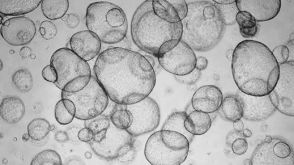
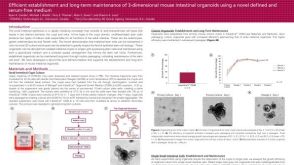 科学海报Efficient Establishment and Long-Term Maintenance of 3-Dimensional Mouse Intestinal Organoids Using a Novel Defined and Serum-Free Medium

 沪公网安备31010102008431号