Proteomics of Duchenne Muscular Dystrophy Patient iPSC-Derived Skeletal Muscle Cells Reveal Differential Expression of Cytoskeletal and Extracellular Matrix Proteins
Proteomics of dystrophic muscle samples is limited by the amount of protein that can be extracted from patient biopsies. Cells and tissues derived from patient-derived induced pluripotent stem cells (iPSCs) can be an expandable alternative source. We have patterned iPSCs from three Duchenne muscular dystrophy (DMD) patient lines into skeletal muscle cells using a two-dimensional as well as our three-dimensional organoid differentiation system. Probes with sufficient protein amounts could be extracted and prepared for mass spectrometry. In total,3007 proteins in 2D and 2709 proteins in 3D were detected in DMD patient probes. A total of 83 proteins in 2D and 338 proteins in 3D can be described as differentially expressed between DMD and control patient probes in a post hoc test. We have identified and we propose Myosin-9,Collagen 18A,Tropomyosin 1,BASP1,RUVBL1,and NCAM1 as proteins specifically altered in their expression in DMD for further investigation. Proteomics of skeletal muscle organoids resulted in greater consistency of results between cell lines in comparison to the two-dimensional myogenic differentiation protocol.
View Publication
产品类型:
产品号#:
05990
产品名:
TeSR™-E8™
L. Hew et al. (Nov 2025)
Cell Death Discovery 11
c-Jun inhibition mitigates chemotherapy-induced neurotoxicity in iPSC-derived sensory neurons
Chemotherapy-induced peripheral neuropathy (CIPN) affects up to two-thirds of cancer patients undergoing cytotoxic chemotherapy. Here,we used human iPSC-derived sensory neurons (iPSC-DSN) to model CIPN in vitro. Administration of various chemotherapeutic agents (i.e.,paclitaxel,vincristine,bortezomib and cisplatin) at clinically applicable concentrations resulted in reduced cell viability,axonal degeneration,electrophysiological dysfunction and increased levels of phosphorylated c-Jun in iPSC-DSN. Transcriptomic analyses revealed that the upregulation of c-Jun strongly correlated with the expression of genes of neuronal injury,apoptosis and inflammatory signatures. To test whether c-Jun plays a central role in the development of CIPN,we applied the small molecule inhibitor of the Jun N-terminal kinase,SP600125,to iPSC-DSN treated with neurotoxic chemotherapy. c-Jun inhibition prevented chemotherapy-induced neurotoxicity by preserving cell viability,axonal integrity and electrophysiological function of iPSC-DSN. These findings identify c-Jun as a key mediator of CIPN pathophysiology across multiple drug types and present preclinical evidence that c-Jun inhibition is an attractive therapeutic target to prevent CIPN.
View Publication
产品类型:
产品号#:
85850
85857
产品名:
mTeSR™1
mTeSR™1
F. Arroyave et al. (Oct 2025)
Frontiers in Endocrinology 16
Deciphering the epigenetic role of KDM4A in pancreatic β-like cell differentiation from iPSCs
Pancreatic β cells derived from human induced pluripotent stem cells (hiPSCs) represent a promising therapeutic avenue in regenerative medicine for diabetes treatment. However,current differentiation protocols lack the specificity and efficiency required to reliably produce fully functional β cells,limiting their clinical applicability. Epigenetic barriers,such as histone modifications,may hinder proper differentiation and the acquisition of essential maturation markers in these cells. Methods: hiPSCs were cultured under feeder-free conditions and subjected to lentiviral transduction with shRNA constructs to silence KDM4A. Differentiation into pancreatic β-like cells was performed using stepwise protocols,with or without doxycycline supplementation,to evaluate the effect of KDM4A suppression. Gene expression was quantified by RT-qPCR,protein expression was assessed by western blotting and immunofluorescence,and functional insulin release was determined by glucose-stimulated insulin secretion (GSIS) assays. Statistical analysis was conducted using unpaired two-tailed Student’s t-tests,with significance set at p < 0.05. Results: A reduction in pancreatic development proteins was observed in the different differentiation states evaluated,after blocking KDM4A expression. Knockdown of KDM4A significantly reduced the expression of pancreatic β-cell genes,such as PDX1,Nkx6.1,and Ins,by 50% compared to WT iPSCs differentiated under the same conditions. Similarly,glucose-stimulated insulin secretion was reduced by approximately 80% in KDM4A-deficient β-like cells. Conclusions: These results emphasize the critical role of histone demethylation in hiPSC differentiation toward β cells. Our findings identify KDM4A as a key epigenetic regulator,suggesting that its modulation could enhance the generation of functional β cells for regenerative medicine in diabetes.
View Publication
产品类型:
产品号#:
85850
85857
产品名:
mTeSR™1
mTeSR™1
E. Y. Flores et al. (Nov 2025)
PLOS Pathogens 21 11
Filovirus infection disrupts epithelial barrier function and ion transport in human iPSC-derived gut organoids
Gastrointestinal (GI) dysfunction,characterized by severe diarrhea and dehydration,is a central contributor to morbidity and mortality in filovirus disease in patients,yet the role of the epithelium in this clinical outcome remains poorly defined. Here,we employ induced pluripotent stem cell (iPSC)-derived human intestinal (HIOs) and colonic organoids (HCOs) to model Ebola virus (EBOV) and Marburg virus (MARV) infection. These organoids are permissive to filovirus infection and support viral replication. Bulk RNA sequencing revealed distinct intestinal and colonic epithelial responses,including apical and junctional disruption and a delayed virus-specific induction of interferon-stimulated genes. Moreover,infection impaired adenylate cyclase signaling and CFTR-mediated ion transport,providing mechanistic insight into virus-induced secretory diarrhea. This platform recapitulates key features of human GI pathology in filoviral disease and serves as a powerful system to dissect host-pathogen interactions and identify therapeutic targets. Author summaryEbola virus (EBOV) and Marburg virus (MARV) are among the most lethal viruses known. Infection with these viruses leads to severe disease and death. One of their most harmful effects is damage to the gastrointestinal tract,causing intense diarrhea and life-threatening dehydration. Yet,how these viruses affect the gut remains poorly understood. In this study,we used human mini-guts—small,three-dimensional tissues grown from stem cells that mimic the human intestinal and colonic epithelium—to investigate how these viruses interact with gut epithelial cells. We found that both EBOV and MARV infect and replicate in these tissues,disrupt key barrier structures,and interfere with the cells’ ability to regulate fluid secretion. These effects mirror the severe symptoms seen in patients. Our study provides new insight into how EBOV and MARV damage the gut and identifies specific cellular pathways that may be targeted for treatment. This research not only improves our understanding of EBOV and MARV infections but also offers new infection platforms for testing therapies aimed at protecting the gastrointestinal system during filovirus outbreaks.
View Publication
Baarine M et al. (NOV 2015)
PLoS ONE 10 11 e0143238
Functional characterization of IPSC-derived brain cells as a model for X-linked adrenoleukodystrophy
X-ALD is an inherited neurodegenerative disorder where mutations in the ABCD1 gene result in clinically diverse phenotypes: the fatal disorder of cerebral childhood ALD (cALD) or a milder disorder of adrenomyeloneuropathy (AMN). The various models used to study the pathobiology of X-ALD disease lack the appropriate presentation for different phenotypes of cALD vs AMN. This study demonstrates that induced pluripotent stem cells (IPSC) derived brain cells astrocytes (Ast),neurons and oligodendrocytes (OLs) express morphological and functional activities of the respective brain cell types. The excessive accumulation of saturated VLCFA,a hallmark" of X-ALD�
View Publication
产品类型:
产品号#:
05850
05857
05870
05875
05940
85850
85857
85870
85875
27845
27945
27840
27865
27940
27965
05835
05839
08581
08582
产品名:
mTeSR™1
mTeSR™1
STEMdiff™ 神经诱导培养基
STEMdiff™ 神经诱导培养基
STEMdiff™SMADi神经诱导试剂盒
STEMdiff™SMADi神经诱导试剂盒,2套
Ja KPMM et al. (FEB 2016)
Journal of cellular and molecular medicine 20 2 323--332
iPSC-derived human cardiac progenitor cells improve ventricular remodelling via angiogenesis and interstitial networking of infarcted myocardium.
We investigate the effects of myocardial transplantation of human induced pluripotent stem cell (iPSC)-derived progenitors and cardiomyocytes into acutely infarcted myocardium in severe combined immune deficiency mice. A total of 2 × 10(5) progenitors,cardiomyocytes or cell-free saline were injected into peri-infarcted anterior free wall. Sham-operated animals received no injection. Myocardial function was assessed at 2-week and 4-week post-infarction by using echocardiography and pressure-volume catheterization. Early myocardial remodelling was observed at 2-week with echocardiography derived stroke volume (SV) in saline (20.45 ± 7.36 $\$,P textless 0.05) and cardiomyocyte (19.52 ± 3.97 $\$,P textless 0.05) groups,but not in progenitor group (25.65 ± 3.61 $\$),significantly deteriorated as compared to sham control group (28.41 ± 4.41 $\$). Consistently,pressure-volume haemodynamic measurements showed worsening chamber dilation in saline (EDV: 23.24 ± 5.01 $\$,P textless 0.05; ESV: 17.08 ± 5.82 $\$,P textless 0.05) and cardiomyocyte (EDV: 26.45 ± 5.69 $\$,P textless 0.05; ESV: 18.03 ± 6.58 $\$,P textless 0.05) groups by 4-week post-infarction as compared to control (EDV: 15.26 ± 2.96 $\$; ESV: 8.41 ± 2.94 $\$). In contrast,cardiac progenitors (EDV: 20.09 ± 7.76 $\$; ESV: 13.98 ± 6.74 $\$) persistently protected chamber geometry against negative cardiac remodelling. Similarly,as compared to sham control (54.64 ± 11.37%),LV ejection fraction was preserved in progenitor group from 2-(38.68 ± 7.34%) to 4-week (39.56 ± 13.26%) while cardiomyocyte (36.52 ± 11.39%,P textless 0.05) and saline (35.34 ± 11.86%,P textless 0.05) groups deteriorated early at 2-week. Improvements of myocardial function in the progenitor group corresponded to increased vascularization (16.12 ± 1.49/mm(2) to 25.48 ± 2.08/mm(2) myocardial tissue,P textless 0.05) and coincided with augmented networking of cardiac telocytes in the interstitial space of infarcted zone.
View Publication
产品类型:
产品号#:
05850
05857
05870
05875
85850
85857
85870
85875
产品名:
mTeSR™1
mTeSR™1
Lee Y-KK et al. (JAN 2016)
International journal of cardiology 203 964--971
Efficient attenuation of Friedreich's ataxia (FRDA) cardiomyopathy by modulation of iron homeostasis-human induced pluripotent stem cell (hiPSC) as a drug screening platform for FRDA.
BACKGROUND Friedreich's ataxia (FRDA),a recessive neurodegenerative disorder commonly associated with hypertrophic cardiomyopathy,is caused by silencing of the frataxin (FXN) gene encoding the mitochondrial protein involved in iron-sulfur cluster biosynthesis. METHODS Application of our previously established FRDA human induced pluripotent stem cell (hiPSC) derived cardiomyocytes model as a platform to assess the efficacy of treatment with either the antioxidant coenzyme Q10 analog,idebenone (IDE) or the iron chelator,deferiprone (DFP),which are both under clinical trial. RESULTS DFP was able to more significantly suppress synthesis of reactive oxygen species (ROS) than IDE at the dosages of 25 $\$ and 10nM respectively which agreed with the reduced rate of intracellular accumulation of iron by DFP treatment from 25 to 50 $\$ With regard to cardiac electrical-contraction (EC) coupling function,decay velocity of calcium handling kinetics in FRDA-hiPSC-cardiomyocytes was significantly improved by DFP treatment but not by IDE. Further mechanistic studies revealed that DFP also modulated iron induced mitochondrial stress as reflected by mitochondria network disorganization and decline level of respiratory chain protein,succinate dehydrogenase (CxII) and cytochrome c oxidase (COXIV). In addition,iron-response protein (IRP-1) regulatory loop was overridden by DFP as reflected by resumed level of ferritin (FTH) back to basal level and the attenuated transferrin receptor (TSFR) mRNA level suppression thereby reducing further iron uptake. CONCLUSIONS DFP modulated iron homeostasis in FRDA-hiPSC-cardiomyocytes and effectively relieved stress-stimulation related to cardiomyopathy. The resuming of redox condition led to the significantly improved cardiac prime events,cardiac electrical-coupling during contraction.
View Publication
产品类型:
产品号#:
05850
05857
05870
05875
85850
85857
85870
85875
产品名:
mTeSR™1
mTeSR™1
Suzuki S et al. (JAN 2016)
Molecular therapy. Nucleic acids 5 1 e273
TALENs Facilitate Single-step Seamless SDF Correction of F508del CFTR in Airway Epithelial Submucosal Gland Cell-derived CF-iPSCs.
Cystic fibrosis (CF) is a recessive inherited disease associated with multiorgan damage that compromises epithelial and inflammatory cell function. Induced pluripotent stem cells (iPSCs) have significantly advanced the potential of developing a personalized cell-based therapy for diseases like CF by generating patient-specific stem cells that can be differentiated into cells that repair tissues damaged by disease pathology. The F508del mutation in airway epithelial cell-derived CF-iPSCs was corrected with small/short DNA fragments (SDFs) and sequence-specific TALENs. An allele-specific PCR,cyclic enrichment strategy gave ˜100-fold enrichment of the corrected CF-iPSCs after six enrichment cycles that facilitated isolation of corrected clones. The seamless SDF-based gene modification strategy used to correct the CF-iPSCs resulted in pluripotent cells that,when differentiated into endoderm/airway-like epithelial cells showed wild-type (wt) airway epithelial cell cAMP-dependent Cl ion transport or showed the appropriate cell-type characteristics when differentiated along mesoderm/hematopoietic inflammatory cell lineage pathways.
View Publication


 EasySep™小鼠TIL(CD45)正选试剂盒




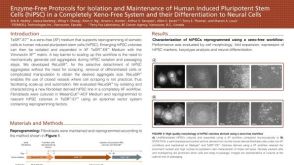
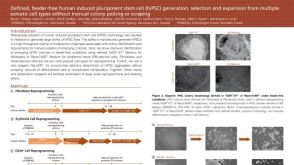 科学海报Defined, Feeder-Free Human Induced Pluripotent Stem Cell (hiPSC) Generation, Selection and Expansion from Multiple Somatic Cell Types

 沪公网安备31010102008431号