Kuroki MM et al. ( 2005)
Anticancer Research 25 6A 3733--9
Preparation of human IgG and IgM monoclonal antibodies for MK-1/Ep-CAM by using human immunoglobulin gene-transferred mouse and gene cloning of their variable regions.
For antibody-based therapy of cancer,monoclonal antibodies (mAbs) of human origin are superior to mouse,mouse/human chimeric or humanized mAbs,because of their minimum immunogenicity to humans and their efficient collaboration with human effector cells. In the present study,human mAbs were prepared against a pancarcinoma antigen,MK-1 (Ep-CAM),using a genetically-engineered mouse (KM mouse) that contains the human immunoglobulin genes. Spleen cells from KM mice,immunized with recombinant MK-1,were fused with P3-U1 mouse myeloma cells. Of 44 anti-MK-1 clones analyzed,two were of IgG4 and the others of IgM clones. Although the two IgG4 clones were suggested to recognize the same antigenic determinant or two closely located determinants,their VK regions were encoded by different light-chain genes while their VH sequences were identical. The two IgG4 and one of the IgM clones tested revealed antibody-dependent cell-mediated cytotoxicity and complement-dependent cytotoxicity,respectively,against MK-1-expressing cells in vitro,suggesting that these fully human mAbs produced against MK-1 and their V-region genes,which are applicable for the preparation of engineered antibody fragments that may be useful for antibody-based therapy of cancer.
View Publication
产品类型:
产品号#:
03800
03801
03802
03803
03804
03805
03806
产品名:
ClonaCell™-HY 杂交瘤试剂盒
ClonaCell™-HY Medium
ClonaCell™-HY Medium
ClonaCell™-HY Medium
ClonaCell™-HY Medium
ClonaCell™-HY Medium
ClonaCell™-HY PEG (融合)
Cashman JD et al. (JAN 1990)
Blood 75 1 96--101
Mechanisms that regulate the cell cycle status of very primitive hematopoietic cells in long-term human marrow cultures. I. Stimulatory role of a variety of mesenchymal cell activators and inhibitory role of TGF-beta.
Long-term marrow cultures (LTMC) allow the proliferation and differentiation of primitive human hematopoietic progenitor cells to be maintained for many weeks in the absence of exogenously provided hematopoietic growth factors. Previous investigations focused on defining various types of cells that are present in this culture system and on measuring the cycling behavior of the different subpopulations of colony-forming cells maintained within it. These studies suggested that mesenchymal stromal elements derived from the input marrow play a key role in regulating the turnover of the most primitive,high-proliferative potential erythroid and granulopoietic colony-forming cells that are found almost exclusively in the adherent layer of LTMC. In this study we show that the re-entry into S-phase of these primitive hematopoietic progenitors that occurs after each weekly medium change is due to an as yet undefined constituent of horse serum,which is absent from fetal calf serum. However,this effect is not unique to the factor present in horse serum. It is also elicited by the addition to LTMC of several well-defined growth regulatory molecules,ie,platelet-derived growth factor (PDGF),interleukin-1 (IL-1),transforming growth factor alpha (TGF-alpha),and IL-2. None of these was able to stimulate hematopoietic colony-forming cells in methylcellulose assays,although all have known actions on mesenchymal cells including,in some cases,the ability to increase production of growth factors that can stimulate primitive high-proliferative potential hematopoietic progenitors in clonogenic assays. Interestingly,a stimulating effect was not obtained after addition of endotoxin to LTMC. TGF-beta,a direct-acting negative regulator that acts selectively on primitive hematopoietic progenitor cells if added to LTMC simultaneously with new medium or IL-1,blocked their stimulating activity. These results suggest a model in which indirect,local modulation of both positive and negative regulatory factors via effects on mesenchymal elements determines the rate of turnover of adjacent populations of very primitive hematopoietic cells that are normally maintained in a quiescent state in vivo.
View Publication
产品类型:
产品号#:
05150
产品名:
MyeloCult™H5100
Neben S et al. (MAR 1993)
Experimental hematology 21 3 438--43
Quantitation of murine hematopoietic stem cells in vitro by limiting dilution analysis of cobblestone area formation on a clonal stromal cell line.
Murine hematopoietic stem cells with varying proliferative capacity can be assayed by limiting dilution analysis of cobblestone area" (CA) formation on stromal layers in microlong-term bone marrow cultures. Cobblestone area forming cell (CAFC) frequency determined at early time points (day 7) correlates with mature stem cells measured as day 8 CFU-S�
View Publication
产品类型:
产品号#:
05150
产品名:
MyeloCult™H5100
Morrow M et al. (MAY 2004)
Blood 103 10 3890--6
TEL-AML1 promotes development of specific hematopoietic lineages consistent with preleukemic activity.
The t(12;21)(p13;q22) translocation is the most common chromosomal abnormality yet identified in any pediatric leukemia and gives rise to the TEL-AML1 fusion product. To investigate the effects of TEL-AML1 on hematopoiesis,fetal liver hematopoietic progenitor cells (HPCs) were transduced with retroviral vectors expressing this fusion protein. We show that TEL-AML1 dramatically alters differentiation of HPCs in vitro,preferentially promoting B-lymphocyte development,enhancing self-renewal of B-cell precursors,and leading to the establishment of long-term growth factor-dependent pre-B-cell lines. However,it had no effect on myeloid development in vitro. Further experiments were performed to determine whether TEL-AML1 also demonstrates lineage-specific activity in vivo. TEL-AML1-expressing HPCs displayed a competitive advantage in reconstituting both B-cell and myeloid lineages in vivo but had no effect on reconstitution of the T-cell lineage. Despite promoting these alterations in hematopoiesis,TEL-AML1 did not induce leukemia in transplanted mice. Our study provides a unique insight into the role of TEL-AML1 in leukemia predisposition and a potential model to study the mechanism of leukemogenesis associated with this fusion.
View Publication
产品类型:
产品号#:
03534
03231
产品名:
MethoCult™GF M3534
MethoCult™M3231
Ryan MA et al. (OCT 2010)
Nature medicine 16 10 1141--6
Mobilization of hematopoietic stem and progenitor cells (HSPCs) from bone marrow into peripheral blood by the cytokine granulocyte colony-stimulating factor (G-CSF) has become the preferred source of HSPCs for stem cell transplants. However,G-CSF fails to mobilize sufficient numbers of stem cells in up to 10% of donors,precluding autologous transplantation in those donors or substantially delaying transplant recovery time. Consequently,new regimens are needed to increase the number of stem cells in peripheral blood upon mobilization. Using a forward genetic approach in mice,we mapped the gene encoding the epidermal growth factor receptor (Egfr) to a genetic region modifying G-CSF-mediated HSPC mobilization. Amounts of EGFR in HSPCs inversely correlated with the cells' ability to be mobilized by G-CSF,implying a negative role for EGFR signaling in mobilization. In combination with G-CSF treatment,genetic reduction of EGFR activity in HSPCs (in waved-2 mutant mice) or treatment with the EGFR inhibitor erlotinib increased mobilization. Increased mobilization due to suppression of EGFR activity correlated with reduced activity of cell division control protein-42 (Cdc42),and genetic Cdc42 deficiency in vivo also enhanced G-CSF-induced mobilization. Our findings reveal a previously unknown signaling pathway regulating stem cell mobilization and provide a new pharmacological approach for improving HSPC mobilization and thereby transplantation outcomes.
View Publication
产品类型:
产品号#:
03234
产品名:
MethoCult™M3234
Leonova KI et al. (APR 2010)
Cell cycle (Georgetown,Tex.) 9 7 1434--43
A small molecule inhibitor of p53 stimulates amplification of hematopoietic stem cells but does not promote tumor development in mice.
It has been shown that genetic inhibition of p53 leads to enhanced proliferation of hematopoietic stem cells (HSCs). This could,in theory,contribute to the increased frequency of tumor development observed in p53-deficient mice and humans. In our previous work,we identified chemical p53 inhibitors (PFTs) that suppress the transactivation function of p53 and protect cultured cells and mice from death induced by gamma irradiation (IR). Here we found that when applied to bone marrow cells in vitro or injected into mice,PFTb impeded IR-induced reduction of hematopoietic stem cell (HSC) and hematopoietic progenitor cell (HPC) population sizes. In addition,we showed that PFTb stimulated HSC and HPC proliferation in the absence of IR in vitro and in vivo and mobilized HSCs to the peripheral blood. Importantly,however,PFTb treatment did not affect the timing or frequency of tumor development in irradiated p53 heterozygous mice used as a model for determination of carcinogenicity. Thus,although PFTb administration led to increased numbers of HSCs and HPCs,it was not carcinogenic in mice. These findings suggest that chemical p53 inhibitors may be clinically useful as safe and effective stimulators of hematopoiesis.
View Publication
产品类型:
产品号#:
72062
72064
产品名:
环状 Pifithrin-α(Cyclic Pifithrin-Alpha)
环状 Pifithrin-α (Hydrobromide)
S. Bari et al. ( 2018)
Stem cells translational medicine 7 5 376--393
Ex Vivo Expansion of CD34+ CD90+ CD49f+ Hematopoietic Stem and Progenitor Cells from Non-Enriched Umbilical Cord Blood with Azole Compounds.
Umbilical cord blood (UCB) transplants in adults have slower hematopoietic recovery compared to bone marrow (BM) or peripheral blood (PB) stem cells mainly due to low number of total nucleated cells and hematopoietic stem and progenitor cells (HSPC). As such in this study,we aimed to perform ex vivo expansion of UCB HSPC from non-enriched mononucleated cells (MNC) using novel azole-based small molecules. Freshly-thawed UCB-MNC were cultured in expansion medium supplemented with small molecules and basal cytokine cocktail. The effects of the expansion protocol were measured based on in vitro and in vivo assays. The proprietary library of {\textgreater}50 small molecules were developed using structure-activity-relationship studies of SB203580,a known p38-MAPK inhibitor. A particular analog,C7,resulted in 1,554.1 ± 27.8-fold increase of absolute viable CD45+ CD34+ CD38- CD45RA- progenitors which was at least 3.7-fold higher than control cultures (p {\textless} .001). In depth phenotypic analysis revealed {\textgreater}600-fold expansion of CD34+ /CD90+ /CD49f+ rare HSPCs coupled with significant (p {\textless} .01) increase of functional colonies from C7 treated cells. Transplantation of C7 expanded UCB grafts to immunodeficient mice resulted in significantly (p {\textless} .001) higher engraftment of human CD45+ and CD45+ CD34+ cells in the PB and BM by day 21 compared to non-expanded and cytokine expanded grafts. The C7 expanded grafts maintained long-term human multilineage chimerism in the BM of primary recipients with sustained human CD45 cell engraftment in secondary recipients. In conclusion,a small molecule,C7,could allow for clinical development of expanded UCB grafts without pre-culture stem cell enrichment that maintains in vitro and in vivo functionality. Stem Cells Translational Medicine 2018;7:376-393.
View Publication
产品类型:
产品号#:
05010
05240
产品名:
STEMdiff™ 心肌细胞分化培养基试剂盒
STEMdiff™ 间充质祖细胞试剂盒
L. D. Volpe et al. (Nov 2024)
Cell Reports Medicine 5 11
A p38 MAPK-ROS axis fuels proliferation stress and DNA damage during CRISPR-Cas9 gene editing in hematopoietic stem and progenitor cells
Ex vivo activation is a prerequisite to reaching adequate levels of gene editing by homology-directed repair (HDR) for hematopoietic stem and progenitor cell (HSPC)-based clinical applications. Here,we show that shortening culture time mitigates the p53-mediated DNA damage response to CRISPR-Cas9-induced DNA double-strand breaks,enhancing the reconstitution capacity of edited HSPCs. However,this results in lower HDR efficiency,rendering ex vivo culture necessary yet detrimental. Mechanistically,ex vivo activation triggers a multi-step process initiated by p38 mitogen-activated protein kinase (MAPK) phosphorylation,which generates mitogenic reactive oxygen species (ROS),promoting fast cell-cycle progression and subsequent proliferation-induced DNA damage. Thus,p38 inhibition before gene editing delays G1/S transition and expands transcriptionally defined HSCs,ultimately endowing edited cells with superior multi-lineage differentiation,persistence throughout serial transplantation,enhanced polyclonal repertoire,and better-preserved genome integrity. Our data identify proliferative stress as a driver of HSPC dysfunction with fundamental implications for designing more effective and safer gene correction strategies for clinical applications.
View Publication
产品类型:
产品号#:
09600
09650
产品名:
StemSpan™ SFEM
StemSpan™ SFEM
A. Reuter et al. ( 2015)
The Journal of Immunology 194 2696-2705
Criteria for Dendritic Cell Receptor Selection for Efficient Antibody-Targeted Vaccination
Ab-targeted vaccination involves targeting a receptor of choice expressed by dendritic cells (DCs) with Ag-coupled Abs. Currently,there is little consensus as to which criteria determine receptor selection to ensure superior Ag presentation and immunity. In this study,we investigated parameters of DC receptor internalization and determined how they impact Ag presentation outcomes. First,using mixed bone marrow chimeras,we established that Ag-targeted,but not nontargeted,DCs are responsible for Ag presentation in settings of Ab-targeted vaccination in vivo. Next,we analyzed parameters of DEC205 (CD205),Clec9A,CD11c,CD11b,and CD40 endocytosis and obtained quantitative measurements of internalization speed,surface turnover,and delivered Ag load. Exploiting these parameters in MHC class I (MHC I) and MHC class II (MHC II) Ag presentation assays,we showed that receptor expression level,proportion of surface turnover,or speed of receptor internalization did not impact MHC I or MHC II Ag presentation efficiency. Furthermore,the Ag load delivered to DCs did not correlate with the efficiency of MHC I or MHC II Ag presentation. In contrast,targeting Ag to CD8(+) or CD8(-) DCs enhanced MHC I or MHC II Ag presentation,respectively. Therefore,receptor expression levels,speed of internalization,and/or the amount of Ag delivered can be excluded as major determinants that dictate Ag presentation efficiency in setting of Ab-targeted vaccination.
View Publication
产品类型:
产品号#:
19251
19251RF
产品名:
EasySep™人Pan-DC预富集试剂盒
RoboSep™ 人Pan-DC预富集试剂盒含滤芯吸头
Kim J-HHH et al. (MAR 2016)
ACS nano 10 3 3342--3355
Nanotopography Promotes Pancreatic Differentiation of Human Embryonic Stem Cells and Induced Pluripotent Stem Cells.
Although previous studies suggest that nanotopographical features influence properties and behaviors of stem cells,only a few studies have attempted to derive clinically useful somatic cells from human pluripotent stem cells using nanopatterned surfaces. In the present study,we report that polystyrene nanopore-patterned surfaces significantly promote the pancreatic differentiation of human embryonic and induced pluripotent stem cells. We compared different diameters of nanopores and showed that 200 nm nanopore-patterned surfaces highly upregulated the expression of PDX1,a critical transcription factor for pancreatic development,leading to an approximately 3-fold increase in the percentage of differentiating PDX1(+) pancreatic progenitors compared with control flat surfaces. Furthermore,in the presence of biochemical factors,200 nm nanopore-patterned surfaces profoundly enhanced the derivation of pancreatic endocrine cells producing insulin,glucagon,or somatostatin. We also demonstrate that nanopore-patterned surface-induced upregulation of PDX1 is associated with downregulation of TAZ,suggesting the potential role of TAZ in nanopore-patterned surface-mediated mechanotransduction. Our study suggests that appropriate cytokine treatments combined with nanotopographical stimulation could be a powerful tool for deriving a high purity of desired cells from human pluripotent stem cells.
View Publication
产品类型:
产品号#:
85850
85857
产品名:
mTeSR™1
mTeSR™1
Duelen R et al. ( 2017)
Stem cells international 2017 4651238
Activin A Modulates CRIPTO-1/HNF4α(+) Cells to Guide Cardiac Differentiation from Human Embryonic Stem Cells.
The use of human pluripotent stem cells in basic and translational cardiac research requires efficient differentiation protocols towards cardiomyocytes. In vitro differentiation yields heterogeneous populations of ventricular-,atrial-,and nodal-like cells hindering their potential applications in regenerative therapies. We described the effect of the growth factor Activin A during early human embryonic stem cell fate determination in cardiac differentiation. Addition of high levels of Activin A during embryoid body cardiac differentiation augmented the generation of endoderm derivatives,which in turn promoted cardiomyocyte differentiation. Moreover,a dose-dependent increase in the coreceptor expression of the TGF-β superfamily member CRIPTO-1 was observed in response to Activin A. We hypothesized that interactions between cells derived from meso- and endodermal lineages in embryoid bodies contributed to improved cell maturation in early stages of cardiac differentiation,improving the beating frequency and the percentage of contracting embryoid bodies. Activin A did not seem to affect the properties of cardiomyocytes at later stages of differentiation,measuring action potentials,and intracellular Ca(2+) dynamics. These findings are relevant for improving our understanding on human heart development,and the proposed protocol could be further explored to obtain cardiomyocytes with functional phenotypes,similar to those observed in adult cardiac myocytes.
View Publication


 EasySep™小鼠TIL(CD45)正选试剂盒




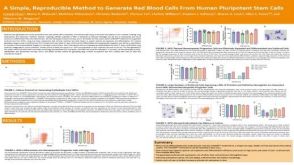 科学海报A Simple, Reproducible Method to Generate Red Blood Cells From Human Pluripotent Stem Cells
 沪公网安备31010102008431号