Jean E et al. (JAN 2011)
Journal of cellular and molecular medicine 15 1 119--33
Aldehyde dehydrogenase activity promotes survival of human muscle precursor cells.
Aldehyde dehydrogenases (ALDH) are a family of enzymes that efficiently detoxify aldehydic products generated by reactive oxygen species and might therefore participate in cell survival. Because ALDH activity has been used to identify normal and malignant cells with stem cell properties,we asked whether human myogenic precursor cells (myoblasts) could be identified and isolated based on their levels of ALDH activity. Human muscle explant-derived cells were incubated with ALDEFLUOR,a fluorescent substrate for ALDH,and we determined by flow cytometry the level of enzyme activity. We found that ALDH activity positively correlated with the myoblast-CD56(+) fraction in those cells,but,we also observed heterogeneity of ALDH activity levels within CD56-purified myoblasts. Using lentiviral mediated expression of shRNA we demonstrated that ALDH activity was associated with expression of Aldh1a1 protein. Surprisingly,ALDH activity and Aldh1a1 expression levels were very low in mouse,rat,rabbit and non-human primate myoblasts. Using different approaches,from pharmacological inhibition of ALDH activity by diethylaminobenzaldehyde,an inhibitor of class I ALDH,to cell fractionation by flow cytometry using the ALDEFLUOR assay,we characterized human myoblasts expressing low or high levels of ALDH. We correlated high ALDH activity ex vivo to resistance to hydrogen peroxide (H(2) O(2) )-induced cytotoxic effect and in vivo to improved cell viability when human myoblasts were transplanted into host muscle of immune deficient scid mice. Therefore detection of ALDH activity,as a purification strategy,could allow non-toxic and efficient isolation of a fraction of human myoblasts resistant to cytotoxic damage.
View Publication
产品类型:
产品号#:
01700
01702
01705
产品名:
ALDEFLUOR™ 试剂盒
ALDEFLUOR™测定缓冲液
ALDEFLUOR™ DEAB试剂
Singh H et al. (MAY 2010)
Stem Cell Research 4 3 165--179
Up-scaling single cell-inoculated suspension culture of human embryonic stem cells.
We have systematically developed single cell-inoculated suspension cultures of human embryonic stem cells (hESC) in defined media. Cell survival was dependent on hESC re-aggregation. In the presence of the Rho kinase inhibitor Y-27632 (Ri) only ∼ 44% of the seeded cells were rescued,but an optimized heat shock treatment combined with Ri significantly increased cell survival to ∼ 60%. Mechanistically,our data suggest that E-cadherin plays a role in hESC aggregation and that dissociation and re-aggregation upon passaging functions as a purification step towards a pluripotency markers-enriched population. Mass expansion of hESC was readily achieved by up-scaling 2 ml cultures to serial passaging in 50 ml spinner flasks. A media comparison revealed that mTeSR was superior to KnockOut-SR in supporting cell proliferation and pluripotency. Persistent expression of pluripotency markers was achieved for two lines (hES2,hES3) that were used at higher passages (textgreater 86). In contrast,rapid down regulation of Oct4,Tra-1-60,and SSEA4 was observed for ESI049,a clinically compliant line,used at passages 20-36. The up-scaling strategy has significant potential to provide pluripotent cells on a clinical scale. Nevertheless,our data also highlights a significant line-to-line variability and the need for a critical assessment of novel methods with numerous relevant cell lines. textcopyright 2010 Elsevier B.V. All rights reserved.
View Publication
Denning-Kendall P et al. (JAN 2003)
Stem cells (Dayton,Ohio) 21 6 694--701
Cobblestone area-forming cells in human cord blood are heterogeneous and differ from long-term culture-initiating cells.
The long-term culture-initiating cell (LTC-IC) assay is a physiological approach to the quantitation of primitive human hematopoietic cells. The readout using identification of cobblestone area-forming cells (CAFC) has gained popularity over the LTC-IC readout where cells are subcultured in a colony-forming cell assay. However,comparing the two assays,cord blood (CB) mononuclear cell (MNC) samples were found to contain a higher frequency of CAFC than LTC-IC (126 +/- 83 versus 40 +/- 31 per 10(5) cells,p = 0.0001). Overall,60% of week-5 cobblestones produced by CB MNC were not functional LTC-IC and were classified as false." Separation of CB MNC using immunomagnetic columns showed that false cobblestones were CD34(-)/lineage(+). Purified CD34(+) cells�
View Publication
产品类型:
产品号#:
09500
09600
09650
产品名:
BIT 9500血清替代物
StemSpan™ SFEM
StemSpan™ SFEM
Wu X et al. (JAN 2010)
PloS one 5 12 e15549
Selective induction of DNA repair pathways in human B cells activated by CD4+ T cells.
Greater than 75% of all hematologic malignancies derive from germinal center (GC) or post-GC B cells,suggesting that the GC reaction predisposes B cells to tumorigenesis. Because GC B cells acquire expression of the highly mutagenic enzyme activation-induced cytidine deaminase (AID),GC B cells may require additional DNA repair capacity. The goal of this study was to investigate whether normal human B cells acquire enhanced expression of DNA repair factors upon AID induction. We first demonstrated that several DNA mismatch repair,homologous recombination,base excision repair,and ATR signaling genes were overexpressed in GC B cells relative to naïve and memory B cells,reflecting activation of a process we have termed somatic hyperrepair (SHR). Using an in vitro system,we next characterized activation signals required to induce AID expression and SHR. Although AID expression was induced by a variety of polyclonal activators,SHR induction strictly required signals provided by contact with activated CD4+ T cells,and B cells activated in this manner displayed reduced levels of DNA damage-induced apoptosis. We further show the induction of SHR is independent of AID expression,as GC B cells from AID-/-mice retained heightened expression of SHR proteins. In consideration of the critical role that CD4+ T cells play in inducing the SHR process,our data suggest a novel role for CD4+ T cells in the tumor suppression of GC/post-GC B cells.
View Publication
产品类型:
产品号#:
19054
19054RF
产品名:
EasySep™人B细胞富集试剂盒
RoboSep™ 人B细胞富集试剂盒含滤芯吸头
N. Paiboon et al. ( 2019)
Stem cells international 2019 9748795
Gestational Tissue-Derived Human Mesenchymal Stem Cells Use Distinct Combinations of Bioactive Molecules to Suppress the Proliferation of Human Hepatoblastoma and Colorectal Cancer Cells.
Background Cancer has been considered a serious global health problem and a leading cause of morbidity and mortality worldwide. Despite recent advances in cancer therapy,treatments of advance stage cancers are mostly ineffective resulting in poor survival of patients. Recent evidences suggest that multipotent human mesenchymal stem cells (hMSCs) play important roles in growth and metastasis of several cancers by enhancing their engraftment and inducing tumor neovascularization. However,the effect of hMSCs on cancer cells is still controversial because there are also evidences demonstrating that hMSCs inhibited growth and metastasis of some cancers. Methods In this study,we investigated the effects of bioactive molecules released from bone marrow and gestational tissue-derived hMSCs on the proliferation of various human cancer cells,including C3A,HT29,A549,Saos-2,and U251. We also characterized the hMSC-derived factors that inhibit cancer cell proliferation by protein fractionation and mass spectrometry analysis. Results We herein make a direct comparison and show that the effects of hMSCs on cancer cell proliferation and migration depend on both hMSC sources and cancer cell types and cancer-derived bioactive molecules did not affect the cancer suppressive capacity of hMSCs. Moreover,hMSCs use distinct combination of bioactive molecules to suppress the proliferation of human hepatoblastoma and colorectal cancer cells. Using protein fractionation and mass spectrometry analysis,we have identified several novel hMSC-derived factors that might be able to suppress cancer cell proliferation. Conclusion We believe that the procedure developed in this study could be used to discover other therapeutically useful molecules released by various hMSC sources for a future in vivo study.
View Publication
Yu J et al. (DEC 2008)
Yearbook of Dermatology and Dermatologic Surgery 2008 5858 301--302
Induced Pluripotent Stem Cell Lines Derived from Human Somatic Cells
Somatic cell nuclear transfer allows trans-acting factors present in the mammalian oocyte to reprogram somatic cell nuclei to an undifferentiated state. We show that four factors (OCT4,SOX2,NANOG,and LIN28) are sufficient to reprogram human somatic cells to pluripotent stem cells that exhibit the essential characteristics of embryonic stem (ES) cells. These induced pluripotent human stem cells have normal karyotypes,express telomerase activity,express cell surface markers and genes that characterize human ES cells,and maintain the developmental potential to differentiate into advanced derivatives of all three primary germ layers. Such induced pluripotent human cell lines should be useful in the production of new disease models and in drug development,as well as for applications in transplantation medicine,once technical limitations (for example,mutation through viral integration) are eliminated.
View Publication
产品类型:
产品号#:
09500
27100
27150
85850
85857
产品名:
BIT 9500血清替代物
35 mm培养皿
35 mm培养皿
mTeSR™1
mTeSR™1
Lavasani M et al. (APR 2014)
The Journal of clinical investigation 124 4 1745--56
Human muscle-derived stem/progenitor cells promote functional murine peripheral nerve regeneration.
Peripheral nerve injuries and neuropathies lead to profound functional deficits. Here,we have demonstrated that muscle-derived stem/progenitor cells (MDSPCs) isolated from adult human skeletal muscle (hMDSPCs) can adopt neuronal and glial phenotypes in vitro and ameliorate a critical-sized sciatic nerve injury and its associated defects in a murine model. Transplanted hMDSPCs surrounded the axonal growth cone,while hMDSPCs infiltrating the regenerating nerve differentiated into myelinating Schwann cells. Engraftment of hMDSPCs into the area of the damaged nerve promoted axonal regeneration,which led to functional recovery as measured by sustained gait improvement. Furthermore,no adverse effects were observed in these animals up to 18 months after transplantation. Following hMDSPC therapy,gastrocnemius muscles from mice exhibited substantially less muscle atrophy,an increase in muscle mass after denervation,and reorganization of motor endplates at the postsynaptic sites compared with those from PBS-treated mice. Evaluation of nerve defects in animals transplanted with vehicle-only or myoblast-like cells did not reveal histological or functional recovery. These data demonstrate the efficacy of hMDSPC-based therapy for peripheral nerve injury and suggest that hMDSPC transplantation has potential to be translated for use in human neuropathies.
View Publication
产品类型:
产品号#:
05750
05751
产品名:
NeuroCult™ NS-A 基础培养基(人)
NeuroCult™ NS-A 扩增试剂盒(人)
Zhou F-W et al. ( 2015)
PloS one 10 3 e0120281
Functional integration of human neural precursor cells in mouse cortex.
This study investigates the electrophysiological properties and functional integration of different phenotypes of transplanted human neural precursor cells (hNPCs) in immunodeficient NSG mice. Postnatal day 2 mice received unilateral injections of 100,000 GFP+ hNPCs into the right parietal cortex. Eight weeks after transplantation,1.21% of transplanted hNPCs survived. In these hNPCs,parvalbumin (PV)-,calretinin (CR)-,somatostatin (SS)-positive inhibitory interneurons and excitatory pyramidal neurons were confirmed electrophysiologically and histologically. All GFP+ hNPCs were immunoreactive with anti-human specific nuclear protein. The proportions of PV-,CR-,and SS-positive cells among GFP+ cells were 35.5%,15.7%,and 17.1%,respectively; around 15% of GFP+ cells were identified as pyramidal neurons. Those electrophysiologically and histological identified GFP+ hNPCs were shown to fire action potentials with the appropriate firing patterns for different classes of neurons and to display spontaneous excitatory and inhibitory postsynaptic currents (sEPSCs and sIPSCs). The amplitude,frequency and kinetic properties of sEPSCs and sIPSCs in different types of hNPCs were comparable to host cells of the same type. In conclusion,GFP+ hNPCs produce neurons that are competent to integrate functionally into host neocortical neuronal networks. This provides promising data on the potential for hNPCs to serve as therapeutic agents in neurological diseases with abnormal neuronal circuitry such as epilepsy.
View Publication
产品类型:
产品号#:
05750
05751
产品名:
NeuroCult™ NS-A 基础培养基(人)
NeuroCult™ NS-A 扩增试剂盒(人)
Rouzbeh S et al. (AUG 2015)
Stem Cells 33 8 2431--2441
Molecular signature of erythroblast enucleation in human embryonic stem cells.
While enucleation is a critical step in the terminal differentiationbackslashnof human red blood cells,the molecular mechanisms underlying thisbackslashnunique process remain unclear. To investigate erythroblast enucleationbackslashnwe studied the erythroid differentiation of human embryonic stembackslashncells (hESCs),which provide a unique model for deeper understandingbackslashnof the development and differentiation of multiple cell types. Firstly,backslashnusing a two-step protocol,we demonstrated that terminal erythroidbackslashndifferentiation from hESCs is directly dependent on the age of thebackslashnembryoid bodies. Secondly,by choosing hESCs in two extreme conditionsbackslashnof erythroid culture,we obtained an original differentiation modelbackslashnwhich allows one to study the mechanisms underlying the enucleationbackslashnof erythroid cells by analyzing the gene and miRNA (miR) expressionbackslashnprofiles of cells from these two culture conditions. Thirdly,usingbackslashnan integrated analysis of mRNA and miR expression profiles,we identifiedbackslashn5 miRs potentially involved in erythroblast enucleation. Finally,backslashnby selective knockdown of these 5 miRs we found miR-30a to be a regulatorbackslashnof erythroblast enucleation in hESCs. This article is protected bybackslashncopyright. All rights reserved.
View Publication
产品类型:
产品号#:
85850
85857
产品名:
mTeSR™1
mTeSR™1
Laperle A et al. (AUG 2015)
Stem cell reports 5 2 195--206
$\$-5 Laminin Synthesized by Human Pluripotent Stem Cells Promotes Self-Renewal.
Substrate composition significantly impacts human pluripotent stem cell (hPSC) self-renewal and differentiation,but relatively little is known about the role of endogenously produced extracellular matrix (ECM) components in regulating hPSC fates. Here we identify $\$-5 laminin as a signature ECM component endogenously synthesized by undifferentiated hPSCs cultured on defined substrates. Inducible shRNA knockdown and Cas9-mediated disruption of the LAMA5 gene dramatically reduced hPSC self-renewal and increased apoptosis without affecting the expression of pluripotency markers. Increased self-renewal and survival was restored to wild-type levels by culturing the LAMA5-deficient cells on exogenous laminin-521. Furthermore,treatment of LAMA5-deficient cells with blebbistatin or a ROCK inhibitor partially restored self-renewal and diminished apoptosis. These results demonstrate that endogenous $\$-5 laminin promotes hPSC self-renewal in an autocrine and paracrine manner. This finding has implications for understanding how stem cells dynamically regulate their microenvironment to promote self-renewal and provides guidance for efforts to design substrates for stem cell bioprocessing.
View Publication


 EasySep™小鼠TIL(CD45)正选试剂盒




 实验方案How to Cryopreserve Human Pluripotent Stem Cells in CryoStor® CS10
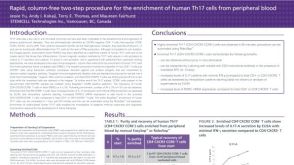 科学海报Column-Free Cell Enrichment of Human Th17 Cells from Peripheral Blood
 沪公网安备31010102008431号