Hsu M-J and Hung S-L (JUN 2013)
Archives of virology 158 6 1287--96
Antiherpetic potential of 6-bromoindirubin-3'-acetoxime (BIO-acetoxime) in human oral epithelial cells.
Glycogen synthase kinase 3 (GSK-3) functions in the regulation of glycogen metabolism,in the cell cycle,and in immune responses and is targeted by some viruses to favor the viral life cycle. Inhibition of GSK-3 by 6-bromoindirubin-3'-acetoxime (BIO-acetoxime),a synthetic derivative of a compound from the Mediterranean mollusk Hexaplex trunculus,protects cells from varicella infection. In this study,we examined the effects of BIO-acetoxime against herpes simplex virus-1 (HSV-1) infection in human oral epithelial cells,which represent a natural target cell type. The results revealed that BIO-acetoxime relieves HSV-1-induced cytopathic effects and apoptosis. We also found that BIO-acetoxime reduced viral yields and the expression of different classes of viral proteins. Furthermore,addition of BIO-acetoxime before,simultaneously with or after HSV-1 infection significantly reduced viral yields. Collectively,BIO-acetoxime may suppress viral gene expression and protect oral epithelial cells from HSV-1 infection. These results suggest the possible involvement of GSK-3 in HSV-1 infection.
View Publication
产品类型:
产品号#:
73322
产品名:
BIO-Acetoxime
Tahamtani Y et al. (FEB 2014)
Cell journal 16 1 63--72
Stauprimide Priming of Human Embryonic Stem Cells toward Definitive Endoderm.
OBJECTIVE: In vitro production of a definitive endoderm (DE) is an important issue in stem cell-related differentiation studies and it can assist with the production of more efficient endoderm derivatives for therapeutic applications. Despite tremendous progress in DE differentiation of human embryonic stem cells (hESCs),researchers have yet to discover universal,efficient and cost-effective protocols. MATERIALS AND METHODS: In this experimental study,we have treated hESCs with 200 nM of Stauprimide (Spd) for one day followed by activin A (50 ng/ml; A50) for the next three days (Spd-A50). In the positive control group,hESCs were treated with Wnt3a (25 ng/ml) and activin A (100 ng/ml) for the first day followed by activin A for the next three days (100 ng/ml; W/A100-A100). RESULTS: Gene expression analysis showed up regulation of DE-specific marker genes (SOX17,FOXA2 and CXCR4) comparable to that observed in the positive control group. Expression of the other lineage specific markers did not significantly change (ptextless0.05). We also obtained the same gene expression results using another hESC line. The use of higher concentrations of Spd (400 and 800 nM) in the Spd-A50 protocol caused an increase in the expression SOX17 as well as a dramatic increase in mortality rate of the hESCs. A lower concentration of activin A (25 ng/ml) was not able to up regulate the DE-specific marker genes. Then,A50 was replaced by inducers of definitive endoderm; IDE1/2 (IDE1 and IDE2),two previously reported small molecule (SM) inducers of DE,in our protocol (Spd-IDE1/2). This replacement resulted in the up regulation of visceral endoderm (VE) marker (SOX7) but not DE-specific markers. Therefore,while the Spd-A50 protocol led to DE production,we have shown that IDE1/2 could not fully replace activin A in DE induction of hESCs. CONCLUSION: These findings can assist with the design of more efficient chemically-defined protocols for DE induction of hESCs and lead to a better understanding of the different signaling networks that are involved in DE differentiation of hESCs.
View Publication
产品类型:
产品号#:
72652
产品名:
Stauprimide
Howden SE and Thomson JA ( 2014)
1114 37--55
Gene targeting of human pluripotent stem cells by homologous recombination.
The ability of human embryonic stem cells and induced pluripotent stem cells to differentiate into all adult cell types greatly facilitates the study of human development,disease pathogenesis,and the generation of screening systems to identify novel therapeutic agents. Autologous cell therapies based on patient-derived induced pluripotent stem cells also hold great promise for the treatment and correction of many inherited and acquired diseases. The full potential of human pluripotent stem cells can be unleashed by genetically modifying a chosen locus with minimal impact on the remaining genome,which can be achieved by targeting genes by homologous recombination. This chapter will describe a protocol for gene modification of pluripotent stem cells by homologous recombination and several methods for the screening and identification of successfully modified clones.
View Publication
产品类型:
产品号#:
85850
85857
产品名:
mTeSR™1
mTeSR™1
(Nov 2024)
Bio-protocol 14 22
Multiplex Genome Editing of Human Pluripotent Stem Cells Using Cpf1
Targeted genome editing of human pluripotent stem cells (hPSCs) is critical for basic and translational research and can be achieved with site-specific endonucleases. Cpf1 (CRISPR from Prevotella and Francisella) is a programmable DNA endonuclease with AT-rich PAM sequences. In this protocol,we describe procedures for using a single vector system to deliver Cpf1 and CRISPR RNA (crRNA) for genome editing in hPSCs. This protocol enables indel formation and homologous recombination-mediated precise editing at multiple loci. With the delivery of Cpf1 and a single U6 promoter-driven guide RNA array composed of an AAVS1-targeting and a MAFB-targeting crRNA array,efficient multiplex genome editing at the AAVS1 (knockin) and MAFB (knockout) loci in hPSCs could be achieved in a single experiment. The edited hPSCs expressed pluripotency markers and could differentiate into neurons in vitro. This system also generated INS reporter hPSCs with a 6 kb cassette knockin at the INS locus. The INS reporter cells can differentiate into β-cells that express tdTomato and luciferase,permitting fluorescence-activated cell sorting of hPSC-β-cells. By targeted screening of potential off-target sequences that are most homologous to crRNA sequences,no off-target mutations were detected in any of the tested sequences. This work provides an efficient and flexible system for precise genome editing in mammalian cells including hPSCs with the benefits of less off-target effects. Key features • A single-vector system to deliver Cpf1 and crRNA enables the sorting of transfected cells • Efficient and simultaneous multi-modular genome editing exemplified by mutation of MAFB and knockin of AAVS1 loci in a single experiment • Edited PSCs showed minimal off-target effects and can be differentiated into multiple cell types.
View Publication
产品类型:
产品号#:
34411
34415
34421
34425
34450
34460
85850
85857
产品名:
AggreWell™ 400 24孔板,1个
AggreWell™400 24孔板,5个
AggreWell™ 400 6孔板,1个
AggreWell™ 400 6孔板,5个
AggreWell™400 24孔板启动套装
AggreWell™ 400 6孔板启动套装
mTeSR™1
mTeSR™1
Kurita R et al. (SEP 2006)
Stem cells (Dayton,Ohio) 24 9 2014--22
Tal1/Scl gene transduction using a lentiviral vector stimulates highly efficient hematopoietic cell differentiation from common marmoset (Callithrix jacchus) embryonic stem cells.
The development of embryonic stem cell (ESC) therapies requires the establishment of efficient methods to differentiate ESCs into specific cell lineages. Here,we report the in vitro differentiation of common marmoset (CM) (Callithrix jacchus) ESCs into hematopoietic cells after exogenous gene transfer using vesicular stomatitis virus-glycoprotein-pseudotyped lentiviral vectors. We transduced hematopoietic genes,including tal1/scl,gata1,gata2,hoxB4,and lhx2,into CM ESCs. By immunochemical and morphological analyses,we demonstrated that overexpression of tal1/scl,but not the remaining genes,dramatically increased hematopoiesis of CM ESCs,resulting in multiple blood-cell lineages. Furthermore,flow cytometric analysis demonstrated that CD34,a hematopoietic stem/progenitor cell marker,was highly expressed in tal1/scl-overexpressing embryoid body cells. Similar results were obtained from three independent CM ESC lines. These results suggest that transduction of exogenous tal1/scl cDNA into ESCs is a promising method to induce the efficient differentiation of CM ESCs into hematopoietic stem/progenitor cells.
View Publication
产品类型:
产品号#:
03434
03444
04435
04445
产品名:
MethoCult™GF M3434
MethoCult™GF M3434
MethoCult™H4435富集
MethoCult™H4435富集
Ploemacher RE et al. (NOV 1991)
Blood 78 10 2527--33
Use of limiting-dilution type long-term marrow cultures in frequency analysis of marrow-repopulating and spleen colony-forming hematopoietic stem cells in the mouse.
We have developed an in vitro clonal assay of murine hematopoietic precursor cells that form spleen colonies (CFU-S day 12) or produce in vitro clonable progenitors in the marrow (MRA cells) of lethally irradiated mice. The assay is essentially a long-term bone marrow culture in microtiter wells containing marrow-derived stromal feeders" depleted for hematopoietic activity by irradiation. To test the validity of the assay as a quantitative in vitro stem cell assay�
View Publication
产品类型:
产品号#:
28600
产品名:
L-Calc™有限稀释软件
Orelio C et al. (DEC 2008)
Blood 112 13 4895--904
Interleukin-1-mediated hematopoietic cell regulation in the aorta-gonad-mesonephros region of the mouse embryo.
Hematopoiesis during development is a dynamic process,with many factors involved in the emergence and regulation of hematopoietic stem cells (HSCs) and progenitor cells. Whereas previous studies have focused on developmental signaling and transcription factors in embryonic hematopoiesis,the role of well-known adult hematopoietic cytokines in the embryonic hematopoietic system has been largely unexplored. The cytokine interleukin-1 (IL-1),best known for its proinflammatory properties,has radioprotective effects on adult bone marrow HSCs,induces HSC mobilization,and increases HSC proliferation and/or differentiation. Here we examine IL-1 and its possible role in regulating hematopoiesis in the midgestation mouse embryo. We show that IL-1,IL-1 receptors (IL-1Rs),and signaling mediators are expressed in the aorta-gonad-mesonephros (AGM) region during the time when HSCs emerge in this site. IL-1 signaling is functional in the AGM,and the IL-1RI is expressed ventrally in the aortic subregion by some hematopoietic,endothelial,and mesenchymal cells. In vivo analyses of IL-1RI-deficient embryos show an increased myeloid differentiation,concomitant with a slight decrease in AGM HSC activity. Our results suggest that IL-1 is an important homeostatic regulator at the earliest time of HSC development,acting to limit the differentiation of some HSCs along the myeloid lineage.
View Publication
产品类型:
产品号#:
03434
03444
产品名:
MethoCult™GF M3434
MethoCult™GF M3434
Vasir B et al. (FEB 2005)
Journal of immunology (Baltimore,Md. : 1950) 174 4 2376--86
Dendritic cells induce MUC1 expression and polarization on human T cells by an IL-7-dependent mechanism.
The MUC1 transmembrane mucin is expressed on the surface of activated human T cells; however,the physiologic signals responsible for the regulation of MUC1 in T cells are not known. The present studies demonstrate that IL-7,but not IL-2 or IL-4,markedly induces MUC1 expression on CD3+ T cells. MUC1 was also up-regulated by IL-15,but to a lesser extent than that found with IL-7. The results show that IL-7 up-regulates MUC1 on CD4+,CD8+,CD25+,CD69+,naive CD45RA+,and memory CD45RO+ T cells. In concert with induction of MUC1 expression by IL-7,activated dendritic cells (DC) that produce IL-7 up-regulate MUC1 on allogeneic CD3+ T cells. DC also induce MUC1 expression on autologous CD3+ T cells in the presence of recall Ag. Moreover,DC-induced MUC1 expression on T cells is blocked by a neutralizing anti-IL-7 Ab. The results also demonstrate that DC induce polarization of MUC1 on T cells at sites opposing the DC-T cell synapse. These findings indicate that DC-mediated activation of Ag-specific T cells is associated with induction and polarization of MUC1 expression by an IL-7-dependent mechanism.
View Publication
产品类型:
产品号#:
15271HLA
产品名:
RosetteSep™ HLA 淋系细胞富集试剂盒
A. Haase et al. ( 2017)
Stem cell research 21 71--73
Generation of non-transgenic iPS cells from human cord blood CD34+ cells under animal component-free conditions.
Recently,many hurdles and limitations for production of clinically applicable iPSC derivatives have been overcome. Transgene-free iPSCs can be efficiently derived from easily accessible cell sources such as blood. Here we describe the generation of transgene-free hiPS cells from cord blood derived CD34+ cells,reprogrammed using CytoTune™ Sendai reprogramming vectors. CD34+ cell isolation,cultivation,reprogramming and establishment of resulting hiPSC lines were performed under the exclusive usage of animal-derived component-free (ADCF) materials and components.
View Publication
Tang C et al. (SEP 2011)
Nature biotechnology 29 9 829--34
An antibody against SSEA-5 glycan on human pluripotent stem cells enables removal of teratoma-forming cells.
An important risk in the clinical application of human pluripotent stem cells (hPSCs),including human embryonic and induced pluripotent stem cells (hESCs and hiPSCs),is teratoma formation by residual undifferentiated cells. We raised a monoclonal antibody against hESCs,designated anti-stage-specific embryonic antigen (SSEA)-5,which binds a previously unidentified antigen highly and specifically expressed on hPSCs--the H type-1 glycan. Separation based on SSEA-5 expression through fluorescence-activated cell sorting (FACS) greatly reduced teratoma-formation potential of heterogeneously differentiated cultures. To ensure complete removal of teratoma-forming cells,we identified additional pluripotency surface markers (PSMs) exhibiting a large dynamic expression range during differentiation: CD9,CD30,CD50,CD90 and CD200. Immunohistochemistry studies of human fetal tissues and bioinformatics analysis of a microarray database revealed that concurrent expression of these markers is both common and specific to hPSCs. Immunodepletion with antibodies against SSEA-5 and two additional PSMs completely removed teratoma-formation potential from incompletely differentiated hESC cultures.
View Publication
产品类型:
产品号#:
85850
85857
产品名:
mTeSR™1
mTeSR™1
Hoggatt J et al. (MAY 2009)
Blood 113 22 5444--55
Prostaglandin E2 enhances hematopoietic stem cell homing, survival, and proliferation.
Adult hematopoietic stem cells (HSCs) are routinely used to reconstitute hematopoiesis after myeloablation; however,transplantation efficacy and multilineage reconstitution can be limited by inadequate HSC number,or poor homing,engraftment,or self-renewal. Here we report that mouse and human HSCs express prostaglandin E2 (PGE2) receptors,and that short-term ex vivo exposure of HSCs to PGE2 enhances their homing,survival,and proliferation,resulting in increased long-term repopulating cell (LTRC) and competitive repopulating unit (CRU) frequency. HSCs pulsed with PGE2 are more competitive,as determined by head-to-head comparison in a competitive transplantation model. Enhanced HSC frequency and competitive advantage is stable and maintained upon serial transplantation,with full multilineage reconstitution. PGE2 increases HSC CXCR4 mRNA and surface expression,enhances their migration to SDF-1 in vitro and homing to bone marrow in vivo,and stimulates HSC entry into and progression through cell cycle. In addition,PGE2 enhances HSC survival,associated with an increase in Survivin mRNA and protein expression and reduction in intracellular active caspase-3. Our results define novel mechanisms of action whereby PGE2 enhances HSC function and supports a strategy to use PGE2 to facilitate hematopoietic transplantation.
View Publication


 EasySep™小鼠TIL(CD45)正选试剂盒




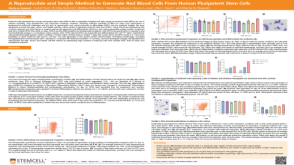 科学海报A Reproducible and Simple Method to Generate Red Blood Cells From Human Pluripotent Stem Cells
 沪公网安备31010102008431号