Volpe DA and Warren MK (JUN 2003)
Toxicology in vitro : an international journal published in association with BIBRA 17 3 271--7
Myeloid clonogenic assays for comparison of the in vitro toxicity of alkylating agents.
A battery of clonal assays for myeloid progenitor cells (HPP-CFC,CFU-gemm,CFU-gm,CFU-g) was utilized to evaluate the myelotoxicity of a series of alkylating agents representing the spectrum of clinical times to nadir. Bone marrow aspirates from normal volunteers were incubated with mechlorethamine,busulfan,melphalan,carmustine or lomustine for 1 h and then cultured in methylcellulose with 30% serum and cytokines. There was a concentration-dependent inhibition of colony formation and often a differential toxicity to the myeloid progenitors with the alkylators tested. On a molar basis,mechlorethamine and melphalan were the most toxic of the alkylator drugs to the myeloid precursors. The most sensitive progenitor was CFU-gemm with the lowest inhibitory concentration IC(70) concentrations for mechlorethamine,melphalan,carmustine and lomustine. Generally,there was great similarity for drug effects between CFU-g and CFU-gm with overlapping inhibition curves. HPP-CFC proved to be the least sensitive of the progenitors to the toxic actions of the drugs. While there was no correlation between the time to clinical neutropenic nadir and the most sensitive progenitor in the clonal assays,the CFU-gm assay remains a suitable method for determining the myelotoxic potential of cytotoxic agents.
View Publication
产品类型:
产品号#:
04535
04545
产品名:
MethoCult™H4535富集无EPO
MethoCult™ H4535 Enriched,不含EPO
Nolte SM et al. (APR 2013)
Journal of the National Cancer Institute 105 8 551--562
A cancer stem cell model for studying brain metastases from primary lung cancer.
BACKGROUND Brain metastases are most common in adults with lung cancer,predicting uniformly poor patient outcome,with a median survival of only months. Despite their frequency and severity,very little is known about tumorigenesis in brain metastases. METHODS We applied previously developed primary solid tumor-initiating cell models to the study of brain metastases from the lung to evaluate the presence of a cancer stem cell population. Patient-derived brain metastases (n = 20) and the NCI-H1915 cell line were cultured as stem-enriching tumorspheres. We used in vitro limiting-dilution and sphere-forming assays,as well as intracranial human-mouse xenograft models. To determine genes overexpressed in brain metastasis tumorspheres,we performed comparative transcriptome analysis. All statistical analyses were two-sided. RESULTS Patient-derived brain metastasis tumorspheres had a mean sphere-forming capacity of 33 spheres/2000 cells (SD = 33.40) and median stem-cell frequency of 1/60 (range = 0-1/141),comparable to that of primary brain tumorspheres (P = .53 and P = .20,respectively). Brain metastases also expressed CD15 and CD133,markers suggestive of a stemlike population. Through intracranial xenotransplantation,brain metastasis tumorspheres were found to recapitulate the original patient tumor heterogeneity. We also identified several genes overexpressed in brain metastasis tumorspheres as statistically significant predictors of poor survival in primary lung cancer. CONCLUSIONS For the first time,we demonstrate the presence of a stemlike population in brain metastases from the lung. We also show that NCI-H1915 tumorspheres could be useful in studying self-renewal and tumor initiation in brain metastases. Our candidate genes may be essential to metastatic stem cell populations,where pathway interference may be able to transform a uniformly fatal disease into a more localized and treatable one.
View Publication
产品类型:
产品号#:
01700
01705
01702
产品名:
ALDEFLUOR™ 试剂盒
ALDEFLUOR™ DEAB试剂
ALDEFLUOR™测定缓冲液
Prowse A et al. (JUL 2009)
BioTechniques 47 1 599--606
A rapid, cost-effective method for counting human embryonic stem cell numbers as clumps.
Enumeration of human embryonic stem cell (hESC) numbers through single cell digestion can be time consuming especially in high-throughput or multi-factorial analysis containing 50+ samples. We have developed a reproducible,cost-effective method of counting hESCs in clumps circumventing the need to manually dissociate each sample to single cells. The method is based on the DNA binding capacity of propidium iodide (PI) and subsequent fluorescent signal detection. Standard curves generated for cell numbers versus PI fluorescence as single cells or clumps showed an almost identical relationship in the lines of best fit. The reproducibility of the assay was first demonstrated by seeding hESC clumps at specific cell densities ranging 0.05[x02013]2x10⁵ cells/well and then secondly by using the assay to count cell numbers after different growth conditions. Validation tests showed that consistent seeding densities are important in maintaining undifferentiated hESC culture and that the assay can be used to estimate relative cell numbers and growth curves with high accuracy.
View Publication
产品类型:
产品号#:
85850
85857
产品名:
mTeSR™1
mTeSR™1
Berndt A et al. ( 2010)
Nature chemical biology 6 2 117--124
The p110 delta structure: mechanisms for selectivity and potency of new PI(3)K inhibitors.
Deregulation of the phosphoinositide-3-OH kinase (PI(3)K) pathway has been implicated in numerous pathologies including cancer,diabetes,thrombosis,rheumatoid arthritis and asthma. Recently,small-molecule and ATP-competitive PI(3)K inhibitors with a wide range of selectivities have entered clinical development. In order to understand the mechanisms underlying the isoform selectivity of these inhibitors,we developed a new expression strategy that enabled us to determine to our knowledge the first crystal structure of the catalytic subunit of the class IA PI(3)K p110 delta. Structures of this enzyme in complex with a broad panel of isoform- and pan-selective class I PI(3)K inhibitors reveal that selectivity toward p110 delta can be achieved by exploiting its conformational flexibility and the sequence diversity of active site residues that do not contact ATP. We have used these observations to rationalize and synthesize highly selective inhibitors for p110 delta with greatly improved potencies.
View Publication
产品类型:
产品号#:
73152
产品名:
GDC-0941
Rahman M et al. (MAR 2015)
Anatomy & cell biology 48 1 25--35
Neurosphere and adherent culture conditions are equivalent for malignant glioma stem cell lines.
Certain limitations of the neurosphere assay (NSA) have resulted in a search for alternative culture techniques for brain tumor-initiating cells (TICs). Recently,reports have described growing glioblastoma (GBM) TICs as a monolayer using laminin. We performed a side-by-side analysis of the NSA and laminin (adherent) culture conditions to compare the growth and expansion of GBM TICs. GBM cells were grown using the NSA and adherent culture conditions. Comparisons were made using growth in culture,apoptosis assays,protein expression,limiting dilution clonal frequency assay,genetic affymetrix analysis,and tumorigenicity in vivo. In vitro expansion curves for the NSA and adherent culture conditions were virtually identical (P=0.24) and the clonogenic frequencies (5.2% for NSA vs. 5.0% for laminin,P=0.9) were similar as well. Likewise,markers of differentiation (glial fibrillary acidic protein and beta tubulin III) and proliferation (Ki67 and MCM2) revealed no statistical difference between the sphere and attachment methods. Several different methods were used to determine the numbers of dead or dying cells (trypan blue,DiIC,caspase-3,and annexin V) with none of the assays noting a meaningful variance between the two methods. In addition,genetic expression analysis with microarrays revealed no significant differences between the two groups. Finally,glioma cells derived from both methods of expansion formed large invasive tumors exhibiting GBM features when implanted in immune-compromised animals. A detailed functional,protein and genetic characterization of human GBM cells cultured in serum-free defined conditions demonstrated no statistically meaningful differences when grown using sphere (NSA) or adherent conditions. Hence,both methods are functionally equivalent and remain suitable options for expanding primary high-grade gliomas in tissue culture.
View Publication
产品类型:
产品号#:
05750
05751
产品名:
NeuroCult™ NS-A 基础培养基(人)
NeuroCult™ NS-A 扩增试剂盒(人)
(Jul 2024)
Nature Communications 15
KAT8-mediated H4K16ac is essential for sustaining trophoblast self-renewal and proliferation via regulating CDX2
Abnormal trophoblast self-renewal and differentiation during early gestation is the major cause of miscarriage,yet the underlying regulatory mechanisms remain elusive. Here,we show that trophoblast specific deletion of Kat8,a MYST family histone acetyltransferase,leads to extraembryonic ectoderm abnormalities and embryonic lethality. Employing RNA-seq and CUT&Tag analyses on trophoblast stem cells (TSCs),we further discover that KAT8 regulates the transcriptional activation of the trophoblast stemness marker,CDX2,via acetylating H4K16. Remarkably,CDX2 overexpression partially rescues the defects arising from Kat8 knockout. Moreover,increasing H4K16ac via using deacetylase SIRT1 inhibitor,EX527,restores CDX2 levels and promoted placental development. Clinical analysis shows reduced KAT8,CDX2 and H4K16ac expression are associated with recurrent pregnancy loss (RPL). Trophoblast organoids derived from these patients exhibit impaired TSC self-renewal and growth,which are significantly ameliorated with EX527 treatment. These findings suggest the therapeutic potential of targeting the KAT8-H4K16ac-CDX2 axis for mitigating RPL,shedding light on early gestational abnormalities. Embryo implantation failure is a leading cause of miscarriage,though the mechanisms underlying trophoblast defects are not well understood. Here they show that the histone acetyltransferase KAT8 is essential for proper activation of the trophoblast stemness gene CDX2,and that placental development can be partially rescued by inhibiting histone deacetylase activity.
View Publication
产品类型:
产品号#:
100-0276
100-1130
05946
产品名:
mTeSR™ Plus
mTeSR™ Plus
TeSR™-E6
(Sep 2024)
Nature Communications 15
Engineered model of heart tissue repair for exploring fibrotic processes and therapeutic interventions
Advancements in human-engineered heart tissue have enhanced the understanding of cardiac cellular alteration. Nevertheless,a human model simulating pathological remodeling following myocardial infarction for therapeutic development remains essential. Here we develop an engineered model of myocardial repair that replicates the phased remodeling process,including hypoxic stress,fibrosis,and electrophysiological dysfunction. Transcriptomic analysis identifies nine critical signaling pathways related to cellular fate transitions,leading to the evaluation of seventeen modulators for their therapeutic potential in a mini-repair model. A scoring system quantitatively evaluates the restoration of abnormal electrophysiology,demonstrating that the phased combination of TGF? inhibitor SB431542,Rho kinase inhibitor Y27632,and WNT activator CHIR99021 yields enhanced functional restoration compared to single factor treatments in both engineered and mouse myocardial infarction model. This engineered heart tissue repair model effectively captures the phased remodeling following myocardial infarction,providing a crucial platform for discovering therapeutic targets for ischemic heart disease. Engineered human models of hearts are needed to study pathology and repair. Here,the authors develop a model which replicates the phased remodelling process. The model is then used to study signalling pathway modulators for their therapeutic potential in a mini-repair model.
View Publication
产品类型:
产品号#:
85850
85857
产品名:
mTeSR™1
mTeSR™1
(Sep 2024)
American Journal of Human Genetics 111 10
ARID1A-BAF coordinates ZIC2 genomic occupancy for epithelial-to-mesenchymal transition in cranial neural crest specification
SummaryThe BAF chromatin remodeler regulates lineage commitment including cranial neural crest cell (CNCC) specification. Variants in BAF subunits cause Coffin-Siris syndrome (CSS),a congenital disorder characterized by coarse craniofacial features and intellectual disability. Approximately 50% of individuals with CSS harbor variants in one of the mutually exclusive BAF subunits,ARID1A/ARID1B. While Arid1a deletion in mouse neural crest causes severe craniofacial phenotypes,little is known about the role of ARID1A in CNCC specification. Using CSS-patient-derived ARID1A+/? induced pluripotent stem cells to model CNCC specification,we discovered that ARID1A-haploinsufficiency impairs epithelial-to-mesenchymal transition (EMT),a process necessary for CNCC delamination and migration from the neural tube. Furthermore,wild-type ARID1A-BAF regulates enhancers associated with EMT genes. ARID1A-BAF binding at these enhancers is impaired in heterozygotes while binding at promoters is unaffected. At the sequence level,these EMT enhancers contain binding motifs for ZIC2,and ZIC2 binding at these sites is ARID1A-dependent. When excluded from EMT enhancers,ZIC2 relocates to neuronal enhancers,triggering aberrant neuronal gene activation. In mice,deletion of Zic2 impairs NCC delamination,while ZIC2 overexpression in chick embryos at post-migratory neural crest stages elicits ectopic delamination from the neural tube. These findings reveal an essential ARID1A-ZIC2 axis essential for EMT and CNCC delamination. Graphical abstract ARID1A modulates chromatin accessibility at enhancers of genes required for epithelial-to-mesenchymal transition,a process essential for cranial neural crest cell (CNCC) specification. Haploinsufficiency of ARID1A attenuates ZIC2 binding at these enhancers,resulting in impaired CNCC formation with an aberrant neuronal trajectory. This study reveals an ARID1A-ZIC2 axis essential for CNCC specification.
View Publication
J. Hao et al. (Jul 2024)
Breast Cancer Research : BCR 26 2
Development of a humanized anti-FABP4 monoclonal antibody for potential treatment of breast cancer
Breast cancer is the most common cancer in women diagnosed in the U.S. and worldwide. Obesity increases breast cancer risk without clear underlying molecular mechanisms. Our studies demonstrate that circulating adipose fatty acid binding protein (A-FABP,or FABP4) links obesity-induced dysregulated lipid metabolism and breast cancer risk,thus potentially offering a new target for breast cancer treatment. We immunized FABP4 knockout mice with recombinant human FABP4 and screened hybridoma clones with specific binding to FABP4. The potential effects of antibodies on breast cancer cells in vitro were evaluated using migration,invasion,and limiting dilution assays. Tumor progression in vivo was evaluated in various types of tumorigenesis models including C57BL/6 mice,Balb/c mice,and SCID mice. The phenotype and function of immune cells in tumor microenvironment were characterized with multi-color flow cytometry. Tumor stemness was detected by ALDH assays. To characterize antigen-antibody binding capacity,we determined the dissociation constant of selected anti-FABP4 antibodies via surface plasmon resonance. Further analyses in tumor tissue were performed using 10X Genomics Visium spatial single cell technology. Herein,we report the generation of humanized monoclonal antibodies blocking FABP4 activity for breast cancer treatment in mouse models. One clone,named 12G2,which significantly reduced circulating levels of FABP4 and inhibited mammary tumor growth,was selected for further characterization. After confirming the therapeutic efficacy of the chimeric 12G2 monoclonal antibody consisting of mouse variable regions and human IgG1 constant regions,16 humanized 12G2 monoclonal antibody variants were generated by grafting its complementary determining regions to selected human germline sequences. Humanized V9 monoclonal antibody showed consistent results in inhibiting mammary tumor growth and metastasis by affecting tumor cell mitochondrial metabolism. Our current evidence suggests that targeting FABP4 with humanized monoclonal antibodies may represent a novel strategy for the treatment of breast cancer and possibly other obesity- associated diseases. The online version contains supplementary material available at 10.1186/s13058-024-01873-y.
View Publication
产品类型:
产品号#:
01700
产品名:
ALDEFLUOR™ 试剂盒
C. Vragniau et al. (sep 2019)
Science Advances 5 9 eaaw2853
Synthetic self-assembling ADDomer platform for highly efficient vaccination by genetically encoded multiepitope display
Self-assembling virus-like particles represent highly attractive tools for developing next-generation vaccines and protein therapeutics. We created ADDomer,an adenovirus-derived multimeric protein-based self-assembling nanoparticle scaffold engineered to facilitate plug-and-play display of multiple immunogenic epitopes from pathogens. We used cryo–electron microscopy at near-atomic resolution and implemented novel,cost-effective,high-performance cloud computing to reveal architectural features in unprecedented detail. We analyzed ADDomer interaction with components of the immune system and developed a promising first-in-kind ADDomer-based vaccine candidate to combat emerging Chikungunya infectious disease,exemplifying the potential of our approach.
View Publication


 EasySep™小鼠TIL(CD45)正选试剂盒




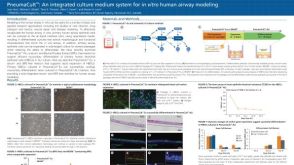 科学海报PneumaCult™: an Integrated Culture Medium System for in Vitro Human Airway Modeling

 沪公网安备31010102008431号