PHE1-based IgG-like antibody platform provides a novel strategy for enhanced T-cell immunotherapy
IntroductionBispecific antibodies (BsAbs) can simultaneously target two epitopes of different antigenic targets,bringing possibilities for diversity in antibody drug design and are promising tools for the treatment of cancers and other diseases. T-cell engaging bsAb is an important application of the bispecific antibody,which could promote T cell-mediated tumor cell killing by targeting tumor-associated antigen (TAA) and CD3 at the same time.MethodsThis study comprised antibodies purification,Elisa assay for antigen binding,cytotoxicity assays,T cell activation by flow cytometry in vitro and xenogenic tumor model in vivo.ResultsWe present a novel bsAb platform named PHE-Ig technique to promote cognate heavy chain (HC)-light chain (LC) pairing by replacing the CH1/CL regions of different monoclonal antibodies (mAbs) with the natural A and B chains of PHE1 fragment of Integrin β2 based on the knob-in-hole (KIH) technology. We had also verified that PHE-Ig technology can be effectively used as a platform to synthesize different desired bsAbs for T-cell immunotherapy. Especially,BCMA×CD3 PHE-Ig bsAbs exhibited robust anti-multiple myeloma (MM) activity in vitro and in vivo.DiscussionMoreover,PHE1 domain was further shortened with D14G and R41S mutations,named PHE-S,and the PHE-S-based BCMA×CD3 bsAbs also showed anti BCMA+ tumor effect in vitro and in vivo,bringing more possibilities for the development and optimization of different bsAbs. To sum up,PHE1-based IgG-like antibody platform for bsAb construction provides a novel strategy for enhanced T-cell immunotherapy.
View Publication
Non-viral DNA donor templates are commonly used for targeted genomic integration via homologous recombination (HR),with efficiency improved by CRISPR/Cas9 technology. Circular single-stranded DNA (cssDNA) has been used as a genome engineering catalyst (GATALYST) for efficient and safe gene knock-in. Here,we introduce enGager,an enhanced GATALYST associated genome editor system that increases transgene integration efficiency by tethering cssDNA donors to nuclear-localized Cas9 fused with single-stranded DNA binding peptide motifs. This approach further improves targeted integration and expression of reporter genes at multiple genomic loci in various cell types,showing up to 6-fold higher efficiency compared to unfused Cas9,especially for large transgenes in primary cells. Notably,enGager enables efficient integration of a chimeric antigen receptor (CAR) transgene in 33% of primary human T cells,enhancing anti-tumor functionality. This ‘tripartite editor with ssDNA optimized genome engineering (TESOGENASE) offers a safer,more efficient alternative to viral vectors for therapeutic gene modification. Non-viral DNA donor templates are commonly used for targeted genomic integration via homologous recombination. Here the authors present the TESOGENASE system which enhances CRISPR-based gene integration by tethering circular single-stranded DNA to Cas9.
View Publication
产品类型:
产品号#:
20144
产品名:
EasySep™缓冲液
S. Chatterjee et al. (Apr 2024)
Cellular and Molecular Life Sciences: CMLS 81 1
Telomerase is essential for cardiac differentiation and sustained metabolism of human cardiomyocytes
Telomeres as the protective ends of linear chromosomes,are synthesized by the enzyme telomerase (TERT). Critically short telomeres essentially contribute to aging-related diseases and are associated with a broad spectrum of disorders known as telomeropathies. In cardiomyocytes,telomere length is strongly correlated with cardiomyopathies but it remains ambiguous whether short telomeres are the cause or the result of the disease. In this study,we employed an inducible CRISPRi human induced pluripotent stem cell (hiPSC) line to silence TERT expression enabling the generation of hiPSCs and hiPSC-derived cardiomyocytes with long and short telomeres. Reduced telomerase activity and shorter telomere lengths of hiPSCs induced global transcriptomic changes associated with cardiac developmental pathways. Consequently,the differentiation potential towards cardiomyocytes was strongly impaired and single cell RNA sequencing revealed a shift towards a more smooth muscle cell like identity in the cells with the shortest telomeres. Poor cardiomyocyte function and increased sensitivity to stress directly correlated with the extent of telomere shortening. Collectively our data demonstrates a TERT dependent cardiomyogenic differentiation defect,highlighting the CRISPRi TERT hiPSCs model as a powerful platform to study the mechanisms and consequences of short telomeres in the heart and also in the context of telomeropathies. The online version contains supplementary material available at 10.1007/s00018-024-05239-7.
View Publication
产品类型:
产品号#:
05230
产品名:
STEMdiff™ 三谱系分化试剂盒
S. Acharya et al. (Jun 2024)
Nature Communications 15
PAM-flexible Engineered FnCas9 variants for robust and ultra-precise genome editing and diagnostics
The clinical success of CRISPR therapies hinges on the safety and efficacy of Cas proteins. The Cas9 from Francisella novicida (FnCas9) is highly precise,with a negligible affinity for mismatched substrates,but its low cellular targeting efficiency limits therapeutic use. Here,we rationally engineer the protein to develop enhanced FnCas9 (enFnCas9) variants and broaden their accessibility across human genomic sites by ~3.5-fold. The enFnCas9 proteins with single mismatch specificity expanded the target range of FnCas9-based CRISPR diagnostics to detect the pathogenic DNA signatures. They outperform Streptococcus pyogenes Cas9 (SpCas9) and its engineered derivatives in on-target editing efficiency,knock-in rates,and off-target specificity. enFnCas9 can be combined with extended gRNAs for robust base editing at sites which are inaccessible to PAM-constrained canonical base editors. Finally,we demonstrate an RPE65 mutation correction in a Leber congenital amaurosis 2 (LCA2) patient-specific iPSC line using enFnCas9 adenine base editor,highlighting its therapeutic utility. Subject terms: CRISPR-Cas9 genome editing,Molecular medicine,Genetic engineering,CRISPR-Cas9 genome editing
View Publication
产品类型:
产品号#:
100-0483
100-0484
产品名:
Hausser Scientificᵀᴹ 明线血球计数板
ReLeSR™
E. Park et al. (Jan 2026)
Light,Science & Applications 15
Label-free mid-infrared dichroism-sensitive photoacoustic microscopy for histostructural analysis of engineered heart tissues
Many biological tissues,such as cardiac muscle,tendons,and the cornea,exhibit highly organized microstructural alignment that is critical for mechanical and physiological functions. Disruptions in this structural organization are commonly associated with pathological conditions such as fibrosis,infarction,and cancer. However,conventional histological imaging techniques rely on immunofluorescence or histochemical staining,and they evaluate tissue alignment via non-physical 2D gradient-based calculation,which is labor-intensive,antibody-dependent,and prone to variability. Here,we demonstrate label-free mid-infrared dichroism-sensitive photoacoustic microscopy (MIR-DS-PAM),an analytical imaging system for cardiac tissue assessments. By combining molecular specificity with polarization sensitivity,this method selectively visualizes protein-rich engineered heart tissue (EHT) and quantifies the extracellular matrix (ECM) alignment without any labeling. The extracted dichroism-sensitive parameters,such as the degree of dichroism and the orientation angle,enable histostructural evaluation of tissue integrity and reveal diagnostic cues in fibrotic EHT. This technique offers a label-free analytical tool for fibrosis research and tissue engineering applications. Mid-infrared dichroism-sensitive photoacoustic microscopy enables label-free,quantitative histostructural analysis by combining spectral specificity and polarization sensitivity to visualize protein-rich components and evaluate anisotropic tissue alignment.
View Publication
Lee WJ et al. (OCT 2005)
Molecular pharmacology 68 4 1018--30
Mechanisms for the inhibition of DNA methyltransferases by tea catechins and bioflavonoids.
In the present investigation,we studied the modulating effects of several tea catechins and bioflavonoids on DNA methylation catalyzed by prokaryotic SssI DNA methyltransferase (DNMT) and human DNMT1. We found that each of the tea polyphenols [catechin,epicatechin,and (-)-epigallocatechin-3-O-gallate (EGCG)] and bioflavonoids (quercetin,fisetin,and myricetin) inhibited SssI DNMT- and DNMT1-mediated DNA methylation in a concentration-dependent manner. The IC(50) values for catechin,epicatechin,and various flavonoids ranged from 1.0 to 8.4 microM,but EGCG was a more potent inhibitor,with IC(50) values ranging from 0.21 to 0.47 microM. When epicatechin was used as a model inhibitor,kinetic analyses showed that this catechol-containing dietary polyphenol inhibited enzymatic DNA methylation in vitro largely by increasing the formation of S-adenosyl-L-homocysteine (a potent noncompetitive inhibitor of DNMTs) during the catechol-O-methyltransferase-mediated O-methylation of this dietary catechol. In comparison,the strong inhibitory effect of EGCG on DNMT-mediated DNA methylation was independent of its own methylation and was largely due to its direct inhibition of the DNMTs. This inhibition is strongly enhanced by Mg(2+). Computational modeling studies showed that the gallic acid moiety of EGCG plays a crucial role in its high-affinity,direct inhibitory interaction with the catalytic site of the human DNMT1,and its binding with the enzyme is stabilized by Mg(2+). The modeling data on the precise molecular mode of EGCG's inhibitory interaction with human DNMT1 agrees perfectly with our experimental finding.
View Publication
产品类型:
产品号#:
73644
产品名:
(-)-Epigallocatechin Gallate
Kubicek S et al. (FEB 2007)
Molecular cell 25 3 473--81
Reversal of H3K9me2 by a small-molecule inhibitor for the G9a histone methyltransferase.
Histone lysine methylation has important roles in the organization of chromatin domains and the regulation of gene expression. To analyze its function and modulate its activity,we screened for specific inhibitors against histone lysine methyltransferases (HMTases) using recombinant G9a as the target enzyme. From a chemical library comprising 125,000 preselected compounds,seven hits were identified. Of those,one inhibitor,BIX-01294 (diazepin-quinazolin-amine derivative),does not compete with the cofactor S-adenosyl-methionine,and selectively impairs the G9a HMTase and the generation of H3K9me2 in vitro. In cellular assays,transient incubation of several cell lines with BIX-01294 lowers bulk H3K9me2 levels that are restored upon removal of the inhibitor. Importantly,chromatin immunoprecipitation at several G9a target genes demonstrates reversible reduction of promoter-proximal H3K9me2 in inhibitor-treated mouse ES cells and fibroblasts. Our data identify a biologically active HMTase inhibitor that allows for the transient modulation of H3K9me2 marks in mammalian chromatin.
View Publication
产品类型:
产品号#:
72042
72044
产品名:
BIX01294 (Trihydrochloride Hydrate)
BIX01294 (Trihydrochloride Hydrate)
Friedel T et al. (MAR 2016)
Stem cells and development 25 9 729--39
CD30 Receptor-Targeted Lentiviral Vectors for Human Induced Pluripotent Stem Cell-Specific Gene Modification.
Cultures of induced pluripotent stem cells (iPSCs) often contain cells of varying grades of pluripotency. We present novel lentiviral vectors targeted to the surface receptor CD30 (CD30-LV) to transfer genes into iPSCs that are truly pluripotent as demonstrated by marker gene expression. We demonstrate that CD30 expression is restricted to SSEA4high cells of human iPSC cultures and a human embryonic stem cell line. When CD30-LV was added to iPSCs during routine cultivation,efficient and exclusive transduction of cells positive for the pluripotency marker Oct-4 was achieved,while retaining their pluripotency. When added during the reprogramming process,CD30-LV solely transduced cells that became fully reprogrammed iPSCs as confirmed by co-expression of endogenous Nanog and the reporter gene. Thus,CD30-LV may serve as novel tool for the selective gene transfer into pluripotent stem cells with broad applications in basic and therapeutic research.
View Publication
Polyglutamine Disease Modeling: Epitope Based Screen for Homologous Recombination using CRISPR/Cas9 System.
We have previously reported the genetic correction of Huntington's disease (HD) patient-derived induced pluripotent stem cells using traditional homologous recombination (HR) approaches. To extend this work,we have adopted a CRISPR-based genome editing approach to improve the efficiency of recombination in order to generate allelic isogenic HD models in human cells. Incorporation of a rapid antibody-based screening approach to measure recombination provides a powerful method to determine relative efficiency of genome editing for modeling polyglutamine diseases or understanding factors that modulate CRISPR/Cas9 HR.
View Publication
产品类型:
产品号#:
85850
85857
产品名:
mTeSR™1
mTeSR™1
Mormone E et al. (NOV 2014)
Stem cells and development 23 21 2626--36
Footprint-free" human induced pluripotent stem cell-derived astrocytes for in vivo cell-based therapy."
The generation of human induced pluripotent stem cells (hiPSC) from somatic cells has enabled the possibility to provide patient-specific hiPSC for cell-based therapy,drug discovery,and other translational applications. Two major obstacles in using hiPSC for clinical application reside in the risk of genomic modification when they are derived with viral transgenes and risk of teratoma formation if undifferentiated cells are engrafted. In this study,we report the generation of footprint-free" hiPSC-derived astrocytes. These are efficiently generated�
View Publication


 EasySep™小鼠TIL(CD45)正选试剂盒




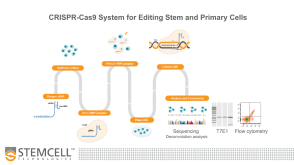 1:07:14
线上讲座Optimized Workflows for High-Efficiency Genome Editing in Stem and Primary Cell Types发布日期: 09/09/2019
1:07:14
线上讲座Optimized Workflows for High-Efficiency Genome Editing in Stem and Primary Cell Types发布日期: 09/09/2019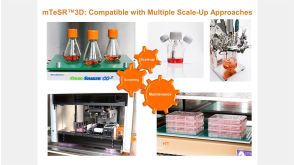

 沪公网安备31010102008431号