Baatz JE et al. (JUL 2014)
In vivo (Athens,Greece) 28 4 411--423
Cryopreservation of viable human lung tissue for versatile post-thaw analyses and culture.
Clinical trials are currently used to test therapeutic efficacies for lung cancer,infections and diseases. Animal models are also used as surrogates for human disease. Both approaches are expensive and time-consuming. The utility of human biospecimens as models is limited by specialized tissue processing methods that preserve subclasses of analytes (e.g. RNA,protein,morphology) at the expense of others. We present a rapid and reproducible method for the cryopreservation of viable lung tissue from patients undergoing lobectomy or transplant. This method involves the pseudo-diaphragmatic expansion of pieces of fresh lung tissue with cryoprotectant formulation (pseudo-diaphragmatic expansion-cryoprotectant perfusion or PDX-CP) followed by controlled-rate freezing in cryovials. Expansion-perfusion rates,volumes and cryoprotectant formulation were optimized to maintain tissue architecture,decrease crystal formation and increase long-term cell viability. Rates of expansion of 4 cc/min or less and volumes ranging from 0.8-1.2 × tissue volume were well-tolerated by lung tissue obtained from patients with chronic obstructive pulmonary disease or idiopathic pulmonary fibrosis,showing minimal differences compared to standard histopathology. Morphology was greatly improved by the PDX-CP procedure compared to simple fixation. Fresh versus post-thawed lung tissue showed minimal differences in histology,RNA integrity numbers and post-translational modified protein integrity (2-dimensional differential gel electrophoresis). It was possible to derive numerous cell types,including alveolar epithelial cells,fibroblasts and stem cells,from the tissue for at least three months after cryopreservation. This new method should provide a uniform,cost-effective approach to the banking of biospecimens,with versatility to be amenable to any post-acquisition process applicable to fresh tissue samples.
View Publication
产品类型:
产品号#:
85850
85857
产品名:
mTeSR™1
mTeSR™1
Gorman BR et al. (DEC 2014)
PLoS ONE 9 12 e116037
Multi-scale imaging and informatics pipeline for in situ pluripotent stem cell analysis
Human pluripotent stem (hPS) cells are a potential source of cells for medical therapy and an ideal system to study fate decisions in early development. However,hPS cells cultured in vitro exhibit a high degree of heterogeneity,presenting an obstacle to clinical translation. hPS cells grow in spatially patterned colony structures,necessitating quantitative single-cell image analysis. We offer a tool for analyzing the spatial population context of hPS cells that integrates automated fluorescent microscopy with an analysis pipeline. It enables high-throughput detection of colonies at low resolution,with single-cellular and sub-cellular analysis at high resolutions,generating seamless in situ maps of single-cellular data organized by colony. We demonstrate the tool's utility by analyzing inter- and intra-colony heterogeneity of hPS cell cycle regulation and pluripotency marker expression. We measured the heterogeneity within individual colonies by analyzing cell cycle as a function of distance. Cells loosely associated with the outside of the colony are more likely to be in G1,reflecting a less pluripotent state,while cells within the first pluripotent layer are more likely to be in G2,possibly reflecting a G2/M block. Our multi-scale analysis tool groups colony regions into density classes,and cells belonging to those classes have distinct distributions of pluripotency markers and respond differently to DNA damage induction. Lastly,we demonstrate that our pipeline can robustly handle high-content,high-resolution single molecular mRNA FISH data by using novel image processing techniques. Overall,the imaging informatics pipeline presented offers a novel approach to the analysis of hPS cells that includes not only single cell features but also colony wide,and more generally,multi-scale spatial configuration.
View Publication
HELLS is required for maintaining proper DNA modification at human satellite repeats
DNA methylation regulation involves multi-layered chromatin interactions that require remodeling proteins like the helicase,lymphoid-specific (HELLS). Here,we generate HELLS and DNA methyltransferase 3A and B (DNMT3A/B) knockout human pluripotent stem cells and report telomere-to-telomere maps of whole genome bisulfite sequencing data combined with ATAC-sequencing. Disrupting HELLS induces a global loss of DNA methylation that is distinct from the DNMTs,in particular over peri/centromeric satellite repeats as defined in the telomere-to-telomere genome assembly. However,HELLS appears dispensable for local enhancer remodeling and the potential to differentiate into the three embryonic germ layers. Taken together,our results further clarify the genomic targets and role of HELLS in human cells.Supplementary InformationThe online version contains supplementary material available at 10.1186/s13059-025-03681-9.
View Publication
产品类型:
产品号#:
05120
100-0276
100-1130
产品名:
STEMdiff™胰腺祖细胞试剂盒
mTeSR™ Plus
mTeSR™ Plus
(Jul 2024)
Molecular Therapy Oncology 32 3
T cell receptor-directed antibody-drug conjugates for the treatment of T cell-derived cancers
T cell-derived cancers are hallmarked by heterogeneity,aggressiveness,and poor clinical outcomes. Available targeted therapies are severely limited due to a lack of target antigens that allow discrimination of malignant from healthy T cells. Here,we report a novel approach for the treatment of T cell diseases based on targeting the clonally rearranged T cell receptor displayed by the cancerous T cell population. As a proof of concept,we identified an antibody with unique specificity toward a distinct T cell receptor (TCR) and developed antibody-drug conjugates,precisely recognizing and eliminating target T cells while preserving overall T cell repertoire integrity and cellular immunity. Our anti-TCR antibody-drug conjugates demonstrated effective receptor-mediated cell internalization,associated with induction of cancer cell death with strong signs of apoptosis. Furthermore,cell proliferation-inhibiting bystander effects observed on target-negative cells may contribute to the molecules’ anti-tumor properties precluding potential tumor escape mechanisms. To our knowledge,this represents the first anti-TCR antibody-drug conjugate designed as custom-tailored immunotherapy for T cell-driven pathologies. Graphical abstract Harald Kolmar and colleagues report a novel approach for the treatment of the difficult-to-treat T cell lymphoma/leukemia based on targeting the clonally rearranged T cell receptor expressed by the malignant T cell population. The developed antibody-drug conjugates precisely eliminate target T cells while preserving the integrity of the T cell repertoire and cellular immunity.
View Publication
产品类型:
产品号#:
17851
17851RF
100-0692
产品名:
EasySep™人CD3正选试剂盒II
RoboSep™ 人CD3正选试剂盒II
EasySep™人CD3正选试剂盒II
(Mar 2025)
The Journal of Experimental Medicine 222 5
KLF family members control expression of genes required for tissue macrophage identities
This work demonstrates that group 2 KLF family transcription factors are critical for specifying the identity of distinct tissue-resident macrophages. KLF2 directly controls expression of genes previously shown to be necessary in cavity macrophages,while KLF4 may play a similar role in alveolar macrophages. Tissue-resident macrophages adopt distinct gene expression profiles and exhibit functional specialization based on their tissue of residence. Recent studies have begun to define the signals and transcription factors that induce these identities. Here we describe an unexpected and specific role for the broadly expressed transcription factor Krüppel-like factor 2 (KLF2) in the development of embryonically derived large cavity macrophages (LCMs) in the serous cavities. KLF2 not only directly regulates the transcription of genes previously shown to specify LCM identity,such as retinoic acid receptors and GATA6,but also is required for induction of many other transcripts that define the identity of these cells. Our results suggest that KLF4 may similarly regulate the identity of alveolar macrophages in the lung. These data demonstrate that broadly expressed transcription factors,such as group 2 KLFs,can play important roles in the specification of distinct identities of tissue-resident macrophages.
View Publication
产品类型:
产品号#:
19861
19861RF
产品名:
EasySep™小鼠单核细胞分选试剂盒
RoboSep™ 小鼠单核细胞分选试剂盒
M. L. Stone et al. (Nov 2024)
iScience 27 12
Agarose hydrogel-mediated electroporation method for retinal tissue cultured at the air-liquid interface
It is advantageous to culture the ex vivo retina and other tissues at the air-liquid interface to allow for more efficient gas exchange. However,gene delivery to these cultures can be challenging. Electroporation is a fast and robust method of gene delivery,but typically requires submergence in liquid buffer for electrical current flow. We have developed a submergence-free electroporation technique that incorporates an agarose hydrogel disk between the positive electrode and retina. Inner retinal neurons and Müller glia are transfected with increased propensity toward Müller glia transfection after extended time in culture. We also observed an increase in BrdU incorporation in Müller glia following electrical stimulation,and variation in detection of transfected cells from expression vectors with different promoters. This method advances our ability to use ex vivo retinal tissue for genetic studies and should be adaptable for other tissues cultured at an air-liquid interface. Subject areas: Genetic engineering,Methodology in biological sciences,Bioelectrical engineering
View Publication
产品类型:
产品号#:
05790
产品名:
BrainPhys™神经元培养基
K. Tanaka et al. (Apr 2025)
Scientific Reports 15 23
Robust and reproducible human intestinal organoid-derived monolayer model for analyzing drug absorption
Predicting the absorption of orally administered drugs is crucial to drug development. Current in vitro models lack physiological relevance,robustness,and reproducibility,thus hindering reliable predictions. In this study,we developed a reproducible and robust culture method to generate a human intestinal organoid-derived monolayer model that can be applied to study drug absorption through a step-by-step approach. Our model showed similarity to primary enterocytes in terms of the drug absorption-related gene expression profile,tight barrier function,tolerability toward artificial bile juice,drug transporter and metabolizing enzyme function,and nuclear receptor activity. This method can be applied to organoids derived from multiple donors. The permeability of launched 19 drugs in our model demonstrated a correlation with human Fa values,with an R 2 value of 0.88. Additionally,by combining the modeling and simulation approaches,the estimated FaFg values for seven out of nine drugs,including CYP3A substrates,fell within 1.5 times the range of the human FaFg values. Applying this method to the drug discovery process might bridge the gap between preclinical and clinical research and increase the success rates of drug development.
View Publication
产品类型:
产品号#:
06010
产品名:
IntestiCult™ 类器官生长培养基 (人)
H. Sim et al. (may 2020)
International journal of molecular sciences 21 10
Iroquois Homeobox Protein 2 Identified as a Potential Biomarker for Parkinson's Disease.
The diagnosis of Parkinson's disease (PD) is initiated after the occurrence of motor symptoms,such as resting tremors,rigidity,and bradykinesia. According to previous reports,non-motor symptoms,notably gastrointestinal dysfunction,could potentially be early biomarkers in PD patients as such symptoms occur earlier than motor symptoms. However,connecting PD to the intestine is methodologically challenging. Thus,we generated in vitro human intestinal organoids from PD patients and ex vivo mouse small intestinal organoids from aged transgenic mice. Both intestinal organoids (IOs) contained the human LRRK2 G2019S mutation,which is the most frequent genetic cause of familial and sporadic PD. By conducting comprehensive genomic comparisons with these two types of IOs,we determined that a particular gene,namely,Iroquois homeobox protein 2 (IRX2),showed PD-related expression patterns not only in human pluripotent stem cell (PSC)-derived neuroectodermal spheres but also in human PSC-derived neuronal cells containing dopaminergic neurons. We expected that our approach of using various cell types presented a novel technical method for studying the effects of multi-organs in PD pathophysiology as well as for the development of diagnostic markers for PD.
View Publication


 EasySep™小鼠TIL(CD45)正选试剂盒




 实验方案How to Process Leukocyte Reduction System (LRS) Cones/Chambers for Downstream Cell Isolation
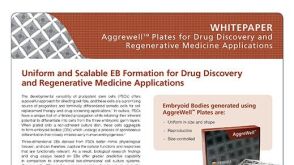 技术公告Uniform and Scalable EB Formation for Drug Discovery and Regenerative Medicine Applications

 沪公网安备31010102008431号