O. V. Halaidych et al. (MAY 2018)
Stem cell reports 10 5 1642--1656
Inflammatory Responses and Barrier Function of Endothelial Cells Derived from Human Induced Pluripotent Stem Cells.
Several studies have reported endothelial cell (EC) derivation from human induced pluripotent stem cells (hiPSCs). However,few have explored their functional properties in depth with respect to line-to-line and batch-to-batch variability and how they relate to primary ECs. We therefore carried out accurate characterization of hiPSC-derived ECs (hiPSC-ECs) from multiple (non-integrating) hiPSC lines and compared them with primary ECs in various functional assays,which included barrier function using real-time impedance spectroscopy with an integrated assay of electric wound healing,endothelia-leukocyte interaction under physiological flow to mimic inflammation and angiogenic responses in in vitro and in vivo assays. Overall,we found many similarities but also some important differences between hiPSC-derived and primary ECs. Assessment of vasculogenic responses in vivo showed little difference between primary ECs and hiPSC-ECs with regard to functional blood vessel formation,which may be important in future regenerative medicine applications requiring vascularization.
View Publication
产品类型:
产品号#:
07930
07931
07933
07940
07949
07952
07953
07955
07959
100-1061
85850
85857
产品名:
CryoStor® CS10
CryoStor® CS10
CryoStor®CS5
CryoStor® CS10
CryoStor®CS5
CryoStor® CS10
CryoStor®CS5
CryoStor® CS10
CryoStor® CS10
CryoStor® CS10
mTeSR™1
mTeSR™1
Zhou P et al. (MAY 2016)
Biomaterials 87 1--17
Simple and versatile synthetic polydopamine-based surface supports reprogramming of human somatic cells and long-term self-renewal of human pluripotent stem cells under defined conditions
Human pluripotent stem cells (hPSCs) possess great value in the aspect of cellular therapies due to its self-renewal and potential to differentiate into all somatic cell types. A few defined synthetic surfaces such as polymers and adhesive biological materials conjugated substrata were established for the self-renewal of hPSCs. However,none of them was effective in the generation of human induced pluripotent stem cells (hiPSCs) and long-term maintenance of multiple hPSCs,and most of them required complicated manufacturing processes. Polydopamine has good biocompatibility,is able to form a stable film on nearly all solid substrates surface,and can immobilize adhesive biomolecules. In this manuscript,a polydopamine-mediated surface was developed,which not only supported the reprogramming of human somatic cells into hiPSCs under defined conditions,but also sustained the growth of hiPSCs on diverse substrates. Moreover,the proliferation and pluripotency of hPSCs cultured on the surface were comparable to Matrigel for more than 20 passages. Besides,hPSCs were able to differentiate to cardiomyocytes and neural cells on the surface. This polydopamine-based synthetic surface represents a chemically-defined surface extensively applicable both for fundamental research and cell therapies of hPSCs.
View Publication
产品类型:
产品号#:
05833
05835
05839
产品名:
STEMdiff™神经前体细胞培养基
STEMdiff™ 神经诱导培养基
STEMdiff™ 神经诱导培养基
Lopez-Izquierdo A et al. (NOV 2014)
American journal of physiology. Heart and circulatory physiology 307 9 H1370--7
A near-infrared fluorescent voltage-sensitive dye allows for moderate-throughput electrophysiological analyses of human induced pluripotent stem cell-derived cardiomyocytes.
Human induced pluripotent stem cell-derived cardiomyocyte (iPSC-CM)-based assays are emerging as a promising tool for the in vitro preclinical screening of QT interval-prolonging side effects of drugs in development. A major impediment to the widespread use of human iPSC-CM assays is the low throughput of the currently available electrophysiological tools. To test the precision and applicability of the near-infrared fluorescent voltage-sensitive dye 1-(4-sulfanatobutyl)-4-β[2-(di-n-butylamino)-6-naphthyl]butadienylquinolinium betaine (di-4-ANBDQBS) for moderate-throughput electrophysiological analyses,we compared simultaneous transmembrane voltage and optical action potential (AP) recordings in human iPSC-CM loaded with di-4-ANBDQBS. Optical AP recordings tracked transmembrane voltage with high precision,generating nearly identical values for AP duration (AP durations at 10%,50%,and 90% repolarization). Human iPSC-CMs tolerated repeated laser exposure,with stable optical AP parameters recorded over a 30-min study period. Optical AP recordings appropriately tracked changes in repolarization induced by pharmacological manipulation. Finally,di-4-ANBDQBS allowed for moderate-throughput analyses,increasing throughput textgreater10-fold over the traditional patch-clamp technique. We conclude that the voltage-sensitive dye di-4-ANBDQBS allows for high-precision optical AP measurements that markedly increase the throughput for electrophysiological characterization of human iPSC-CMs.
View Publication
产品类型:
产品号#:
85850
85857
产品名:
mTeSR™1
mTeSR™1
Unzu C et al. ( 2016)
Stem Cells International 2016 4370142
Human hepatocyte-derived induced pluripotent stem cells: MYC expression, similarities to human germ cell tumors, and safety issues
textlessptextgreater Induced pluripotent stem cells (iPSC) are a most promising approach to the development of a hepatocyte transplantable mass sufficient to induce long-term correction of inherited liver metabolic diseases,thus avoiding liver transplantation. Their intrinsic self-renewal ability and potential to differentiate into any of the three germ layers identify iPSC as the most promising cell-based therapeutics,but also as drivers of tumor development. Teratoma development currently represents the gold standard to assess iPSC pluripotency. We analyzed the tumorigenic potential of iPSC generated from human hepatocytes (HEP-iPSC) and compared their immunohistochemical profiles to that of tumors developed from fibroblast and hematopoietic stem cell-derived iPSC. HEP-iPSC generated tumors significantly presented more malignant morphological features than reprogrammed fibroblasts or CD34+ iPSC. Moreover,the protooncogene textlessitalictextgreatermyctextless/italictextgreater showed the strongest expression in HEP-iPSC,compared to only faint expression in the other cell subsets. Random integration of transgenes and the use of potent protooncogenes such as textlessitalictextgreatermyctextless/italictextgreater might be a risk factor for malignant tumor development if hepatocytes are used for reprogramming. Nonviral vector delivery systems or reprogramming of cells obtained from less invasive harvesting methods would represent interesting options for future developments in stem cell-based approaches for liver metabolic diseases. textless/ptextgreater
View Publication
产品类型:
产品号#:
85850
85857
产品名:
mTeSR™1
mTeSR™1
Shahbazi M et al. (JUL 2013)
Journal of the Neurological Sciences 330 1–2 85--93
Inhibitory effects of neural stem cells derived from human embryonic stem cells on differentiation and function of monocyte-derived dendritic cells
Neural stem cells (NSCs) possess immunosuppressive characteristics,but effects of NSCs on human dendritic cells (DCs),the most important antigen presenting cells,are less well studied. We used an in vitro approach to evaluate the effects of human NSCs on differentiation of human blood CD14+ monocytes into DCs. NSCs derived from H1 human embryonic stem cells (hESC-NSCs) and human ReNcell NSC line,as well as human bone marrow derived mesenchymal stem cells (MSCs),were tested. We observed that in response to treatment with interleukin-4 and granulocyte macrophage colony-stimulating factor CD14+ monocytes co-cultured with NSCs were able to down-regulate CD14 and up-regulate the differentiation marker CD1a,whereas MSC co-culture strongly inhibited CD1a expression and supported prolonged expression of CD14. A similar difference between NSCs and MSCs was noted when lipopolysaccharides were included to induce maturation of monocyte-derived DCs. However,when effects on the function of derived DCs were investigated,NSCs suppressed the elevation of the DC maturation marker CD83,although not the up-regulation of costimulatory molecules CD80,CD86 and CD40,and impaired the functional capacity of the derived DCs to stimulate alloreactive T cells. We did not observe any obvious difference between hESC-NSCs and ReNcell NSCs in inhibiting DC maturation and function. Our data suggest that although human NSCs are less effective than human MSCs in suppressing monocyte differentiation into DCs,these stem cells can still affect the function of DCs,ultimately regulating specific immune responses.
View Publication
产品类型:
产品号#:
70025
70025.1
70025.2
70025.3
85850
85857
产品名:
冻存的人外周血单个核细胞
冻存的人外周血单个核细胞
冻存的人外周血单个核细胞
冻存的人外周血单个核细胞
mTeSR™1
mTeSR™1
Brandl C et al. (SEP 2014)
NeuroMolecular Medicine 16 3 551--564
In-depth characterisation of Retinal Pigment Epithelium (RPE) cells derived from human induced pluripotent stem cells (hiPSC).
Induced pluripotent stem cell (iPSC)-derived retinal pigment epithelium (RPE) has widely been appreciated as a promising tool to model human ocular disease emanating from primary RPE pathology. Here,we describe the successful reprogramming of adult human dermal fibroblasts to iPSCs and their differentiation to pure expandable RPE cells with structural and functional features characteristic for native RPE. Fibroblast cultures were established from skin biopsy material and subsequently reprogrammed following polycistronic lentiviral transduction with OCT4,SOX2,KLF4 and L-Myc. Fibroblast-derived iPSCs showed typical morphology,chromosomal integrity and a distinctive stem cell marker profile. Subsequent differentiation resulted in expandable pigmented hexagonal RPE cells. The cells revealed stable RNA expression of mature RPE markers RPE65,RLBP and BEST1. Immunolabelling verified localisation of BEST1 at the basolateral plasma membrane,and scanning electron microscopy showed typical microvilli at the apical side of iPSC-derived RPE cells. Transepithelial resistance was maintained at high levels during cell culture indicating functional formation of tight junctions. Secretion capacity was demonstrated for VEGF-A. Feeding of porcine photoreceptor outer segments revealed the proper ability of these cells for phagocytosis. IPSC-derived RPE cells largely maintained these properties after cryopreservation. Together,our study underlines that adult dermal fibroblasts can serve as a valuable resource for iPSC-derived RPE with characteristics highly reminiscent of true RPE cells. This will allow its broad application to establish cellular models for RPE-related human diseases.
View Publication
产品类型:
产品号#:
07923
07930
07931
07940
07952
07955
07959
100-1061
85850
85857
产品名:
Dispase (1 U/mL)
CryoStor® CS10
CryoStor® CS10
CryoStor® CS10
CryoStor® CS10
CryoStor® CS10
CryoStor® CS10
CryoStor® CS10
mTeSR™1
mTeSR™1
Yang J et al. ( 2014)
BMC Biology 12 1 95
Suppression of histone deacetylation promotes the differentiation of human pluripotent stem cells towards neural progenitor cells
BACKGROUND:Emerging studies of human pluripotent stem cells (hPSCs) raise new prospects for neurodegenerative disease modeling and cell replacement therapies. Therefore,understanding the mechanisms underlying the commitment of neural progenitor cells (NPCs) is important for the application of hPSCs in neurodegenerative disease therapies. It has been reported that epigenetic modifications of histones play important roles in neural differentiation,but the exact mechanisms in regulating hPSC differentiation towards NPCs are not fully elucidated.RESULTS:We demonstrated that suppression of histone deacetylases (HDACs) promoted the differentiation of hPSCs towards NPCs. Application of HDAC inhibitors (HDACi) increased the expression of neuroectodermal markers and enhanced the neuroectodermal specification once neural differentiation was initiated,thereby leading to more NPC generation. Similarly,the transcriptome analysis showed that HDACi increased the expression levels of ectodermal markers and triggered the NPC differentiation related pathways,while decreasing the expression levels of endodermal and mesodermal markers. Furthermore,we documented that HDAC3 but not HDAC1 or HDAC2 was the critical regulator participating in NPC differentiation,and knockdown of HDAC3's cofactor SMRT exhibited a similar effect as HDAC3 on NPC generation.CONCLUSIONS:Our study reveals that HDACs,especially HDAC3,negatively regulate the differentiation of hPSCs towards NPCs at an earlier stage of neural differentiation. Moreover,HDAC3 might function by forming a repressor complex with its cofactor SMRT during this process. Thus,our findings uncover an important epigenetic mechanism of HDAC3 in the differentiation of hPSCs towards NPCs.
View Publication
产品类型:
产品号#:
07920
07922
100-1044
72302
72304
72307
72308
85850
85857
产品名:
ACCUTASE™
ACCUTASE™
Y-27632(二盐酸盐)
Y-27632(二盐酸盐)
Y-27632(二盐酸盐)
Y-27632(二盐酸盐)
Y-27632(二盐酸盐)
mTeSR™1
mTeSR™1
Song W et al. (OCT 2016)
Journal of Biomedical Materials Research - Part A 104 3 678--687
Efficient generation of endothelial cells from human pluripotent stem cells and characterization of their functional properties
Although endothelial cells (ECs) have been derived from human pluripotent stem cells (hPSCs),large-scale generation of hPSC-ECs remains challenging and their functions are not well characterized. Here we report a simple and efficient three-stage method that allows generation of approximately 98 and 9500 ECs on day 16 and day 34,respectively,from each human embryonic stem cell (hESC) input. The functional properties of hESC-ECs derived in the presence and absence of a TGF$$-inhibitory molecule SB431542 were characterized and compared with those of human umbilical vein endothelial cells (HUVECs). Confluent monolayers formed by SB431542(+) hESC-ECs,SB431542(-) hESC-ECs,and HUVECs showed similar permeability to 10,000 Da dextran,but these cells exhibited striking differences in forming tube-like structures in 3D fibrin gels. The SB431542(+) hESC-ECs were most potent in forming tube-like structures regardless of whether VEGF and bFGF were present in the medium; less potent SB431542(-) hESC-ECs and HUVECs responded differently to VEGF and bFGF,which significantly enhanced the ability of HUVECs to form tube-like structures but had little impact on SB431542(-) hESC-ECs. This study offers an efficient approach to large-scale hPSC-EC production and suggests that the phenotypes and functions of hPSC-ECs derived under different conditions need to be thoroughly examined before their use in technology development. This article is protected by copyright. All rights reserved.
View Publication
产品类型:
产品号#:
07923
27215
27216
27217
27250
27260
27270
36254
85850
85857
产品名:
Dispase (1 U/mL)
37µm可逆滤筛,小 (15 mL)
70µm可逆滤筛,小 (15 mL)
100µm可逆滤筛,小 (15 mL)
37µm可逆滤筛,大 (50 mL)
70µm可逆滤筛,大 (50 mL)
100µm可逆滤筛,大 (50 mL)
DMEM/F-12 with 15 mM HEPES
mTeSR™1
mTeSR™1
Cai J et al. (APR 2010)
Journal of Biological Chemistry 285 15 11227--34
Generation of human induced pluripotent stem cells from umbilical cord matrix and amniotic membrane mesenchymal cells
The umbilical cord and placenta are extra-embryonic tissues of particular interest for regenerative medicine. They share an early developmental origin and are a source of vast amounts of cells with multilineage differentiation potential that are poorly immunogenic and without controversy. Moreover,these cells are likely exempt from incorporated mutations when compared with juvenile or adult donor cells such as skin fibroblasts or keratinocytes. Here we report the efficient generation of induced pluripotent stem cells (iPSCs) from mesenchymal cells of the umbilical cord matrix (up to 0.4% of the cells became reprogrammed) and the placental amniotic membrane (up to 0.1%) using exogenous factors and a chemical mixture. iPSCs from these 2 tissues homogeneously showed human embryonic stem cell (hESC)-like characteristics including morphology,positive staining for alkaline phosphatase,normal karyotype,and expression of hESC-like markers including Nanog,Rex1,Oct4,TRA-1-60,TRA-1-80,SSEA-3,and SSEA-4. Selected clones also formed embryonic bodies and teratomas containing derivatives of the 3 germ layers,and could as well be readily differentiated into functional motor neurons. Among other things,our cell lines may prove useful for comparisons between iPSCs derived from multiple tissues regarding the extent of the epigenetic reprogramming,differentiation ability,stability of the resulting lineages,and the risk of associated abnormalities.
View Publication
产品类型:
产品号#:
85850
85857
产品名:
mTeSR™1
mTeSR™1
(Sep 2024)
Nature Communications 15
Robust differentiation of human pluripotent stem cells into mural progenitor cells via transient activation of NKX3.1
Mural cells are central to vascular integrity and function. In this study,we demonstrate the innovative use of the transcription factor NKX3.1 to guide the differentiation of human induced pluripotent stem cells into mural progenitor cells (iMPCs). By transiently activating NKX3.1 in mesodermal intermediates,we developed a method that diverges from traditional growth factor-based differentiation techniques. This approach efficiently generates a robust iMPC population capable of maturing into diverse functional mural cell subtypes,including smooth muscle cells and pericytes. These iMPCs exhibit key mural cell functionalities such as contractility,deposition of extracellular matrix,and the ability to support endothelial cell-mediated vascular network formation in vivo. Our study not only underscores the fate-determining significance of NKX3.1 in mural cell differentiation but also highlights the therapeutic potential of these iMPCs. We envision these insights could pave the way for a broader use of iMPCs in vascular biology and regenerative medicine. Mural progenitor cells are crucial for vascular stability. Here,the authors generate these cells from human pluripotent stem cells using NKX3.1 and show that they can mature into various mural cell types and contribute to blood vessel formation.
View Publication
The endothelial antigen ESAM marks primitive hematopoietic progenitors throughout life in mice.
Although recent advances have enabled hematopoietic stem cells (HSCs) to be enriched to near purity,more information about their characteristics will improve our understanding of their development and stage-related functions. Here,using microarray technology,we identified endothelial cell-selective adhesion molecule (ESAM) as a novel marker for murine HSCs in fetal liver. Esam was expressed at high levels within a Rag1(-) c-kit(Hi) Sca1(+) HSC-enriched fraction,but sharply down-regulated with activation of the Rag1 locus,a valid marker for the most primitive lymphoid progenitors in E14.5 liver. The HSC-enriched fraction could be subdivided into 2 on the basis of ESAM levels. Among endothelial antigens on hematopoietic progenitors,ESAM expression showed intimate correlation with HSC activity. The ESAM(Hi) population was highly enriched for multipotent myeloid-erythroid progenitors and primitive progenitors with lymphopoietic activity,and exclusively reconstituted long-term lymphohematopoiesis in lethally irradiated recipients. Tie2(+) c-kit(+) lymphohematopoietic cells in the E9.5-10.5 aorta-gonad-mesonephros region also expressed high levels of ESAM. Furthermore,ESAM was detected on primitive hematopoietic progenitors in adult bone marrow. Interestingly,ESAM expression in the HSC-enriched fraction was up-regulated in aged mice. We conclude that ESAM marks HSC in murine fetal liver and will facilitate studies of hematopoiesis throughout life.
View Publication


 EasySep™小鼠TIL(CD45)正选试剂盒




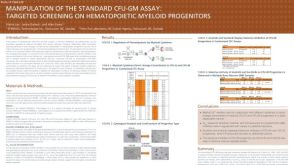 科学海报Manipulation of the Standard CFU-GM Assay Targeted Screening of Hematopoietic Myeloid Progenitors
 沪公网安备31010102008431号