Fischbach NA et al. (FEB 2005)
Blood 105 4 1456--66
HOXB6 overexpression in murine bone marrow immortalizes a myelomonocytic precursor in vitro and causes hematopoietic stem cell expansion and acute myeloid leukemia in vivo.
The HOX family of homeobox genes plays an important role in normal and malignant hematopoiesis. Dysregulated HOX gene expression profoundly effects the proliferation and differentiation of hematopoietic stem cells (HSCs) and committed progenitors,and aberrant activation of HOX genes is a common event in human myeloid leukemia. HOXB6 is frequently overexpressed in human acute myeloid leukemia (AML). To gain further insight into the role of HOXB6 in hematopoiesis,we overexpressed HOXB6 in murine bone marrow using retrovirus-mediated gene transfer. We also explored structure-function relationships using mutant HOXB6 proteins unable to bind to DNA or a key HOX-binding partner,pre-B-cell leukemia transcription factor-1 (PBX1). Additionally,we investigated the potential cooperative interaction with myeloid ecotropic viral integration site 1 homolog (MEIS1). In vivo,HOXB6 expanded HSCs and myeloid precursors while inhibiting erythropoiesis and lymphopoiesis. Overexpression of HOXB6 resulted in AML with a median latency of 223 days. Coexpression of MEIS1 dramatically shortened the onset of AML. Cytogenetic analysis of a subset of HOXB6-induced AMLs revealed recurrent deletions of chromosome bands 2D-E4,a region frequently deleted in HOXA9-induced AMLs. In vitro,HOXB6 immortalized a factor-dependent myelomonocytic precursor capable of granulocytic and monocytic differentiation. These biologic effects of HOXB6 were largely dependent on DNA binding but independent of direct interaction with PBX1.
View Publication
Critical role for PI 3-kinase in the control of erythropoietin-induced erythroid progenitor proliferation.
The production of red blood cells is tightly regulated by erythropoietin (Epo). The phosphoinositide 3-kinase (PI 3-kinase) pathway was previously shown to be activated in response to Epo. We studied the role of this pathway in the control of Epo-induced survival and proliferation of primary human erythroid progenitors. We show that phosphoinositide 3 (PI 3)-kinase associates with 4 tyrosine-phosphorylated proteins in primary human erythroid progenitors,namely insulin receptor substrate-2 (IRS2),Src homology 2 domain-containing inositol 5'-phosphatase (SHIP),Grb2-associated binder-1 (Gab1),and the Epo receptor (EpoR). Using different in vitro systems,we demonstrate that 3 alternative pathways independently lead to Epo-induced activation of PI 3-kinase and phosphorylation of its downstream effectors,Akt,FKHRL1,and P70S6 kinase: through direct association of PI 3-kinase with the last tyrosine residue (Tyr479) of the Epo receptor (EpoR),through recruitment and phosphorylation of Gab proteins via either Tyr343 or Tyr401 of the EpoR,or through phosphorylation of IRS2 adaptor protein. The mitogen-activated protein (MAP) kinase pathway was also activated by Epo in erythroid progenitors,but we found that this process is independent of PI 3-kinase activation. In erythroid progenitors,the functional role of PI 3-kinase was both to prevent apoptosis and to stimulate cell proliferation in response to Epo stimulation. Finally,our results show that PI 3-kinase-mediated proliferation of erythroid progenitors in response to Epo occurs mainly through modulation of the E3 ligase SCF(SKP2),which,in turn,down-regulates p27(Kip1) cyclin-dependent kinase (CDK) inhibitor via proteasome degradation.
View Publication
产品类型:
产品号#:
09500
09600
09650
产品名:
BIT 9500血清替代物
StemSpan™ SFEM
StemSpan™ SFEM
Wang E et al. (AUG 1991)
The Journal of biological chemistry 266 22 14486--90
Inhibition of sphingolipid biosynthesis by fumonisins. Implications for diseases associated with Fusarium moniliforme.
Culture materials and grains contaminated with certain isolates of Fusarium moniliforme cause equine leucoencephalomalacia,porcine pulmonary edema syndrome,and liver cancer in rats. The causative agents are thought to be a family of compounds called fumonisins,which bear considerable structural similarity to the long-chain (sphingoid) base backbones of sphingolipids. Incubation of rat hepatocytes with fumonisins inhibited incorporation of [14C]serine into the sphingosine moiety of cellular sphingolipids with an IC50 of 0.1 microM for fumonisin B1. In contrast,fumonisin B1 increased the amount of the biosynthetic intermediate sphinganine,which suggests that fumonisins inhibit the conversion of [14C]sphinganine to N-acyl-[14C]sphinganines,a step that is thought to precede introduction of the 4,5-trans double bond of sphingosine (Merrill,A.H.,Jr. and Wang,E. (1986) J. Biol. Chem. 261,3764-3769). In agreement with this mechanism,fumonisin B1 inhibited the activity of sphingosine N-acyltransferase (ceramide synthase) in rat liver microsomes with 50% inhibition at approximately 0.1 microM and reduced the conversion of [3H]sphingosine to [3H]ceramide by intact hepatocytes. As far as we are aware,this is the first discovery of a naturally occurring inhibitor of this step of sphingolipid metabolism. These findings suggest that disruption of the de novo pathway of sphingolipid biosynthesis may be a critical event in the diseases that have been associated with consumption of fumonisins.
View Publication
产品类型:
产品号#:
73682
73684
产品名:
Fumonisin B1
Fumonisin B1
Katori S et al. (JUL 2009)
The Journal of neuroscience : the official journal of the Society for Neuroscience 29 29 9137--47
Protocadherin-alpha family is required for serotonergic projections to appropriately innervate target brain areas.
Serotonergic axons from the raphe nuclei in the brainstem project to every region of the brain,where they make connections through their extensive terminal arborizations. This serotonergic innervation contributes to various normal behaviors and psychiatric disorders. The protocadherin-alpha (Pcdha) family of clustered protocadherins consists of 14 cadherin-related molecules generated from a single gene cluster. We found that the Pcdhas were strongly expressed in the serotonergic neurons. To elucidate their roles,we examined serotonergic fibers in a mouse mutant (Pcdha(Delta CR/Delta CR)) lacking the Pcdha cytoplasmic region-encoding exons,which are common to the gene cluster. In the first week after birth,the distribution pattern of serotonergic fibers in Pcdha(Delta CR/Delta CR) mice was similar to wild-type,but by 3 weeks of age,when the serotonergic axonal termini complete their arborizations,the distribution of the projections was abnormal. In some target regions,notably the globus pallidus and substantia nigra,the normally even distribution of serotonin axonal terminals was,in the mutants,dense at the periphery of each region,but sparse in the center. In the stratum lacunosum-molecular of the hippocampus,the mutants showed denser serotonergic innervation than in wild-type,and in the dentate gyrus of the hippocampus and the caudate-putamen,the innervation was sparser. Together,the abnormalities suggested that Pcdha proteins are important in the late-stage maturation of serotonergic projections. Further examination of alternatively spliced exons encoding the cytoplasmic tail showed that the A-type (but not the B-type) cytoplasmic tail was essential for the normal development of serotonergic projections.
View Publication
产品类型:
产品号#:
03800
03801
03802
03803
03804
03805
03806
产品名:
ClonaCell™-HY 杂交瘤试剂盒
ClonaCell™-HY Medium
ClonaCell™-HY Medium
ClonaCell™-HY Medium
ClonaCell™-HY Medium
ClonaCell™-HY Medium
ClonaCell™-HY PEG (融合)
Christoffersson J et al. (APR 2016)
Methods in molecular biology (Clifton,N.J.)
A Microfluidic Bioreactor for Toxicity Testing of Stem Cell Derived 3D Cardiac Bodies.
Modeling tissues and organs using conventional 2D cell cultures is problematic as the cells rapidly lose their in vivo phenotype. In microfluidic bioreactors the cells reside in microstructures that are continuously perfused with cell culture medium to provide a dynamic environment mimicking the cells natural habitat. These micro scale bioreactors are sometimes referred to as organs-on-chips and are developed in order to improve and extend cell culture experiments. Here,we describe the two manufacturing techniques photolithography and soft lithography that are used in order to easily produce microfluidic bioreactors. The use of these bioreactors is exemplified by a toxicity assessment on 3D clustered human pluripotent stem cells (hPSC)-derived cardiomyocytes by beating frequency imaging.
View Publication
产品类型:
产品号#:
85850
85857
产品名:
mTeSR™1
mTeSR™1
Wang YI et al. (JUL 2016)
Biotechnology and Bioengineering
Microfluidic blood-brain barrier model provides in vivo-like barrier properties for drug permeability screening
Efficient delivery of therapeutics across the neuroprotective blood-brain barrier (BBB) remains a formidable challenge for central nervous system drug development. High-fidelity in vitro models of the BBB could facilitate effective early screening of drug candidates targeting the brain. In this study,we developed a microfluidic BBB model that is capable of mimicking in vivo BBB characteristics for a prolonged period and allows for reliable in vitro drug permeability studies under recirculating perfusion. We derived brain microvascular endothelial cells (BMECs) from human induced pluripotent stem cells (hiPSCs) and cocultured them with rat primary astrocytes on the two sides of a porous membrane on a pumpless microfluidic platform for up to 10 days. The microfluidic system was designed based on the blood residence time in human brain tissues,allowing for medium recirculation at physiologically relevant perfusion rates with no pumps or external tubing,meanwhile minimizing wall shear stress to test whether shear stress is required for in vivo-like barrier properties in a microfluidic BBB model. This BBB-on-a-chip model achieved significant barrier integrity as evident by continuous tight junction formation and in vivo-like values of trans-endothelial electrical resistance (TEER). The TEER levels peaked above 4000 $$ textperiodcentered cm(2) on day 3 on chip and were sustained above 2000 $$ textperiodcentered cm(2) up to 10 days,which are the highest sustained TEER values reported in a microfluidic model. We evaluated the capacity of our microfluidic BBB model to be used for drug permeability studies using large molecules (FITC-dextrans) and model drugs (caffeine,cimetidine,and doxorubicin). Our analyses demonstrated that the permeability coefficients measured using our model were comparable to in vivo values. Our BBB-on-a-chip model closely mimics physiological BBB barrier functions and will be a valuable tool for screening of drug candidates. The residence time-based design of a microfluidic platform will enable integration with other organ modules to simulate multi-organ interactions on drug response. Biotechnol. Bioeng. 2016;9999: 1-11. textcopyright 2016 Wiley Periodicals,Inc.
View Publication
产品类型:
产品号#:
85850
85857
产品名:
mTeSR™1
mTeSR™1
Girardot T et al. (OCT 2016)
Journal of immunological methods
An optimized protocol for adenosine triphosphate quantification in T lymphocytes of lymphopenic patients.
In several clinical contexts,the measurement of ATP concentration in T lymphocytes has been proposed as a biomarker of immune status,predictive of secondary infections. However,the use of such biomarker in lymphopenic patients requires some adaptations in the ATP dosage protocol. We used blood from healthy volunteers to determine the optimal experimental settings. We investigated technical aspects such as the type of anticoagulant for blood sampling,the effect of freeze and thaw cycles,the reagent and sample mixing sequence,and the optimal dilution buffer. We also shortened the incubation time to 8h,and even showed that a 30min incubation may be sufficient. To evaluate the ATP rise upon lymphocyte activation,the optimal dose of stimulant was defined to be 4μg/mL of phytohaemagglutinin. Lastly,we determined that the number of T cells needed for this measurement was as low as 50,000,which is compatible with the existing lymphopenia in clinical settings. This optimized protocol appears ready to be assessed in lymphopenic patients to further investigate the interconnection between T lymphocyte metabolism and impaired phenotype and functions.
View Publication
产品类型:
产品号#:
17851
17851RF
15021
15061
85415
85420
85450
85460
86415
86420
86450
86460
100-0692
产品名:
EasySep™人CD3正选试剂盒II
RoboSep™ 人CD3正选试剂盒II
RosetteSep™人T细胞富集抗体混合物
RosetteSep™人T细胞富集抗体混合物
SepMate™-15 (IVD), 100 units
SepMate™-15 (IVD)
SepMate™-50 (IVD)
SepMate™-50 (IVD)
SepMate™-15 (RUO), 100 units
SepMate™-15 (RUO)
SepMate™-50 (RUO)
SepMate™-50 (RUO)
EasySep™人CD3正选试剂盒II
E. E. Ford et al. (may 2023)
Journal of immunology (Baltimore,Md. : 1950) 210 10 1607--1619
FLAIRR-Seq: A Method for Single-Molecule Resolution of Near Full-Length Antibody H Chain Repertoires.
Current Adaptive Immune Receptor Repertoire sequencing (AIRR-seq) using short-read sequencing strategies resolve expressed Ab transcripts with limited resolution of the C region. In this article,we present the near-full-length AIRR-seq (FLAIRR-seq) method that uses targeted amplification by 5' RACE,combined with single-molecule,real-time sequencing to generate highly accurate (99.99%) human Ab H chain transcripts. FLAIRR-seq was benchmarked by comparing H chain V (IGHV),D (IGHD),and J (IGHJ) gene usage,complementarity-determining region 3 length,and somatic hypermutation to matched datasets generated with standard 5' RACE AIRR-seq using short-read sequencing and full-length isoform sequencing. Together,these data demonstrate robust FLAIRR-seq performance using RNA samples derived from PBMCs,purified B cells,and whole blood,which recapitulated results generated by commonly used methods,while additionally resolving H chain gene features not documented in IMGT at the time of submission. FLAIRR-seq data provide,for the first time,to our knowledge,simultaneous single-molecule characterization of IGHV,IGHD,IGHJ,and IGHC region genes and alleles,allele-resolved subisotype definition,and high-resolution identification of class switch recombination within a clonal lineage. In conjunction with genomic sequencing and genotyping of IGHC genes,FLAIRR-seq of the IgM and IgG repertoires from 10 individuals resulted in the identification of 32 unique IGHC alleles,28 (87%) of which were previously uncharacterized. Together,these data demonstrate the capabilities of FLAIRR-seq to characterize IGHV,IGHD,IGHJ,and IGHC gene diversity for the most comprehensive view of bulk-expressed Ab repertoires to date.
View Publication
Human iPSC and CRISPR targeted gene knock-in strategy for studying the somatic TIE2
Induced pluripotent stem cell (iPSC) derived endothelial cells (iECs) have emerged as a promising tool for studying vascular biology and providing a platform for modelling various vascular diseases,including those with genetic origins. Currently,primary ECs are the main source for disease modelling in this field. However,they are difficult to edit and have a limited lifespan. To study the effects of targeted mutations on an endogenous level,we generated and characterized an iPSC derived model for venous malformations (VMs). CRISPR-Cas9 technology was used to generate a novel human iPSC line with an amino acid substitution L914F in the TIE2 receptor,known to cause VMs. This enabled us to study the differential effects of VM causative mutations in iECs in multiple in vitro models and assess their ability to form vessels in vivo. The analysis of TIE2 expression levels in TIE2L914F iECs showed a significantly lower expression of TIE2 on mRNA and protein level,which has not been observed before due to a lack of models with endogenous edited TIE2L914F and sparse patient data. Interestingly,the TIE2 pathway was still significantly upregulated and TIE2 showed high levels of phosphorylation. TIE2L914F iECs exhibited dysregulated angiogenesis markers and upregulated migration capability,while proliferation was not affected. Under shear stress TIE2L914F iECs showed reduced alignment in the flow direction and a larger cell area than TIE2WT iECs. In summary,we developed a novel TIE2L914F iPSC-derived iEC model and characterized it in multiple in vitro models. The model can be used in future work for drug screening for novel treatments for VMs.Supplementary InformationThe online version contains supplementary material available at 10.1007/s10456-024-09925-9.
View Publication
产品类型:
产品号#:
85850
85857
产品名:
mTeSR™1
mTeSR™1
D. Tibbe et al. (Dec 2025)
Journal of Neurochemistry 169 12
Patient‐Derived Variants Define Constraints for Ligand Binding at the PDZ Domain of CASK
Genetic variants in the X‐chromosomal gene coding for the calcium−/calmodulin‐dependent serine protein kinase (CASK) are associated with a neurodevelopmental disorder. CASK is a member of the membrane‐associated guanylate kinase (MAGUK) family of proteins. It acts as a scaffold at presynaptic sites,as a regulator of the transport of glutamate receptors,and as a transcriptional regulator. The PDZ domain of CASK has been reported to bind to presynaptic cell adhesion molecules such as Neurexin1‐3,CNTNAP2,SynCAM and SALM1. Structural analyses of related MAGUKs indicate that the canonical SH3 and GK domains combine with the PDZ domain to form the so‐called PSG supramodule. Conserved aromatic residues (Y723 and W914) flanking the GK domain contribute to the formation of a dimeric structure of two PSG modules,which is required for high‐affinity binding to the type 2 PDZ ligand motif of,for example,Neurexin. Here we identify previously uncharacterized patient variants in the SH3 domain of CASK (I672V; P673L),which alter the intermolecular binding pocket for Y723. Both variants interfere with the binding of Neurexin‐1β,in a manner similar to the previously reported Y723C variant. Intriguingly,binding to the type 1 PDZ ligand of the cell adhesion molecule SALM1 is not altered. Using a set of highly selective patient variants,we show that the binding of SALM1 to CASK is actually not mediated by the CASK PDZ domain or the PSG supramodule,but depends on other type 1 PDZ domain‐containing proteins such as SAP97 and Veli,which associate with CASK through its L27 domains. Our data underline the relevance of an intact PSG tandem of CASK for human health.
View Publication


 EasySep™小鼠TIL(CD45)正选试剂盒




 20:24
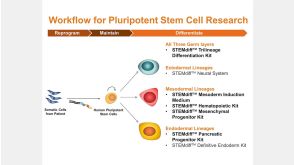
线上讲座STEMdiff™ Kits for Robust and Efficient Differentiation of hPSCs to Multiple Cell Types发布日期: 06/24/2016
20:24
线上讲座STEMdiff™ Kits for Robust and Efficient Differentiation of hPSCs to Multiple Cell Types发布日期: 06/24/2016

 沪公网安备31010102008431号