H. Shen et al. (dec 2022)
Journal of orthopaedic research : official publication of the Orthopaedic Research Society 40 12 2754--2762
The use of connective tissue growth factor mimics for flexor tendon repair.
Intrasynovial flexor tendon lacerations of the hand are clinically problematic,typically requiring operative repair and extensive rehabilitation. The small-molecule connective tissue growth factor (CTGF) mimics,oxotremorine M (Oxo-M) and 4-PPBP maleate (4-PPBP),have been shown to improve tendon healing in small animal models by stimulating the expansion and differentiation of perivascular CD146+ cells. To enhance intrasynovial flexor tendon healing,small-molecule CTGF mimics were delivered to repaired canine flexor tendons via porous sutures. In vitro studies demonstrated that Oxo-M and 4-PPBP retained their bioactivity and could be released from porous sutures in a sustained manner. However,in vivo delivery of the CTGF mimics did not improve intrasynovial tendon healing. Histologic analyses and expression of tenogenic,extracellular matrix,inflammation,and remodeling genes showed similar outcomes in treated and untreated repairs across two time points. Although in vitro experiments revealed that CTGF mimics stimulated robust responses in extrasynovial tendon cells,there was no response in intrasynovial tendon cells,explaining the lack of in vivo effects. The results of the current study indicate that therapeutic strategies for tendon repair must carefully consider the environment and cellular makeup of the particular tendon for improving the healing response.
View Publication
A flexible, high-throughput system for studying live mRNA translation with HiBiT technology
HiBiT is an engineered luciferase’s 11-amino-acid component that can be introduced as a tag at either terminus of a protein of interest. When the LgBiT component and a substrate are present,HiBiT and LgBiT dimerize forming a functional luciferase. The HiBiT technology has been extensively used for high-throughput protein turnover studies in cells. Here,we have adapted the use of the HiBiT technology to quantify messenger RNA (mRNA) translation temporally in vitro in the rabbit reticulocyte system and in cellulo in HEK293 cells constitutively expressing LgBiT. The assay system can uniquely detect differences in cap,5?UTR,modified nucleotide composition,coding sequence optimization and poly(A) length,and their effects on mRNA translation over time. Importantly,using these assays we established the optimal mRNA composition varied depending on the encoded protein of interest,highlighting the importance of screening methods tailored to the protein of interest,and not reliant on reporter proteins. Our findings demonstrated that HiBiT can be easily and readily adapted to monitor real-time mRNA translation in live cells and offers a novel and highly favourable method for the development of mRNA-based therapeutics.
View Publication
产品类型:
产品号#:
05990
产品名:
TeSR™-E8™
D. Cabañero et al. (Jun 2025)
The Journal of Headache and Pain 26 1
Cold receptor TRPM8 as a target for migraine-associated pain and affective comorbidities
Genetic variations in the Trpm8 gene that encodes the cold receptor TRPM8 have been linked to protection against polygenic migraine,a disabling condition primarily affecting women. Noteworthy,TRPM8 has been recently found in brain areas related to emotional processing,suggesting an unrecognized role in migraine comorbidities. Here,we use mouse behavioural models to investigate the role of Trpm8 in migraine-related phenotypes. Subsequently,we test the efficacy of rapamycin,a clinically relevant TRPM8 agonist,in these behavioural traits and in human induced pluripotent stem cell (iPSC)-derived sensory neurons. We report that Trpm8 null mice exhibited impulsive and depressive-like behaviours,while also showing frequent pain-like facial expressions detected by an artificial intelligence algorithm. In a nitroglycerin-induced migraine model,Trpm8 knockout mice of both sexes developed anxiety and mechanical hypersensitivity,whereas wild-type females also displayed depressive-like phenotype and hypernociception. Notably,rapamycin alleviated pain-related behaviour through both TRPM8-dependent and independent mechanisms but lacked antidepressant activity,consistent with a peripheral action. The macrolide ionotropically activated TRPM8 signalling in human sensory neurons,emerging as a new candidate for intervention. Together,our findings underscore the potential of TRPM8 for migraine relief and its involvement in affective comorbidities,emphasizing the importance of addressing emotional symptoms to improve clinical outcomes for migraine sufferers,especially in females. The online version contains supplementary material available at 10.1186/s10194-025-02082-4.
View Publication
产品类型:
产品号#:
34811
34815
34821
34825
34850
34860
产品名:
AggreWell™ 800 24孔板,1个
AggreWell™ 800 24孔板,5个
AggreWell™ 800 6孔板,1个
AggreWell™ 800 6孔板,5个
AggreWell™ 800 24孔板启动套装
AggreWell™ 800 6孔板启动套装
T. P. Resende et al. (feb 2020)
Journal of animal science 98 2
Evaluation of swine enteroids as in vitro models for Lawsonia intracellularis infection1,2.
The enteric pathogen Lawsonia intracellularis is one of the main causes of diarrhea and compromised weight gain in pigs worldwide. Traditional cell-line cultures have been used to study L. intracellularis pathogenesis. However,these systems fail to reproduce the epithelial changes observed in the intestines of L. intracellularis-infected pigs,specifically,the changes in intestinal cell constitution and gene expression. A more physiologically accurate and state-of-the-art model is provided by swine enteroids derived from stem cell-containing crypts from healthy pigs. The objective of this study was to verify the feasibility of two-dimensional swine enteroids as in vitro models for L. intracellularis infection. We established both three- and two-dimensional swine enteroid cultures derived from intestinal crypts. The two-dimensional swine enteroids were infected by L. intracellularis in four independent experiments. Enteroid-infected samples were collected 3 and 7 d postinfection for analysis using real-time quantitative PCR and L. intracellularis immunohistochemistry. In this study,we show that L. intracellularis is capable of infecting and replicating intracellularly in two-dimensional swine enteroids derived from ileum.
View Publication
Z. Luo et al. (Oct 2025)
Stem Cells Translational Medicine 14 10
Oligodendrogenic neural progenitors for treatment of chronic compressive cervical spinal cord injury
Chronic compressive cervical spinal cord injury (cCSCI),a debilitating condition,lacks effective treatment options. Addressing this gap,our study introduces a novel rat model of cCSCI developed through spinal cord compression via synthetic polyether sheet implantation,closely mimicking human pathology. We evaluated the model’s fidelity utilizing a comprehensive series of behavioral,electrophysiological,and histological assessments. Our research also explored the therapeutic potential of oligodendrogenic neural progenitor cells (oNPCs) derived from induced pluripotent stem cells. Transplanted oNPCs successfully integrated into the host spinal cord,differentiated into neurons,astrocytes,and oligodendrocytes,and demonstrated a remarkable capacity for enhancing neuroplasticity. Electrophysiological analyses revealed significant improvements in motor evoked potentials and a rectification of the excitability imbalance posttransplantation,indicating substantial recovery of motor circuits. Histological findings complemented these results,showing enhanced remyelination and a reduction in excitatory transmitter expression in the residual gray matter. Functionally,the transplantation of oNPCs led to marked improvements in grip strength,locomotor abilities,and sensory functions,surpassing those seen with standard treatments. This study not only provides a novel and reliable rat model of cCSCI for further research but also highlights the potential of oNPCs as a transformative approach for spinal cord injury therapy,suggesting their significant role in neural regeneration and repair.
View Publication
产品类型:
产品号#:
85850
85857
产品名:
mTeSR™1
mTeSR™1
Pende D et al. (MAR 2009)
Blood 113 13 3119--29
Anti-leukemia activity of alloreactive NK cells in KIR ligand-mismatched haploidentical HSCT for pediatric patients: evaluation of the functional role of activating KIR and redefinition of inhibitory KIR specificity.
We analyzed 21 children with leukemia receiving haploidentical hematopoietic stem cell transplantation (haplo-HSCT) from killer immunoglobulin (Ig)-like receptors (KIR) ligand-mismatched donors. We showed that,in most transplantation patients,variable proportions of donor-derived alloreactive natural killer (NK) cells displaying anti-leukemia activity were generated and maintained even late after transplantation. This was assessed through analysis of donor KIR genotype,as well as through phenotypic and functional analyses of NK cells,both at the polyclonal and clonal level. Donor-derived KIR2DL1(+) NK cells isolated from the recipient displayed the expected capability of selectively killing C1/C1 target cells,including patient leukemia blasts. Differently,KIR2DL2/3(+) NK cells displayed poor alloreactivity against leukemia cells carrying human leukocyte antigen (HLA) alleles belonging to C2 group. Unexpectedly,this was due to recognition of C2 by KIR2DL2/3,as revealed by receptor blocking experiments and by binding assays of soluble KIR to HLA-C transfectants. Remarkably,however,C2/C2 leukemia blasts were killed by KIR2DL2/3(+) (or by NKG2A(+)) NK cells that coexpressed KIR2DS1. This could be explained by the ability of KIR2DS1 to directly recognize C2 on leukemia cells. A role of the KIR2DS2 activating receptor in leukemia cell lysis could not be demonstrated. Altogether,these results may have important clinical implications for the selection of optimal donors for haplo-HSCT.
View Publication
Osakada F et al. (JAN 2009)
Nature protocols 4 6 811--24
Stepwise differentiation of pluripotent stem cells into retinal cells.
Embryonic stem (ES) cells are pluripotent cells derived from the inner cell mass of blastocyst-stage embryos. They can maintain an undifferentiated state indefinitely and can differentiate into derivatives of all three germ layers,namely ectoderm,endoderm and mesoderm. Although much progress has been made in the propagation and differentiation of ES cells,induction of photoreceptors has generally required coculture with or transplantation into developing retinal tissue. Here,we describe a protocol for generating retinal cells from ES cells by stepwise treatment with defined factors. This method preferentially induces photoreceptor and retinal pigment epithelium (RPE) cells from mouse and human ES cells. In our protocol,differentiation of RPE and photoreceptors from mouse ES cells requires 28 d and the differentiation of human ES cells into mature RPE and photoreceptors requires 120 and 150 d,respectively. This differentiation system and the resulting pluripotent stem cell-derived retinal cells will facilitate the development of transplantation therapies for retinal diseases,drug testing and in vitro disease modeling. It will also improve our understanding of the development of the central nervous system,especially the eye.
View Publication
产品类型:
产品号#:
72082
产品名:
DAPT
Tata PR et al. (NOV 2013)
Nature 503 7475 218--23
Dedifferentiation of committed epithelial cells into stem cells in vivo.
Cellular plasticity contributes to the regenerative capacity of plants,invertebrates,teleost fishes and amphibians. In vertebrates,differentiated cells are known to revert into replicating progenitors,but these cells do not persist as stable stem cells. Here we present evidence that differentiated airway epithelial cells can revert into stable and functional stem cells in vivo. After the ablation of airway stem cells,we observed a surprising increase in the proliferation of committed secretory cells. Subsequent lineage tracing demonstrated that the luminal secretory cells had dedifferentiated into basal stem cells. Dedifferentiated cells were morphologically indistinguishable from stem cells and they functioned as well as their endogenous counterparts in repairing epithelial injury. Single secretory cells clonally dedifferentiated into multipotent stem cells when they were cultured ex vivo without basal stem cells. By contrast,direct contact with a single basal stem cell was sufficient to prevent secretory cell dedifferentiation. In analogy to classical descriptions of amphibian nuclear reprogramming,the propensity of committed cells to dedifferentiate is inversely correlated to their state of maturity. This capacity of committed cells to dedifferentiate into stem cells may have a more general role in the regeneration of many tissues and in multiple disease states,notably cancer.
View Publication


 EasySep™小鼠TIL(CD45)正选试剂盒




 39:33
线上讲座Quality by Design: Reagents and Support for hPSC-Derived Cell and Gene Therapies发布日期: 08/16/2021
39:33
线上讲座Quality by Design: Reagents and Support for hPSC-Derived Cell and Gene Therapies发布日期: 08/16/2021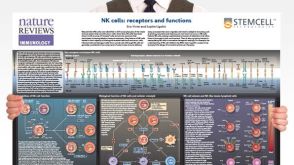 挂图Natural Killer Cells Overview of NK cell receptors, subsets, activation and function


 沪公网安备31010102008431号