Long non-coding RNAs as surrogate indicators for chemical stress responses in human-induced pluripotent stem cells.
In this study,we focused on two biological products as ideal tools for toxicological assessment: long non-coding RNAs (lncRNAs) and human-induced pluripotent stem cells (hiPSCs). lncRNAs are an important class of pervasive non-protein-coding transcripts involved in the molecular mechanisms associated with responses to cellular stresses. hiPSCs possess the capabilities of self-renewal and differentiation into multiple cell types,and they are free of the ethical issues associated with human embryonic stem cells. Here,we identified six novel lncRNAs (CDKN2B-AS1,MIR22HG,GABPB1-AS1,FLJ33630,LINC00152,and LINC0541471v2) that respond to model chemical stresses (cycloheximide,hydrogen peroxide,cadmium,or arsenic) in hiPSCs. Our results indicated that the lncRNAs responded to general and specific chemical stresses. Compared with typical mRNAs such as p53-related mRNAs,the lncRNAs highly and rapidly responded to chemical stresses. We propose that these lncRNAs have the potential to be surrogate indicators of chemical stress responses in hiPSCs.
View Publication
产品类型:
产品号#:
85850
85857
产品名:
mTeSR™1
mTeSR™1
Nie S et al. (FEB 2015)
Journal of proteome research 14 2 814--22
Tenascin-C: a novel candidate marker for cancer stem cells in glioblastoma identified by tissue microarrays.
Glioblastoma multiforme (GBM) is a highly aggressive brain tumor,with dismal survival outcomes. Recently,cancer stem cells (CSCs) have been demonstrated to play a role in therapeutic resistance and are considered to be the most likely cause of cancer relapse. The identification of CSCs is an important step toward finding new and effective ways to treat GBM. Tenascin-C (TNC) protein has been identified as a potential marker for CSCs in gliomas based on previous work. Here,we have investigated the expression of TNC in tissue microarrays including 17 GBMs,18 WHO grade III astrocytomas,15 WHO grade II astrocytomas,4 WHO grade I astrocytomas,and 7 normal brain tissue samples by immunohistochemical staining. TNC expression was found to be highly associated with the grade of astrocytoma. It has a high expression level in most of the grade III astrocytomas and GBMs analyzed and a very low expression in most grade II astrocytomas,whereas it is undetectable in grade I astrocytomas and normal brain tissues. Double-immunofluorescence staining for TNC and CD133 in GBM tissues revealed that there was a high overlap between theses two positive populations. The results were further confirmed by flow cytometry analysis of TNC and CD133 in GBM-derived stem-like neurospheres in vitro. A limiting dilution assay demonstrated that the sphere formation ability of CD133(+)/TNC(+) and CD133(-)/TNC(+) cell populations is much higher than that of the CD133(+)/TNC(-) and CD133(-)/TNC(-) populations. These results suggest that TNC is not only a potential prognostic marker for GBM but also a potential marker for glioma CSCs,where the TNC(+) population is identified as a CSC population overlapping with part of the CD133(-) cell population.
View Publication
Lagar'Kova MA et al. (FEB 2012)
Bulletin of Experimental Biology and Medicine 152 4 516--518
In vitro histogenesis of human embryonic stem cells into retina components
We developed a protocol of in vitro differentiation of human embryonic stem cells into three-dimensional structures histologically and molecularly similar to the developing retina.
View Publication
产品类型:
产品号#:
85850
85857
产品名:
mTeSR™1
mTeSR™1
Liu G-H et al. (NOV 2012)
Nature 491 7425 0--4
Progressive degeneration of human neural stem cells caused by pathogenic LRRK2
Nuclear-architecture defects have been shown to correlate with the manifestation of a number of human diseases as well as ageing. It is therefore plausible that diseases whose manifestations correlate with ageing might be connected to the appearance of nuclear aberrations over time. We decided to evaluate nuclear organization in the context of ageing-associated disorders by focusing on a leucine-rich repeat kinase 2 (LRRK2) dominant mutation (G2019S; glycine-to-serine substitution at amino acid 2019),which is associated with familial and sporadic Parkinson's disease as well as impairment of adult neurogenesis in mice. Here we report on the generation of induced pluripotent stem cells (iPSCs) derived from Parkinson's disease patients and the implications of LRRK2(G2019S) mutation in human neural-stem-cell (NSC) populations. Mutant NSCs showed increased susceptibility to proteasomal stress as well as passage-dependent deficiencies in nuclear-envelope organization,clonal expansion and neuronal differentiation. Disease phenotypes were rescued by targeted correction of the LRRK2(G2019S) mutation with its wild-type counterpart in Parkinson's disease iPSCs and were recapitulated after targeted knock-in of the LRRK2(G2019S) mutation in human embryonic stem cells. Analysis of human brain tissue showed nuclear-envelope impairment in clinically diagnosed Parkinson's disease patients. Together,our results identify the nucleus as a previously unknown cellular organelle in Parkinson's disease pathology and may help to open new avenues for Parkinson's disease diagnoses as well as for the potential development of therapeutics targeting this fundamental cell structure.
View Publication
产品类型:
产品号#:
85850
85857
产品名:
mTeSR™1
mTeSR™1
Maston GA et al. ( 2012)
eLife 1 1 e00068
Non-canonical TAF complexes regulate active promoters in human embryonic stem cells
The general transcription factor TFIID comprises the TATA-box-binding protein (TBP) and approximately 14 TBP-associated factors (TAFs). Here we find,unexpectedly,that undifferentiated human embryonic stem cells (hESCs) contain only six TAFs (TAFs 2,3,5,6,7 and 11),whereas following differentiation all TAFs are expressed. Directed and global chromatin immunoprecipitation analyses reveal an unprecedented promoter occupancy pattern: most active genes are bound by only TAFs 3 and 5 along with TBP,whereas the remaining active genes are bound by TBP and all six hESC TAFs. Consistent with these results,hESCs contain a previously undescribed complex comprising TAFs 2,6,7,11 and TBP. Altering the composition of hESC TAFs,either by depleting TAFs that are present or ectopically expressing TAFs that are absent,results in misregulated expression of pluripotency genes and induction of differentiation. Thus,the selective expression and use of TAFs underlies the ability of hESCs to self-renew.DOI:http://dx.doi.org/10.7554/eLife.00068.001.
View Publication
产品类型:
产品号#:
85850
85857
产品名:
mTeSR™1
mTeSR™1
Yoshikawa K et al. (FEB 2013)
Biochemical and biophysical research communications 431 1 104--10
Multipotent stem cells are effectively collected from adult human cheek skin.
Skin-derived precursor (SKP) cells are a valuable resource for tissue engineering and regenerative medicine,because they represent multipotent stem cells that differentiate into neural and mesodermal progenies. Previous studies suggest that the stem cell pool decreases with age. Here,we show that human multipotent SKP cells can be efficiently collected from adult cheek/chin skin,even in aged individuals of 70-78years. SKP cells were isolated from 38 skin samples by serum-free sphere culture and examined for the ability to differentiate into neural and mesodermal lineages. The number of spheres obtained from adult facial skin was significantly higher than that of trunk or extremity skin. SKP cells derived from cheek/chin skin exhibited a high ability to differentiate into neural and mesodermal cells relative to those derived from eyelid,trunk,or extremity skin. Furthermore,cheek/chin skin SKP cells were shown to express markers for undifferentiated stem cells,including a high expression level of the Sox9 gene. These results indicate that cheek/chin skin is useful for the recovery of multipotent stem cells for tissue engineering and regenerative therapy.
View Publication
产品类型:
产品号#:
05752
产品名:
NeuroCult™ NS-A 分化试剂盒 (人)
Felfly H and Klein OD (JUL 2013)
Scientific Reports 3 2277
Sprouty genes regulate proliferation and survival of human embryonic stem cells.
Sprouty (Spry) genes encode negative regulators of receptor tyrosine kinase (RTK) signaling,which plays important roles in human embryonic stem cells (hESCs). SPRY2 and SPRY4 are the two most highly expressed Sprouty family members in hESCs,suggesting that they may influence self-renewal. To test this hypothesis,we performed siRNA-mediated knock down (KD) studies. SPRY2 KD resulted in increased cell death and decreased proliferation,whereas SPRY4 KD enhanced survival. In both cases,after KD the cells were able to differentiate into cells of the three germ layers,although after SPRY2 KD there was a tendency toward increased ectodermal differentiation. SPRY2 KD cells displayed impaired mitochondrial fusion and cell membrane damage,explaining in part the increased cell death. These data indicate that Sprouty genes regulate pathways involved in proliferation and cell death in hESCs.
View Publication
产品类型:
产品号#:
85850
85857
产品名:
mTeSR™1
mTeSR™1
Byrne SM et al. (FEB 2015)
Nucleic Acids Research 43 3 e21
Multi-kilobase homozygous targeted gene replacement in human induced pluripotent stem cells.
Sequence-specific nucleases such as TALEN and the CRISPR/Cas9 system have so far been used to disrupt,correct or insert transgenes at precise locations in mammalian genomes. We demonstrate efficient 'knock-in' targeted replacement of multi-kilobase genes in human induced pluripotent stem cells (iPSC). Using a model system replacing endogenous human genes with their mouse counterpart,we performed a comprehensive study of targeting vector design parameters for homologous recombination. A 2.7 kilobase (kb) homozygous gene replacement was achieved in up to 11% of iPSC without selection. The optimal homology arm length was around 2 kb,with homology length being especially critical on the arm not adjacent to the cut site. Homologous sequence inside the cut sites was detrimental to targeting efficiency,consistent with a synthesis-dependent strand annealing (SDSA) mechanism. Using two nuclease sites,we observed a high degree of gene excisions and inversions,which sometimes occurred more frequently than indel mutations. While homozygous deletions of 86 kb were achieved with up to 8% frequency,deletion frequencies were not solely a function of nuclease activity and deletion size. Our results analyzing the optimal parameters for targeting vector design will inform future gene targeting efforts involving multi-kilobase gene segments,particularly in human iPSC.
View Publication
产品类型:
产品号#:
85850
85857
产品名:
mTeSR™1
mTeSR™1
Martinez RA et al. (MAY 2015)
Nucleic acids research 43 10 e65
Genome engineering of isogenic human ES cells to model autism disorders
Isogenic pluripotent stem cells are critical tools for studying human neurological diseases by allowing one to study the effects of a mutation in a fixed genetic background. Of particular interest are the spectrum of autism disorders,some of which are monogenic such as Timothy syndrome (TS); others are multigenic such as the microdeletion and microduplication syndromes of the 16p11.2 chromosomal locus. Here,we report engineered human embryonic stem cell (hESC) lines for modeling these two disorders using locus-specific endonucleases to increase the efficiency of homology-directed repair (HDR). We developed a system to: (1) computationally identify unique transcription activator-like effector nuclease (TALEN) binding sites in the genome using a new software program,TALENSeek,(2) assemble the TALEN genes by combining golden gate cloning with modified constructs from the FLASH protocol,and (3) test the TALEN pairs in an amplification-based HDR assay that is more sensitive than the typical non-homologous end joining assay. We applied these methods to identify,construct,and test TALENs that were used with HDR donors in hESCs to generate an isogenic TS cell line in a scarless manner and to model the 16p11.2 copy number disorder without modifying genomic loci with high sequence similarity.
View Publication
产品类型:
产品号#:
85850
85857
产品名:
mTeSR™1
mTeSR™1
Fulcher JA et al. (JUL 2006)
Journal of immunology (Baltimore,Md. : 1950) 177 1 216--26
Galectin-1-matured human monocyte-derived dendritic cells have enhanced migration through extracellular matrix.
Dendritic cells (DCs) are potent mediators of the immune response,and can be activated by exogenous pathogen components. Galectin-1 is a member of the conserved beta-galactoside-binding lectin family that binds galactoside residues on cell surface glycoconjugates. Galectin-1 is known to play a role in immune regulation via action on multiple immune cells. However,its effects on human DCs are unknown. In this study,we show that galectin-1 induces a phenotypic and functional maturation in human monocyte-derived DCs (MDDCs) similar to but distinct from the activity of the exogenous pathogen stimuli,LPS. Immature human MDDCs exposed to galectin-1 up-regulated cell surface markers characteristic of DC maturation (CD40,CD83,CD86,and HLA-DR),secreted high levels of IL-6 and TNF-alpha,stimulated T cell proliferation,and showed reduced endocytic capacity,similar to LPS-matured MDDCs. However,unlike LPS-matured DCs,galectin-1-treated MDDCs did not produce the Th1-polarizing cytokine IL-12. Microarray analysis revealed that in addition to modulating many of the same DC maturation genes as LPS,galectin-1 also uniquely up-regulated a significant subset of genes related to cell migration through the extracellular matrix (ECM). Indeed,compared with LPS,galectin-1-treated human MDDCs exhibited significantly better chemotactic migration through Matrigel,an in vitro ECM model. Our findings show that galectin-1 is a novel endogenous activator of human MDDCs that up-regulates a significant subset of genes distinct from those regulated by a model exogenous stimulus (LPS). One unique effect of galectin-1 is to increase DC migration through the ECM,suggesting that galectin-1 may be an important component in initiating an immune response.
View Publication
产品类型:
产品号#:
15022
15062
15028
15068
产品名:
RosetteSep™人CD4+ T细胞富集抗体混合物
RosetteSep™人CD4+ T细胞富集抗体混合物
RosetteSep™ 人单核细胞富集抗体混合物
RosetteSep™人单核细胞富集抗体混合物
Benvenuti S et al. (OCT 2007)
Journal of endocrinological investigation 30 9 RC26--30
Rosiglitazone stimulates adipogenesis and decreases osteoblastogenesis in human mesenchymal stem cells.
Thiazolidinediones (TZD) are widely prescribed for the treatment of Type 2 diabetes. Increased loss of bone mass and a higher incidence of fractures have been associated with the use of this class of drugs in post-menopausal women. In vitro studies performed in rodent cell models indicated that rosiglitazone (RGZ),one of the TZD,inhibited osteoblastogenesis and induced adipogenesis in bone marrow progenitor cells. The objective of the present study was to determine for the first time the RGZ-dependent shift from osteoblastogenesis toward adipogenesis using a human cell model. To this purpose,bone marrow-derived mesenchymal stem cells were characterized and induced to differentiate along osteogenic and adipogenic lineages. We found that the exposure to RGZ potentiated adipogenic differentiation and shifted the differentiation toward an osteogenic phenotype into an adipogenic phenotype,as assessed by the appearance of lipid droplets. Accordingly,RGZ markedly increased the expression of the typical marker of adipogenesis fatty-acid binding protein 4,whereas it reduced the expression of Runx2,a marker of osteoblastogenesis. This is the first demonstration that RGZ counteracts osteoblastogenesis and induces a preferential differentiation into adipocytes in human mesenchymal stem cells.
View Publication


 EasySep™小鼠TIL(CD45)正选试剂盒




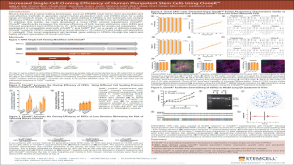 科学海报Increased Single-Cell Cloning Efficiency of Human Pluripotent Stem Cells Using CloneR™
 沪公网安备31010102008431号